
Most people hear “RAV4” and think “reliable.” I do too. It is one of the safer bets in the compact SUV world.
But there are a few ugly problem years and some patterns that keep showing up. Stuff like transmissions that fail early, engines that drink oil, and the 2019-plus models with weird shifting and fuel pump issues.
The good news. Most of these problems are well known now. Many are covered by recalls, extended warranties, or clear repair paths. My goal here is to help you spot the real risks fast so you can buy or keep a RAV4 with open eyes.
How Bad Are Toyota RAV4 Problems Really?
Short version. The RAV4 is better than average for reliability. If you stay away from a few bad years and get a proper inspection, it is a solid daily driver.
The three big trouble themes I worry about are:
- Early 2000s engine computer and transmission failures.
- Mid 2000s oil consumption and steering issues.
- 2019 and newer drivability, fuel pump, and electronics complaints.
Here is the at-a-glance “hero” table I wish every listing had.
Biggest Toyota RAV4 Problems at a Glance
| Problem type | Worst years* | How bad it is | Typical fix | Rough cost if not covered |
|---|---|---|---|---|
| Engine computer kills automatic transmission | 2001–2003 | Serious. Can destroy the gearbox. | Replace or reflash ECM. Often also rebuild or replace transmission. | $3,000–$5,000+ |
| Excessive oil consumption, 2.4L engine | 2006–2008 | Serious if ignored. Can ruin engine. | Updated pistons and rings. Sometimes full engine replacement. | $2,000–$5,000+ |
| Steering clunk or knock | 2006–2012 | Annoying. Can feel loose but usually not a crash risk. | Replace intermediate steering shaft or related parts. | $400–$1,000 |
| Torque converter shudder at speed | 2013–2015 | Medium. Vibration and harsh shifts. | Software update first. Then torque converter or transmission work if needed. | $300–$3,000 |
| EVAP, O2 sensor, “fake” catalytic converter codes | 2013–2018 | Mild to medium. Mostly check engine lights. | Replace purge valve, canister, O2 sensor, or update software. | $200–$1,200 |
| 2019+ harsh or hesitant shifting, 8-speed auto | 2019–2021 | Medium. Annoying, hurts confidence in traffic. | Transmission software update. In bad cases, internal repair. | $0 under warranty to $3,000+ out of warranty |
| Fuel pump recall. Stalling risk on some gas and hybrid models | 2013–2019 | Serious if not fixed. Can cause stall. | Dealer replaces high-pressure fuel pump under recall. | Usually $0 if recall open |
| Hybrid high-voltage cable corrosion and water leaks (RAV4 Hybrid / Prime) | 2019+ hybrids | Serious if advanced. Can trigger warnings and kill rear drive. | Inspect and replace cable or connector. Fix roof rail leaks if present. | $0 under campaign to $2,000+ out of pocket |
| Moldy A/C smell and cabin odor | Many years | Annoying. Not dangerous. | Clean evaporator, replace cabin filter, use disinfectant treatment. | $100–$400 |
*“Worst years” are the model years where these issues show up most often in complaints, TSBs, or recall coverage, not the only years they can appear.
If your RAV4 sits in one of those bad boxes, do not panic. It does not mean your SUV is doomed. It just means you should:
- Check for open recalls and service campaigns.
- Look for repair records on that exact issue.
- Have a good shop or dealer inspect that system before you buy or before the warranty clock runs out.
From here I will break these problems down by generation and system so you can line them up with the year you own or want to buy.
Toyota RAV4 Models by Year: Generations, Trims & Key Changes
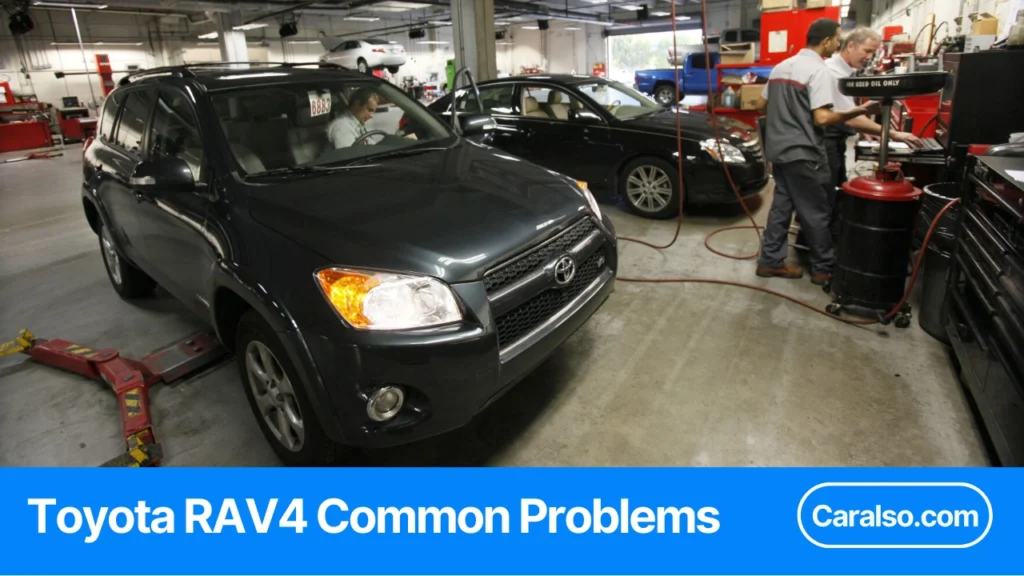
Most Common Toyota RAV4 Problems (All Generations)
When I look at RAV4 problems, I do not start with the year. I start with the system. Here are the big ones.
Transmission problems (ECM failures, torque converters, 8-speed hesitation)
There are three main transmission stories.
- 2001–2003. The engine computer can send bad signals that burn up the automatic transmission. You see harsh shifts, lurching, or no movement at all. If the ECM and transmission are not already replaced, I treat these as avoid years.
- 2013–2015. Some RAV4s develop a torque converter shudder at steady speeds. You feel a vibration or light “buzz” through the seat and wheel. A software update can help. Bad cases need a new torque converter or transmission.
- 2019 and newer. The 8-speed automatic can feel jerky at low speeds. People describe it as hunting for gears or hesitating when they pull out. Many owners get improvement from a dealer software update. A few need deeper transmission work.
When to worry:
Hard shifts, slipping, or no drive at all are big red flags. Light shudder that only shows up sometimes might be software.
What to do next:
Get the codes scanned. Ask a Toyota dealer to check for software updates and TSBs on your year. If it is an early 2000s RAV4 without documented ECM and transmission work, I would walk.
Excessive oil consumption and engine problems
The worst oil story is 2006–2008 2.4-liter engines. Worn piston rings can make them burn oil fast. Some owners report adding a quart every 1,000 miles or less. If you ignore it, the engine can wear out or seize.
Later years have their own issues. Some RAV4s see coolant leaks, head gasket problems, or engine cooling faults that can lead to overheating, especially on newer generations.
When to worry:
If the dipstick drops between fuel stops, or you get blue smoke, or the temp gauge climbs, take it seriously.
What to do next:
Check oil level often on any 2006–2008. Ask for consumption tests or piston ring repair history. On newer models, pressure test the cooling system if there is any sign of overheating or coolant loss.
Steering and suspension issues
A lot of 2006–2012 RAV4s develop a steering clunk. It typically comes from the intermediate steering shaft. You feel or hear a knock when turning the wheel at low speed. It is annoying but usually not an immediate safety threat.
Suspension problems pop up across years. Things like worn rear suspension arms, noisy struts, and loose-feeling steering on rough roads.
When to worry:
Any loud clunk, pull, or wandering at highway speed is worth checking fast. Uneven tire wear is another clue.
What to do next:
Have a shop inspect the steering shaft and suspension bushings. Many fixes are simple bolt-in parts. You just do not want to ignore a problem until it damages tires or makes the SUV unsafe in an emergency lane change.
Electrical, infotainment, and display problems
Electrical stuff is everywhere on modern RAV4s. A few patterns show up.
Mid-2000s and newer RAV4s can have soy-based wire insulation that attracts rodents. Chewed wires cause random warning lights, misfires, or dead systems.
On 4th and 5th gen RAV4s, owners report touchscreens that freeze, reboot, or drop Bluetooth connections. It is more annoying than dangerous, but it can kill CarPlay or navigation.
On some newer models, there are recalls for digital instrument clusters and backup cameras that go blank or glitch.
When to worry:
If you have warning lights plus chewed-looking wires, you need help now. If the dash or camera cuts out while driving, check for recalls.
What to do next:
Run your VIN on Toyota or NHTSA recall tools. Ask the dealer about software updates. If rodents are involved, you need wiring repair and to fix the nest problem or it will come back.
A/C, interior, and body problems
Many owners complain about a musty, moldy A/C smell. That usually comes from the evaporator and housing staying damp. It is gross but fixable with cleaning, a fresh cabin filter, and sometimes a TSB procedure.
Some RAV4s, especially 5th gen, have interior rattles, buzzing panels, and cargo floor issues. Not fun if you hate noise, but not a safety concern.
There are also reports of peeling paint and early rust on some colors and years, more often in harsh climates or on older 4th gen rigs.
When to worry:
Any strong mold smell that does not go away can be a health issue. Paint peeling down to bare metal can lead to rust.
What to do next:
Have the A/C cleaned and serviced. Replace the cabin filter. On paint, get quotes from a body shop and see if Toyota ever offered goodwill on that color and year.
Hybrid and RAV4 Prime-specific problems
RAV4 Hybrid and RAV4 Prime use high-voltage systems that are solid in general, but a few issues stand out.
Some 2016+ hybrids, especially 2019 and newer, have seen high-voltage cable corrosion at the rear drive unit. That can trigger hybrid system warnings and kill rear-wheel assist, which hurts traction.
Fuel pump recalls hit both gas and hybrid RAV4s in certain 2013–2019 years. The risk is engine stalling.
Hybrids and Prime models can also log false or confusing hybrid system warnings when there is a sensor issue somewhere else.
When to worry:
Any “Check hybrid system” message or stall needs attention right away. Loss of rear drive on a hybrid in snow or dirt also matters.
What to do next:
Ask a dealer to check your VIN for hybrid-related campaigns and fuel pump recalls. Get the underbody and cable areas inspected for corrosion or water damage. Do not let any hybrid warning lights sit unsolved.
Best Year for a Used Toyota RAV4: Safest Bets for Your Budget
Toyota RAV4 Problems by Generation and Year
Now let’s zoom out. Here is how I look at problems by generation so you can line your year up quickly.
1st-gen RAV4 problems (1996–2000)
These are old rigs now. Their biggest issues are age, not design flaws.
Common problems:
- Rust in salty states
- Old hoses and seals that leak
- Worn clutches on manuals and worn bands in automatics
Verdict: fun little trucks if you know what you are doing, but they are 25+ years old. I only recommend them as cheap beaters or projects, never as a main family car.
2nd-gen RAV4 problems (2001–2005)
The headline here is 2001–2003 with the ECM and transmission problem. The engine computer can send bad signals that ruin the automatic. Many have already been fixed with updated computers and replacement transmissions. Some have not.
Later 2nd gen years are calmer but still old now, so age issues matter.
Mini verdict table:
| Years | Main problems | My verdict |
|---|---|---|
| 2001–2003 | ECM kills transmission, harsh shifts, limp mode | Avoid unless ECM and transmission have clear, recent proof of repair |
| 2004–2005 | Normal old-car wear, some transmission and suspension issues | Only if price is low and condition is excellent |
3rd-gen RAV4 problems (2006–2012)
The 3rd gen has two big themes.
First, 2006–2008 engines that burn oil. If you do not watch oil level, you can destroy the engine. Second, steering shaft clunk on many 2006–2012 trucks. Some owners also report throttle feel issues and basic suspension wear as they age.
Mini verdict table:
| Years | Main problems | My verdict |
|---|---|---|
| 2006–2008 | High oil use, possible engine damage, steering clunk | High caution. Only with oil use proof and repairs on record |
| 2009–2012 | Steering clunk, normal wear, some throttle and suspension complaints | Decent if inspected well and priced right |
4th-gen RAV4 problems (2013–2018)
The 4th gen is better in many ways but not clean.
You see:
- EVAP and emissions issues that trigger check engine lights
- O2 sensor and catalytic converter codes that are sometimes software related
- Torque converter shudder on some 2013–2015 models
- A battery fire investigation on 2013–2018 that owners should at least be aware of
- Moldy A/C and soy wiring complaints, plus some paint peeling on certain years and colors
Mini verdict table:
| Years | Main problems | My verdict |
|---|---|---|
| 2013–2015 | Torque converter shudder, EVAP and sensor codes, fire investigation years | Caution. OK if issues were fixed and records are strong |
| 2016–2018 | EVAP and A/C issues, some paint and wiring complaints | Generally solid. Good picks if inspection is clean |
5th-gen RAV4 problems (2019–present)
This is the current body style. It drives nice and scores well in safety tests, but early years have more noise in the data.
2019 is the roughest. Owners report harsh or hesitant shifting from the 8-speed auto, engine cooling and fuel system concerns, steering and suspension problems, and early leak issues. Some of these are covered by recalls and bulletins.
2020–2021 see many of the same systems but with more fixes in place. Complaints shift more toward electronics, infotainment glitches, and specific hybrid issues like high-voltage cable corrosion and fuel pump recalls.
2022 and newer pick up new tech. There are recalls on things like digital clusters and backup cameras, but overall safety and reliability look better on paper. For 2024–2025, most of what I see are early reports about infotainment bugs, occasional shifting complaints, and isolated stalling or power steering issues that lemon lawyers like to chase.
Mini verdict table:
| Years | Main problems | My verdict |
|---|---|---|
| 2019 | Transmission hesitation, fuel pump, cooling, steering, leaks, hybrid cable risk | Problem child. I only buy with full campaign proof and a great price |
| 2020–2021 | Softer version of 2019 issues, plus electronics and hybrid problems | Caution but workable. Good if all recalls and TSBs are done |
| 2022+ | Cluster and camera recalls, infotainment glitches, normal new-tech teething | Strong picks. My go-to for a newer RAV4 if the budget allows |
If you match your year and these tables make your stomach drop, do not panic. It just means you should dig into recalls and repair history. A “bad year” that has been fully fixed is often safer than a “good year” nobody has ever checked.
Best Year for Toyota RAV4 Hybrid: Most Reliable Years (and Ones to Avoid)
Toyota RAV4 Transmission Problems (What to Watch For)
When I test a RAV4, I always check the transmission first. A bad one is big money.
Main symptoms to look for
If you feel any of this, pay attention:
- Shudder or vibration at steady speeds
- Harsh or delayed shifts
- RPMs jump up without more throttle
- Lurch when you pull away from a stop
- Slow to go into Drive or Reverse
If it does any of these often, not just once on a cold morning, you need a deeper look.
2001–2003 – ECM killing automatics
On early 2000s RAV4s, the big story is the engine computer, not the hardware.
Toyota and owner reports show the ECM can send bad shift commands, which beats up the automatic transmission. Drivers see harsh shifts, banging into gear, and random gear changes. Over time, it can destroy the gearbox.
If a 2001–2003 RAV4 has not had the ECM repaired or replaced, I treat it as a high-risk truck.
What I do with these years:
- Look for paperwork showing a new or repaired ECM and documented transmission work.
- If there is no proof, I walk. The fix is usually ECM + transmission, and that is not cheap.
2013–2015 – Torque converter shudder
Some 4th gen RAV4s, mainly 2013–2014 and some 2015, get a torque converter “flex lock-up” shudder. Toyota issued a TSB for this.
What it feels like:
- Brief shudder or vibration at light throttle
- Usually between about 25 and 50 mph
- Comes and goes under steady load
Toyota’s repair path is:
- Update the ECM software.
- If it still shudders, replace the torque converter.
Some owners end up with full transmission replacement if damage is bad.
What I do:
- Drive at 30–45 mph on a flat road and feel for a fine vibration.
- Ask the seller if the torque converter TSB has been done.
- Budget for converter work if the shudder is there on a high-mile rig.
2019+ – 8-speed hesitation and lurching
On 2019 and newer gas RAV4s, complaints cluster around the 8-speed automatic.
Owners describe:
- Hesitation coming out of a rolling stop
- Sudden downshift and jerk at very low speeds
- Gear hunting when climbing small hills
Forums and lemon-law writeups point to software calibration and low-speed shift logic as the main problem. Toyota has issued TSBs and programming updates to smooth things out.
What I do:
- Drive it in city traffic, including rolling stops and slow turns.
- Check with a dealer for any pending transmission software updates.
- If it still feels nasty after the latest software, I think hard about walking or pricing in possible transmission work.
Quick symptom table
| What you feel | Likely cause | Worst years | What I do |
|---|---|---|---|
| Harsh, random shifts, banging into gear | ECM sending bad commands, transmission damage | 2001–2003 | Only consider if ECM and transmission have documented repairs. Otherwise walk. |
| Shudder at 25–50 mph under light throttle | Torque converter lock-up shudder | 2013–2014 (some 2015) | Ask about TSB and converter replacement. Test drive at those speeds. |
| Jerky low-speed shifting, hesitation from a roll | 8-speed calibration / software, in rare cases hardware | 2019+ | Check for latest software update. If still bad, treat as a negotiation or move on. |
If a RAV4 shifts smooth, with no shudder and no lag, that is a very good sign. I always check fluid leaks, but on these years the software and history matter just as much as the oil.
Toyota RAV4 Engine, Oil, and Cooling Problems
Engines cost real money. This is where I get picky.
2006–2008 – 2.4L oil consumption
The worst engine pattern is the 2AZ-FE 2.4-liter in 2006–2008 RAV4s.
Toyota’s own TSBs and warranty enhancement programs admit that some of these engines burn a lot of oil because of piston ring wear. Dealers use a test where 1 quart every 1,200 miles or worse is considered a problem.
If you do not watch the dipstick, the engine can run low, wear out, or even seize.
The real fix is:
- New pistons and rings
- Or a short-block / full engine replacement
Both are expensive once you are out of any extended program.
What I do with 2006–2008:
- Assume it burns oil until proven otherwise.
- Check the stick myself. Ask the owner how often they top off.
- Only buy if there is proof of oil-consumption repair or the price is very low and I am ready to babysit it.
Head gasket, leaks, and overheating
As these SUVs age, you see more cooling problems:
- Coolant leaks from hoses, water pumps, or radiators
- Overheating that leads to head gasket damage
- Combustion gases in the coolant on abused engines
On newer 2019+ models, some recall and complaint data point to engine cooling system issues and coolant leaks that can cause stalls if ignored.
What I do:
- Look for dried coolant trails, stains, or a sweet smell under the hood.
- Watch the temp gauge on a long climb or hot day. It should sit steady.
- If there is any overheating history, I want a combustion leak test before I buy.
Fuel pump and stalling risk
Fuel system problems tie straight into engine life and safety.
A big one is the fuel pump recall that covers many 2013–2019 Toyota models, including RAV4. A failing in-tank pump can drop fuel pressure and stall the engine while driving.
What I do:
- Run the VIN on Toyota or NHTSA recall sites to see if the pump recall applies.
- If it does, I want proof that the pump was replaced at a dealer.
- Any RAV4 that stalls or hesitates with no code needs a fuel pressure check.
When an engine is fine vs a money pit
For me, an engine is probably OK if:
- It starts clean, no rattles, no long cranks
- Oil level is stable between changes
- Coolant level stays put and looks clean
- Temp gauge never moves off normal in real driving
It is a likely money pit if:
- You see heavy oil use or blue smoke
- There is any overheating history
- There are active misfire and fuel pressure codes with no clear fix yet
If the engine fails these basic checks, I walk. RAV4s are common. You do not need to rescue a bad one.
Toyota RAV4 Hybrid & Prime Problems (If You’re Going Electric)
I like RAV4 Hybrids and Primes a lot. MPG is great. They wheel fine on dirt. But there are some specific things I watch.
High-voltage cable corrosion on AWD hybrids
The big hybrid story right now is rear traction motor cable corrosion.
Toyota’s latest campaign covers 2019–2024 RAV4 Hybrid AWD and 2021–2024 RAV4 Prime, plus some other hybrid models. The bulletin calls out corrosion at the connector where the high-voltage cable meets the rear motor. In bad cases the hybrid system can shut down or lose rear drive, and repairs run into the thousands.
Road salt, water, and debris seem to be the main triggers. Some owners also link it to water getting into the rear area from leaks.
Toyota’s current fix is to:
- Inspect the rear cable and connector
- Replace or repair if corrosion is severe
- Fit a protective boot or seal on affected vehicles
What I do:
- Check for any hybrid cable inspection or campaign on the VIN.
- Ask the dealer directly about the rear traction motor cable program.
- On a used hybrid, listen for AM radio static and watch for any hybrid warnings, which can be early signs.
Roof leaks and water intrusion
On some 5th gen RAV4s, including hybrids, water can leak around the roof rails and drip into the body. Owners and lawyers have tied roof leaks to wiring and cable corrosion in a few nasty cases.
What I do:
- Pull up the rear cargo floor and check for rust, wet insulation, or water lines.
- Look at the headliner around the roof rails for stains.
- If I see anything, I assume I am looking at a bigger hybrid wiring risk and either negotiate very hard or walk.
Hybrid battery and system warnings
In general, Toyota hybrid batteries last a long time. Most RAV4 hybrids never see a pack failure in normal use. Still, a few patterns show up:
- “Check hybrid system” messages from sensor or inverter issues
- Rare pack problems on high-mile or abused vehicles
- 12-volt battery weakness causing false hybrid warnings
What I do:
- Treat any hybrid warning light as a “do it now,” not “later” issue.
- Ask for a full hybrid system scan before I buy, especially on a high-mile car.
- Make sure the 12-volt battery is fresh. A weak one can cause weird behavior.
RAV4 Prime specific problems
The RAV4 Prime adds a big battery and plug-in hardware. It has its own small list of issues.
Some Prime owners and recall notices mention:
- Stalling or system shutdown in very cold weather under hard acceleration in EV mode, tied to a voltage drop issue.
- Safety recalls on charging components and DC/DC converter that can overheat and, in rare cases, create a fire risk while charging.
- Typical plug-in quirks like heat pump noise, weak cabin heat in deep cold, and ABS or hybrid ECU software updates.
What I do with a Prime:
- Check recall history for stalling and charging system fixes.
- Confirm the owner followed Toyota’s charging guidance.
- Test the car in both EV and hybrid modes if I can, not just around the block.
How worried should you be about hybrid and Prime problems?
Here is the part a lot of people miss. These issues are real, and the bills can be high if they hit you. But they are still rare compared with how many RAV4 Hybrids and Primes Toyota has sold. That is an inference from complaint counts vs production volumes, not an exact rate.
So I do not avoid RAV4 Hybrids or Primes. I just buy them smarter:
- Favor 2020+ for the longer hybrid battery warranty.
- Check cable corrosion and roof leak history on any 2019+ AWD hybrid.
- Make sure all Prime recalls and software updates are done before I hand over money.
If a hybrid checks out on those points, I am usually more excited about it than the gas version.
Toyota RAV4 Recalls You Should Know About
Recalls are your friend. They fix real problems on Toyota’s dime. Here are the big ones I always check on a RAV4.
2001–2003 ECM and transmission programs
Early 2000s RAV4s had engine computers that could wreck the automatic transmission. Toyota released updated ECMs and, in many cases, covered transmission repair for a time.
If you are looking at a 2001–2003:
- Ask if the ECM was replaced.
- Ask if the transmission was rebuilt or replaced.
- If nobody knows, I treat it as a high-risk SUV.
2013–2019 fuel pump recall
A large fuel pump recall hit many Toyota models, including RAV4 gas and hybrid. A bad in-tank pump can cause stalling. That is a safety issue.
What I do:
- Run the VIN on Toyota’s recall site or NHTSA.
- If the fuel pump recall is open, I get it done before I rely on the car.
- If it is marked complete, I ask for the dealer paperwork.
2013–2018 battery fire investigation and actions
There was an investigation into battery and wiring fires on some 2013–2018 RAV4s. In some cases, the fix involved inspecting battery wiring, replacing parts, and adding protective covers.
If I own or buy a 2013–2018:
- I ask a Toyota dealer to check for any battery/fire-related recall or service campaign.
- I look under the hood and around the battery for melted plastic or hack repairs.
Any sign of burning or melted parts is a hard stop until a pro inspects it.
2019+ steering, suspension, power steering, and cooling recalls
On 5th-gen RAV4s, several recalls and TSBs tie into problems we already talked about:
- Lower control arm and rear suspension hardware issues
- Power steering assist problems
- Engine cooling system concerns
- Fuel system and pump issues
All of those can affect safety or reliability. That is why I always:
- Ask the dealer for a recall printout by VIN
- Check that any steering, suspension, and cooling recalls are showing as “completed”
- Road test for noises, pulls, or temperature issues even after the work
2022+ digital cluster and camera recalls
Some newer RAV4s have recalls for:
- Digital instrument clusters that can go blank or show wrong info
- Rear-view cameras that may stop showing an image
These sound minor, but the cluster and camera are safety items now.
What I do:
- Make sure cluster and camera recalls are done
- Test the dash and camera on a longer drive, not just 10 seconds in reverse
How to check your own RAV4 for recalls
I always tell people to check three places:
- Toyota’s official owner / recall lookup site (by VIN).
- NHTSA’s recall lookup (by VIN).
- For Canada, Transport Canada’s recall search.
It is free. It takes 2 minutes. If a recall is open, book a dealer visit and get it fixed before you chase anything else.
What To Do If Your RAV4 Has These Problems
If your RAV4 is acting up, here is how I handle it step by step.
1. Check recalls and extended warranties
First move is always free stuff.
- Look up your VIN on Toyota and NHTSA recall tools.
- Ask the dealer to check for service campaigns and warranty extensions, not just formal recalls.
- Some big fixes, like fuel pumps or ECMs, may be covered even if the basic warranty is gone.
If there is an open recall, schedule that before you pay anyone else.
2. Look up TSBs for your symptom
A TSB (technical service bulletin) is Toyota’s “known issue + fix” guide for dealers.
- Search for TSBs that match your year and symptom (shudder, leak, noise, etc.).
- A TSB does not always mean free repair, but it means the problem is known and there is a tested fix.
When you talk to a shop or dealer, mention the TSB number if you have it. It helps.
3. Get a proper diagnosis
Do not throw random parts at a modern RAV4.
- Start with a scan for codes, even if the check engine light is off.
- Use a good independent shop or a Toyota dealer, especially for hybrid or transmission issues.
- Ask for a written estimate with parts and labor split out.
If you are not sure about the first answer, get a second opinion. It is your money.
4. Decide: live with it, fix it, or move on
Once you know what it is and what it costs, you have three choices:
- Live with it. For small stuff like minor rattles, light A/C smell, or a slow infotainment boot.
- Fix it. For safety items, leaks, stalling, hybrid warnings, or anything that could strand you.
- Move on. For huge bills on old rigs, like bad engines, rotten frames, or repeat transmission failures.
I keep this simple rule. If the repair costs more than the SUV is worth in trade, and it is not a safety recall, I usually sell and put that money toward a better RAV4 or a different SUV.
Problems you should treat as urgent
I treat these as “park it until fixed”:
- Stalling, loss of power, or fuel pump issues
- Overheating or rapid coolant loss
- Brake, ABS, or stability control lights with real symptoms
- Steering that clunks hard, binds, or pulls
- Hybrid or Prime “check system” messages that keep coming back
And these as “annoying but not urgent”:
- Light transmission shudder with a known TSB fix coming up
- Rattles, trim buzz, and mild A/C smell
- Infotainment glitches that do not affect safety
Safety first. Convenience later.
Are Toyota RAV4s Still Worth Buying Despite These Problems?
Short answer. Yes. I still recommend the RAV4 a lot.
Across all the data and what I see on the road, the RAV4 is better than average for reliability. It is not perfect. No SUV is. But if you dodge the known bad years and check recall history, it is a strong daily.
Which generations I like the most
Here is how I rank them in my head:
- Best all-rounders: Late 4th gen and most 5th gen, so roughly 2016 and newer, with extra caution on 2019. Good safety, decent tech, and parts are easy to get.
- Solid older choice: 2009–2012, if the steering and engine check out. Cheap to buy. Just more “old truck” feel.
- High-risk years: 2001–2003 (ECM / transmission) and 2006–2008 (oil burners). I rarely recommend these unless they are unicorns with proof of big repairs.
For hybrids and Prime, I like 2020+ best because of the longer battery warranty and more sorted hardware.
When it makes sense to pick something else
I tell people to look at another SUV if:
- The only RAV4s in budget are from the known problem years with no proof of repair
- You need to tow heavy all the time and want more engine and frame under you
- You hate CVTs, 8-speed autos, or modern driver assist tech and want something simpler
But in most normal cases. Family hauler. Commuter. Light trail work. Snow trips. The RAV4 still sits on my short list.
You just have to shop with your eyes open, not with the “Toyota is perfect” myth in your head.
FAQ – Toyota RAV4 Problems
What are the most common Toyota RAV4 problems?
The big ones I watch for are transmission issues, oil consumption, steering clunk, EVAP and sensor codes, and fuel pump or cooling problems on newer years. On hybrids and Prime you add high voltage cable corrosion and the fuel tank or fuel pump issues. Most of these have clear TSBs or recalls now. The key is to match the problem to the year and check if the fix was already done.
What year RAV4 has the most problems?
For gas models, 2001–2003, 2006–2008, 2013–2015, and 2019 show the most noise in complaints and “years to avoid” lists. For hybrids, 2019 and some 2020–2021 builds get the most attention for fuel, cable, and drivability issues. That does not mean every one of those SUVs is bad. It just means I am extra picky on inspection and history for those years.
Is the Toyota RAV4 transmission reliable?
Most RAV4 transmissions live a long life if the fluid stays clean and the software is up to date. The problem spots are 2001–2003 with ECM related failures, 2013–2015 with torque converter shudder, and 2019 plus with 8 speed hesitation. If a test drive feels smooth in all gears and there are no harsh shifts or shudders, I am usually comfortable.
Do RAV4s have engine problems or burn oil?
Some do. The worst group is 2006–2008 with 2.4 liter engines that can burn oil fast when the rings wear. Any RAV4 with overheating or heavy oil use can turn into an engine job. I always check the dipstick, watch the temp gauge, and ask directly about oil use before I buy.
Are RAV4 hybrids more reliable than gas models?
The hybrid system itself is very solid in most cases. You mainly have to watch for specific issues like fuel pump recalls, fuel tank range problems, and the rear motor cable corrosion on some 2019 plus AWD hybrids. I still like RAV4 Hybrids and Prime a lot, especially 2020 and newer with the longer battery warranty, as long as recall and campaign work is up to date.
How can I check if my RAV4 has a recall?
Use your VIN. I plug it into Toyota’s recall lookup, the NHTSA site in the US, or Transport Canada if you are up north. Those tools will show open recalls and sometimes campaigns. If anything is open, I book a dealer visit and get that done first before I chase any other repairs.
Sources
- ToyotaProblems – “What’s Wrong with the Toyota RAV4?”
- CarComplaints – Toyota RAV4 overview and model year comparison
- Toyota TSB – “Torque Converter Flex Lock-up Shudder” (T-SB-0023-15)
- Toyota fuel pump recall documents and letters
- RAV4World forum – fuel pump recall and “cablegate” rear traction motor cable campaign
- Reddit r/rav4club – rear traction motor cable corrosion recall discussion
- Toyota recall lookup – official VIN recall and campaign checker

Hey there,
How is it going?
I’m Meraj Sarker. I am a Car Mechanic and a student of Automobile Restoration here in Florida, USA. I’ve been studying automotive for around 9 years now. So you can rely on my recommendation. For me, studying and getting knowledge about automobile it’s really fun and entertaining. I will help you to get solutions for your car through this website. If you need any help let me know.