
I’ve owned and worked on enough RAV4s to know where people get stuck. It’s usually one of two things. What to do at 5,000 miles. And why some shops push oil changes twice as often as the manual seems to imply.
This guide is the simple version. I’ll tell you what to do, when to do it, and what it usually costs over time. If you only read one part, use the quick cheat sheet below.
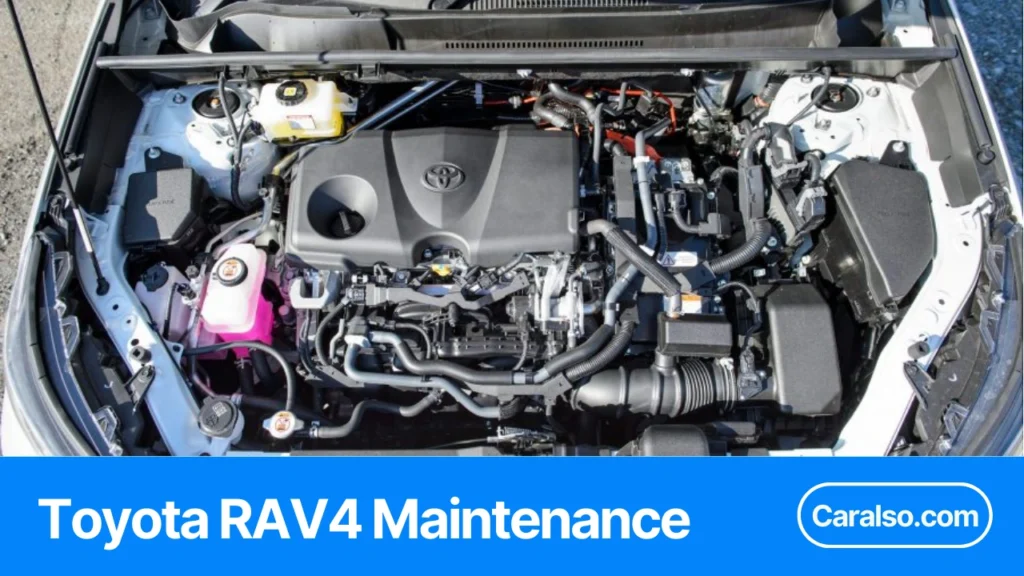
Toyota RAV4 Maintenance
Quick Maintenance Cheat Sheet
Quick Verdict
- Plan on a checkup every 5,000 miles or 6 months.
- Plan on oil and filter about every 10,000 miles or 12 months for most RAV4s on synthetic oil.
- If you do lots of short trips, heavy traffic idling, towing, or dusty roads, plan on more frequent oil changes.
Fast Schedule Snapshot
| When | What I Consider Non-Negotiable |
|---|---|
| Every 5,000 Miles Or 6 Months | Tire rotation, fluid checks, brake and tire inspection |
| Every 10,000 Miles Or 12 Months | Oil and filter, plus the 5,000-mile items |
| Every 30,000 Miles | Filters and deeper inspections, plus “catch-up” on wear items |
| Every 60,000 Miles | Bigger fluid decisions start showing up, especially on AWD and hard use |
Cost Snapshot
- Average annual repair and maintenance cost reported for the RAV4: 429 USD.
- Estimated maintenance and repairs in the first 10 years: about 6,005 USD.
How Often Does A Toyota RAV4 Need Maintenance?
I use one rule to keep it simple. Check it every 5,000 miles or 6 months, whichever comes first. Oil and filter is often every 10,000 miles or 12 months, but driving conditions can cut that in half.
The 5,000-Mile Rhythm
Every 5,000 miles is the backbone of RAV4 maintenance. Even when your oil interval is longer, this visit is still worth doing.
Here’s what I look at every 5,000 miles.
- Rotate tires. This is the big one. It slows uneven wear and keeps the ride smooth.
- Check tire pressure and tread. I want all four tires wearing evenly, especially on AWD.
- Inspect brakes. Pads, rotors, and any weird vibration.
- Check fluids. Engine oil level, coolant level, brake fluid level, washer fluid.
- Quick under-hood scan. Leaks, cracked hoses, loose clamps.
- Wipers and lights check. Cheap fixes that prevent expensive headaches later.
If you only do one “extra” thing, do the tire rotation. Most uneven tire wear problems start small. They show up as noise around 25 to 45 mph, or a steering wheel shake you swear came out of nowhere.
Oil Changes: Why You’ll See 5,000 And 10,000 Recommendations
This is where the internet gets loud.
A lot of RAV4s are set up for 10,000-mile oil changes with synthetic oil. But that does not delete the 5,000-mile service. Toyota still expects checkups at 5,000-mile intervals for rotations and inspections.
So why do some people still do 5,000-mile oil changes?
- Short trips. If most drives are under 5 miles, moisture and fuel dilution can build up faster.
- Heavy traffic. Lots of idling counts as harder use.
- Towing or roof loads. More load means more heat.
- Dusty roads. More dirt can end up where you do not want it.
- Extreme heat or cold. Oil works harder at the edges.
My practical approach is simple. If your driving is mostly highway and longer trips, 10,000 miles is often fine. If your driving is mostly short trips and traffic, I lean closer to 5,000 miles.
One more thing. Even if you follow 10,000-mile oil changes, I still check the oil level every 1,000 miles. It takes 60 seconds. It can save an engine.
Toyota RAV4 Maintenance Schedule By Mileage
I keep RAV4 maintenance simple. I follow the mileage. I also watch the months, because fluids and rubber age even if you only drive 4,000 miles a year.
This table is the quick plan I use for most late-model RAV4s. Your exact checklist can vary by year, engine, and drivetrain. So I treat this like a baseline and I confirm the fine print in the Maintenance Guide for the VIN.
| Mileage Or Time | Must-Do Items | Inspect Items | Notes For AWD And Hybrid |
|---|---|---|---|
| 5,000 Miles Or 6 Months | Rotate tires. Check and adjust fluid levels. Inspect wiper blades. | Visual brake check. Quick underbody check. | Hybrid: coolant checks can include inverter coolant. AWD: keep tire tread even across all 4 tires. |
| 10,000 Miles Or 12 Months | Replace engine oil and oil filter. Rotate tires. | Brakes, wipers, fluids, and basic leak checks. | If your RAV4 is set up for 10,000-mile oil changes, this is the “main” oil interval in normal driving. |
| 15,000 Miles Or 18 Months | Repeat the 5,000-mile checks. | Suspension and steering wear points get more attention here. Cooling stack checks can show up. | If your RAV4 is spec’d for 0W-16 and you did not use it at the last change, shorten the next oil interval. |
| 30,000 Miles Or 36 Months | Oil and filter. Cabin air filter. Engine air filter. Rotate tires. | Brake lines and hoses. Ball joints. Drive shaft boots. Exhaust. Fuel lines. Steering. Radiator and condenser. | AWD: transfer case fluid may be called out here. AWD: rear differential fluid is commonly inspected. |
| 60,000 Miles Or 72 Months | Oil and filter. Cabin air filter. Engine air filter. Rotate tires. | Drive belts. Cooling system checks. Deeper brake inspection. Broader leak inspection. | AWD: transfer case fluid may repeat. Some schedules add automatic transmission fluid only under special operating conditions. |
| 100,000 Miles Or 120 Months | Oil and filter. Rotate tires. | Standard inspection set plus a closer look at age-related rubber and cooling parts. | Engine coolant replacement often shows up around this point on many Toyota schedules. |
| 120,000 Miles Or 144 Months | Oil and filter. Replace spark plugs. Cabin air filter. Engine air filter. Rotate tires. | Same deeper inspection set as 60,000 miles. | AWD: transfer case fluid may repeat again. This is a common “big ticket” visit if you have been skipping filters and plugs. |
5,000 Miles Or 6 Months (Baseline Checklist)
This visit is not optional in my book. It keeps tire wear even and it catches small leaks before they turn into a 900 USD repair.
What I do at 5,000 miles.
- Tire rotation.
- Fluid level check.
- Wiper blade check.
- Quick brake look.
10,000 Miles Or 12 Months (Oil Plus The Basics)
This is the interval where most owners actually feel the benefit. Fresh oil. A clean filter. A tire rotation that keeps the steering smooth.
What I expect at 10,000 miles.
- Engine oil and oil filter.
- Tire rotation.
- Repeat the 5,000-mile inspection items.
15,000 Miles (Filters And Deeper Inspections)
This is where I slow down and look harder at wear points. If something is going to start clunking, squeaking, or leaking, it often starts showing clues around this range.
What I focus on.
- Repeat the 5,000-mile items.
- Suspension and steering inspection points.
- Cooling stack condition check if you drive in bugs, dust, or road salt.
30,000 Miles (Major Service Visit)
This is a real milestone. It is where filters and drivetrain checks start stacking up.
What I plan for at 30,000 miles.
- Oil and filter.
- Cabin air filter.
- Engine air filter.
- Tire rotation.
- A longer inspection list under the vehicle.
60,000 Miles (Repeat Major Checks Plus Fluid Decisions)
At 60,000 miles, the RAV4 is usually still in its prime. But it is also old enough that fluid strategy matters.
What I plan for at 60,000 miles.
- Oil and filter.
- Cabin and engine air filters.
- Tire rotation.
- Belt and cooling checks.
- Driveline inspection for seepage.
100,000 To 120,000 Miles (Plugs, Coolant, Aging Items)
This is where I stop guessing and I get strict about the checklist. Coolant age matters. Spark plugs age matters. Rubber hoses and boots matter.
What I plan for in this range.
- Coolant timing based on the Maintenance Guide for your model year.
- Spark plugs often land around 120,000 miles on many Toyota schedules.
- Keep doing the basics every 5,000 miles.
Special Operating Conditions (The Part Most Guides Don’t Explain Well)
This section is the difference between a clean-running RAV4 at 180,000 miles and a sludgy one at 110,000.
Toyota uses a simple idea. If the majority of your driving is “hard use,” you do extra services more often. If you only do it once a month, you usually do not.
What Counts As “Severe” For A RAV4
If you do one or more of these most weeks, I treat your RAV4 as special operating conditions.
- Dirt roads or dusty roads.
- Towing.
- Roof box or car-top carrier used often.
- Heavy loading, like tools, gear, or full passenger loads.
- Repeated trips under 5 miles when it is under 32°F or 0°C.
- Extensive idling or low-speed driving for long distances, like delivery work.
What Changes Under Special Operating Conditions
Here’s the practical version. The 5,000-mile visit becomes more than “just a tire rotation.”
Common add-ons when hard use is your normal.
- More frequent oil and oil filter replacement.
- Engine air filter inspections more often.
- Extra checks on steering and driveline boots.
- AWD driveline fluid work shows up earlier when you tow or haul.
Quick Severe-Use Table (Mini Table)
| Condition | What I Shorten | Why It Matters |
|---|---|---|
| Dusty Roads | Engine air filter checks. Oil interval if dust is constant. | Dust loads up filters fast. Dirty air can raise engine wear. |
| Towing Or Heavy Loading | Oil interval. AWD driveline fluids on a stricter plan. | Heat goes up. Fluid stress goes up. |
| Short Trips Under 5 Miles In Freezing Weather | Oil interval. | Moisture and fuel dilution build faster. |
| Delivery Work Or Lots Of Idling | Oil interval. Sometimes transmission fluid under certain schedules. | Low airflow and high idle hours stress fluids. |
My rule is simple. If special operating conditions describe most of your week, I follow the “extra items” list on purpose. If it describes 2 weekends a year, I do not.
RAV4 Hybrid Vs Gas Vs Prime Maintenance Differences
What’s The Same
Most of your real-world maintenance looks identical across all three.
- Tire rotation every 5,000 miles
- Oil and filter changes (Hybrid and Prime still have a gas engine)
- Engine air filter and cabin air filter replacement
- Brake inspections
- Wiper blades, washer fluid, bulbs, and basic chassis inspections
- Alignment checks when tires wear unevenly or the steering wheel is off-center
If you follow the factory schedule, you will not “miss” anything important just because you picked Hybrid or Prime.
What’s Different
Here’s what I actually see change when you move from Gas to Hybrid to Prime.
Brakes Wear Differently
Hybrid and Prime use regenerative braking. That means the electric motor does a lot of the slowing down. Your friction brakes get used less.
- Gas RAV4 front pads often get replaced around 30,000 to 40,000 miles.
- RAV4 Hybrid pads often go 70,000 to 100,000 miles.
One catch. Less brake use can mean more surface rust on rotors in salty or wet climates. I still want regular brake inspections. Toyota’s own schedule calls for a deeper brake inspection every 30,000 miles.
Hybrid And Prime Add High-Voltage Related Maintenance Items
This is not scary. It is just different.
- HEV battery cooling intake filter: Toyota includes it in the maintenance chart. It gets inspected and cleaned at certain intervals.
- Inverter coolant (if equipped): This is separate from engine coolant on electrified models.
Coolant Intervals Can Be Different
Toyota’s maintenance guide calls out these specific intervals:
- Engine coolant initial replacement at 100,000 miles or 120 months, then every 50,000 miles or 60 months.
- Inverter coolant initial replacement at 150,000 miles or 180 months, then every 50,000 miles or 60 months.
Prime-Specific Reality Checks
Prime is a plug-in hybrid, so it can run a lot of miles on electricity. That can reduce engine run time, but it does not delete the calendar.
- I still follow the time limit for oil changes. Oil ages even if mileage stays low.
- Tires can wear faster if you drive it like an EV. Extra weight plus instant torque shows up on tread life.
Long-Term Battery Considerations
This is the simple version I live by.
- Keep the battery cooling intake area clean, especially if you have pets.
- Don’t ignore warning lights. Hybrid cooling and charging issues are easy to diagnose early and expensive to ignore.
- Know the warranty. Toyota’s guide spells out longer coverage for the hybrid battery than the rest of the hybrid system.
Comparison Table
| Powertrain | Routine Maintenance | Likely Savings | Long-Term Watch Items |
|---|---|---|---|
| Gas RAV4 | Standard 5k tire rotations and inspections, oil service, filters | Baseline | Brake wear, normal cooling system service |
| RAV4 Hybrid | Same basics plus HEV battery cooling intake filter, inverter coolant intervals (if equipped) | Fewer brake jobs over the life of the vehicle | Battery cooling airflow, inverter coolant interval, rotor rust in salty climates |
| RAV4 Prime | Same as Hybrid, plus more “calendar-based” thinking because EV miles add up quietly | Brake wear can be very low, engine run time can be lower | Tire wear from weight and torque, battery cooling airflow, inverter coolant interval |
How Much Does Toyota RAV4 Maintenance Cost?
Most RAV4 owners I talk to land in a wide but predictable range. Plan on about $300 to $600 per year for normal maintenance once you are out of the free maintenance window. Big spikes happen when wear items stack up in the same year, like tires plus brakes, or when you hit major fluid service intervals. Over 10 years, third-party data puts total maintenance and repairs around the $6,000 mark, but your driving conditions and who does the work can move that number a lot.
What The Big Data Sources Report
Cost Snapshot
- Annual repair and maintenance average: $429 per year
- 10-year maintenance and repair estimate: about $6,005
- Major repair probability over 10 years: about 16.6%
I use these as budgeting anchors, not promises. Your zip code and your service habits matter more than any single national average.
Cost Per Service Interval
Here’s what you will actually pay for the common checkpoints. These are typical U.S. ranges. Dealer pricing tends to land at the high end because labor rates are higher. Independent shops usually land lower.
| Interval | Typical Services | Dealer Price Range | Independent Shop Range | DIY Potential |
|---|---|---|---|---|
| 5,000 Miles | Tire rotation, inspections | $30 to $50 | $20 to $35 | High. $0 if you rotate at home |
| 10,000 Miles | Oil and filter change, tire rotation, inspections | $100 to $180 | $85 to $160 | Medium. $35 to $80 for oil and filter if you DIY |
| 30,000 Miles | Cabin air filter, engine air filter, deeper brake check | $180 to $320 | $140 to $260 | High. Filters are easy on most RAV4s |
| 60,000 Miles | Same routine plus “condition-based” fluids (common add-ons) | $450 to $900 | $350 to $750 | Medium. Fluids are doable, but messy and tool-sensitive |
Notes I Use In Real Life
- Toyota’s schedule is inspection-heavy. That is why a cheap 5,000-mile visit can save you a big bill later.
- Some shops push transmission and AWD fluid changes early. Sometimes that makes sense. Sometimes it is upsell. I match it to towing, hills, heat, and how long I plan to keep the car.
Why Cost Estimates Disagree
I see three reasons.
- Some sources mix repairs and maintenance together. Others separate them.
- Some numbers assume dealer labor rates. Others assume independent shops.
- Some estimates include big wear items like tires and brakes. Others ignore them completely.
That is why I like to budget in intervals. It keeps surprises smaller.
Dealer Upsell Decoder
I like dealership techs for warranty work and software updates. I do not automatically buy “30k service” or “60k service” packages.
Here’s how I keep it simple.
- If the schedule says inspect, I pay for an inspection.
- If they want to replace something early, I ask for a reason I can measure.
- If they cannot show me a test result, I usually pass.
The 30k, 60k, And 90k Services People Overpay For
These are the add-ons I see most often in RAV4 quotes.
Fuel System Service (Fuel Induction)
This is common at 30,000 or 60,000 miles. It is not a routine Toyota requirement for most drivers. I consider it only if you have rough idle, misfires, or a real drivability complaint.
Throttle Body Cleaning
If the car idles fine and throttle response is normal, I skip it. If idle is unstable, I consider cleaning after basic diagnosis.
Transmission Flush
I almost never do a “flush” as a first move. I prefer a drain and fill. If a shop is selling a flush at 30,000 miles on a RAV4 with normal use, I ask why.
Coolant Flush At 30k Or 60k
Toyota long-life coolant intervals are usually much longer than 30,000 miles. I only do coolant early if there is contamination, overheating history, or the wrong coolant was added.
Brake Fluid Exchange
This is the one that can be real and still feel like an upsell. Brake fluid absorbs moisture over time. I approve it based on a brake fluid moisture test or time in service. A good trigger is 2 to 3 years if you plan to keep the vehicle long-term.
Alignment “Because It’s Time”
I do an alignment when I have a reason. Pulling, off-center wheel, uneven tire wear, or new tires.
Power Steering Fluid Flush
Most modern RAV4s use electric power steering. That means no power steering fluid. If you see this on a menu, stop and ask questions.
Service Package Translator Table
Use this table like a translator when you get a quote.
| Dealer Line Item | Is It Required Now | When It’s Justified | Fair Price Range | DIY Difficulty |
|---|---|---|---|---|
| Cabin Air Filter Replacement | Depends | Airflow drops. Smell. Dusty driving. Filter looks dark and packed. | $20 to $35 parts. $85 to $121 installed. | Easy |
| Engine Air Filter Replacement | Depends | Dirty filter. Reduced MPG. Dusty roads. Visible debris in the pleats. | $19 to $25 parts. $47 to $64 installed. | Easy |
| Fuel Injection Service (Fuel Induction) | Depends | Rough idle. Hesitation. Misfire codes after diagnosis. | $150 to $250 | Medium |
| Throttle Body Cleaning | Depends | Unstable idle. Sticky throttle feel. Carbon buildup confirmed. | $50 to $200 | Medium |
| Brake Fluid Exchange (Brake Bleed) | Depends | Moisture test fails. Dark fluid. 2 to 3 years in service. | $182 to $267 | Hard |
| Transmission Fluid Change (Drain And Fill) | Depends | Towing. High heat. Long ownership plan. Fluid looks or smells burnt. | $233 to $313 | Hard |
| Transmission “Flush” | Usually Skip | Only after diagnosis and only at a shop I trust. | $250 to $450 | Not DIY |
| Coolant Change | Depends | Schedule interval reached. Contamination. Overheat history. | $191 to $234 | Medium |
| Spark Plug Replacement | Yes At The Right Mileage | Schedule interval reached. Misfire. Hard starts. | $147 to $227 at many shops. Dealer prices can be higher. | Medium |
| Wheel Alignment | Depends | Pulling. Steering wheel off-center. Uneven wear. New tires. | $114 to $150 typical. $244 to $436 at some shops and dealers. | Not DIY |
| AWD Rear Differential Fluid (If Equipped) | Depends | Towing. Frequent hills. Long-term ownership. Some owners do it around 60,000 miles. | About $132 per service estimate | Hard |
| Transfer Case Fluid (If Equipped) | Depends | Same logic as rear diff on AWD. | About $111 per service estimate | Hard |
The 5 Questions I Ask Before Approving Extra Services
- What does the factory maintenance guide say at my mileage and months?
- Are you recommending replace or inspect?
- What test result are you using? Show me the printout or the measurement.
- If I decline today, what is the real risk in the next 5,000 miles?
- What is the exact part and fluid spec you will use?
If you ask those five questions, the quote usually gets shorter and cheaper fast.
DIY-Friendly RAV4 Maintenance You Can Do In 15 To 30 Minutes
I do a few quick jobs myself even when I use a shop for bigger work. It saves money and it keeps me honest about what the car actually needs.
Monthly 5-Minute Checks
This is the routine that prevents surprises.
- Tire pressure. Use the door-jamb sticker. Most RAV4s are around 33 to 36 psi. Confirm your exact number.
- Engine oil level. Check on level ground with the engine off for a few minutes.
- Coolant level. Check the reservoir when the engine is cold.
- Washer fluid. Refill before winter and before long trips.
- Lights. Brake lights and turn signals.
- Quick leak check. Look under the engine area after the car sits overnight.
Cabin Filter Swap And Engine Air Filter Check
These two are the easiest wins on a RAV4.
Cabin Air Filter
Most RAV4s keep it behind the glove box. I can do it in about 5 minutes.
- If airflow is weak on fan speed 4, I check it.
- If you drive dusty roads, I check it more often.
- A common parts price is about $20.
Shop pricing is usually much higher than the filter itself. That is why I do this one at home.
Engine Air Filter
This is usually a clip-open air box under the hood.
- I inspect it every oil change.
- If the pleats are dark and packed, I replace it.
- A common parts price is about $19.
If a shop wants to charge $60 for this job, I smile and do it later in my driveway.
Tire Rotation Basics And Why AWD Tread Matching Matters
If you rotate tires on time, you buy yourself tread life. You also reduce road noise.
My rules.
- Rotate every 5,000 miles.
- Use the same rotation pattern consistently.
- Recheck lug nut torque after 50 to 100 miles if you rotated at home.
- Many RAV4 wheel lug nuts torque to 76 ft-lbs. I still confirm for my year.
AWD Tire Matching
On AWD models, I try to keep all four tires close in tread depth.
- I aim for 2/32 to 4/32 max difference across the set.
- If one tire is damaged and the others are worn, I price out tire shaving or replacing in pairs.
That one habit can prevent drivetrain stress and it keeps the car feeling smooth.
Hybrid And Prime Pro Tip: Check The HV Battery Cooling Intake Filter
If you own a RAV4 Hybrid or Prime, this is worth doing.
- I inspect it regularly, especially if you have pets.
- Lint and hair can reduce airflow.
- Reduced airflow means higher battery temps.
It is a small task. It can prevent big headaches.
Maintenance “Required” Light And Reminders
I see this light scare people for no reason. Then I see other people ignore the wrong light. So I treat it like this.
What The Maintenance Light Usually Means (And What It Does Not Mean)
Most of the time, the “Maintenance Required” reminder is mileage-based.
It is usually tied to routine service. Oil. Tire rotation. Inspections.
It is not the same as a check engine light.
It is not a brake warning.
It is not a low oil pressure warning.
Here is the pattern I see on many Toyotas, including many RAV4 years.
- Around 4,500 miles after the last reset, it may flash at startup.
- Around 5,000 miles after the last reset, it can stay on steady.
If you see other warnings at the same time, I do not reset anything first. I check what the other light is. Then I scan codes if needed.
How To Reset The Maintenance Light (Quick Steps)
RAV4 reset steps depend on your dashboard. I use one of these two methods.
Method 1: Key Ignition With Trip Button (Common On Older RAV4s)
- Turn the key to ON. Do not start the engine.
- Set the display to Trip A or ODO, depending on your cluster.
- Turn the key to OFF.
- Press and hold the trip or odometer reset button.
- While holding the button, turn the key back to ON.
- Keep holding until the display counts down or shows zeros.
- Release the button. Start the car. Confirm the light is off.
Method 2: Multi-Information Display With Steering Wheel Buttons (Common On Newer RAV4s)
- Turn the car to ON. If you have push-button start, press Start without your foot on the brake.
- Use the steering wheel arrows to find the gear or settings icon on the display.
- Select Settings.
- Find Maintenance Reset or Scheduled Maintenance.
- Select Yes or OK to reset.
- Turn the car off. Start again. Confirm the message is gone.
If it will not reset, I do not keep clicking. I check that I am in the right screen. I also confirm the trip display is not on Trip B. Then I try once more.
If it still will not reset, I scan for codes. That is when a “maintenance” message might not be the normal reminder.
My Reminder Setup
This is how I keep it foolproof.
- I set a phone reminder for every 5,000 miles.
- I keep a maintenance log in the glove box.
- I save photos of receipts. I include the odometer in the photo.
That is it. Simple works.
RAV4 Maintenance Checklist (Copy And Paste + Printable Style)
I use this checklist the same way every time. I start with mileage. Then I match it to time.
Print it. Copy it. Paste it into Notes.
Every Visit (5,000 Miles Or 6 Months)
- Rotate tires.
- Check tire pressure.
- Inspect tire tread for uneven wear.
- Check engine oil level.
- Check coolant level when cold.
- Check brake fluid level.
- Inspect brakes for pad thickness and rotor condition.
- Check washer fluid.
- Check wipers.
- Quick look under the vehicle for leaks.
If you drive an AWD RAV4, add this.
- Check tire tread depth across all 4 tires. Keep them close.
If you drive a Hybrid or Prime, add this.
- Check that the battery cooling intake area is clear of lint and hair.
Every Year (Or Every 10,000 Miles)
I treat this as the “baseline annual service.”
- Replace engine oil and oil filter if due by mileage or time.
- Replace cabin air filter if airflow is weak or the filter is dirty.
- Inspect engine air filter. Replace if dirty.
- Inspect battery terminals for corrosion.
- Inspect belts and hoses for cracking.
- Inspect brake pads and rotors more carefully.
- Check alignment if the steering wheel is off-center or tires are wearing unevenly.
Every 30,000 Miles
This is where I stop relying on memory and I use a written list.
- Replace cabin air filter.
- Replace engine air filter.
- Inspect suspension and steering components.
- Inspect brake lines and hoses.
- Inspect CV boots and driveline boots.
- Inspect exhaust hangers and heat shields.
- Inspect cooling stack condition if you drive in dust, bugs, or road salt.
Every 60,000 Miles
This is the interval where fluid strategy starts to matter.
- Repeat the 30,000-mile checks.
- Decide on drivetrain fluids based on how you drive.
- If you tow, haul, or drive mountains often, I tighten the fluid plan.
AWD Add-On At 60,000 Miles (Common Decision Point)
- Transfer case fluid, if equipped.
- Rear differential fluid, if equipped.
Brake Fluid At 2 To 3 Years (Time-Based, Not Mileage)
- I approve it based on time and a moisture test, not a sales pitch.
Every 100,000 To 120,000 Miles
This is where age-based items stack up.
- Follow the coolant interval listed for your specific year and powertrain.
- Replace spark plugs if your schedule calls for it. Many RAV4 schedules land around 120,000 miles.
- Inspect coolant hoses, radiator cap, and any seepage around water pump area.
- Expect more rubber and gasket inspections.
Simple Maintenance Log Template
| Date | Odometer | Service Done | Parts And Fluid Spec | Shop Or DIY | Next Due |
|---|---|---|---|---|---|
| Oil + Filter | 0W-16 or 0W-20, filter part # | ||||
| Tire Rotation | Front to rear pattern | ||||
| Cabin Filter | Part # | ||||
| Engine Air Filter | Part # | ||||
| Brake Fluid | DOT 3, test result % | ||||
| Coolant | Toyota SLLC, mileage and date |
I fill in “Next Due” before I put the pen down. That one habit keeps maintenance from drifting.
FAQs
Do I Really Need RAV4 Service Every 5,000 Miles?
Yes. I treat 5,000 miles as the checkup rhythm.
Most of the time, the 5,000-mile visit is not “big service.”
It is usually tire rotation plus inspections.
Oil changes can be every 10,000 miles on many RAV4s using the required synthetic oil.
But the 5,000-mile visit still matters because tires and brakes do not care about oil life.
If you drive short trips, tow, idle a lot, or drive dusty roads, I tighten the plan.
That is when 5,000-mile oil changes can make sense.
How Often Should I Change Oil In A RAV4 With Synthetic?
For many Toyota vehicles that require synthetic oil, Toyota approves up to 10,000 miles or 12 months in normal use.
Here is how I decide in real life.
- Mostly highway and longer trips: I aim for 10,000 miles or 12 months.
- Mostly short trips under 5 miles, heavy traffic, towing, or dust: I aim for 5,000 miles or 6 months.
I also follow the oil spec on the cap and in the Maintenance Guide.
If your last shop used the wrong viscosity, I shorten the next interval.
What Is Included In The 30,000-Mile RAV4 Service?
This is where quotes start getting padded.
So I focus on the items that show up repeatedly in Toyota maintenance logs.
What I expect at 30,000 miles.
- Oil and filter if due by the schedule you are following
- Tire rotation
- Cabin air filter replacement
- Engine air filter replacement
- A deeper inspection under the vehicle, including boots, hoses, and brakes
If you have AWD, this is also when drivetrain items start showing up more often in the conversation.
I do not approve AWD fluids just because the number is 30,000.
I approve them based on how I drive and how long I plan to keep the RAV4.
Is RAV4 Maintenance Expensive?
For a compact SUV, it is usually not.
Here are the two numbers I use for budgeting.
- $429 per year average repair and maintenance cost
- About $6,005 total maintenance and repairs in the first 10 years
Your cost swings come from a few big-ticket categories.
- Tires
- Brakes
- Major fluid services if you pay dealer labor rates
- Repairs that happen when maintenance is ignored
If you rotate tires every 5,000 miles and stay ahead on fluids, you usually avoid the worst surprises.
RAV4 Hybrid Maintenance: Is It Cheaper Than Gas?
It can be. But not because the schedule is wildly different.
The biggest real-world savings is often brakes.
Regenerative braking does a lot of slowing. Pads can last longer.
The tradeoff is a few extra items.
- Battery cooling intake checks and cleaning
- Inverter coolant on some electrified setups
- More “don’t block airflow” habits if you carry pets or lots of cargo
My take.
If you are comparing gas vs Hybrid vs Prime, routine maintenance costs usually stay in the same neighborhood.
The bigger difference is fuel cost and how you drive.
Can I Service My RAV4 At An Independent Shop And Keep Warranty?
Yes, in general.
In the U.S., warranty law does not let a manufacturer force you to use the dealer for routine maintenance.
Here is how I protect myself.
- Follow the factory maintenance schedule for your mileage and months.
- Use parts and fluids that meet the Toyota spec.
- Keep receipts that show the date, mileage, and what was done.
- If you DIY, write the mileage and date on the receipt for oil and filters.
Toyota also states it will not deny a warranty claim solely because you do not have records.
But they can deny coverage if lack of maintenance caused the failure.
So I keep the paper trail anyway.
When Do I Replace Coolant And Spark Plugs On A RAV4?
It depends on model year and powertrain.
So I always confirm in the Maintenance Guide for the VIN.
That said, here is a common Toyota pattern I see in RAV4 maintenance logs.
- Engine coolant: first replacement around 100,000 miles or 120 months, then every 50,000 miles or 60 months
- Spark plugs: commonly around 120,000 miles or 144 months
If you buy a used RAV4 with unknown history, I check these items early.
Coolant and plugs are easy to verify with records. They are expensive to guess on.
Key Takeaways (For Skimmers)
- I plan on a checkup every 5,000 miles or 6 months. Tire rotation is the anchor.
- For many RAV4s on the required synthetic oil, oil and filter can be 10,000 miles or 12 months in normal driving.
- If you do short trips, towing, heavy idling, or dusty roads, I shorten oil intervals to 5,000 miles or 6 months.
- Budget around $429 per year on average, and about $6,005 across 10 years for maintenance and repairs.
- The fastest way to cut costs is consistent tire rotations, clean filters, and saying no to services that are not backed by tests or symptoms.
Sources
- Toyota ToyotaCare PDF (scheduled maintenance coverage)
- Galaxy Toyota: Toyota RAV4 Maintenance Schedule
- Anderson Toyota: Toyota RAV4 Maintenance Schedule (Includes Light Reset Info)
- RepairPal Estimator: Cabin Air Filter Replacement Cost (RAV4)
- Kelley Blue Book: Oil Change Cost Guidance

Hey there,
How is it going?
I’m Meraj Sarker. I am a Car Mechanic and a student of Automobile Restoration here in Florida, USA. I’ve been studying automotive for around 9 years now. So you can rely on my recommendation. For me, studying and getting knowledge about automobile it’s really fun and entertaining. I will help you to get solutions for your car through this website. If you need any help let me know.