
If you searched “Toyota RAV4 invoice price,” you are trying to set a real negotiating baseline.
That is exactly how I use invoice.
I treat it as the starting line.
Not the finish line.
Invoice is the dealer’s factory bill amount for a specific vehicle configuration.
It does not include your taxes, title, registration, dealer doc fee, or add-ons.
It may be shown with destination as a separate line, depending on the source.
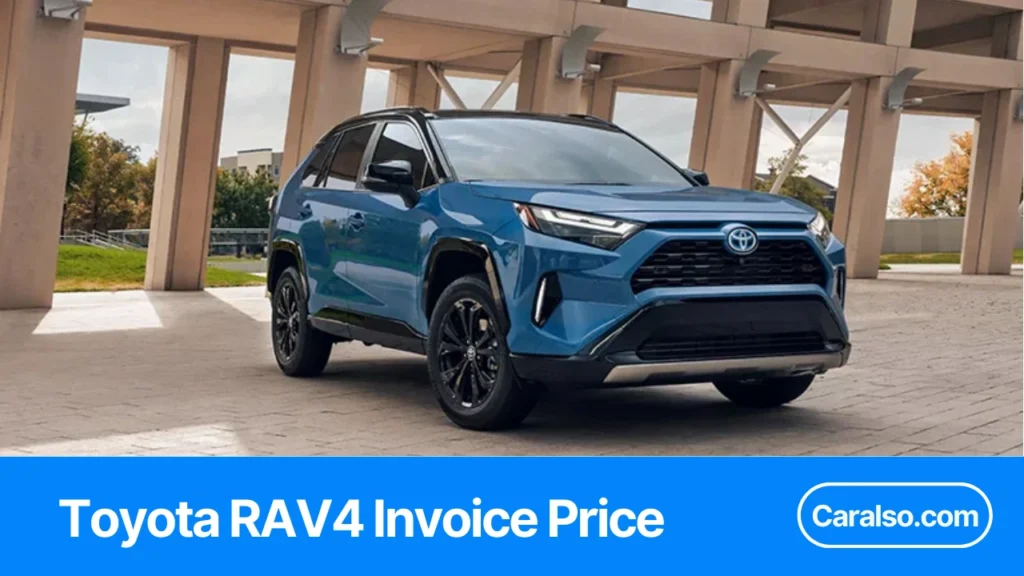
Toyota RAV4 Invoice Price
Quick Answer Box (Hero Asset)
2026 RAV4 invoice price range: $29,987 to $40,703
2026 RAV4 MSRP range (excluding destination): $31,900 to $43,300
Destination charge shown for 2026: $1,450
2026 MSRP range (including destination): $33,350 to $44,750
My fast negotiation baseline for 2026:
- Pick your exact trim and drivetrain in the table below.
- Use invoice plus destination as your “invoice with freight” number.
- Negotiate the selling price first. Then add taxes and fees.
Mini Range Table (2026)
| Item | Low | High |
|---|---|---|
| Invoice Price | $29,987 | $40,703 |
| MSRP (Excluding Destination) | $31,900 | $43,300 |
| MSRP (Including Destination) | $33,350 | $44,750 |
2026 Toyota RAV4 Invoice Price By Trim
Quick Table
Notes I follow when I use this table:
- Invoice and MSRP below are shown excluding destination.
- Destination is listed separately.
- MSRP including destination is MSRP plus $1,450.
- Spread is MSRP minus invoice. It shows the factory price gap before destination.
| Trim And Drivetrain | Invoice Price | MSRP (Excl. Destination) | Destination | MSRP (Incl. Destination) | MSRP Minus Invoice |
|---|---|---|---|---|---|
| LE (FWD) | $29,987 | $31,900 | $1,450 | $33,350 | $1,913 |
| LE (AWD) | $31,303 | $33,300 | $1,450 | $34,750 | $1,997 |
| SE (FWD) | $32,619 | $34,700 | $1,450 | $36,150 | $2,081 |
| SE (AWD) | $33,935 | $36,100 | $1,450 | $37,550 | $2,165 |
| XLE Premium (FWD) | $33,935 | $36,100 | $1,450 | $37,550 | $2,165 |
| XLE Premium (AWD) | $35,251 | $37,500 | $1,450 | $38,950 | $2,249 |
| Woodland (AWD) | $37,507 | $39,900 | $1,450 | $41,350 | $2,393 |
| XSE (AWD) | $38,823 | $41,300 | $1,450 | $42,750 | $2,477 |
| Limited (AWD) | $40,703 | $43,300 | $1,450 | $44,750 | $2,597 |
What Changed For 2026 (And Why Some Prices Look “Off”)
First, 2026 is a full reset year.
The lineup is hybrid-focused and the trims are structured differently than older years.
Second, sources disagree on one annoying thing.
Some show MSRP without destination.
Others quote MSRP including destination.
Here is how I keep it clean:
- MSRP excluding destination is the trim sticker price before freight.
- Destination is a mandatory freight charge. It gets added either way.
- If you want apples-to-apples comparisons, always compare invoice and MSRP on the same basis, then add destination once.
If a dealer says “that’s below invoice,” I ask one question.
Are you talking about invoice before destination, or invoice with destination.
2025 Toyota RAV4 Invoice Price By Trim
I treat 2025 like this.
Invoice and MSRP below exclude destination.
Destination is $1,450.
MSRP including destination is MSRP plus $1,450.
Gas Trims Table
| Trim And Drivetrain | Invoice Price | MSRP (Excl. Destination) | Destination | MSRP (Incl. Destination) | MSRP Minus Invoice |
|---|---|---|---|---|---|
| LE (FWD) | $27,863 | $29,800 | $1,450 | $31,250 | $1,937 |
| LE (AWD) | $29,172 | $31,200 | $1,450 | $32,650 | $2,028 |
| XLE (FWD) | $29,275 | $31,310 | $1,450 | $32,760 | $2,035 |
| XLE (AWD) | $30,584 | $32,710 | $1,450 | $34,160 | $2,126 |
| XLE Premium (FWD) | $31,977 | $34,200 | $1,450 | $35,650 | $2,223 |
| XLE Premium (AWD) | $33,286 | $35,600 | $1,450 | $37,050 | $2,314 |
| Limited (FWD) | $35,629 | $38,105 | $1,450 | $39,555 | $2,476 |
| Limited (AWD) | $36,938 | $39,505 | $1,450 | $40,955 | $2,567 |
Hybrid Trims Table
All 2025 RAV4 Hybrid trims below are listed as AWD.
| Trim And Drivetrain | Invoice Price | MSRP (Excl. Destination) | Destination | MSRP (Incl. Destination) | MSRP Minus Invoice |
|---|---|---|---|---|---|
| LE (AWD) | $30,880 | $32,850 | $1,450 | $34,300 | $1,970 |
| XLE (AWD) | $32,298 | $34,360 | $1,450 | $35,810 | $2,062 |
| SE (AWD) | $33,412 | $35,545 | $1,450 | $36,995 | $2,133 |
| Woodland Edition (AWD) | $33,906 | $36,070 | $1,450 | $37,520 | $2,164 |
| XLE Premium (AWD) | $35,015 | $37,250 | $1,450 | $38,700 | $2,235 |
| XSE (AWD) | $36,200 | $38,510 | $1,450 | $39,960 | $2,310 |
| Limited (AWD) | $38,686 | $41,155 | $1,450 | $42,605 | $2,469 |
Plug-In Hybrid Table
This is the 2025 RAV4 Plug-In Hybrid pricing.
| Trim And Drivetrain | Invoice Price | MSRP (Excl. Destination) | Destination | MSRP (Incl. Destination) | MSRP Minus Invoice |
|---|---|---|---|---|---|
| SE (AWD) | $42,125 | $44,815 | $1,450 | $46,265 | $2,690 |
| XSE (AWD) | $45,764 | $48,685 | $1,450 | $50,135 | $2,921 |
2024 Toyota RAV4 Invoice Price By Trim
I handle 2024 the same way.
Invoice and MSRP below exclude destination.
Destination is $1,395.
MSRP including destination is MSRP plus $1,395.
Gas Trims Table
| Trim And Drivetrain | Invoice Price | MSRP (Excl. Destination) | Destination | MSRP (Incl. Destination) | MSRP Minus Invoice |
|---|---|---|---|---|---|
| LE (FWD) | $26,811 | $28,675 | $1,395 | $30,070 | $1,864 |
| LE (AWD) | $28,120 | $30,075 | $1,395 | $31,470 | $1,955 |
| XLE (FWD) | $28,224 | $30,185 | $1,395 | $31,580 | $1,961 |
| XLE (AWD) | $29,533 | $31,585 | $1,395 | $32,980 | $2,052 |
| XLE Premium (FWD) | $30,926 | $33,075 | $1,395 | $34,470 | $2,149 |
| XLE Premium (AWD) | $32,235 | $34,475 | $1,395 | $35,870 | $2,240 |
| Adventure (AWD) | $32,603 | $34,870 | $1,395 | $36,265 | $2,267 |
| TRD Off-Road (AWD) | $35,804 | $38,295 | $1,395 | $39,690 | $2,491 |
| Limited (FWD) | $34,577 | $36,980 | $1,395 | $38,375 | $2,403 |
| Limited (AWD) | $35,886 | $38,380 | $1,395 | $39,775 | $2,494 |
Hybrid Trims Table
All 2024 RAV4 Hybrid trims below are listed as AWD.
| Trim And Drivetrain | Invoice Price | MSRP (Excl. Destination) | Destination | MSRP (Incl. Destination) | MSRP Minus Invoice |
|---|---|---|---|---|---|
| LE (AWD) | $29,822 | $31,725 | $1,395 | $33,120 | $1,903 |
| XLE (AWD) | $31,241 | $33,235 | $1,395 | $34,630 | $1,994 |
| SE (AWD) | $32,354 | $34,420 | $1,395 | $35,815 | $2,066 |
| Woodland Edition (AWD) | $32,849 | $34,945 | $1,395 | $36,340 | $2,096 |
| XLE Premium (AWD) | $33,958 | $36,125 | $1,395 | $37,520 | $2,167 |
| XSE (AWD) | $35,143 | $37,385 | $1,395 | $38,780 | $2,242 |
| Limited (AWD) | $37,628 | $40,030 | $1,395 | $41,425 | $2,402 |
Plug-In Hybrid Table
For 2024, Toyota labels the plug-in as RAV4 Prime.
| Trim And Drivetrain | Invoice Price | MSRP (Excl. Destination) | Destination | MSRP (Incl. Destination) | MSRP Minus Invoice |
|---|---|---|---|---|---|
| SE (AWD) | $41,068 | $43,690 | $1,395 | $45,085 | $2,622 |
| XSE (AWD) | $44,706 | $47,560 | $1,395 | $48,955 | $2,854 |
What Changed Vs 2025 And 2026
- Destination went from $1,395 (2024) to $1,450 (2025 and 2026).
- 2024 gas invoice range: $26,811 to $35,886. 2025 gas invoice range: $27,863 to $36,938.
- 2024 gas MSRP range: $28,675 to $38,380. 2025 gas MSRP range: $29,800 to $39,505.
- 2026 is the big pivot year. Base MSRP range is $31,900 to $43,300, and invoice range is $29,987 to $40,703.
- The plug-in name shifts in common listings. 2024 shows “RAV4 Prime.” 2025 often shows “RAV4 Plug-In Hybrid.”
MSRP, Invoice, And Suggested Price Snapshot (2024)
This is the simple view many buyers like.
MSRP and invoice below are shown with destination and typical options.
Suggested price is a market-based target, not a fixed number.
| Trim | MSRP | Invoice Price | Suggested Price |
|---|---|---|---|
| LE | $30,025 | $28,161 | $26,925 |
| XLE | $31,535 | $29,574 | $29,012 |
| XLE Premium | $34,425 | $32,276 | $30,832 |
| Adventure | $36,220 | $33,953 | $32,385 |
| Limited | $38,330 | $35,927 | $34,267 |
| TRD Off-Road | $39,645 | $37,154 | $35,422 |
What “Invoice Price” Means (And What It Doesn’t)
Definition
Invoice price is what the manufacturer bills the dealer for a specific vehicle.
It is tied to a trim, drivetrain, and factory options.
It is a benchmark for negotiation. It is not your final cost.
Invoice Vs MSRP
Here is how I separate them when I negotiate.
- Invoice is the dealer’s factory bill amount.
- MSRP is the window sticker price set by the manufacturer.
- Invoice is usually lower than MSRP.
- MSRP is what many dealers anchor negotiations to.
- Neither number includes your tax, title, registration, or dealer doc fee.
- Both numbers can be shown with destination separated or included.
Does Invoice Include Destination
Yes on the real factory invoice.
Destination is typically a line item on the dealer invoice.
But published “invoice price” tables can go either way.
Some list invoice without destination.
Some roll destination into invoice.
So I do one quick check every time.
I look for a separate destination line in the table.
If it is listed, I add it once.
If it is not listed, I assume it is already included and I confirm.
Why Invoice Does Not Equal Dealer Cost
Invoice is the dealer’s paper cost.
Real net cost can be lower.
Here is why.
- Holdback. This is money the manufacturer pays back to the dealer after the sale. It is often a percentage of MSRP.
- Dealer cash and volume bonuses. These are manufacturer to dealer incentives that do not always show on consumer pricing pages.
- Floorplan assistance. This helps cover interest on inventory.
- Regional advertising assessments. You might see this as a separate line on a deal sheet.
- Dealer add-ons. These are not part of invoice. They are dealer profit items.
Some pricing guides estimate “true dealer cost” by taking invoice, adding destination, then subtracting holdback.
That can be useful.
It is still an estimate.
You do not see the dealer’s full statement.
When a dealer says “we are at invoice,” I do not stop.
I ask for an itemized breakdown.
I separate selling price from fees and add-ons.
The Invoice-To-Offer Method (Simple Math That Works)
I use the same method every time.
It keeps the conversation clean.
It also makes quotes comparable across dealers.
Step 1: Start With The Right Base Number
Use invoice as your base.
Then add the mandatory pieces.
Base Formula I Use
- Invoice With Destination = Invoice + Destination
- Invoice With Destination And Options = Invoice + Destination + Options Invoice
If you do not know the option invoice, keep it simple.
Use invoice plus destination for the trim.
Then negotiate add-ons and accessories separately.
Quick Example Using 2026 RAV4 LE FWD
- Invoice: $29,987
- Destination: $1,450
- Invoice With Destination: $31,437
That $31,437 number is the baseline I build from.
It is not OTD.
It is the selling price baseline.
Step 2: Adjust For Incentives And Market Reality
This is where most people get stuck.
Invoice is a number.
The market is a moving target.
Incentive Checklist I Always Run
- Customer cash rebate
- Lease cash
- Special APR offers
- Loyalty offers
- Conquest offers
- Military or college programs
- Regional incentives
- Dealer cash (manufacturer to dealer)
Two rules I follow.
- Incentives stack differently by program. Some are lease only.
- Incentives vary by ZIP code and month.
Why “Below Invoice” Deals Vary By Region
- Incentives can be higher in one region than another.
- Supply can be tight in one city and normal in another.
- Dealers can have different allocation and volume targets.
So I do not chase a magic number.
I chase a clean deal sheet.
Selling price first. Fees second. Add-ons last.
Step 3: Convert To OTD
OTD is what matters.
It is also where the tricks show up.
OTD Formula I Use
- OTD = Selling Price + Doc Fee + Taxes + Title/Registration + Government Fees + Dealer Add-Ons You Accept
Three things I verify on every quote.
- Selling price is not the monthly payment.
- Doc fee is listed as one line item.
- Add-ons are optional and itemized.
A Simple Decline Script For Add-Ons
“Please remove all add-ons and re-quote.
I only want the factory vehicle and mandatory fees.
If an item is required, show me where it is required in writing.”
Then I re-check the numbers.
If the price moves $800 after I decline add-ons, that was not a mandatory cost.
Step 4: Your Target Offer Range (Example Ranges)
I set my target range off invoice with destination.
Then I adjust based on incentives and local supply.
Here are the ranges I use as a starting point.
Conservative Offer
- Invoice With Destination + $500 to + $1,500
Best when inventory is tight.
Normal Offer
- Invoice With Destination – $500 to + $500
Best when supply is normal and incentives exist.
Aggressive Offer
- Invoice With Destination – $1,500 to – $500
Best when incentives are strong and dealers are competing.
One more shortcut I use.
I look at the MSRP minus invoice spread in the trim table.
If the spread is around $2,000, the margin is not huge on paper.
That tells me to focus harder on add-ons and fees.
The “Real Deal Sheet” Section (Your Differentiation)
I do not negotiate in vibes.
I negotiate on a line-item sheet.
If a dealer will not send a full breakdown, I move on.
A clean deal is easy to read.
Below are 3 real-world style examples.
These are templates.
The math is what matters.
Example 1: Clean Quote (What Good Looks Like)
Everything is itemized.
No mystery bundles.
No “required” add-ons.
| Line Item | Amount |
|---|---|
| Vehicle Selling Price | $37,550 |
| Destination | $1,450 |
| Dealer Doc Fee | $299 |
| Sales Tax (Varies) | $2,430 |
| Title And Registration (Varies) | $410 |
| Total Out The Door | $42,139 |
What I like here:
- Selling price is separate from destination.
- Doc fee is 1 line.
- Taxes and government fees are separated.
- No add-ons.
What I do next:
- I ask for the VIN or stock number.
- I confirm no port-installed accessories were added later.
- I confirm the selling price does not require a trade or financing.
Example 2: Add-On Stuffed Quote (How To Remove $X)
This is the most common mess I see.
The selling price looks fine.
Then the add-ons hit.
| Line Item | Amount |
|---|---|
| Vehicle Selling Price | $37,950 |
| Destination | $1,450 |
| Dealer Doc Fee | $299 |
| Paint Protection Package | $1,295 |
| Nitrogen Tires | $199 |
| Window Tint | $499 |
| VIN Etching | $299 |
| Wheel Locks | $189 |
| “Theft Protection” | $699 |
| Sales Tax (Varies) | $2,650 |
| Title And Registration (Varies) | $410 |
| Total Out The Door | $45,839 |
Add-ons total in this example:
$3,180
How I remove $3,180 in 60 seconds:
- I ask which add-ons are optional.
- I tell them to remove all optional add-ons and re-quote.
- I ask for a new OTD number with only mandatory fees.
If they say an add-on is required, I ask for proof in writing.
Most of the time, it disappears.
Example 3: Low Price But High Fees (The Trap)
This one is sneaky.
The selling price looks lower than everyone else.
The fees make it worse.
| Line Item | Amount |
|---|---|
| Vehicle Selling Price | $36,900 |
| Destination | $1,450 |
| Dealer Doc Fee | $899 |
| “Dealer Prep” | $695 |
| “Market Fee” | $995 |
| Accessories Bundle | $1,250 |
| Sales Tax (Varies) | $2,520 |
| Title And Registration (Varies) | $410 |
| Total Out The Door | $45,119 |
This quote “wins” on selling price.
It loses on total cost.
How I spot it fast:
- I compare OTD, not selling price.
- I scan for non-government fees that look like pure profit.
Red Flag Fees Checklist
When I see these, I slow down and ask questions.
- Market adjustment
- Dealer prep
- Reconditioning on a new car
- Accessories bundle with no item list
- Protection package with no warranty terms
- Nitrogen tires
- VIN etching
- Theft protection subscriptions
- “Required” tint
- “Required” paint protection
- High doc fee with no offset on price
One rule keeps me safe.
If it is not a government fee and not on the factory sticker, it is negotiable.
Get The Exact Invoice For Your RAV4 (VIN-Based)
Trim tables are the starting point.
The VIN is the finish line.
If you want the exact invoice for the exact vehicle you are buying, you need the VIN or a stock number.
Options change invoice.
Port-installed accessories change invoice.
Region and distribution items can change the dealer worksheet.
Why VIN Matters
The VIN ties to the exact build.
It tells me:
- The exact trim and drivetrain
- The factory option packages
- The installed equipment list
- The original window sticker configuration
That matters because “invoice price” on pricing sites is usually a trim estimate.
Your specific VIN can be higher than the trim baseline if it has packages and accessories.
What To Ask The Dealer For (Itemized Buyer’s Order)
I ask for an itemized buyer’s order or purchase agreement before I drive in.
I want it emailed as a PDF.
I ask for these line items, in this order:
- VIN and stock number
- MSRP and destination listed separately
- Selling price listed separately
- Factory options and packages with prices
- Port-installed accessories with prices
- Dealer doc fee
- Sales tax line
- Title and registration line
- Any dealer add-ons, each as a separate line
- Total out the door price
- A statement that the quote is valid without mandatory add-ons
If they cannot itemize, I assume the deal will change in the finance office.
I do not play that game.
Email Template That Gets 3 Comparable Quotes Fast
Subject: Itemized OTD Quote Request For RAV4 [Trim] [ZIP]
Hi [Name],
I am buying a new Toyota RAV4 this week.
Please email me an itemized out-the-door quote.
Vehicle: RAV4 [Year] [Trim] [FWD or AWD]
Color: [Color]
VIN or Stock Number: [If you have it]
Please include these line items:
- Selling price
- Destination
- Doc fee
- Sales tax
- Title and registration
- Any accessories or add-ons listed separately
- Total out the door price
Please confirm the quote does not require add-ons, trade-in, or dealer financing.
If any item is required, please state why in writing.
Thank you,
[Your Name]
[Phone Number]
I send that to 3 dealers.
Then I pick the cleanest sheet, not the friendliest phone call.
FAQs
What Is The Invoice Price Of A Toyota RAV4?
Invoice price is the manufacturer billing amount to the dealer for that trim and configuration.
It is a negotiation baseline.
It is not your out-the-door total.
Is Invoice Price The Dealer’s Cost?
Not always.
Invoice is the paper cost.
The dealer can have holdback, incentives, and bonuses that reduce net cost.
How Much Below Invoice Can I Negotiate?
It depends on supply and incentives in your ZIP code.
When incentives are strong, below-invoice deals are possible.
When inventory is tight, you may land at invoice plus a small buffer.
What Fees Are Legit Vs Junk Fees?
Legit fees are usually government charges and clearly disclosed processing items like a doc fee.
Junk fees are vague dealer fees that do not map to a required service.
If it is not a government fee and not on the factory sticker, I treat it as negotiable.
Does Invoice Include Destination?
On the actual factory invoice, destination is typically a line item.
On public pricing tables, destination may be separate or already included.
I confirm which one it is, then I add destination once.
Should I Negotiate On OTD Or Selling Price?
I negotiate selling price first.
Then I negotiate OTD to catch fee games.
If you only talk monthly payment, you lose control of the math.
Sources

Hey there,
How is it going?
I’m Meraj Sarker. I am a Car Mechanic and a student of Automobile Restoration here in Florida, USA. I’ve been studying automotive for around 9 years now. So you can rely on my recommendation. For me, studying and getting knowledge about automobile it’s really fun and entertaining. I will help you to get solutions for your car through this website. If you need any help let me know.