
I spend a lot of time around RAV4 Hybrids. I like them because they are efficient, practical, and usually trouble free. Over the 2016 to 2025 run, the big story is not constant breakdowns, but a few very specific problem patterns that keep coming up.
In plain terms, the RAV4 Hybrid is generally more reliable than many compact SUVs. The catch is that some model years have known quirks with fuel tanks, high voltage cabling, roof leaks, 12 volt batteries, and more recently digital displays. The good news is that most of these problems have clear fixes, and several are covered by recalls or Toyota service bulletins so owners do not always pay out of pocket.
Quick Answer: Are Toyota RAV4 Hybrids Problematic?
Overall, I would not call the RAV4 Hybrid a problem car. From 2016 to 2025 it has fewer serious mechanical failures than many rivals. The main trouble spike is with 2019 to 2021 models, where you see more complaints about fuel tank range, cable corrosion, water leaks, and 12 volt battery drain. Newer models shift the risk toward software and digital display issues rather than engine or hybrid system failures.
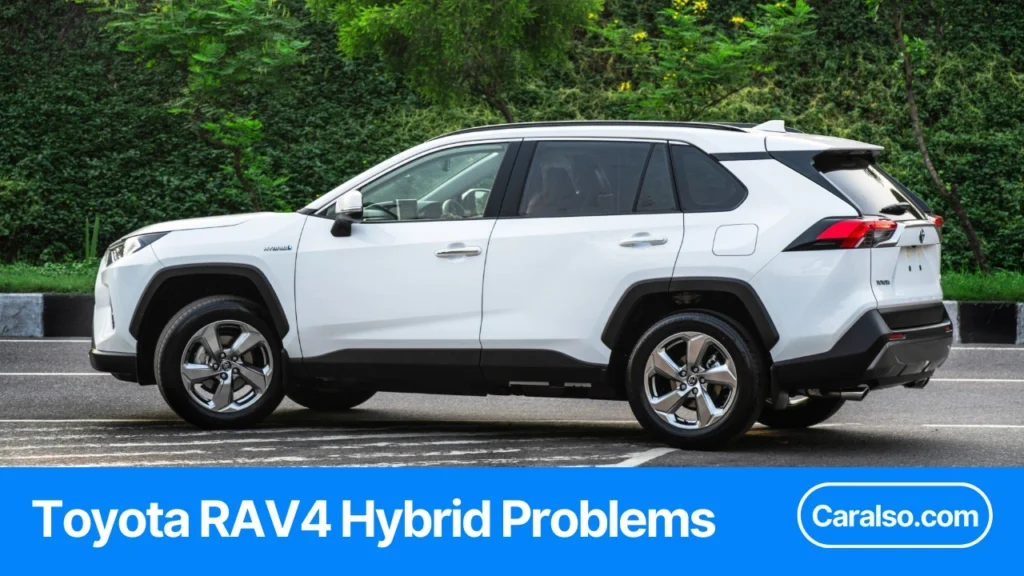
Toyota RAV4 Hybrid Problems
RAV4 Hybrid Problem Snapshot (2016–2025)
| Question | Short Answer |
|---|---|
| Are RAV4 Hybrids generally reliable | Yes. Most owners see normal wear, not constant major failures |
| Worst years for annoying problems | 2019 to 2021. Fuel tank, leaks, wiring, and 12 volt battery issues |
| Safer bets on the used market | 2016 to 2018 and 2022 onward with full service and recall history |
| Biggest single complaint pattern | Fuel tank not filling to expected capacity on some 2019 to 2021 Hybrids |
| Newest problem trend | Digital instrument display that can start up blank on some 2023 to 2025 |
| How often the hybrid battery itself fails | Rarely, based on current reports. Most issues involve wiring or 12 volt |
| Can recalls and TSBs fix many of these | Yes. Several key problems have official fixes that dealers can apply |
Top Toyota RAV4 Hybrid Problems In One Glance
Here are the issues I see most often talked about or diagnosed on 2016 to 2025 RAV4 Hybrids:
- Fuel tank will not fill fully and range is lower than expected on many 2019 to 2021 models.
- Rear motor high voltage wiring and connectors that can corrode, especially in salty winter regions, mostly on early 5th generation Hybrids.
- 12 volt battery drain that leaves the car dead after sitting a few days, often tied to the DCM communication module on some 2020 and 2021 vehicles.
- Roof rail and A pillar leaks on many 2019 to 2021 RAV4 Hybrids, with water staining the headliner or A pillar trim.
- Brake feel complaints, including grabby or inconsistent pedal response, and isolated booster or ABS related issues.
- Extra cabin noise, rattles, and harshness on rough roads, reported across several years but most often on 5th generation models.
- Digital instrument cluster or panel display that can start up blank on some 2023 to 2025 RAV4 models, including Hybrids.
In the next sections of the guide I will break these down by model year, explain how serious each problem really is, and show you what I would check before buying or keeping a RAV4 Hybrid long term.
Most Common Toyota RAV4 Hybrid Problems (At A Glance)
When someone asks me what actually goes wrong with a RAV4 Hybrid, I do not start with the engine or the big battery. The repeat stories I see are about the fuel tank, rear motor wiring, water leaks, 12 volt batteries, and now the digital display on newer models. The hybrid system itself is usually not the villain.
Problems Table – Issue, Years, Severity, Coverage
| Problem | Main Model Years | System | Typical Severity | Recall / TSB? | Notes |
|---|---|---|---|---|---|
| Fuel Tank Will Not Fill Fully | 2019 to 2021 | Fuel system | Annoying to major | TSB / support | Often fixed with new tank and sender |
| Rear Motor Wiring / Cable Corrosion | 2019 to 2021 | Hybrid drive | Major if ignored | TSB / warranty ext. in some markets | Can disable rear motor, worse with road salt |
| 12 Volt Battery Drain / Dead Battery | 2019 to 2022 | Electrical / DCM | Mild to moderate | TSB on DCM | DCM module can stay awake and drain battery |
| Roof Rail / A Pillar Water Leaks | 2019 to 2021 | Body | Mild to major over time | TSB / CSP | Can stain headliner and reach wiring or airbags |
| Brake Feel / Booster / ABS Issues | 2018 to 2021 | Braking | Moderate | Some recalls | Spongy or grabby feel, rare booster faults |
| Display / Instrument Cluster Blank At Start | 2023 to 2025 | Instruments | Safety related | Recall | Digital cluster can boot up blank |
| Hybrid System Faults / Limp Mode | Sporadic | High voltage | Rare but serious | Case by case | Usually tied to overheating or sensor faults |
Short Description Of Each Common Problem
Fuel Tank Will Not Fill Fully
On many 2019 to 2021 RAV4 Hybrids the fuel tank simply does not take the full rated amount. You stop the pump and see only 8 to 10 gallons even when the gauge was near empty. That cuts real range by roughly 100 to 150 miles. Toyota issued a tank and sender update on affected vehicles and also settled a class action so many owners can get support for the fix.
From my point of view this is annoying more than dangerous, but it does matter. If a 14.5 gallon tank only gives you 10 gallons, that is a 31 percent loss of usable capacity. If the car still has the original tank and is out of coverage, I treat that as a negotiation point or a reason to keep shopping.
Rear Motor Wiring And Cable Corrosion
Fifth generation RAV4 Hybrids use an electric rear axle with a high voltage cable and connector. In salty climates that connector can corrode badly. When corrosion chews through the contact, the rear motor can shut down and the car may not start or may lose all wheel drive.
I treat this as a serious problem because repair can run into thousands. In some regions Toyota has extended coverage on the cable and there are ongoing legal cases, but not every owner gets goodwill. I always tell people in heavy salt zones to assume that connector needs inspection and long term protection with careful cleaning and corrosion inhibitor.
12 Volt Battery Drain And DCM Issues
The hybrid traction battery is not the usual starting problem. The small 12 volt battery is. On quite a few 2019 to 2022 RAV4 Hybrids the car will sit for one or two days and then the 12 volt is flat. In many cases the root cause is the DCM communication module that does not go to sleep and keeps pulling current.
The good news is that Toyota released software updates and procedures for the DCM. If the firmware is current and the battery is healthy, most owners do not see repeat failures. When I shop a used RAV4 Hybrid I ask the seller directly about any no start events and I check for recent DCM software work on the service history.
Roof Rail And A Pillar Water Leaks
On many 2019 to 2021 RAV4s, including Hybrids, the clips and seals under the roof rails can let water into the roof structure. The water then runs down the A pillars and into the cabin. Owners often first notice light brown stains on the headliner or damp carpet at the front footwells.
I do not ignore this. Over time leaks can corrode hidden wiring, affect airbag areas, and grow mold. Toyota has a bulletin that reworks the clips and gaskets and in some cases they clean or replace the headliner under a customer support program. When I inspect a car I always run my hand along the top of the A pillar trim and check the floors under the mats for any sign of past leaks.
Brake Feel, Booster, And ABS Complaints
RAV4 Hybrids blend regenerative and friction braking, so the pedal feel is different from a non hybrid. Some owners dislike the grabby or inconsistent feel. On top of that, there have been isolated cases of booster or ABS related problems and related recalls in some markets and years.
When I test drive one I do several medium stops in a row. The pedal should feel consistent and the hand off between regen and normal braking should not surprise you. Any warning lights or strange noises from the booster area are a reason to have a dealer scan the system and check for open recalls before you sign anything.
Display Or Instrument Cluster Going Blank
Newer RAV4s with the 12.3 inch digital cluster can have the whole display stay blank at startup. You get no speed readout and no warning icons. Toyota has now recalled hundreds of thousands of vehicles across several models and years, including 2023 to 2025 RAV4 and RAV4 Hybrid, for this software related issue. Dealers update or replace the cluster at no charge.
If I owned one of these, I would book the recall even if the cluster has not failed yet. It is not a wear item. It is logic in the cluster that needs a fix.
Hybrid System Faults And Limp Mode
Actual high voltage battery failures on RAV4 Hybrids are still rare compared to the volume on the road. What I see more often are isolated cases of hybrid warnings or limp mode when the system detects overheating or a serious fault. Police testing in Australia, for example, saw some RAV4 Hybrids enter limp mode to protect the system during extreme pursuit style use.
For a normal driver this is not something I lose sleep over, but it is not something to ignore either. Any hybrid warning light should be scanned quickly. As long as the car has regular coolant service, good airflow, and clean hybrid related filters, most owners never see this kind of problem.
RAV4 Hybrid Problems By Model Year (2016 To 2025)
Now I will map all of that to the actual years. This is where the patterns become clear. You can see how 2019 to 2021 stand out, while 2016 to 2018 and 2022 onward look calmer in the data and in real world stories.
Year By Year Problem Snapshot
| Model Year | Generation | Headline Verdict | Main Problem Themes | Notes For Buyers |
|---|---|---|---|---|
| 2016 | 4th gen | Early hybrid quirks | Some hybrid warnings, 12v and sensor issues, a few leaks | Good if serviced and recalls done |
| 2017 | 4th gen | Mostly solid | Occasional brakes and hybrid system alarms, minor leaks | Low complaint volume but still check history |
| 2018 | 4th gen | Mostly solid | Similar to 2017, plus general RAV4 brake and trim issues | Late build 2018 can be nice value |
| 2019 | 5th gen | Caution | Fuel tank range, cable corrosion, roof leaks, early 12v drain | Only consider cars with documented tank and leak fixes |
| 2020 | 5th gen | Caution | Fuel tank, DCM related 12v drain, cable corrosion, noise | Strong car once TSBs are done |
| 2021 | 5th gen | Caution | Ongoing tank and leak cases, battery drain, some brake concerns | Treat like 2020, verify every campaign |
| 2022 | 5th gen | Improved | Fewer tank complaints, still some cable and noise reports | Look for updated connector and recent software |
| 2023 | 5th gen | Strong so far | Digital cluster recall, scattered 12v and noise reports | Ensure recall and software updates are complete |
| 2024 | 5th gen | Strong so far | Same cluster recall family, isolated build issues | Young enough that most are still under warranty |
| 2025 | 5th gen | Strong so far | Digital cluster and display related recalls, normal new model bugs | Focus on open recalls rather than wear problems |
This table is not based on exact complaint counts per year. It is a summary of patterns across owner reports, complaint data, and recall campaigns.
2016 To 2018 RAV4 Hybrid (4th Gen) – What Actually Goes Wrong
The first modern RAV4 Hybrids arrived for 2016 as part of the fourth generation refresh. Most of the issues I see on these are standard aging car stuff plus some hybrid warning lights that often trace back to the 12 volt battery or a sensor. UK and NZ sources mention occasional hybrid shutdowns tied to weak 12 volt batteries, inverters, or software, not failed traction packs.
You also see some weatherstrip and door seal leaks in wet climates. Water tends to collect in the footwells or around the tailgate on neglected cars. The fix is usually new seals and time with a careful technician rather than anything structural.
On the recall side, these years can be caught in broader Toyota campaigns like fuel pump and airbag work, depending on the exact build and market. As long as those are done and the hybrid system has had regular coolant and inverter checks, I treat a 2016 to 2018 RAV4 Hybrid as a safe used buy. Service history and a clean scan are the two things I lean on hardest here.
2019 To 2021 RAV4 Hybrid (Early 5th Gen) – Fuel Tank, Cables, And Leaks
The 2019 redesign brought better fuel economy and a nicer cabin, but also the bulk of the headline problems. This is where you need to be more careful.
First, the fuel tank issue. Many owners of 2019 to 2021 Hybrids could only add about 8 to 10 gallons even when the gauge showed near empty. Real world range dropped from a claimed near 600 miles to closer to 400 to 450 miles. Toyota updated the tank and sender design and set up support programs so affected owners could get the fix. When I look at one of these, I want paperwork that the tank and sender were replaced, not just a note that “could not duplicate”.
Second, rear motor cable corrosion. The high voltage connector to the rear motor can corrode enough to break the connection, especially on cars that live with winter road salt. Owners have seen eye watering quotes for replacement harnesses. There are also reports of extended cable warranty coverage and of Toyota updating the connector on later builds, but this is still a risk on early 5th gen cars.
Third, roof rail leaks. Some 2019 to 2021 RAV4s have roof rail clip and gasket designs that let water sneak in around the mounting stakes. Water then runs down the pillars and can reach wiring or airbag areas. Toyota has a detailed bulletin that replaces clips and seals and in some cases cleans or replaces the headliner, and there is also an active class action about the defect. I always check for any sign of staining or damp carpet before I even start talking price on these years.
On top of that you see DCM related 12 volt battery drain, some brake feel complaints, and the usual rattles and noise that come with a stiffer, more upright SUV body. The core hybrid hardware is still solid, but for 2019 to 2021 I treat tank, cable, water leaks, and DCM updates as non negotiable checklist items. If a seller cannot prove those are handled, I either walk or budget for the worst case.
2022 To 2025 RAV4 Hybrid – Software And Display Issues
From 2022 onward the picture improves. You still see some noise complaints and the occasional 12 volt story, but the major spike from tank and leak issues seems to ease off as updated parts and designs filter into production. Owners and techs also mention that later cars benefit from revised connectors for the rear motor cable, even if the design is not perfect.
The new headline problem for 2023 to 2025 is digital. The 12.3 inch instrument cluster can boot up blank. No speed, no warning icons, nothing. Toyota has now recalled roughly 591,000 vehicles across several models, including RAV4 and RAV4 Hybrid, to update or replace that cluster. In Australia there is a parallel recall on similar displays. The work is free and usually handled in one visit.
Outside of that, 2022 to 2025 cars look like what I expect from a modern Toyota hybrid. You see small bugs, software updates, and the odd build quality issue, but not a clear pattern of catastrophic failures. When I help someone shop these years, my priority list is simple. I want every recall closed, the latest software on the car, a clean scan, and proof that the car has seen regular hybrid coolant and brake fluid service. If those boxes are ticked, a 2022 to 2025 RAV4 Hybrid is a very easy one for me to recommend.
Fuel Tank & Range Issues On 2019–2021 RAV4 Hybrids
If you hear one complaint about the 2019 to 2021 RAV4 Hybrid, it is usually the fuel tank. People expect a 14.5 gallon tank and 550 to 600 miles of range. Many owners only get 8 to 10 gallons in and see real range closer to 400 to 450 miles.
Symptoms – How The Fuel Tank Problem Shows Up
Here is how I spot a likely fuel tank issue:
- Low fuel light is on. You refuel. The pump clicks off around 8 to 10 gallons.
- The gauge jumps to full or almost full after that small fill.
- The “distance to empty” number is much lower than the spec sheet suggests.
- On long trips you find yourself stopping 1 or 2 extra times compared with what you expected.
Toyota’s own bulletin describes the same thing. The gauge may not show full even when the nozzle clicks off, and the distance to empty value can be lower than expected. Owners in forums and in the fuel tank class action say the same thing in real world numbers.
If I am test driving a 2019 to 2021 RAV4 Hybrid and the seller says “range seems short,” I assume this problem is on the table until I see proof it has been handled.
Underlying Cause And Official Fix
The problem is not that the car burns fuel too fast. The problem is that some tanks do not let fuel fill all the way.
Toyota switched to a long, saddle style tank layout for the 2019 Hybrid. The tank shape, internal components, and venting can trap air and limit how much fuel actually goes in before the pump shuts off. That is what owners, media, and the lawsuit documents all describe.
Toyota responded with:
- A technical service bulletin for 2019 to 2021 RAV4 Hybrid.
- A repair procedure that can replace the tank and related parts.
- A customer support program and class action settlement that covers many owners.
The bulletin outlines a very specific test. Run the vehicle to low fuel. Fill at normal speed. If it takes less than a set amount, the dealer can replace the tank, the fuel sender, and some related parts with updated versions. The settlement adds extended support and reimbursement for many owners who paid for the repair.
In my view this fix is the only real solution. Software cannot create capacity that the physical tank will not accept. If the tank and sender are not updated, I treat the car as still having the defect.
How To Know If Your Tank Has Already Been Fixed
When I check a 2019 to 2021 RAV4 Hybrid, I go in with a short list.
First, I ask for service records. I look for any line that mentions “fuel tank,” “refueling performance,” or the bulletin description. On a dealer printout you will often see a reference to a campaign or code that matches the refueling TSB or customer support program.
Second, I call a Toyota service department with the VIN. They can see:
- Whether the TSB procedure was done.
- Whether the customer support program is still open on that VIN.
- Whether there are any related notes from past visits.
Third, if the owner is willing, I do a real test. Run the fuel light on, then fill the car at a busy station. If the pump shuts off around 9 gallons every time, and the gauge acts odd, I assume the tank is still a problem. If it takes 12 gallons or more with the light on, I feel much better about it. Reports from owners after proper tank replacement back this up.
If there is no paperwork and no test, I price the car as if it still has the defect and may need a full tank job. That is a big enough repair that I do not gloss over it.
Cable Corrosion & Hybrid Wiring Faults
The other big story on early 5th generation RAV4 Hybrids is the rear motor cable. People call it “cablegate.” It is a high voltage connector that lives under the car near the rear motor. Water, mud, and road salt can get in and chew it up.
What Rear Motor Cable Corrosion Does
The rear motor on a RAV4 Hybrid is fed by a floor under wire harness and a big high voltage connector. That connector needs to stay clean and sealed. When corrosion gets inside, contacts can pit and lose metal. The rubber seal stops sealing properly and lets in more moisture.
Owners and shops report a few outcomes:
- Hybrid warnings and error messages on the dash.
- Loss of rear motor function so the car behaves like front wheel drive.
- In worse cases the car may not start at all.
Repair is not cheap. Some dealers quote several thousand dollars to replace the harness and related parts. That is why there are class actions and extended coverage programs in some countries.
If I find heavy corrosion at that connector, I treat it as a major fault. This is not a small sensor. It is the power feed for the rear drive unit.
Which Years And Climates Are At Risk
The pattern here is pretty tight.
- Model years: Mostly 2019, 2020, and 2021 RAV4 Hybrids.
- Platform: 5th generation XA50 with the electric rear axle.
- Climate: Places with road salt, slush, and frequent wet driving.
Canadian and northern US reports are loudest. A class action in Canada focuses on these years and on hybrids that live in winter salt. Owners in those regions share pictures of heavily rusted connectors after only a few winters.
Toyota has responded with inspection and service campaigns. There is a limited service campaign bulletin that spells out how mud, water, or road salt can enter the HV floor underwire connector and cause corrosion over time. Later builds use updated parts and covers, and in some markets Toyota has extended warranty coverage for the cable and connector.
From what I have seen, 2022 and newer RAV4 Hybrids are less likely to show this issue. That lines up with owner comments about revised connectors and the lack of large numbers of failures on those newer years so far.
Prevention And Repair Options
If I owned a 2019 to 2021 RAV4 Hybrid in a salty climate, I would treat the rear cable as a maintenance item. Not something to fear every day. Just something to check and protect.
Here is how I approach it:
- Regular underbody rinses in winter. I avoid pointing a high pressure nozzle directly at the connector. The goal is to remove salt, not drive water past the seal.
- Periodic visual inspections. During tire rotations or brake work I ask the shop to inspect the rear motor cable connector for rust, missing boots, or damaged covers.
- Preventive sealing. Some techs and owners unplug the connector, clean any early rust, and apply the correct non conductive grease or wax around the gasket. This is delicate work and should be done by someone who understands high voltage components.
Toyota’s service campaign bulletins also matter. Many vehicles qualify for inspection and repair at no charge under those programs. In some regions Toyota has extended the warranty for the cable and connector to match the hybrid drivetrain coverage. I always have the dealer run the VIN and confirm what is available before spending my own money.
If corrosion is already severe, there is no magic spray that will save the connector. At that point you are talking about a harness replacement or similar heavy repair. That is why I push inspections and preventive care on these years. A 10 minute look while the car is on a lift can avoid a very expensive surprise later.
12 Volt Battery Drain And “Hybrid System Malfunction” Warnings
RAV4 Hybrids use a small 12 volt battery. It does not crank the engine. It keeps computers, locks, telematics, and alarms alive when the car is off. That small size makes it sensitive to short trips, long parking, and any extra parasitic draw.
On some years there is a second layer. The DCM telematics module can stay awake when it should sleep. That creates a slow drain even when everything looks off. Toyota has acknowledged this in service bulletins and firmware updates for several models, including RAV4 and RAV4 Hybrid.
Typical Symptoms
Here is what I see most often.
- The car sits for 1 to 3 days. You come back to a dead 12 volt battery.
- You jump start it. It starts fine, but the problem comes back on the next long park.
- You may see “Hybrid system malfunction” or “Check hybrid system” after a low voltage event or jump start.
- A scan tool shows a long list of random low voltage codes in different control units.
Owners report this on early 4th generation cars and also on 5th generation Hybrids. For some, it first shows up after a few years of short trip use. For others, it appears almost new and points more clearly to a parasitic drain problem.
If I hear “it dies after a weekend” I do not assume the hybrid battery is bad. I start with the 12 volt and with what the car is doing while parked.
DCM Software Issues And TSBs
Toyota’s own bulletins spell out one clear scenario. Some 2020 and 2021 RAV4 and RAV4 Hybrid vehicles can suffer a depleted 12 volt battery while the ignition is off. The cause is the DCM module not going fully to sleep. It keeps drawing current when the car is supposed to be resting.
The fix in those bulletins is very specific.
- Reset the DCM module.
- Update its firmware to a newer version.
- Confirm that all remote services and warning lights behave as expected.
The bulletin lists “depleted 12V battery when in IG OFF” as a covered symptom. Labor time is around 0.8 hours. The work is typically covered under warranty if the vehicle is in the right year and mileage window.
Owners in forums describe the same pattern. Before the update the car might kill the battery in a few days. After the DCM software update the drain stops, as long as the battery itself is still healthy. There is also a class action around 2020 RAV4 parasitic drain that talks about batteries going flat repeatedly and then failing early due to constant deep discharge.
Because of that, I always treat the DCM as a prime suspect on 2020 to 2022 RAV4 Hybrids with unexplained drain. If the dealer has not done the latest DCM bulletin, I ask for it.
When It Is Just An Old Battery Versus A Deeper Problem
Not every dead battery is a defect. A 12 volt battery is a wear item.
Most factory 12 volt batteries last 4 to 6 years in normal use. Short trips and extreme heat or cold can cut that to 3 years. If I see the original battery in a 2019 car, I assume it is living on borrowed time.
Here is how I separate “just old” from “something is wrong.”
- Check age and type.
- The build date is usually printed on a label.
- Anything older than 5 years goes straight to the “replace soon” list.
- Measure resting voltage.
- Park the car. Lock it. Wait at least 8 hours.
- A healthy fully charged battery should read around 12.6 volts or a bit higher.
- Around 12.3 volts is borderline.
- Near 12.0 volts or less is weak.
- Test with a proper load or conductance tester.
- Many shops and parts stores will test cold cranking capacity.
- If it tests “bad” or “replace” more than once, I do not argue.
If a new, name brand 12 volt battery still goes flat after 24 to 72 hours parked, there is a drain. At that point I ask for a proper parasitic draw test. A tech will put an ammeter in series with the battery and let the car go to sleep. A modern car at rest might pull 20 to 50 milliamps. If I see numbers well over 100 milliamps with no accessories plugged in, I start thinking DCM or some other module is staying awake.
I also look hard at aftermarket gear. Dash cams that run all the time, trackers, cheap alarm systems, and audio amps can all add 100 milliamps or more. If that stuff is wired in badly, fixing the car can be as simple as unplugging one box.
The key rule I use is simple. Replace an obviously old battery once. If the new one dies the same way, do not keep buying batteries. Demand a real diagnosis and check the DCM updates.
Roof Leaks, Door Seals And Water Ingress
Water leaks on a RAV4 Hybrid annoy me more than most mechanical problems. Water never stays in one place. It stains trim. It corrodes hidden connectors. It can even reach airbag parts. The two main sources I see are roof rail clips and door or tailgate sealing.
Roof Rail Gasket Failures (Mainly 2019 To 2021)
For 2019 to 2021 RAV4 and RAV4 Hybrid, Toyota has an official bulletin about water entry from roof rail garnish clips. The short version is simple. The plastic clips and foam washers that hold the roof rails can let water past. That water runs into the roof and down the pillars.
Owners report a few clear signs.
- Brown or yellow water stains on the headliner near the roof rails.
- Damp A pillar trim. Sometimes the seat belt comes out of the pillar feeling wet.
- Wet carpet at the front or rear floor, even though the door seals look fine.
The bulletin tells techs to pull some trim and check several spots. Under the A, B, and C pillars on the floor. Around the roof rail clip points under the weatherstrip. If they find water or signs of “organic growth” they then replace clips and seals and dry or replace affected trim.
There is also a class action that claims water from the roof rail defect can reach wiring and cause shorts in the electrical system. That risk is real in theory. Water and connectors do not mix. This is why I treat roof leaks as something to fix once, and fix properly.
If I am shopping a 2019 to 2021 Hybrid and smell musty air or see any roof stain, I assume a roof rail leak until proven otherwise. I also ask the dealer to check for the roof rail TSB by VIN.
Door And Tailgate Weatherstrip Issues
Earlier 4th generation hybrids can have more old fashioned leaks. Grimmer Motors in New Zealand calls out 2016 RAV4 Hybrids with door weatherstrip problems. Doors may not shut firmly. Water makes it past tired rubber and into the cabin.
On both 4th and 5th generation cars, you can also get water trapped inside the doors. Toyota has a bulletin about sloshing or splashing noises from inside door panels. The cause is blocked door drain holes or issues with door cavity wax and membranes. In some cases water that should drain out can instead seep past the inner membrane and into the cabin.
Tailgate leaks show up too. The rear hatch seal, grommets for the tailgate wiring, and the body seams around the top of the hatch opening can all be paths. The symptom is a wet cargo floor or damp padding under the spare wheel. Owners in wet climates see this more, especially if the car spends years outside.
None of these leaks are glamorous jobs to fix. They are all about careful inspection and sealing. But if you catch them early, the damage is usually limited to trim and carpet, not structure.
How To Inspect For Hidden Leaks In A Used RAV4 Hybrid
When I inspect a used RAV4 Hybrid, I always do a simple water check. It takes 10 minutes and it can save you from a moldy headache.
Here is my routine.
- Start with smell.
- Open the door after the car has been closed for a while.
- A stale or moldy smell often means water has been sitting somewhere.
- Check the headliner and pillars.
- Look along both roof rails from inside.
- Check for stains, ripples, or warped fabric.
- Run your hand gently along the top of the A pillar trim. It should feel dry.
- Lift every floor mat.
- Front footwells. Rear footwells. Cargo area.
- Press the carpet with your hand. It should feel dry and firm.
- Any squish, cool dampness, or dark patches are a warning sign.
- Inspect the spare wheel well.
- Lift the cargo floor and the foam tray.
- Look for standing water, rust spots, or white mineral marks in the well.
- Look at the door bottoms.
- Open each door and inspect the drain holes at the bottom edge.
- They should be open, not blocked with mud or wax.
- If you hear sloshing when you swing a door, water is trapped inside.
- Ask for a hose test if you are serious about buying.
- One person sits inside with a flashlight.
- Another runs a gentle stream of water along the roof rails, windshield top, and door tops for 5 to 10 minutes.
- Any new drips, streaks, or damp spots tell you where the problem lives.
I treat roof rail leaks and door seal leaks the same way I treat the fuel tank and rear cable issues. I do not panic. I just refuse to ignore them. If the leak has a clean, documented fix and the price reflects the work done, a RAV4 Hybrid can still be a great buy. If a seller shrugs it off and the cabin smells like a basement, I move on to the next one.
Brakes, Ride And Noise Complaints
When people tell me they “do not like how the RAV4 Hybrid feels,” they usually mean the brakes or the noise. Some of it is just how hybrids work. Some of it is real defect territory, especially on certain years and in harsh climates.
Hybrid Brake Feel, Booster, And ABS Issues
Every RAV4 Hybrid has to blend two braking systems. Regenerative braking from the motors. Hydraulic braking from pads and discs. The hand off happens most noticeably around walking speed.
On a healthy car you might feel a slight change in pedal effort as you roll to a stop. If you brake over bumps, the ABS will intervene and the system can briefly cut regen and go full hydraulic. That can flash the ABS light and change pedal feel for a moment. Owners sometimes describe this as a “jump” or “lurch.” It is often normal behavior for Toyota hybrids.
There are also real brake problems on record. Legal complaint summaries for 2021 RAV4 and RAV4 Hybrid list cases where drivers say the pedal went soft or the car rolled through a stop at low speed. Some reports involve collisions and airbag non deployment. These are rare compared with total sales, but they exist.
Outside of electronics and blending, you still have normal mechanical brake issues.
- Uneven pad wear from sticky caliper pins, especially in winter salt.
- Grinding or howling from rusted rotors and glazed pads.
- Spongy pedal from air in the system or a failing master cylinder.
Independent techs and owners have posted plenty of photos of seized caliper slide pins on relatively young RAV4s that live in snow country. One owner in a winter state saw very uneven pad wear in a single year because the front caliper pins had already seized.
Toyota has issued selective recalls for braking on some RAV4 years, though not every Hybrid is affected. There have also been software updates for brake control on related models like RAV4 Prime. So I always run the VIN for open recalls and campaigns before I judge any brake complaint.
Here is how I sort “normal hybrid quirk” from “get this checked now.”
- A slight change in pedal feel right at the end of a stop is usually normal.
- A one time ABS flash when you brake hard over potholes is usually normal.
- A pedal that sinks, feels mushy, or requires much more travel than yesterday is not normal.
- Any clear grinding, pulling to one side, or repeated ABS activations in dry conditions is not normal.
If I feel anything in that last group, I want a scan and a proper brake inspection, not just new pads.
Cabin Rattles, Wind Noise And Engine Sound
Noise complaints show up on every generation of RAV4. Hybrids seem to get more comments because the cabin is quiet in EV mode. Once the engine cuts in, owners notice every rattle.
On 5th generation RAV4 Hybrids, many owners describe the interior as “full of small rattles.” People mention the dashboard, cargo cover, rear seat latches, and door panels. Engine Patrol even quotes owners saying it feels like “pieces loose everywhere.”
Wind noise is another theme. Boxy crossovers are not aero miracles. Roof rails, mirrors, and door seals all add their own sounds at highway speed. RAV4 on all powertrains gets compared to more premium rivals and loses some points on highway hush.
Then there is the engine note. Toyota’s e CVT setup lets the engine rev to a steady speed under hard acceleration while the vehicle catches up. That gives a droning sound that some drivers dislike. A few owners call it “tractor” or “agricultural.” That is more about calibration and sound insulation than about the engine being unhealthy.
Not every rattle is innocent though. Loose heat shields, broken exhaust hangers, worn suspension bushings, or a failing strut mount can all create knocking or clunking. Those are worth chasing down. I also pay attention to any rattle that comes with a vibration in the steering wheel or brake pedal. That can point to warped rotors, loose steering parts, or drivetrain issues.
Normal Vs Abnormal Behavior
I use a simple filter here. Some behaviors are just “Toyota hybrid.” Others are red flags.
Normal in my book:
- Engine revs rising and holding steady under strong acceleration while the road speed catches up.
- A brief rise in engine rpm on hills even with gentle throttle.
- A small change in brake feel at very low speed as regen hands off to friction braking.
- Light tire roar on coarse highway pavement.
Not normal in my book:
- Loud metal grinding that changes with brake pressure.
- Sharp knocks over small bumps from one corner of the car.
- Constant rattling at idle that lasts after warm up.
- Any combination of brake warning lights, ABS lights, and traction lights.
When I test drive a RAV4 Hybrid I do three things every time.
- A series of moderate stops from 30 to 40 miles per hour to check brake feel and straight line stability.
- A highway run at 60 to 70 miles per hour to listen for wind noise and droning.
- A slow drive on a rough road or speed bumps to listen for clunks.
If it feels rough but consistent and the owner has no codes, I treat it as a comfort issue. If the car pulls, clunks, or lights the dash up, I want a shop to find the actual failed part before money changes hands.
Hybrid Battery & High Voltage System Problems (Rare But Expensive)
The big worry with any hybrid is the traction battery. When people ask me “is the RAV4 Hybrid going to kill me with a five figure battery bill,” I can answer calmly. Widespread traction battery failures are not what I see on this model. Most real world problems involve the 12 volt battery, cabling, or control software, not the big pack itself.
How Often RAV4 Hybrid Traction Batteries Fail In Practice
There is no perfect public “failure rate” database. What I can see is complaint patterns and what independent garages and owner forums talk about. On 2016 to 2025 RAV4 Hybrids, traction battery failure is not a top complaint category. The big repeat topics are fuel tanks, leaks, cables, 12 volt batteries, brakes, and displays. The high voltage pack rarely makes the main list.
ClickMechanic’s overview of RAV4 Hybrid issues, for example, talks about hybrid warning lights and system shutdown on some early cars. But their own notes point to weak 12 volt batteries, inverters, and software glitches more often than failed packs. Engine Patrol’s guide on RAV4 Hybrid problems focuses on tank, wiring, leaks, noise, and 12 volt issues, not traction batteries.
Toyota’s own behavior supports this. In 2019 Toyota extended hybrid battery warranties on 2020 model year hybrids to 10 years or 150,000 miles in the United States. You do not extend a warranty like that if you expect high failure rates. That extension applies to RAV4 Hybrid from 2020 onward.
That does not mean packs never fail. Abuse, flood damage, manufacturing defects, or very high mileage can still take out a battery. But when I look at the pattern, I see more worry than reality. For most owners, the pack outlasts the typical finance term and often the life of their ownership.
Limp Mode, Overheating And Shutdown
The most dramatic hybrid stories usually involve “limp mode.” Power drops. Warning lights explode across the cluster. The car crawls.
Recent news out of Queensland shows a good example. Police training with RAV4 Hybrid patrol cars in simulated pursuits saw some vehicles show battery overheat warnings. When the system sensed that risk, it forced the car into a low power limp mode to protect the battery. The maximum speed dropped and traction control behavior changed. That is how the safeguard is supposed to work.
Context matters here. Those tests used heavy vehicles loaded with equipment. Drivers ran repeated hard accelerations and harsh braking in hot conditions. That is a torture test, not a school run. There are no similar large scale reports of consumer RAV4 Hybrids going into limp mode during normal use.
If a normal owner ever sees hybrid temperature warnings or limp mode, I treat it as serious. The system is telling you it cannot control heat or sees a dangerous fault. Typical causes could include:
- Cooling system issues for the hybrid components.
- Blocked vents or fans around the battery.
- Control module or sensor faults.
- In rare cases, an internal problem in the pack or inverter.
In that situation I park the car, have it towed if needed, and get a dealer or hybrid specialist to scan it. Driving through a high voltage warning is not worth the risk.
Warranty Coverage And Replacement Options
Toyota hybrid warranties are one of the reasons I am comfortable with RAV4 Hybrids.
For many older hybrids the traction battery warranty was 8 years or 100,000 miles. For 2020 model year hybrids and newer in the US, Toyota extended the hybrid battery coverage to 10 years or 150,000 miles from first use, whichever comes first. That is spelled out in Toyota press material and dealer warranty pages.
The hybrid system warranty is separate. It usually covers other high voltage components like the inverter, DC DC converter, and some control modules for 8 years or 100,000 miles. Exact terms vary by region and by year, so I always tell people to read their own warranty booklet or ask a dealer to print a coverage summary by VIN.
If a traction battery fails inside that window, the replacement should be covered. You might still pay for diagnosis in some edge cases, but the pack itself is under warranty.
Out of warranty, you have three basic paths.
- A new OEM pack from a dealer. Highest cost. Best peace of mind.
- A remanufactured or refurbished pack from a specialist. Medium cost. Quality depends heavily on the shop.
- Used modules or packs from salvaged vehicles. Lowest cost. Highest risk.
Dealer sites and hybrid specialists often quote replacement prices in the low to mid thousands of dollars for a full pack swap on modern Toyotas. That is not small money, but it is not the 10,000 dollar horror story many people imagine.
The way I look at it is simple.
- If you buy a 2020 or newer RAV4 Hybrid and plan to own it for 8 years, the battery is under warranty the entire time.
- If you buy an older one, you budget a small annual amount in case you ever need a pack near year 12 to 15.
Most owners will sell or trade long before that matters. And many packs will be working fine well past 15 years, based on how Toyota designs and tests them.
Recalls And TSBs That Relate To RAV4 Hybrid Problems
I like to separate factory fixes into three buckets in my head. Recalls. Technical service bulletins. Customer support programs. All three matter for RAV4 Hybrids from 2016 to 2025.
Major US Recalls Touching RAV4 Hybrid
Here are the big recall themes that line up with the problems we already talked about.
- Low Pressure Fuel Pump Recall
Some 2019 and 2020 RAV4 and RAV4 Hybrid models have a low pressure fuel pump that can fail. When that happens the engine may run rough, stall, or not start at all. That is a safety recall. Dealers replace the in tank pump module at no charge.
- Digital Instrument Cluster Blank Screen Recall
Toyota is recalling around 591,000 vehicles in the United States for a fault in the digital instrument cluster. That includes 2023 to 2025 RAV4 and RAV4 Hybrid with the 12.3 inch display. The cluster can stay blank at startup and hide the speedometer and warning lights. Dealers fix this with a software update or a display replacement for free.
- Rear View Camera Software Recall
There is also a separate recall affecting over one million Toyota and Lexus vehicles for a software fault that can freeze or blank the rear view camera image. RAV4 and RAV4 Hybrid with a certain camera system are included. The fix is a free software update at the dealer.
- Low Pressure Fuel Pump Customer Support Programs
On top of the main fuel pump recall, Toyota runs customer support programs that extend coverage on the same pump issue for some vehicles. They spell this out in documents that describe defects in the low pressure fuel pump material or workmanship. The result is extended free repair for covered VINs beyond the standard warranty.
There are other smaller recalls around things like seat belts and electronics on some years. For a specific car I always tell people to run the VIN rather than assume.
Key TSBs For Hybrid Specific Issues
Technical service bulletins are different from recalls. They tell dealers how to fix a known problem. They do not always mean free work by default. But they are very important for RAV4 Hybrid owners to know about.
Here are the big hybrid related ones I pay attention to.
- Refueling Performance And Fuel Tank Capacity
Toyota issued a bulletin for 2019 to 2021 RAV4 Hybrid that covers “vehicle refueling performance.” The bulletin describes fuel gauges that do not reach full and total fuel dispensed that is lower than expected when the nozzle clicks off. It applies to 2019 to 2021 RAV4 Hybrid in the United States. The repair procedure replaces the fuel tank and related parts if the car fails a specific refueling test.
- DCM And 12 Volt Battery Drain
For some 2020 and 2021 Toyota hybrids there are bulletins about the telematics module. The DCM can fail to enter sleep mode and continue to draw current after the car is parked. The symptom is a depleted 12 volt battery when the car sits in ignition off. The fix is a DCM reset and firmware update. Owners and techs have seen this cure repeat flat battery problems on RAV4 and related models.
- Roof Rail Water Leaks
There is a detailed bulletin titled along the lines of “Water Entry From One Or More Roof Rail Garnish Clips” for 2019 to 2021 RAV4 and RAV4 Hybrid. It explains how water can leak past roof rail clips and into the headliner and pillars. Toyota also runs a customer support program called 22TE05 that extends coverage for roof rail leaks on 2019 to 2021 RAV4, RAV4 Hybrid, and RAV4 Prime. The program includes new clips and seals plus cleaning or replacing water damaged parts when a leak is confirmed.
- Rear Motor Cable Corrosion And Harness Coverage
For RAV4 Hybrids with the electric rear axle, Toyota has issued coverage for corrosion at the rear motor harness connection. The documents explain that mud, water, or road salt can enter the high voltage floor underwire connector and cause corrosion. Symptoms can include static on AM radio, a no start condition, or loss of rear motor function. Toyota now offers extended coverage and a limited service campaign that adds a protector seal or replaces parts when corrosion is found on affected vehicles.
These are not the only bulletins on RAV4 Hybrid. There are also software updates, brake related items, and minor trim and noise fixes. But these four lines match the big real world problems we already walked through.
How To Check Your VIN And Get The Work Done Free
Here is how I tell people to handle recalls and TSBs in the real world.
- Run The VIN On Official Tools
Use two sources.
- The official Toyota owner site for your region.
- The official safety site run by your government. In the United States that is the NHTSA recall checker.
Both let you punch in the full 17 character VIN. They then show all open safety recalls for that exact vehicle. Recalls are safety issues. Recall repairs are free by law, no matter who owns the car or how long ago it was built.
- Ask The Dealer About TSBs And Customer Support Programs
TSBs and customer support programs do not always show up in public recall searches. A dealer can see more. With the VIN on screen they can tell you:
- Which bulletins apply to that model and build.
- Which customer support programs extend coverage for common problems.
- Which of those have already been completed on that car.
Programs like the roof rail leak coverage and rear motor harness coverage live in this space. They are not standard recalls, but they can still give you free or discounted repairs on specific verified problems for many years after the car was sold.
- Read The Letters And Keep Them
If you own the car now, you should get letters when a new recall or support program is launched. I keep those letters with the service file. They spell out dates, coverage, and sometimes mileage limits.
If you are buying used, ask the seller for any recall or program letters they still have. If they do not have them, no problem. The dealer can still look up the status by VIN.
My rule is simple. I never buy or keep a RAV4 Hybrid that has open safety recalls sitting on it. I book those in right away. Then I use TSBs and support programs as a checklist to make sure the big known problems have been handled while the manufacturer is still paying.
Is A Used RAV4 Hybrid A Good Buy? (Deal Breakers Vs Acceptable Issues)
Short answer. Yes. A used RAV4 Hybrid is usually a smart buy if you pick the right year, check the known trouble spots, and lean on the recall and TSB system. Across owner surveys and complaint data, RAV4 and RAV4 Hybrid stay above average for reliability in the compact SUV class.
The trick is to separate problems that should kill a deal from ones that are manageable or already fixed.
Issues That Should Make You Walk Away
Here are the things that would make me put the keys back on the desk.
- Structural rust near high voltage components.
If I see deep rust around the rear motor cradle, high voltage cable mounts, or underbody structure, I move on. That is hard and expensive to fix safely. - Heavy corrosion on the rear motor connector with no coverage left.
If the connector is crusted, green, and flaking, and the dealer says there is no remaining program or warranty, I do not want the bill that may come next. - Persistent hybrid system warnings.
A car that has had repeated “Check hybrid system” messages, limp mode, or unexplained shutdowns is not a casual buy. If a dealer cannot show a clear fix and a clean scan, I move on. - Severe water damage from roof or door leaks.
If the headliner is stained everywhere, carpets are wet or moldy, or you can see water trails near fuse boxes and connectors, I walk away. Water is rough on modern wiring and airbag parts. - Unresolved fuel tank defect on a car out of support.
If a 2019 to 2021 RAV4 Hybrid still only takes 8 to 9 gallons from almost empty and there is no record of tank work and no support program left, I treat that as a big negative. It affects daily range and can cost a lot to fix privately. - Multiple open safety recalls that the dealer will not schedule.
Most dealers are fine. If a seller or dealer does not want to handle open safety recalls before sale, I question what else they are skipping.
In short. Anything that suggests deep water damage, big high voltage problems, or unresolved safety issues is a deal breaker for me.
Issues That Are Negotiable If Priced Right
Plenty of RAV4 Hybrids have minor flaws that do not scare me at all. They just change what I will pay.
- Interior rattles and wind noise.
Almost every 5th generation RAV4 has some. If everything else is solid, I accept this as part of the package or budget for some trim work. - A 12 volt battery that is simply old.
If the 12 volt is five or six years old and the car is otherwise clean, I just factor a new battery into the price. - Past leaks that have proper repair documentation.
A 2020 Hybrid with a roof leak repair under the roof rail program, new clips, and a replaced headliner is fine with me. In some ways it is better than a car that never got inspected. - Minor cosmetic issues.
Small scratches, a worn cargo floor, or a small chip in the windshield are normal on a used SUV. I use them to nudge the price. - Fuel tank issue that has already been fixed under the official TSB or settlement.
If I can see paperwork for a tank and sender replacement on a 2019 to 2021 Hybrid, I do not hold the original defect against the car. - Early cable corrosion that has been cleaned and protected under an official program.
If the rear connector was inspected and treated under a campaign, I check it myself and then feel much better about keeping the car long term.
These are the kinds of issues that give you leverage. A seller who has handled them and kept records is someone I like to buy from.
Best Bets By Year
Here is how I personally rank the 2016 to 2025 RAV4 Hybrid years for a used buyer. This lines up with complaint data, recall history, and what owners report.
- 2016 to 2018
First wave of modern RAV4 Hybrids. Most issues are normal aging and the odd hybrid warning that traces to the 12 volt side. If service history is solid and recalls are done, these are usually safe and good value. - 2019 to 2021
Great powertrain and economy, but also the years with the most noise around fuel tanks, roof leaks, 12 volt drain, and rear motor cable corrosion. I do not avoid them outright. I just insist on proof of tank work, roof rail work, DCM updates, and rear harness coverage before I call one a good buy. - 2022
A nice middle ground. Benefits from many running changes and updated parts. Still close enough to new that most of the car is under warranty. You still check for roof rail coverage and any cable or DCM campaigns, but the pattern looks better than 2019 to 2021. - 2023 to 2025
Strong choices if you handle the display recall and any camera software updates. Complaints so far focus more on infotainment and electronics than on hybrid drivetrains. With long hybrid battery coverage on these years, I am very comfortable recommending them to someone who wants to keep the car a long time.
So if you want the simplest play.
- You pick a 2016 to 2018 or a 2022 plus RAV4 Hybrid with clean history.
- You confirm every recall and key bulletin is done.
- You scan it, test drive it hard once, and then keep up with basic service.
Do that and you are stacking the odds in your favor.
How To Inspect A RAV4 Hybrid Before You Buy (10 Minute Checklist)
When I look at a used RAV4 Hybrid, I treat the first 10 minutes as a filter. I am not trying to diagnose every sensor. I am trying to spot fuel tank issues, leaks, cable problems, battery trouble, and any sign of abuse.
Quick Driveway And Cold Start Checks
Start with the car stone cold if you can. Warm engines hide noises.
- Walk around the car.
- Look at panel gaps and paint. Big mismatches can point to crash repairs.
- Check around the fuel door for scratches or fuel stains. Repeated topping off is a bad habit.
- Look for water and leak clues.
- Check the roof liner near the rails for stains.
- Run a hand along the top of the A pillar trim on both sides. It should feel dry.
- Lift all floor mats and press the carpet. It should feel dry and firm, not squishy.
- Open the hatch. Lift the cargo floor and foam tray. Look for rust or water marks in the spare wheel well.
- Check the rear cable area visually.
- If the car can go on a lift, great. If not, crouch behind the rear wheels and look inboard.
- You are looking for damaged covers, hanging plastic, or obvious corrosion chunks near the rear motor area on 2019 to 2021 cars.
- Inspect the 12 volt battery.
- Pop the hood. Locate the 12 volt battery.
- Check the date code. Anything older than 5 years is near the end of normal life.
- Look for swelling, acid stains, or loose terminals.
- Cold start behavior.
- Get in. Turn the car to “ready.”
- All warning lights should come on briefly, then go out.
- You should not see “Check hybrid system” or red master warning lights.
- Turn on lights, windows, locks, and the infotainment. Make sure the cluster and screen wake up normally.
- Fuel gauge sanity check.
- Look at the current fuel level.
- Ask the owner how many miles they usually get per tank. If a 2019 to 2021 owner says “about 350 miles,” I immediately think about the tank issue and plan a deeper check.
Short Test Drive – What To Listen And Feel For
A five to ten minute drive can tell you a lot.
- EV to engine transitions.
- Pull away gently in EV.
- As the gas engine starts, you should feel a smooth hand off.
- Harsh jerks, knocking, or big hesitations are not normal.
- Brake feel.
- Do several moderate stops from 30 to 40 miles per hour.
- Pedal travel should be consistent.
- The car should track straight, without pulling.
- You may feel a small change at walking speed. That is the regen hand off. That is fine.
- A long, sinking pedal or repeated grinding is not fine.
- Ride and noise.
- Drive at city speeds over patched pavement. Listen for rattles and clunks.
- A bit of trim rattle is common. A sharp knock from one corner over every bump is a clue to worn suspension.
- Take it briefly to highway speed. Listen for loud wind roar around a particular door or mirror that might hint at seal issues.
- Steering and alignment.
- On a flat straight road, relax your grip slightly.
- The car should not drift hard left or right within a few seconds.
- Vibration in the wheel at a constant speed can mean tire or rotor issues.
- Fuel gauge and range behavior.
- If the tank is near empty, consider a fuel stop with the seller.
- Note how many gallons go in.
- If the low fuel light was on and you only add around 8 to 10 gallons on a 2019 to 2021 Hybrid, keep the fuel tank TSB in mind and ask about past work.
Pre Purchase Inspection And Scan
If the car passes your quick tests and you are serious, I always add one more step. A proper inspection and scan.
Here is what I ask for.
- Hybrid literate shop or Toyota dealer.
- I want someone who works with Toyota hybrids every week.
- They know how to handle high voltage safely and which data to read.
- Full code scan of all modules.
- Ask them to scan engine, hybrid control, battery ECU, ABS, and body modules.
- You are looking for stored codes, not just current ones.
- Occasional low voltage history is fine if the 12 volt battery is old.
- Repeated hybrid system, isolation fault, or battery codes need an explanation.
- Health data from the hybrid system.
- On some tools they can read block voltages and temperatures from the traction battery.
- You want a flat, even spread without any one block much lower than the rest.
- Underbody and cable inspection.
- Have them inspect the rear motor harness connector on 2019 to 2021 cars.
- Light surface rust on brackets is normal. Heavy flaking on the connector itself is not.
- Leak check.
- Ask them to look for water traces under carpet edges and under seat mounts.
- Have them check around the roof rail points if there were any stain clues.
- Recall and campaign status.
- Ask the service writer to print a list of all open recalls and past campaign work for that VIN.
- Confirm that fuel pump recall, cluster recall, roof rail program, refueling TSB, and any DCM updates are done or scheduled for the car you are about to buy.
I treat a clean scan, a dry cabin, a solid rear cable, and closed recalls as the green light. At that point the rest is price and normal wear.
Ownership Tips To Avoid The Big RAV4 Hybrid Problems
Once you own the car, your goal flips. Now you want to keep the known issues from appearing in the first place. Most of that comes down to battery care, corrosion control, and keeping up with software and recall work.
Battery Care And Software Updates
Think of the RAV4 Hybrid as having two batteries to care for. The big high voltage pack and the small 12 volt.
For the 12 volt battery:
- Drive it long enough.
Short trips only are hard on the 12 volt. I like to see at least one 20 to 30 minute drive per week where the car fully warms up. - Replace before it dies if it is old.
Once a 12 volt battery is five to six years old, I treat a preventive replacement as cheap insurance. Deep discharges shorten life fast. - Avoid constant parasitic loads.
Hard wired dash cams, trackers, and accessories need to be installed correctly. If a device runs 24 hours a day, make sure the installer used a timed or ignition switched feed. - Keep the DCM updated.
When Toyota releases a DCM firmware update or a bulletin about 12 volt drain, I book it. That is the cleanest way to avoid ghost drains on 2020 era cars.
For the hybrid battery and software:
- Stay on schedule with coolant and service.
Follow Toyota’s schedule for engine and inverter coolant changes. The hybrid system needs proper heat management. - Do not ignore software updates.
Many dealers will apply ECU and cluster updates during regular service. I always ask if my car has any pending software updates, even when no recall letter has arrived. - Avoid long term storage at empty or full.
If you plan to park the car for months, store it with a normal fuel level and use a 12 volt maintainer if possible. The hybrid pack is managed by the car and usually kept in a safe window, but a dead 12 volt makes everything more complicated.
Corrosion And Leak Prevention
Corrosion and water were big themes in the problem list. You can reduce both with small habits.
For corrosion:
- Rinse the underbody in winter.
If you live where roads get salt, a gentle underbody rinse a few times each winter helps. I avoid blasting the rear motor connector directly with high pressure. I focus on washing the general area and removing salt from frames and arms. - Check the rear connector during regular service.
I ask the shop to look at the rear harness connection once a year on a lift, especially on 2019 to 2021 cars. Early rust is easier to treat than a rotted shell. - Keep door drains clear.
A quick pass with a plastic pick or cable tie through door drain slots keeps water moving out of the doors instead of into the cabin.
For leaks:
- Inspect the roof rails yearly.
I look along the roof rails, check the trim for cracks, and peek under the weatherstrip near the clip points. Any lifted sealing or cracks are a clue to get the roof rail TSB checked. - Look under the mats at every oil change.
When I pull into my usual shop, I use those few minutes to lift mats and feel the carpet front and rear. Dry is good. Any damp spot means I dig deeper. - Clean the hatch and door seals.
A quick wipe with a damp cloth once in a while keeps grit from chewing up the rubber.
When To Choose A Dealer Vs An Independent Garage
I like both dealers and independents. I just use them for different jobs.
I use a Toyota dealer when:
- I need recall or campaign work.
- I need hybrid system diagnosis.
- I am chasing a “Check hybrid system” warning or limp mode.
- I suspect high voltage cable or battery issues.
Dealers have factory scan tools, direct access to TSB libraries, and training on the exact hybrid system. They also are the gateway for goodwill and extended coverage on things like fuel tanks, roof leaks, and rear harness corrosion.
I use a trusted independent shop when:
- I need routine oil, filters, and tire work.
- I want brake pads and rotors replaced.
- I need suspension work like shocks or control arms.
- I want a pre purchase inspection on the basic mechanical parts.
A good independent can save meaningful money on routine jobs. I just make sure they are comfortable working around hybrid cars in general, even if they do not open battery packs themselves.
If I keep those lines clear in my head, I can run a RAV4 Hybrid for many years with predictable costs and a low chance of surprise failures. The car does its part if I do mine.
FAQs
What Year RAV4 Hybrid Has The Most Problems?
If you look at complaint databases, 2017 shows up as the “worst year” on paper because of fuel system complaints that hit their scoring system.
In real life conversations, 2019 to 2021 get the most noise. That is when the 5th generation arrived and brought the fuel tank issue, roof leaks, cable corrosion, and 12 volt drain into the mix. A lot of owners with 2019 Hybrids even logged their fuel tank stories under the regular RAV4, so the data can undercount Hybrid specific complaints.
So my short answer is this. 2017 looks worst in some charts. 2019 to 2021 feel worst in the real world because the problems are more visible and more widely discussed.
Is The RAV4 Hybrid More Reliable Than The Regular RAV4?
I treat both as reliable. They are built on the same platform. They share most of the body, interior, and basic hardware.
The RAV4 Hybrid does add high voltage parts. The track record on Toyota hybrid systems is strong. Toyota extended the hybrid battery warranty on 2020 and newer models to 10 years or 150,000 miles, which tells me they are confident in the hardware.
Comparisons from outlets like MotorTrend and owner discussions often call the Hybrid the “overachiever” in the family. You get better performance and fuel economy with similar or better reliability, as long as you respect the known Hybrid specific issues like cable corrosion and fuel tank quirks on the early 5th generation.
If someone asks me which one to pick for long term use, I lean Hybrid unless their driving pattern is very short trips only.
Does The Fuel Tank Problem Still Affect New RAV4 Hybrids?
Not in the same way. The big fuel tank problem sits with 2019 to 2021 RAV4 Hybrids. That is where you see repeated reports of tanks that only take 8 to 10 gallons and ranges that are 100 to 150 miles lower than expected.
Toyota responded with a technical bulletin, updated tank and sender parts, and a settlement with extended support for many owners. Later production and later model years show far fewer refueling complaints, which lines up with those changes.
For 2022 onward I still listen for range complaints, but I do not treat the tank as a default issue. I still tell owners of any year to run their VIN with a dealer and make sure any refueling bulletins or support programs have been applied.
How Long Does The RAV4 Hybrid Battery Last?
The simple floor is the warranty. For 2020 and newer Toyota hybrids, the hybrid battery is covered for 10 years or 150,000 miles, whichever comes first. That is written in Toyota’s own press material and dealer warranty guides.
Toyota engineers design and stress test packs well past that. Internal and owner discussions often talk about 10 to 15 years as a normal expectation, with many packs going longer if the car is driven regularly and not abused.
In real terms, I tell people this. Plan on at least 10 trouble free years from the pack on a new RAV4 Hybrid. Expect closer to 15 years in typical use. If you decide to keep the car that long, treat a future pack replacement as a one time four figure expense, not a yearly fear.
Are RAV4 Hybrid Problems Expensive To Fix?
Some can be if you are out of coverage. The rear motor harness is the big one. Harness and connector repair can run into the thousands at dealer rates, which is why Toyota now has a limited service campaign and extended coverage on that connector for many AWD hybrids.
Fuel tank and roof rail issues are also expensive if you pay full price. Dropping a tank and swapping parts is a solid chunk of labor plus parts. Roof leaks can mean clips, seals, and trim work. The good news is that Toyota created a refueling TSB, a roof rail customer support program, and has covered many of these repairs for qualifying owners.
On the other side, many common complaints are cheap. A tired 12 volt battery is a routine maintenance item. Interior rattles and minor trim buzz are annoying, not catastrophic. Brakes and suspension wear cost about what you would expect on any compact SUV.
So my answer is this. The headline Hybrid specific problems can be expensive if you ignore them and miss the coverage window. If you stay on top of recalls, TSBs, and support programs, most owners never see a massive surprise bill.
Key Takeaways
- RAV4 Hybrids from 2016 to 2025 are generally reliable. The big story is a handful of well known problem clusters, not constant breakdowns.
- The riskiest years for headaches are 2019 to 2021. That is where fuel tank range issues, roof rail leaks, rear motor cable corrosion, and 12 volt drain show up most often. 2016 to 2018 and 2022 onward are calmer.
- The Hybrid battery itself is rarely the problem. Toyota backs 2020 and newer packs with a 10 year or 150,000 mile warranty, and real world evidence points to 10 to 15 year life in normal use.
- Recalls, TSBs, and customer support programs do a lot of heavy lifting. Fuel pump, cluster display, roof leaks, refueling issues, and rear cable corrosion all have formal factory procedures and in many cases free or extended coverage.
- For buyers, the safest move is a 2016 to 2018 or 2022 plus RAV4 Hybrid with clean history, closed recalls, and proof of any tank, leak, or cable work if it ever applied. For 2019 to 2021, I only feel good when I see documentation for those fixes.
- For current owners, the best protection is boring. Keep the 12 volt battery healthy, wash off winter salt, have the rear cable inspected in salty climates, and say yes to recall and software appointments. Do that and a RAV4 Hybrid is a very easy SUV to live with.
Sources
- Engine Patrol – “7 Most Common Toyota RAV4 Hybrid Problems (Explained)”
- Grimmer Motors – “Toyota RAV4 Hybrid Problems Hamilton”
- ClickMechanic – “Common Problems With The Toyota RAV4”
- Autodoc – “Problems With The Toyota RAV4”
- Autodoc – “Toyota RAV4 Engines” (reliability notes for hybrid powertrains)

Hey there,
How is it going?
I’m Meraj Sarker. I am a Car Mechanic and a student of Automobile Restoration here in Florida, USA. I’ve been studying automotive for around 9 years now. So you can rely on my recommendation. For me, studying and getting knowledge about automobile it’s really fun and entertaining. I will help you to get solutions for your car through this website. If you need any help let me know.