
In my experience, a Toyota RAV4 Hybrid traction battery typically lasts 10 to 15 years or about 150,000 to 200,000 miles. Many go past 200,000 miles with good cooling airflow and moderate heat. Toyota backs the battery with up to 10 years or 150,000 miles of warranty coverage.
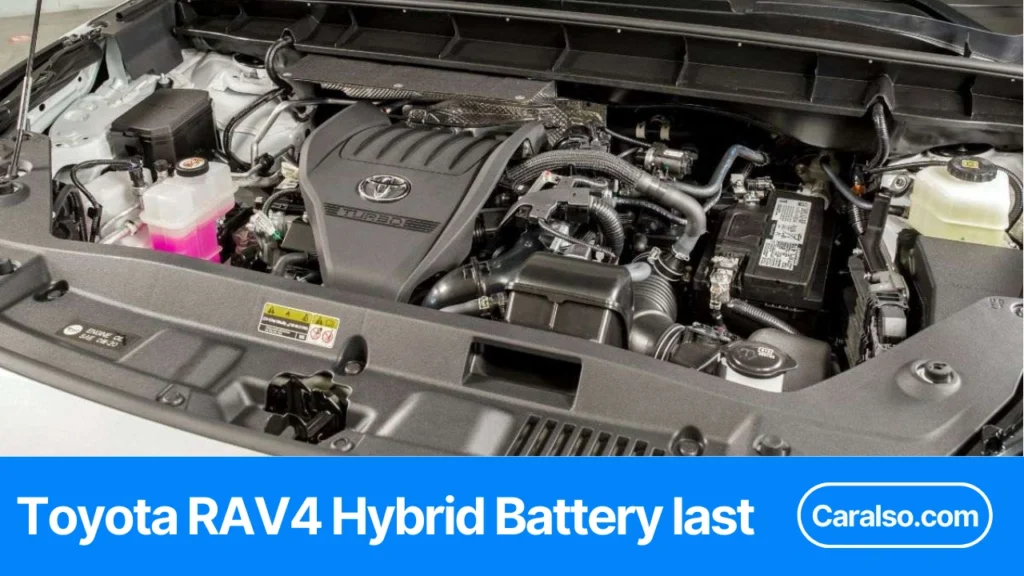
How Long Do RAV4 Hybrid Batteries Last
Quick Verdict
- Typical lifespan I plan around: 10 to 15 years, 150,000 to 200,000 miles
- Common “still running fine” ceiling I see: 200,000+ miles
- Warranty (most 2020+ Toyota hybrids): 10 years or 150,000 miles
- Biggest lifespan killers: high heat and a neglected battery cooling intake filter
- If it ever needs replacement: many quotes land around $2,000 to $5,000 installed, with higher dealer quotes possible
Warranty Vs Real-World Expectation
| What You Care About | What I Use As The Baseline | What Moves The Number |
|---|---|---|
| Toyota HV Battery Warranty | 10 years or 150,000 miles | In-service date, model year, state rules |
| Real-World Lifespan | 10 to 15 years, 150,000 to 200,000 miles | Heat exposure, driving frequency, maintenance |
| Fastest Ways To Shorten Life | Heat plus restricted cooling airflow | Dirty cooling intake filter, pet hair, dust |
| Simple Habit That Helps | Inspect about every 5,000 miles, service about every 20,000 miles | Pets, dusty roads, rideshare use |
I want to be clear about one thing up front. When I say “RAV4 Hybrid battery,” I mean the high-voltage traction battery that drives the electric motors. Not the 12V battery that starts computers and accessories.
Now let’s put real numbers on it.
How Long Do RAV4 Hybrid Batteries Last In Years And Miles?
The Realistic Range Most Owners Can Expect
If you want one practical range that fits most owners, I use this:
- 10 to 15 years for age
- 150,000 to 200,000 miles for mileage
I also see plenty of Toyota hybrids go beyond 200,000 miles on the original pack. That does not mean every one will. Heat and neglect can pull the number down.
Here’s how I think about it when you’re shopping or planning ownership:
- If you drive 12,000 miles per year, 150,000 miles is about 12.5 years.
- If you drive 20,000 miles per year, 150,000 miles is about 7.5 years.
- If you drive 5,000 miles per year, time becomes the bigger factor than miles.
So yes, mileage matters. But calendar age matters too.
What Lasting Means (Degradation Vs Total Failure)
Most hybrid batteries do not flip from “good” to “dead” overnight.
What usually happens first is capacity loss. Think of it like this:
- The battery stores less energy than it did when new.
- The gas engine runs more often to cover the gap.
- MPG drops because the hybrid assist is smaller and shorter.
In day-to-day driving, “battery life” often looks like:
- 2 to 6 MPG loss compared with what you used to get in the same commute
- More frequent engine starts at low speeds
- The cooling fan running more often, sometimes louder than you remember
A full failure is less common than gradual decline. But the decline is what makes owners start asking about replacement, especially after 10 years or 150,000 miles.
Do Not Confuse The 12V Battery With The Hybrid Traction Battery
I see this mistake all the time. Someone searches “RAV4 Hybrid battery life,” lands on a page that says “3 to 5 years,” and panics. That “3 to 5 years” number is almost always talking about the 12V battery. Not the high-voltage hybrid pack.
12V Battery Lifespan And Why Some Pages Say 3 To 5 Years
The 12V battery is the small battery that powers the computers, lights, locks, and the “boot up” process when you press Start.
In most climates, a 12V battery lasts about 3 to 5 years.
Heat matters a lot.
- Hot climates can push it closer to 3 years
- Cooler climates can push it closer to 5 years
This is why you see “3 to 5 years” all over the place. It is a normal number for a regular 12V car battery.
One more thing. On hybrids, the 12V battery usually does not crank the engine like on a non-hybrid. It still matters, though. If it gets weak, the car can act weird. You might see random warnings, slow starts, or electronics that do not wake up cleanly.
HV Traction Battery Lifespan The One You Are Actually Asking About
The hybrid traction battery is the high-voltage pack that runs the electric motors and stores energy from braking.
This is the expensive one. This is the one people worry about on used hybrids.
This battery is built for long duty cycles. In real ownership, I plan around:
- 10 to 15 years
- 150,000 to 200,000 miles
That is why Toyota can offer a long warranty on it. And that is why the “3 to 5 years” claim is a red flag for traction battery advice.
If you want a quick mental shortcut, I use this:
- 12V battery: 3 to 5 years
- Hybrid traction battery: 10 to 15 years
Toyota RAV4 Hybrid Battery Warranty By Model Year
Warranty details vary by country. I am talking about the U.S. market here.
Two things matter more than people think:
- Model year
- In-service date, meaning the date the vehicle was first sold or leased
The warranty clock starts at the in-service date, not the day you buy it used.
2020 And Newer Models 10 Years Or 150,000 Miles
For 2020 model year and newer Toyota hybrids, the hybrid battery warranty was expanded to:
- 10 years
- 150,000 miles
This is the hybrid battery itself.
Other hybrid components still have separate coverage. On many Toyota warranty guides, those components sit under the Hybrid System Warranty at:
- 8 years
- 100,000 miles
That includes parts like the inverter with converter and hybrid control modules.
2019 And Older Models What To Expect And Why It Differs
For many 2019 and older Toyota hybrids, the hybrid system warranty coverage for the HV battery and key hybrid components is:
- 8 years
- 100,000 miles
I always verify it in the warranty booklet for that exact model year.
There is also a state factor. Some states follow California emissions rules, and emissions warranty coverage can change what is covered and for how long on certain parts. I do not guess on this. I check the warranty guide tied to the VIN and registration state.
Quick Table Warranty Snapshot For Used Buyers
Use this table as a fast baseline. Then confirm with the warranty booklet for your exact model year and VIN.
| RAV4 Hybrid Model Year | Hybrid Battery Coverage | Hybrid System Components Coverage | What I Tell Used Buyers To Check |
|---|---|---|---|
| 2020 And Newer | 10 years or 150,000 miles | 8 years or 100,000 miles | In-service date and current mileage |
| 2019 And Older | Commonly 8 years or 100,000 miles | 8 years or 100,000 miles | State emissions rules and the exact warranty booklet |
One more helpful detail. Toyota’s New Vehicle Limited Warranty follows the vehicle. It transfers automatically to later owners while time and miles are still within limits. That matters if you are buying a used RAV4 Hybrid that still has battery warranty time left.
What Actually Shortens RAV4 Hybrid Battery Life?
If you want the short version, I track two things.
Heat. And airflow.
When the battery runs hot, it ages faster. When the cooling airflow is restricted, it runs hotter.
Heat, Long Idle Time, And Stop-And-Go Driving
Heat is the big one.
Most hybrid battery chemistry is happiest in a moderate band. One common benchmark I use is 59°F to 95°F. Once you live above that for long stretches, battery stress goes up.
Here is how this shows up in real driving:
- Hot climate parking. A closed cabin gets hot fast. The RAV4 Hybrid pulls cooling air from the cabin area, so hot cabin air makes the battery work harder.
- Stop-and-go in summer. The battery cycles more. Charge and discharge make heat.
- Long idle time in Ready mode. The car is still managing battery charge. The cooling fan can run a lot, especially in traffic.
Toyota even calls out extensive idling and low-speed driving (taxi, delivery, police-style duty) as a “special operating condition” where the HV battery intake filter needs attention more often.
Infrequent Driving (Why Low-Mileage Hybrids Can Still Age)
Low miles do not always mean low wear.
Hybrid batteries age by time too. Even when parked, the pack is not frozen in time. The car also uses small amounts of energy for system checks and electronics.
What I do if a hybrid sits:
- I do not let it sit for months without being driven.
- If it must sit, I try to run it every 1 to 2 weeks for 20 to 30 minutes.
- I avoid storing it in extreme heat when I can.
When I shop used, I look for “long gaps” in service records. A 5-year-old RAV4 Hybrid with 30,000 miles can be fine. Or it can be a car that sat through 3 hot summers.
The Hidden Killer: A Clogged HV Battery Cooling Intake Filter
This is the one most owners miss.
The RAV4 Hybrid traction battery has a cooling system. Air comes in through an intake vent and passes through a filter on many model years. If that filter loads up with lint, dust, or pet hair, airflow drops.
When airflow drops, a few things can happen:
- Battery temperature rises
- The cooling fan runs more often
- The system can limit battery power to protect itself
- Fuel economy can drop because the gas engine has to cover more work
- You may get a hybrid battery cooling warning message
I treat this like an engine air filter. It is not glamorous. But it matters.
Common clog sources I see:
- Dog hair and dander
- Dusty roads
- Lint from blankets and seat covers
- Rear-seat clutter that blocks the vent area
RAV4-Specific Pro Tip: Follow Toyota’s HV Battery Cooling Filter Guidance
If I could pick one RAV4 Hybrid habit that helps the traction battery, it is this.
Keep the cooling intake and filter clean.
Toyota service guidance spells out a simple cadence on many hybrid models, including RAV4 Hybrid for certain years.
Toyota’s Recommended Inspection And Cleaning Intervals
This is the schedule I follow because it is easy to remember.
| Item | Interval I Use | Why It Matters |
|---|---|---|
| Quick Visual Check For Dust And Debris | Every 5,000 miles | Catches pet hair and lint early |
| Full Filter Cleaning Procedure | Every 20,000 miles | Restores airflow before it becomes a problem |
| Replace The Filter If Damaged | As needed | A torn filter does not protect the fan |
If you drive in dusty conditions or you do rideshare, taxi, delivery, or lots of low-speed idling, I shorten the interval. I also shorten it if you have a dog that rides in back.
What Symptoms You’ll Notice When Airflow Is Restricted
Most owners feel this before they “see” it.
Here is what I watch for:
- Cooling fan noise from the rear area that is louder than it used to be
- The fan running more often, even on mild days
- A steady MPG drop, like 2 to 6 MPG on the same commute
- Less EV assist at low speeds
- Hybrid battery cooling warnings or “check hybrid system” messages
If you catch it early, the fix is often just cleaning and restoring airflow.
Quick Checklist (Safe Owner Checks Vs Shop Work)
I separate this into “safe and simple” and “let a pro handle it.”
Safe Owner Checks I Do
- Keep the air intake vent area clear. No bags. No blankets. No seat covers blocking it.
- Look for visible lint or pet hair on the vent cover.
- Use a vacuum with a soft brush on the vent cover area.
- If your owner’s manual shows a removable filter screen, follow that procedure.
- If a warning message shows up, I stop guessing and get it checked.
What I Let A Shop Or Dealer Do
- Remove interior trim or the rear seat cushion to access the filter on your specific model year
- Clean or replace the HV battery intake filter properly
- Inspect the cooling fan for packed dust and hair
- Scan the hybrid system for stored codes and battery temperature data
One safety note I stick to. I do not use water or liquids on traction battery air intake components. And I do not blow compressed air into ducts unless the filter is removed and the procedure calls for it.
Warning Signs Your RAV4 Hybrid Battery Is Getting Weak
Most RAV4 Hybrid traction batteries do not fail all at once. I usually see a slow change first. It shows up in MPG, engine run time, and how the battery gauge behaves.
MPG Drop Plus More Engine Run Time
This is the first thing I track.
I do it like this:
- I compare my last 3 tanks to my normal average.
- I ignore 1 bad tank. Weather and tires can skew it.
- If I see a 10% to 20% drop that sticks for 3 tanks, I start investigating.
Real numbers help.
If your normal is 38 MPG and you are now at 32 MPG for 3 tanks, that is a 6 MPG drop. That is about 16%.
Other clues that often come with an MPG drop:
- The gas engine starts more often at low speeds.
- The engine stays on longer at stoplights.
- EV assist feels shorter, especially up small hills.
“Check Hybrid System” And Dash Warnings
If you see “Check Hybrid System,” I do not guess. I scan it.
That message can show up for more than one reason. Sometimes it is the traction battery. Sometimes it is the 12V battery. Sometimes it is another hybrid system part.
Here is what I do right away:
- I check the 12V battery health first if the car has weird electronics or slow boot-up.
- I pull codes with an OBD2 scanner if the warning stays on.
Codes I see tied to traction battery wear and imbalance include:
- P0A80
- P0A7F
Do not ignore warnings that include “hybrid system malfunction,” “check hybrid system,” or traction battery messages. The car can reduce power to protect itself.
Battery Fan Noise Or Constant Fan Operation
On many RAV4 Hybrids, the traction battery cooling fan gets louder when the system is working harder.
I pay attention if:
- The fan runs a lot more than it used to.
- The fan gets loud on mild days.
- The fan ramps up fast after a short drive.
If the fan noise comes with a steady MPG drop, I check the intake vent and the HV battery cooling filter. Pet hair and dust can turn into a real airflow problem.
How Much Does It Cost To Replace A RAV4 Hybrid Battery?
I budget this like a range, not a single number. Prices swing a lot by region, labor rate, and which battery option you choose.
Here is the planning range I use for a RAV4 Hybrid traction battery replacement.
Cost Table New OEM Vs Remanufactured Vs Used
| Option | Typical Installed Price Range | What You Are Really Buying | Who It Fits Best |
|---|---|---|---|
| New OEM Pack | $3,000 to $8,000 | New battery pack with the longest expected life | Owners keeping the car 5 to 10 more years |
| Remanufactured Pack | $2,000 to $4,000 | Rebuilt pack with tested modules and a shop warranty | Owners who want lower cost with acceptable risk |
| Used Salvage Pack | $1,500 to $3,500 | A used pack with unknown history | Short-term ownership or tight budgets |
| Module Repair Only | $800 to $2,500 | Replacing weak modules, not the full pack | Cases where a full pack is not justified |
Two notes I always mention:
- Labor is usually $500 to $1,000 inside those installed ranges.
- Some shops add a core charge if you do not return the old pack.
When Replacement Is Worth It Vs When To Consider Selling
I use a simple rule.
If the rest of the RAV4 is solid, a battery can be a smart repair.
I lean toward replacing the battery when:
- The car is rust-free.
- The transmission and engine are healthy.
- Suspension and brakes are not a mess.
- You plan to keep it at least 3 more years.
- You can get a warranty in writing.
I lean toward selling or trading when:
- The car also needs $2,000 to $4,000 in other repairs soon.
- The body has rust that will keep spreading.
- You cannot get a clear warranty from the installer.
- You hate the car already. That matters.
Here is the math I like.
- Battery replacement cost ÷ vehicle value
If the RAV4 is worth $18,000 and the battery quote is $4,500, that is 25% of the car’s value. That can still make sense if the rest of the vehicle is clean.
What To Ask A Shop Before You Say Yes
I ask these questions every time. It prevents surprises.
Battery And Warranty
- Is it a new OEM pack, remanufactured, or used?
- What is the warranty in years and miles?
- Is the warranty parts-only or parts and labor?
- Who honors the warranty if I travel?
Diagnostics And Installation Quality
- What codes did you pull, and which ones point to the battery?
- Will you show me before-and-after scan data?
- Will you check and clean the HV battery cooling fan and filter area during the job?
- Will you confirm the charging system and 12V battery are healthy?
Pricing Details
- Is labor included in the quote?
- Is there a diagnostic fee?
- Is there a core charge?
- What is the out-the-door total with tax?
If a shop cannot answer these clearly, I move on.
How To Check RAV4 Hybrid Battery Health (Before Buying Used)
When I buy a used RAV4 Hybrid, I want proof. Not vibes. I focus on scan data, a structured test drive, and records that show the car was used consistently.
What A Dealer “Hybrid Health Check” Should Include
If I pay for an inspection, I ask for these items. In writing.
- Full system scan for stored and pending codes
- Freeze-frame data for any hybrid-related code
- Traction battery live data, including block voltages and battery temps
- Battery cooling fan operation and commanded fan speed
- 12V battery test, including voltage under load and charging performance
- Road test notes that match the scan results
The traction battery data I care about most is simple.
- Voltage consistency between blocks
- Temperature consistency between sensors
- Whether the system is pushing the cooling fan hard during a normal drive
A shop does not need to “guess” battery health. If they have a factory-level scan tool, they can show you the numbers.
If they only say “it passed,” I ask for the printout. If they cannot provide anything, I treat it like a basic inspection, not a hybrid inspection.
Test Drive Signals To Watch For (Simple, Buyer-Friendly)
I do a 20 to 30 minute drive. I want city and highway.
My quick route looks like this:
- 10 minutes of stop-and-go under 45 mph
- 10 minutes at 55 to 70 mph
- 5 minutes of gentle hills if possible
- 5 minutes of low-speed parking lot driving
What I watch for:
- Battery gauge swings fast from high to low, then back up in a few minutes
- Engine runs almost constantly at low speeds even when the battery shows mid charge
- MPG is far below what you would expect for that model year in similar weather
- Loud battery cooling fan noise that does not match the outside temperature
- Warning messages, even if they clear after a restart
One small trick I use.
I drive 5 minutes with the audio off. I listen for the fan. It is easier to catch changes that way.
If anything feels off, I do not negotiate based on hope. I negotiate based on inspection results. Or I walk.
Records That Matter (Cooling Filter Service, Mileage Patterns)
I scan the service history for two patterns.
Maintenance consistency. And usage consistency.
Records I like to see:
- Oil changes on time
- Coolant services done at the right intervals
- Any mention of hybrid system checks
- Cabin air filter changes, because it shows basic upkeep
- Notes about cleaning or inspecting the HV battery cooling intake or filter
Mileage patterns matter more than most people think.
- 10,000 to 15,000 miles per year is a good sign
- Long gaps with almost no miles can mean the car sat
- Short-trip life in a hot climate puts more stress on battery cooling
If the seller has pets, I always check the rear intake vent area. I look for hair and lint. If it is packed, I assume the cooling path has been neglected.
Before I buy, I also do this.
I ask for the in-service date so I can estimate what is left on the battery warranty. Time and miles both count.
RAV4 Hybrid Vs RAV4 Prime (Plug-In) Battery Lifespan (Quick Clarity)
This is where people get tripped up. Both are electrified. The batteries are used differently.
Why Prime Questions Are Different
RAV4 Hybrid:
- Smaller traction battery
- Charges from braking and the gas engine
- Uses lots of shallow charge and discharge cycles
RAV4 Prime:
- Larger lithium-ion traction battery
- Can be charged from a wall plug
- Can do daily EV miles, which can mean more total charging cycles over time
Here is how I explain it to a friend.
On a Hybrid, the first thing you notice is usually MPG changes. On a Prime, the first thing you notice is usually EV range changes.
I still plan around the same ownership baseline for both.
- 10 to 15 years
- 150,000 to 200,000 miles
The difference is expectations.
If you plug in a Prime every day, a little range drop over time is normal. Toyota also treats capacity reduction as a normal characteristic, not a defect.
If you are shopping used, I keep it simple:
Prime: I focus on charging habits, heat exposure, and current EV range vs mileage
Hybrid: I focus on smooth operation, scan data, and clean cooling airflow
Sources
- Toyota Electrified Vehicle Warranty (Hybrid Battery Coverage)
- 2019 RAV4 Hybrid Warranty And Maintenance Guide (PDF)
- Kelley Blue Book (Hybrid Battery Health Tips)
- Santa Cruz Toyota (RAV4 Hybrid Battery Replacement Cost Info)
- AAA (How Long Car Batteries Last)

Hey there,
How is it going?
I’m Meraj Sarker. I am a Car Mechanic and a student of Automobile Restoration here in Florida, USA. I’ve been studying automotive for around 9 years now. So you can rely on my recommendation. For me, studying and getting knowledge about automobile it’s really fun and entertaining. I will help you to get solutions for your car through this website. If you need any help let me know.