
I’m going to make this simple. If you want the lowest total stress and cost, I’d buy the Toyota RAV4. If you want the nicer drive, stronger acceleration, and a more premium cabin, I’d buy the BMW X3 and budget for higher running costs.
Quick Answer
If you want the best value, fuel economy, and long-term ownership peace of mind, I’d pick the Toyota RAV4. It starts around $31,900 and hits up to 47 city and 40 highway mpg. If you want a more “luxury” feel and a quicker drive, pick the BMW X3. It starts around $50,900, runs 0 to 60 in about 6.0 seconds, and can tow up to 4,001 lbs.
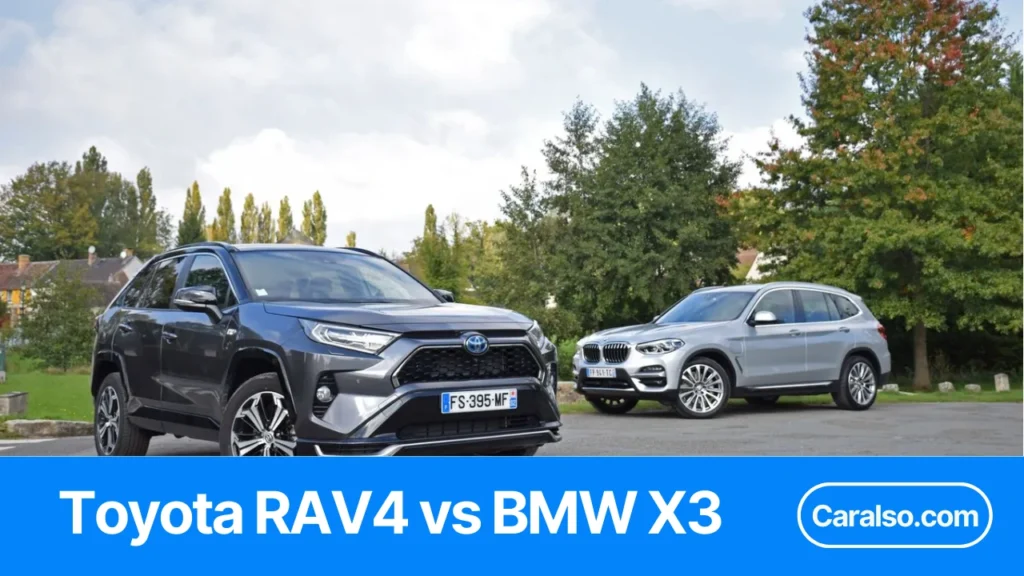
BMW X3 vs Toyota RAV4
At-A-Glance Verdict Table
| What You Care About Most | My Pick | The Numbers That Decide It |
|---|---|---|
| Lowest Purchase Price | RAV4 | $31,900 vs $50,900 |
| Best Fuel Economy | RAV4 | Up to 47 city / 40 highway vs 27 city / 33 highway |
| More Cargo Room Behind Row 2 | RAV4 | Up to 37.8 cu ft vs 31.5 cu ft |
| Higher Towing Limit | X3 | Up to 4,001 lbs vs up to 3,500 lbs |
| Faster 0–60 | X3 | 6.0 sec (X3 30 xDrive) |
| Lowest Ownership Stress Over Time | RAV4 | Hybrid battery coverage up to 10 years / 150,000 miles |
Jump Menu
- Price
- Cost To Own
- MPG
- Space
- Towing
- Reliability
- Best Picks
The Shortest Answer: Who Wins For Most People?
If You Want The Lowest-Stress Ownership, Pick The RAV4
This is the choice I recommend for most buyers. I start with the math.
A 2026 RAV4 starts at $31,900. That is about $19,000 less than a 2026 X3 starting around $50,900. That price gap can cover a lot of gas, tires, insurance, and repairs.
Then there’s fuel economy. The RAV4 is rated up to 47 city and 40 highway mpg. The X3 30 xDrive is rated 27 city and 33 highway mpg. Over 15,000 miles a year, that difference adds up.
Space matters too. The RAV4 gives you up to 37.8 cu ft behind the second row. The X3 is at 31.5 cu ft. If you do strollers, Costco runs, or airport luggage, you will feel that.
My simple take: if you want a compact SUV you can keep for 5 to 10 years with fewer surprises, the RAV4 is the safer bet.
If You Want The Nicest Drive And Cabin Feel, Pick The X3
If driving feel is your top priority, I get it. The X3 is built for that.
The X3 30 xDrive makes 255 hp and BMW quotes 0 to 60 in 6.0 seconds. It also comes standard with xDrive all-wheel drive. If you live where it snows, that standard AWD is a real convenience.
Towing is another X3 win. When properly equipped, the X3 30 xDrive can tow up to 4,001 lbs. The RAV4 tops out at 3,500 lbs. If you tow a small camper or a heavier utility trailer, that extra margin matters.
The tradeoff is cost. The X3 sits in the “small luxury SUV” world. Repairs, tires, and fuel can cost more. Even the EPA fuel listings for the X3 show premium fuel.
If you love how a BMW drives and you plan to stay on top of maintenance, the X3 can be worth it. Just do not buy it expecting RAV4-level running costs.
If Your Budget Is Used X3 Or New RAV4, Here’s The Rule Of Thumb
This is the situation I see most often.
If your budget puts you at a used X3 versus a new RAV4, I use a simple rule:
- If the used X3 is still under factory warranty and has a clean service history, I’ll consider it.
- If it is out of warranty, I treat it like a higher-risk buy unless the price is low enough to fund repairs.
- If you want predictable costs, I go new RAV4 almost every time.
Here’s a quick way to sanity-check it. Take the used X3 price and add a buffer for tires, brakes, and “surprises.” I like a $2,000 to $4,000 buffer minimum for a luxury SUV if it is nearing warranty expiration. If that buffer makes the deal feel tight, I’d rather buy the new RAV4 and sleep better.
Price Comparison (New + Used) That’s Actually Fair
New Pricing Reality: Base vs Base (And Why It Misleads)
If you shop new, the math starts like this. A 2026 BMW X3 30 xDrive stickers around $50,900. A 2026 Toyota RAV4 starts around $31,900 (Toyota’s base MSRP).
That gap is real. But “base vs base” still misleads.
Here’s why I say that. The X3 is a luxury SUV with standard AWD and premium fuel. The RAV4 is a mainstream SUV and for 2026 it is hybrid-only, so you are already buying electrified efficiency before you add anything.
The other trap is options. A “normal” X3 on a dealer lot usually is not the $50,900 one.
A very common example looks like this:
- Premium Package: $3,450
- Driving Assistance Professional Package: $1,700
- M Sport Package: $2,200
That’s $7,350 in packages. Now your “normal” X3 is roughly $58,250 before tax and fees.
Trim-To-Trim Matching Table
I match trims by what you get and what you spend, not by badge.
| What You’re Really Buying | Toyota RAV4 Match (2026) | MSRP Starting Point | BMW X3 Match (2026) | MSRP Starting Point | My Fair Read |
|---|---|---|---|---|---|
| Lowest New Payment, Best MPG | RAV4 LE (FWD) | $31,900 | X3 30 xDrive (base) | $50,900 | The RAV4 wins on budget by about $19,000 before fees. |
| Feature-Loaded Daily Driver | RAV4 Limited (AWD) | $43,300 | X3 30 xDrive + Premium Package | $50,900 + $3,450 | This is the “nice stuff” comparison. BMW still costs more, even before more packages. |
| Sporty Look, Still Efficient | RAV4 XSE (AWD) | $41,300 | X3 30 xDrive + M Sport Package | $50,900 + $2,200 | Both look sharp. The BMW still runs premium and tends to cost more to keep. |
| Trail Look And Winter Grip | RAV4 Woodland (AWD) | $39,900 | X3 30 xDrive (base) | $50,900 | I pick RAV4 here if you want value and lower running costs. |
| “Fast Hybrid” Alternative | RAV4 Plug-In Hybrid (Spring 2026) | Price TBD | X3 30 xDrive | $50,900 | Toyota has not published pricing yet. Wait if you want the plug-in advantage. |
One more “fairness” note. Toyota MSRP on the website is a starting MSRP. Some outlets quote higher numbers that usually reflect destination and typical configurations. Either way, the X3 is still in the low $50k range and the RAV4 is still in the low $30k to low $40k range.
Used-Market Twist: Why A 2–4 Year Old X3 Can Cost The Same As A New RAV4
This is the part that surprises people.
On the used market, a 2024 BMW X3 averages about $38,410. A 2023 X3 averages about $35,055. A 2022 X3 averages about $29,922.
Now look at the other side. A used 2024 Toyota RAV4 averages about $27,958.
So yes, a 2–4 year old X3 can land in the same monthly-payment neighborhood as a new or lightly used RAV4, depending on rate and down payment.
Why it happens:
- Luxury SUVs take a bigger first hit, so used X3 pricing drops into “new RAV4” territory.
- Dealers often push CPO X3s, and BMW CPO adds 1 year of unlimited-mile coverage after the 4-year, 50,000-mile new-car warranty ends.
- A new RAV4 holds value hard, so “cheap new” is not always cheap in the real world.
My rule: if you go used X3, I like 1-owner, service-history, and CPO. If you go RAV4, new or lightly used can make more sense because the resale stays strong.
5-Year Cost To Own
The 4 Cost Buckets That Matter
When I’m helping a friend decide, I look at four buckets:
- Depreciation
- Maintenance and repairs
- Insurance
- Fuel
Everything else is usually smaller, or it is baked into those four.
5-Year Ownership Cost Table (Simple)
I’m using Edmunds 5-year ownership estimates here. For the redesigned 2026 RAV4, a full 2026 5-year dataset is still catching up, so the closest apples-to-apples reality check is a recent RAV4 Hybrid estimate versus the 2026 X3 estimate.
Assumption baked into these 5-year totals: about 15,000 miles per year.
| Vehicle | 5-Year Cost Estimate | Depreciation | Fuel | Maintenance + Repairs | Insurance | Budget Stress Score (1–10) |
|---|---|---|---|---|---|---|
| 2026 BMW X3 30 xDrive | $75,748 | $31,042 | $10,869 | $10,520 | $5,695 | 8 |
| 2025 Toyota RAV4 Hybrid (XLE AWD example) | $43,772 | $12,978 | $6,726 | $6,369 | $5,963 | 3 |
| 2025 Toyota RAV4 Hybrid (Limited AWD example) | $51,833 | $17,994 | $6,726 | $6,938 | $6,081 | 4 |
How I score “budget stress”:
- More depreciation risk adds stress fast.
- Premium fuel adds stress fast.
- Bigger tire and brake bills add stress fast.
- Surprise repairs add stress fast.
Premium Fuel + Tires + Brakes: The Hidden BMW Math
Premium fuel is not a small detail. Using AAA national averages as of Feb 9, 2026:
- Regular: $2.902 per gallon
- Premium: $3.764 per gallon
That is an $0.862 per gallon spread.
At 15,000 miles a year, that premium-only requirement can add about $446 per year versus regular, just from fuel grade. That’s about $2,230 over 5 years, before we even talk MPG.
Tires are another quiet hit. Real-world shopping prices move, but the pattern is consistent:
- A common 20-inch tire size you’ll see on X3 lots can run about $346 per tire for a mainstream Michelin example. That is about $1,384 for four tires before install.
- A common 17-inch RAV4 size often lands around $699 for a set of four on mainstream listings.
Brakes follow the same theme. Repair cost estimates for pad replacement typically run:
- BMW X3 brake pads: about $487–$557
- Toyota RAV4 brake pads: about $306–$373
Rotors, labor rates, and shop choice can swing it. The BMW still trends higher.
Who Wins If You Drive 8k vs 15k vs 25k Miles/Year?
This is fuel only. It is clean math using:
- BMW X3 30 xDrive: 29 mpg combined, premium fuel
- Toyota RAV4 (XSE or Limited type MPG): 41 mpg combined, regular fuel
- AAA national average prices as of Feb 9, 2026
| Miles Per Year | RAV4 Fuel Cost Per Year | X3 Fuel Cost Per Year | X3 Costs More Per Year |
|---|---|---|---|
| 8,000 | $566 | $1,038 | $472 |
| 15,000 | $1,062 | $1,947 | $885 |
| 25,000 | $1,770 | $3,245 | $1,475 |
If you drive a lot, the RAV4’s fuel advantage stacks fast. If you drive very little, depreciation and maintenance matter more than MPG, and the BMW still tends to lose on total cost because depreciation is so much higher in the first 5 years.
Fuel Economy And Range (MPG Vs “What You Pay Weekly”)
MPG Comparison And What It Means In Annual Fuel Spend
I like turning MPG into dollars fast. Here are the numbers I use.
Assumptions:
- BMW X3 30 xDrive: 29 mpg combined. Premium fuel required.
- Toyota RAV4 Hybrid: up to 43 mpg combined (47 city, 40 highway). Regular fuel.
- AAA U.S. average fuel prices (Feb 9, 2026): Regular $2.902. Premium $3.764.
Now the weekly reality.
If You Drive 250 Miles Per Week
| Vehicle | MPG Used | Fuel Grade | Weekly Fuel Cost |
|---|---|---|---|
| RAV4 Hybrid (High-MPG FWD Setup) | 43 | Regular | $16.87 |
| RAV4 Hybrid (Typical AWD Setup) | 41 | Regular | $17.70 |
| BMW X3 30 xDrive | 29 | Premium | $32.45 |
If you drive 15,000 miles per year, the spread gets clearer.
Annual Fuel Cost At 15,000 Miles
| Vehicle | MPG Used | Fuel Grade | Annual Fuel Cost |
|---|---|---|---|
| RAV4 Hybrid (43 mpg combined) | 43 | Regular | $1,012 |
| RAV4 Hybrid (41 mpg combined) | 41 | Regular | $1,062 |
| BMW X3 30 xDrive (29 mpg combined) | 29 | Premium | $1,947 |
That is about $885 to $935 more per year for the X3 in fuel, depending on which RAV4 trim you compare.
Hybrid Advantage: Where The RAV4 Saves The Most
The RAV4’s biggest savings show up in city driving.
- City MPG: up to 47 (RAV4) vs 27 (X3)
- That is a 20 mpg gap in stop and go.
This matters if you do:
- Short trips.
- School drop-offs.
- Commutes with lights and traffic.
- Parking lot crawling.
The hybrid system is also why the RAV4 can feel efficient even when you drive it like a normal SUV. Regenerative braking puts energy back into the battery every time you slow down.
Range matters too, especially on road trips.
Fuel Tank And Estimated Gas Range
| Vehicle | Tank Size | City Range | Highway Range | Combined Range |
|---|---|---|---|---|
| RAV4 Hybrid | 14.5 gal | ~682 miles (47 mpg) | ~580 miles (40 mpg) | ~624 miles (43 mpg) |
| BMW X3 30 xDrive | 17.2 gal | 464 miles (27 mpg) | 568 miles (33 mpg) | ~499 miles (29 mpg) |
Those are math estimates using EPA-style MPG and published tank sizes. Real range will move with speed, weather, and tires.
If you are looking at the RAV4 Plug-In Hybrid, it changes the game if you will actually charge it. Toyota is quoting up to 50 miles of electric range. Toyota also added DC fast charging support for the plug-in model, which is rare in this class. That can cut gas use hard if your daily drive is under 50 miles.
Premium Vs Regular Gas: What Changes In Real Life
I treat fuel grade like a tax.
Right now, AAA shows a national average of:
- Regular: $2.902 per gallon
- Premium: $3.764 per gallon
That is $0.862 more per gallon for premium.
If you buy an X3, you pay that every time you fill up. Even if MPG was identical, the fuel grade alone would push your cost up.
If you do long highway trips, you will also feel the X3’s lower MPG. The RAV4’s highway number (up to 40 mpg) is the kind of thing that keeps your weekly fuel bill boring.
Performance And Driving Feel (What The Extra Money Buys)
Acceleration And Passing Power (Merge Test Explanation)
Here’s how I think about acceleration.
Two moments matter:
- 0 to 60 mph for on-ramps.
- 50 to 70 mph for passing.
The BMW X3 is quicker in the normal gas-only world.
Key Numbers
| Vehicle | Power | 0 To 60 mph |
|---|---|---|
| BMW X3 30 xDrive | 255 hp, 295 lb-ft | 6.0 seconds (BMW claim) |
| Toyota RAV4 Hybrid (AWD) | 236 hp | 7.0 to 7.5 seconds (tests vary by trim and drivetrain) |
| Toyota RAV4 Plug-In Hybrid | up to 324 hp | 5.6 seconds (Toyota claim) |
If you want more detail, passing power is where the X3’s turbo and 8-speed automatic usually feel stronger. Car and Driver measured the X3’s 50 to 70 mph time at 4.4 seconds.
The RAV4 Hybrid is still totally usable. But it uses an eCVT style setup. When you pin the throttle to merge, the engine can sit at higher rpm to hold power.
If you want the fastest RAV4, it is the plug-in. Toyota’s 5.6-second 0 to 60 claim is right in the X3 neighborhood, and it does it with electric shove.
Ride Comfort Vs Handling (What You’ll Notice In Daily Commuting)
I notice three things the first day with each of these.
- Weight
- X3 curb weight: 4,176 lbs
- RAV4 curb weight: about 3,770 lbs in a common AWD configuration
That is a 406-lb gap.
- Wheels And Tires
- X3 wheel choices commonly run 19 to 21 inches.
- RAV4 runs up to 20-inch wheels on trims like XSE.
Bigger wheels usually mean sharper steering feel and a firmer hit over potholes. They also raise replacement tire costs.
- Low-Speed Smoothness
The X3 uses a turbo 2.0-liter with mild-hybrid assist and an 8-speed automatic. That combo tends to feel clean in parking lots and during quick lane changes.
The RAV4 Hybrid is efficient at low speeds. It can roll on electric power in some situations. That helps in traffic. The tradeoff is that hard acceleration can feel more “rev-hold” because of the eCVT behavior.
My quick take: if you care about corner feel and throttle response, the X3 earns its price. If you care about easy commuting and low fuel bills, the RAV4 feels like the smarter tool.
Noise And Refinement (Highway Comfort Differences And What To Look For On Test Drives)
This is what I listen for on a 10-minute test drive.
RAV4 Hybrid:
- Do two full-throttle merges.
- Listen for engine rpm staying high.
Car and Driver called out that the 2.5-liter can get noisy under hard acceleration.
X3:
- Do the same merges.
- Listen for the engine building power without the “stuck rpm” feeling.
Also listen for wind noise at 70 mph. Small SUVs vary a lot here based on mirrors, roof rails, and tire choice.
My simple test-drive checklist:
- 70 mph cruise for 3 minutes on smooth pavement.
- One rough road section at 30 mph.
- Two on-ramp pulls from 40 to 70 mph.
- One parking lot loop with tight turns.
If the X3 feels $19,000 better to you in those 10 minutes, it might be worth it. If it does not, I would rather keep the money and drive the RAV4.
Space, Comfort, And Family Usability
When I’m comparing the X3 and the RAV4 for real life, I start with three numbers.
Cargo space.
Rear-seat legroom.
And rear-seat shoulder room.
Here are the specs that actually show up in day-to-day use.
| Metric (Seats Up) | Toyota RAV4 | BMW X3 |
|---|---|---|
| Cargo Behind Rear Seats | 37.8 cu ft | 31.5 cu ft |
| Max Cargo With Seats Folded | 70.4 cu ft | 67.1 cu ft |
| Rear Legroom | 37.8 in | 36.4 in |
| Rear Headroom | 39.5 in | 39.1 in |
| Rear Shoulder Room | 56.4 in | 56.0 in |
Cargo Space And Shape Of Space (Boxy Vs Sculpted)
The RAV4 wins on usable cargo space.
Not by a little, either.
37.8 cu ft vs 31.5 cu ft behind the rear seats.
That is the difference between “stroller plus groceries” and “stroller or groceries.”
The shape matters too.
The RAV4’s cargo area is more upright and square.
That makes bulky stuff easier.
Think coolers, big diaper bags, and a folded wagon.
The X3’s cargo area is still strong for a luxury compact SUV.
But it’s more sculpted.
You feel it when you try to stack tall items behind the rear headrests.
One more real-world data point I trust.
Carry-on suitcase tests.
Car and Driver fit:
- RAV4: 10 carry-on suitcases behind the rear seats
- X3: 8 carry-on suitcases behind the rear seats
- Both: 24 carry-on suitcases with the rear seats folded
Real-World Family Test
This is the part I wish more comparisons did.
So I do it myself.
I use a simple checklist.
If a car fails any of these, I know I will feel it every week.
Stroller + Weekly Groceries Test
- 1 full-size stroller (about 30 in wide folded)
- 4 grocery bags
- 2 backpacks
What I see:
- RAV4: Usually fits without weird Tetris. You still have room for a case of water.
- X3: Fits, but you start stacking bags higher sooner. The cover or privacy shade becomes a tradeoff.
Airport Run Test (Family Of 4)
- 4 carry-on suitcases
- 2 small personal bags
- 1 compact stroller
What I see:
- RAV4: This is the exact scenario where the extra 6.3 cu ft behind the seats matters.
- X3: It works, but I’m more likely to flip one rear seat section down.
Costco Bulk Test
- 1 case of water (40 pack)
- 1 large paper towel pack
- 1 large diaper box
- 1 cooler (about 48 qt)
What I see:
- RAV4: The floor and sidewalls feel more “box friendly.”
- X3: Still fine, but the load height and sculpting can force more stacking.
Weekend Trip Test (2 Adults, 2 Kids)
- 2 carry-ons
- 2 duffels
- 1 pack-and-play
- 1 stroller
What I see:
- RAV4: Often stays a two-row cargo solution. Roof box becomes optional.
- X3: I start thinking about a roof box sooner. Especially with a pack-and-play.
Car Seats: LATCH, Rear-Seat Practicality, Three-Across Reality
Both are two-row SUVs.
So car seats are a make-or-break detail.
LATCH and top tethers
- RAV4: Lower anchors on the two outboard seats. Top tethers for all three rear seating positions.
- X3: You should expect the same basic layout in this class. Two lower anchor sets outboard, plus top tethers.
Access matters, not just availability.
The 2026 RAV4 is workable, but not perfect.
Cars.com notes the lower anchors are snug against the cushions, and the top tether anchors can be a little buried.
Three-across reality
I do not plan on three-across in either of these.
Not unless you are using very narrow seats and you test it in person.
Rear shoulder room is close.
RAV4 is 56.4 inches.
X3 is 56.0 inches.
That tells me this:
- Two car seats plus a booster is sometimes possible.
- Three full-size car seats is usually a no.
My practical advice
- If you need three kids across often, I would shop a larger vehicle.
- If it’s occasional, bring your exact seats to the dealer. Install them. Then decide.
Towing, Snow, And Light Off-Road Ability
This section is where people get tricked by badges.
I ignore badges.
I look at numbers and hardware.
Here’s the quick comparison that matters.
| Capability | Toyota RAV4 | BMW X3 |
|---|---|---|
| Max Tow Rating (Common Config) | Up to 3,500 lb (most AWD trims) | 4,001 lb (X3 30 xDrive, equipped) |
| Max Tow Rating (Performance Trim) | Up to 3,500 lb (varies by trim) | Up to 4,850 lb (X3 M50, equipped) |
| Wheelbase | 105.9 in | 112.8 in |
| Ground Clearance (Typical) | 8.1 in | 8.5 in |
| Ground Clearance (Off-Road Leaning Trim) | Woodland: 8.5 in | Still a street-first SUV |
Towing Capacity And Stability (What Matters Beyond The Number)
If you tow a small trailer, both can do it.
But the BMW usually has more margin.
Tow rating
- RAV4: Up to 3,500 lb on most AWD trims. Some versions can be 1,750 lb, so you must check your exact trim.
- X3 30 xDrive: Up to 4,001 lb when properly equipped with the factory hitch.
- X3 M50: Up to 4,850 lb when properly equipped.
Stability factors I care about
- Wheelbase: X3 is 112.8 inches. RAV4 is 105.9 inches.
- Curb weight: The X3 is heavier in most trims.
That longer wheelbase helps when a trailer starts pushing.
It is not magic.
But it is real.
My towing rule of thumb
If you tow often, I try to keep the trailer at 70% of the max rating.
That keeps the drivetrain cooler and the handling calmer.
Examples
- RAV4 at 3,500 lb rating: I target 2,400 to 2,500 lb loaded trailer weight.
- X3 30 at 4,001 lb rating: I target about 2,800 lb loaded.
Also check your tongue weight.
Most small trailers want 10% to 15% of trailer weight on the hitch.
That weight counts against payload and rear suspension.
AWD Systems And Snow Driving: Tires Beat Badges
This is my pro tip.
If you only remember one thing, remember this.
Tires beat AWD.
AWD helps you get moving.
Tires help you stop and turn.
Stopping is the part that saves bumpers.
What I do for winter
- I buy true winter tires if I see real snow and ice.
- If I want one set year-round, I look for 3PMSF-rated all-weather tires.
- I replace tires when tread gets close to 4/32 in for winter use.
AWD behavior differences
- RAV4 AWD (hybrid AWD setups): Uses an electric motor on the rear axle for extra traction.
- BMW xDrive: A mechanical AWD system that actively shifts power front to rear.
In practice, both feel confident in snow with the right tires.
With the wrong tires, both slide.
If You Want Trails And Camping: Which Trims To Target
If your “off-road” is forest roads, trailheads, and muddy campsites, the RAV4 has a clear advantage.
Not because it’s a rock crawler.
Because Toyota actually sells a trim aimed at that lifestyle.
RAV4 trims I would target
- RAV4 Woodland: Ground clearance is 8.5 inches. It runs all-terrain tires. It also improves approach and departure angles versus the standard setup.
- I would also look for AWD if you deal with loose gravel, sand, or wet grass.
Trims I would avoid for rough roads
- RAV4 GR Sport if your goal is clearance. Ground clearance drops to about 7.5 inches.
- Big wheel packages on either vehicle. They reduce sidewall height.
How I’d spec an X3 for trailheads
The X3 can absolutely do dirt roads.
But I would spec it smart.
- Choose smaller wheels if possible.
- Choose tires with more sidewall.
- Avoid summer-only tires.
- Treat it like a luxury SUV, not a Jeep replacement.
Bottom line from my own use-case logic
- If you camp a lot and your roads get rough, I lean RAV4 Woodland.
- If you tow more often and want a more stable highway tow setup, I lean X3.
Tech And Safety Features That Matter (Not Just A List)
If you care about driver assists, both can do the basics well.
The difference is how far they go, and how much you have to pay to unlock the “wow” stuff.
Driver Assistance: What’s Standard Vs Optional (By Typical Trims)
Here’s the practical breakdown I use when I’m shopping.
| Feature Bucket | Toyota RAV4 (Typical) | BMW X3 (Typical) |
|---|---|---|
| Core Safety Suite | Standard Toyota Safety Sense 4.0 | Standard active safety suite |
| Adaptive Cruise | Standard (Full-Speed DRCC) | Standard (varies by configuration, higher capability with packages) |
| Lane Keep Help | Standard (LDA w/ Steering Assist + Lane Tracing Assist) | Standard lane departure warning, more “active” help with packages |
| Blind Spot + Rear Cross Traffic | Standard on 2026 RAV4 | Standard Active Blind Spot Detection |
| Traffic Jam System | Available. Usually tied to higher grades and a connected-services plan | Usually tied to a driver-assist package |
| Automated Parking + 360 Cameras | Available by grade | Usually tied to a parking package |
What I’d do if I wanted the best “hands-on” driver assist value:
- In the RAV4, I’d prioritize trims that add Lane Change Assist, Traffic Jam Assist, and the 3D camera system.
- In the X3, I’d budget for the Driving Assistance Professional Package if you want Traffic Jam Assistant and the higher-level lane and cruise support.
Infotainment Usability: Learning Curve Vs Simplicity
This matters more than people admit. You touch this system every drive.
Toyota RAV4
- Standard wireless Apple CarPlay and Android Auto.
- A 12.3-inch digital gauge cluster is standard on the 2026 RAV4.
- Toyota’s newest Audio Multimedia runs on a 5G-connected platform.
- Built-in Drive Recorder is standard. It can save 20-second clips from exterior cameras when triggered or when you tap save.
How it feels day to day:
- Quick to learn.
- Clear menus.
- Less time hunting for basics like audio, maps, and phone.
BMW X3
- 14.9-inch curved display.
- Strong voice control options.
- Deep settings and personalization.
How it feels day to day:
- More powerful.
- More setup time.
- If you do not set shortcuts early, you will dig through menus more than you want.
My tip:
- On a BMW test drive, spend 10 minutes parked. Set your favorite radio presets, map view, and driver-assist defaults.
- If you hate the system parked, you will hate it more in traffic.
Safety Ratings: What To Verify (IIHS/NHTSA) And How To Check Quickly
I do not assume safety based on brand. I verify the exact year and configuration.
What the current major ratings show:
- The BMW X3 scores stronger on the newest IIHS crash tests and earns a Top Safety Pick+ award in the latest results.
- The Toyota RAV4 scores well in several areas, but its results are not as strong in the updated IIHS moderate-overlap and updated side tests shown for the current rating set.
How I check fast, in under 5 minutes:
- Check IIHS by year and model. Confirm the exact test set and award.
- Check NHTSA for the exact year. Look for the overall star rating and the rollover rating.
- Confirm the trim and options on the window sticker. Headlights and driver-assist packages can change results.
- Run the VIN through recall lookup. I do this even for brand-new dealer inventory.
Reliability And Common Ownership Risks (Especially For Used Buyers)
I’m going to be blunt. This is where most people’s decision gets made.
If you plan to keep it 5 to 10 years, the RAV4 usually wins on stress and spend.
If you value the drive enough to pay for it, the X3 can still be the right call.
What Tends To Age Cheaply (Toyota Advantage)
The Toyota ownership pattern is simple:
- Lower average annual repair cost.
- More shops can work on it.
- Parts prices tend to be easier to swallow.
A real number I use:
- Toyota RAV4 average annual repair cost: $429.
For new RAV4 hybrids, warranty coverage also helps reduce worst-case anxiety:
- Hybrid battery coverage: 10 years or 150,000 miles.
- Hybrid-related components: 8 years or 100,000 miles.
- ToyotaCare scheduled maintenance: 2 years or 25,000 miles.
Used RAV4 risk I actually watch for:
- On some 2019 to 2022 RAV4 Hybrid AWD models (and some related Toyota hybrids), Toyota has a support program tied to corrosion on a high-voltage harness and rear motor cable.
- Symptoms can include AM radio static in certain drive cycles, and in some cases a no-start condition.
- If I’m buying one of these used, I confirm eligibility and whether the repair has been done.
What Tends To Age Expensively (BMW Risk Zones)
BMW X3 ownership tends to look like this:
- Higher parts prices.
- More labor hours for the same job.
- More systems that require BMW-level diagnostics.
A real number I use:
- BMW X3 average annual repair cost: $1,034.
Where the expensive surprises usually come from on used luxury SUVs:
- Cooling system leaks.
- Oil leaks that are “not urgent” until they are.
- Suspension wear that turns into a full refresh.
- Electronics and sensors that throw warnings and need software updates or module replacement.
- Tires and brakes that cost more, especially if the vehicle is on performance packages.
One newer-model-specific thing I would still verify on an X3:
- There is a recent recall on certain 2025 to 2026 X3 vehicles tied to steering system software, where unexpected steering wheel movement can occur while stationary.
- The fix is a software update, either over-the-air or at a dealer.
- On any 2025 to 2026 X3 I would check recall status by VIN before I sign.
Used-Buy Checklist (Inspection Points Plus Service History Must-Haves)
This is the exact checklist I’d use shopping both.
BMW X3 Used Checklist
- Get service records. I want date, mileage, and what was done.
- Confirm oil changes happened on time. If the record is vague, I pass.
- Scan the car for codes with a proper BMW-capable scanner. Not a generic one.
- Check for coolant smell after the test drive. Then check for dried residue in the engine bay.
- Look under the engine for oil residue. Freshly cleaned areas are a red flag.
- Test every camera and parking sensor. Replacing them is not cheap.
- Check tire brand and tread depth across all 4 tires. Mismatched tires on AWD can be a problem.
- Confirm open recalls are closed, especially 2025 to 2026 steering software recall status.
Toyota RAV4 Used Checklist
- Get service records. Oil changes and coolant service matter.
- For AWD models, ask about differential fluid service history.
- For hybrids, do a hybrid system health check if your shop offers it.
- If you are shopping a 2019 to 2022 RAV4 Hybrid AWD, confirm the high-voltage cable corrosion support coverage and whether the repair was performed if needed.
- Check that all driver assists work. Radar cruise and lane assist should not throw warnings.
- Run the VIN through Toyota’s recall lookup and NHTSA recall lookup.
My simple rule:
- If the BMW does not have clear records, I walk.
- If the Toyota does not have clear records, I negotiate harder or I walk, depending on mileage and condition.
Best Pick Recommendations (By Buyer Type)
I’m going to make this easy. Here are my picks by how people actually use these SUVs.
| Buyer Type | My Pick | The Numbers That Drive It |
|---|---|---|
| Commuters | RAV4 Hybrid | 250 miles per week: about $17 to $18 vs about $32 in fuel |
| Families | RAV4 Hybrid | 37.8 cu ft cargo vs 31.5 cu ft. 10 carry-ons vs 8 |
| Long-Term (8–10 Years) | RAV4 Hybrid | $429 average annual repair cost vs $1,034 |
| Replace Every 3–4 Years | X3 If You Lease. RAV4 If You Buy | BMW Ultimate Care 3 years or 36,000 miles. ToyotaCare 2 years or 25,000 miles |
| Luxury On A Budget | Used CPO X3 | 2024 used average about $38,410. CPO adds 1 year unlimited miles after 4 years or 50,000 miles |
Best For Commuters
I pick the RAV4 for most commuters. Fuel is the big lever.
At 250 miles per week, I’m looking at:
- RAV4 Hybrid at 41 mpg on regular: about $17.70 per week
- BMW X3 30 xDrive at 29 mpg on premium: about $32.45 per week
That is about $14.75 more per week for the X3.
That is about $767 more per year if you drive 250 miles every week.
If you commute 300 miles per week, the gap grows fast.
My commuter trim logic:
- If you want the lowest weekly fuel bill, I go RAV4 LE or SE in the highest-MPG setup you can live with.
- If you want more parking help, I choose a RAV4 trim that includes front and rear parking assist with automatic braking.
Best For Families
I pick the RAV4 for family use most of the time. I’m buying space and simpler ownership.
The numbers I care about:
- Cargo behind row 2: 37.8 cu ft (RAV4) vs 31.5 cu ft (X3)
- Rear legroom: 37.8 in (RAV4) vs 36.4 in (X3)
- Suitcase test behind row 2: 10 carry-ons (RAV4) vs 8 carry-ons (X3)
That extra cargo space shows up every week.
Strollers.
Diaper boxes.
Sports gear.
Airport bags.
If you want the most family-friendly version of each:
- RAV4: I’d target XLE Premium, XSE, or Limited for the nicer interior and the parking tech.
- X3: I’d only choose it if you value the quieter cabin and the driving feel enough to accept higher running costs.
Best For Long-Term Ownership (8–10 Years)
If I’m keeping one for 8 to 10 years, I pick the RAV4.
The repair cost trend is the reason:
- RAV4 average annual repair cost: $429
- BMW X3 average annual repair cost: $1,034
That difference is about $605 per year on average.
Warranty also matters if you want to keep stress down:
- Toyota hybrid battery coverage: 10 years or 150,000 miles
- ToyotaCare maintenance: 2 years or 25,000 miles
My long-term rule:
If you want to keep it past 100,000 miles, I want the simplest cost curve possible.
That is the RAV4.
Best If You Replace Cars Every 3–4 Years
This one depends on how you buy.
If you lease or trade often, the X3 makes more sense than it does for long-term owners.
You’re paying for the experience.
You also get scheduled maintenance coverage up front.
BMW Ultimate Care is 3 years or 36,000 miles.
ToyotaCare is 2 years or 25,000 miles.
Here’s my simple decision rule:
- If you lease and you want the premium drive, I pick the X3.
- If you buy and you want the lowest total spend, I pick the RAV4.
I still look at depreciation risk.
Edmunds puts 5-year depreciation around:
- X3: about $31,042
- A recent RAV4 Hybrid example: about $12,978
That is why buying an X3 and keeping it long-term usually costs more.
Best If You Want Luxury On A Budget (CPO/Used Strategy)
If you want the BMW badge for RAV4 money, I would shop a used CPO X3.
The used price reality:
- Average used 2024 X3 price on a large marketplace: about $38,410
- Average used 2024 RAV4 price on the same marketplace: about $27,958
The CPO part matters because it reduces risk.
BMW CPO adds:
- 1 year of unlimited-mile coverage after the 4-year or 50,000-mile new-vehicle warranty ends
My CPO strategy:
- I aim for a 2 to 4 year old X3 with CPO coverage.
- I want full service records.
- I want tires with even tread depth across all 4 corners.
- I do a pre-purchase inspection anyway.
If the used X3 is not CPO and it is out of warranty, I need a bigger discount to feel good about it.
FAQs
Is A BMW X3 Worth It Over A Toyota RAV4?
It can be. It depends on what you value.
If you want the premium cabin feel and the quicker response, the X3 is the one I’d drive home.
If you want the best value and lowest ownership stress, the RAV4 wins.
The math that usually decides it:
- Starting MSRP: about $50,900 (X3) vs $31,900 (RAV4)
- 5-year cost estimate: about $75,748 (X3) vs about $43,772 (a recent RAV4 Hybrid example)
Which Is More Reliable Long Term?
I trust the RAV4 more for long-term ownership.
The average annual repair cost trend supports that:
- RAV4: $429
- X3: $1,034
I still recommend service records for either one.
But I see fewer budget surprises on the Toyota side.
Which Is Cheaper To Maintain?
The RAV4 is cheaper most of the time.
It typically uses regular fuel.
Parts and labor tend to cost less.
And the average annual repair cost is less than half of the X3’s number.
Which Is Better In Snow?
Both can be good in snow with the right tires.
My winter rule is simple:
- Put winter tires on either SUV and you will feel safer.
- Keep all-season tires and you will slide sooner, even with AWD.
If you want the strongest winter “set it and forget it” setup, I like:
- X3 30 xDrive on winter tires
- RAV4 AWD trims on winter tires
What’s The Smartest Way To Compare Trims Fairly?
I match by what you actually use, not by trim name.
Here’s how I do it:
- Pick your must-haves: AWD, heated seats, parking sensors, 360 camera, driver assist.
- Build the least-expensive configuration that includes them on each SUV.
- Compare the out-the-door price, not base MSRP.
- Add a 5-year fuel estimate. Include premium vs regular.
- Add a repair-cost buffer if you’re buying used out of warranty. I use $2,000 to $4,000 as a minimum for a used luxury SUV.
Key Takeaways
- I pick the RAV4 for most buyers because it starts around $31,900 and the X3 starts around $50,900.
- If you drive 250 miles per week, fuel can be about $17 to $18 in a RAV4 Hybrid versus about $32 in an X3 30 xDrive.
- If you need family space, the RAV4 has 37.8 cu ft behind the rear seats. The X3 has 31.5 cu ft.
- If you tow often, the X3 has more margin. It can tow up to 4,001 lbs when equipped. Many RAV4 trims top out at 3,500 lbs.
- For total spend, Edmunds puts 5-year ownership around $75,748 for an X3 30 xDrive versus about $43,772 for a recent RAV4 Hybrid example.
- For long-term stress, RepairPal’s averages are $429 per year for the RAV4 and $1,034 per year for the X3.
Sources
- Toyota RAV4 Official Specs, Trims, MPG, Pricing
- BMW USA X3 Official Page (Specs, Features, Towing Claims)
- Edmunds Comparison Tool (X3 vs RAV4)
- TrueCar Compare Tool (X3 vs RAV4)
- CarGurus Used Toyota RAV4 Listings/Pricing
- RepairPal Toyota RAV4 Reliability And Annual Repair Cost

Hey there,
How is it going?
I’m Meraj Sarker. I am a Car Mechanic and a student of Automobile Restoration here in Florida, USA. I’ve been studying automotive for around 9 years now. So you can rely on my recommendation. For me, studying and getting knowledge about automobile it’s really fun and entertaining. I will help you to get solutions for your car through this website. If you need any help let me know.