
If you just want the short answer. For most people the best years for the Toyota RAV4 Hybrid are 2020 to 2022. The best budget years are 2017 and 2018. I avoid 2016 and 2019 because they show more problems in complaints data and early hybrid bugs.
In general the RAV4 Hybrid is a solid machine. It gets real-world 38 to 40 mpg, strong safety scores, and a simple Toyota hybrid system that has been proven in the wild.
But some years have specific issues. Things like fuel tanks that do not fill to the rated 14.5 gallons, water leaks, and corrosion on the high-voltage cable to the rear motor on AWD hybrids.
In this guide I walk through the best years, the years to avoid, and the big hybrid questions. I cover battery life and the 10-year / 150,000-mile warranty on 2020 and newer hybrids. I also flag the recalls and service campaigns you should check before you buy.
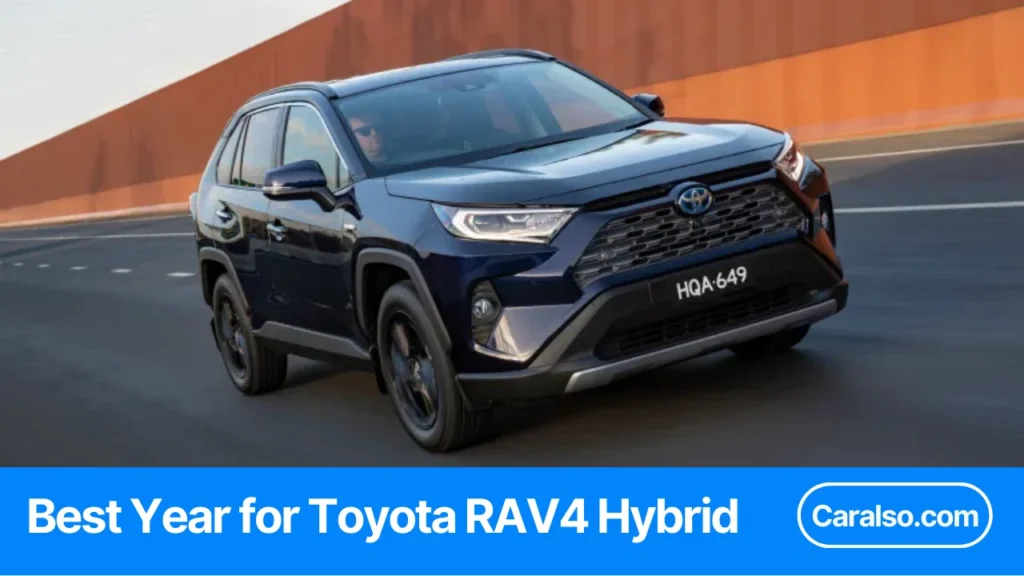
What Is the Best Year for the RAV4 Hybrid?
If a friend asks me in the parking lot, here is what I tell them. Buy a 2020 to 2022 RAV4 Hybrid if you can. Pick 2017 or 2018 if you need to save money. Try to skip 2016 and 2019 unless the price and history are perfect.
Here is the fast breakdown I use when helping people shop:
| Model year(s) | My verdict | Why I like or avoid it | Key things to check |
|---|---|---|---|
| 2016 | Avoid or heavy caution | First RAV4 Hybrid year. More complaints about brakes, interior parts, lights, and paint than later years. Hybrid battery still on the older 8-year / 100,000-mile warranty. | Only buy with full service history. Have a shop check for brake issues, dash warnings, and any water leaks. |
| 2017–2018 | Best budget used years | Same generation as 2016 but with many early bugs ironed out. Good safety tech for the age and strong hybrid MPG around 34–40 mpg depending on conditions. | Normal used-car checks plus hybrid health scan. Make sure all recalls are done and there are no signs of roof or door leaks. |
| 2019 | Avoid if possible | First year of the current (5th) generation. Highest complaint volume. Issues with fuel tanks that will not fill fully and “distance to empty” reading low. Also the start of the high-voltage rear cable corrosion story on AWD hybrids. | Confirm fuel tank and fuel gauge service bulletins are completed. Ask the dealer to check the rear motor cable campaign. Walk away from any car with water in the spare tire well. |
| 2020–2021 | Best balance of price and reliability | Still the newer 5th-gen platform with 219 hp and 40 mpg combined, but past the rough 2019 launch year. Hybrid battery warranty jumps to 10 years or 150,000 miles on 2020 and newer. Some units still fall under the fuel tank and rear cable corrosion programs, but Toyota now has clear fixes and extended support. | Run the VIN for open recalls and service campaigns. Make sure fuel range looks normal and the rear motor cable inspection or repair is documented. If that checks out, these are my favorite used years. |
| 2022–2024 | Best for tech, warranty, and safety | Very strong safety record with 5-star NHTSA ratings and IIHS Top Safety Pick awards on recent models. Updated infotainment and driver-assist tech. Still within new-car warranty plus the long hybrid battery coverage. There is a recall for backup cameras on some 2022+ hybrids, but it is a simple software update. | Check for completed camera software update. Confirm basic stuff on a test drive: smooth hybrid handoff, quiet drivetrain, no warning lights. If you want a “buy it and just drive it” hybrid, start here. |
| RAV4 Prime / RAV4 Plug-in Hybrid (2021–2025) | Great if you want real EV range | Plug-in version of the RAV4 with 300+ hp and roughly 40+ miles of electric range, depending on year and test. Uses the same long 10-year / 150,000-mile battery warranty from 2020 onward. Higher price but very low fuel use if you charge at home. | Make sure you actually have a good way to charge. Check for any completed campaigns on the rear motor cable. Look for even tire wear, since the torque hit is strong on these. |
If you want the simple rule.
I tell people to start their search at 2020, widen to 2017–2018 if the budget is tight, and only touch 2016 or 2019 with a very clean history and a solid inspection from a hybrid-savvy shop.
RAV4 Hybrid Model Years at a Glance
When people ask me about RAV4 Hybrid years, I think in generations. That makes it way easier to compare power, MPG, and warranty.
When did Toyota start making the RAV4 Hybrid?
Toyota launched the RAV4 Hybrid for the 2016 model year. It came in as part of the facelifted fourth-generation RAV4 and used a 2.5 liter four cylinder engine with electric motors for a total of about 194 hp and around 33–34 mpg combined.
Every RAV4 Hybrid from 2016 through 2025 uses a 2.5 liter gas engine plus Toyota’s Hybrid Synergy Drive. The big changes over the years are power, MPG, chassis, and the hybrid battery warranty.
Fourth-generation RAV4 Hybrid (2016–2018)
These are the first RAV4 Hybrids. They look like the older, rounded RAV4 body.
- Model years: 2016, 2017, 2018
- Generation: XA40 (4th gen)
- Powertrain: 2.5L I-4 plus electric motors, around 194 hp, CVT, standard AWD.
- EPA MPG: roughly 34 city / 30–31 highway / 32–33 combined depending on trim and source.
2016 is the launch year. Same basic hybrid system as other Toyota hybrids from that era. It is efficient, but it also shows more complaints on things like brakes, lights, interior trim, and paint than later hybrid years.
By 2017 and 2018 Toyota had dialed things in. You still get good MPG and Toyota Safety Sense driver assist tech on many trims. These two years are usually much calmer in complaint data than 2016.
Fifth-generation RAV4 Hybrid (2019–present)
For 2019, Toyota moved the RAV4 onto the TNGA-K platform. That brought a new body, new interior, and a stronger hybrid system.
- Model years: 2019 onward
- Generation: XA50 (5th gen)
- Powertrain: 2.5L hybrid system rated at 219 hp, with an electric rear motor for on-demand AWD.
- EPA MPG: around 41 city / 37–38 highway / 39–40 combined on early 5th gen hybrids. Later years stay near that, with small changes by trim.
So the 5th gen hybrid is both quicker and more efficient than the old one. It also picked up newer safety tech like Toyota Safety Sense 2.0 and better infotainment.
The flip side. 2019 as the first year of this new platform carries the most complaints and service bulletins out of the hybrid years. Fuel tank range, electronics, and hardware around the roof rails and rear diff area are the hot spots. I will dig into that in the “years to avoid” section next.
Hybrid battery and warranty overview by year
Toyota hybrids are pretty tough, but the paper warranty changed in a big way starting in 2020.
From Toyota’s own press info and dealer sites:
- Before 2020 most Toyota hybrids had an 8-year / 100,000-mile hybrid battery warranty in the U.S.
- For model year 2020 and newer, Toyota extended the hybrid battery coverage to 10 years / 150,000 miles.
That makes the year line very simple in my head. If you want the longest factory backup on the battery, you start at 2020.
Here is the at-a-glance chart I use when comparing years:
| Model years | Generation | Hybrid power (approx) | EPA rating, city / combined* | Hybrid battery warranty (U.S.) |
|---|---|---|---|---|
| 2016–2018 | 4th gen RAV4 Hybrid | 194 hp | Around 34 / 32–33 mpg | 8 years or 100,000 miles |
| 2019 | 5th gen, first year | 219 hp | Around 41 / 39–40 mpg | 8 years or 100,000 miles |
| 2020–2025 | 5th gen, updated | 219 hp | Around 41 / 39–40 mpg. Woodland and some trims slightly lower. | 10 years or 150,000 miles |
*EPA figures vary slightly by trim and source, but these are the ballpark numbers across Toyota and independent tests.
RAV4 Hybrid Years to Avoid (and Why)
I like the RAV4 Hybrid a lot. I still tell people to be picky on a couple of years.
Short version.
I treat 2016 and 2019 as “extra caution” years. I also watch for three hybrid-specific problem patterns that can show up across multiple years: water leaks, fuel tank range issues, and high-voltage cable corrosion.
Why 2016 RAV4 Hybrid is a risky first year
2016 is the very first RAV4 Hybrid. Like a lot of first-year models, it had some growing pains.
Complaint data that CoPilot pulled from CarComplaints and NHTSA shows 2016 with elevated reports of:
- Interior accessory failures
- Body and paint problems
- Brake performance issues
- Exterior accessory failures
- Interior and exterior light problems
- Some fuel system and steering complaints
On top of that, 2016 sits under the older 8-year / 100,000-mile hybrid battery warranty, not the newer 10-year / 150,000-mile deal.
So how do I treat 2016 in the real world?
- I only consider it if the price is very good versus a 2017 or 2018.
- I want a full service history and no accidents on the report.
- I ask a hybrid-savvy shop to scan the hybrid system, check the brakes hard, and inspect for any signs of leaks or electrical weirdness.
If it passes all of that, a 2016 can still be a fine commuter. I just would not call it a “best year” when 2017 and 2018 are usually nearby in price and cleaner in the data.
2019 RAV4 Hybrid. New generation teething issues
2019 is where the fifth generation starts. New chassis. New body. New hybrid system tune. That is cool for MPG and performance. It is not so cool for early bugs.
Several sources agree that 2019 has the highest complaint count of the RAV4 Hybrid years so far, plus a big stack of technical service bulletins.
The main things I watch for:
1. Fuel tank that will not fill fully
Some 2019 and 2020 hybrids have a fuel tank that cannot take the full rated capacity. Owners report the pump clicking off early and the “distance to empty” reading low. Green Car Reports covered this and noted that the issue ties back to the tank shape on the hybrid system.
Toyota has worked on this with a combination of tank and sender updates. On a used 2019 hybrid, I always:
- Ask the seller if the tank campaign or TSB work was done.
- Look for records mentioning tank replacement, fuel level sender, or range concerns.
- Watch range on a test drive. The gauge and “distance to empty” should look normal for a 14.5-gallon tank.
2. Roof rail leak and water intrusion
There is a service bulletin from Toyota that covers water entry from roof rail garnish clips on 2019–2021 RAV4 and RAV4 Hybrid, plus 2021 RAV4 Prime. Water can get in around the roof rails and drip into the cabin or rear area.
That matters on a hybrid. Water in the back of the vehicle can damage wiring, electronics, and even components around the high-voltage rear drive unit.
When I inspect one of these:
- I pull up the rear floor and look for moisture, staining, or musty smell around the spare tire well.
- I ask the dealer to check for that roof rail bulletin by VIN and confirm if the repair has been done.
3. High-voltage cable corrosion at the rear motor
On some 2019–2020 RAV4 Hybrids the high-voltage cable that feeds the rear motor can corrode at the connector. Owners on RAV4 forums and Toyota owner clubs have posted photos of heavy corrosion at the motor generator (MGR) connector.
This is sometimes called “cablegate” online. It has been serious enough that:
- Owners report hybrid malfunction warnings and loss of rear drive.
- There has been talk of extended coverage or campaigns on certain models in Canada and the U.S.
If I was buying a 2019 hybrid, I would:
- Run the VIN through Toyota’s owner site or ask a dealer to check for open service campaigns on the high-voltage cable.
- Ask the service department if the cable has already been inspected or replaced.
- Get any hybrid warning lights or AWD issues checked before signing anything.
Because of this stack of issues, 2019 is on my personal “avoid if you can” list. If the price is great and all the campaigns are done and documented, it might still make sense for some buyers. But if a similar 2020 is in range, I aim for that instead.
Known hybrid-specific issues across multiple years
Here is how I think about the main hybrid quirks, by pattern instead of by single year.
Water leaks and electronics risk
As I mentioned above, Toyota’s own bulletin covers water entry from roof rail clips on 2019–2021 RAV4 and RAV4 Hybrid, plus some Prime models.
Why that matters:
- Water inside the roof or rear quarter area can damage wiring harnesses.
- In a worst case on AWD hybrids, long term moisture could help corrosion along near the rear drive components.
What I do:
- Look for any signs of water trails on the headliner near the rails.
- Check under the rear cargo floor for rust, mold, or damp insulation.
- Confirm that any leak bulletin has been addressed by a dealer if the VIN shows it.
Fuel tank and fuel gauge issues
The fuel tank issue mainly hits 2019 and some 2020 hybrids. The tank may not accept its full rated capacity. There are also reports of “distance to empty” readings that seem too low.
Toyota’s response has focused on tank shape and fuel level sender behavior. Some owners have had parts replaced under warranty or special service campaigns.
What I do on a test drive:
- Watch the fuel gauge and range calculation over a decent drive.
- Check service history for fuel tank or sender work.
- Ask a Toyota dealer to print any completed campaigns that touch the fuel system.
If the fuel tank has been replaced and the owner says range is normal, I am much less worried.
Brake assist and stability control recalls
Across the recent RAV4 run, there have been some recalls that involve the braking and stability control systems. These are not hybrid-only problems, but they do show up on RAV4 Hybrids as well.
I do not blacklist a year for this by itself. I just make sure:
- All recalls on ABS, stability control, and brake assist are done.
- The brake pedal feels firm and consistent. No pulsing and no warning lights.
So, for years to avoid, here is my honest shopping rule:
- 2016 and 2019 go in the “extra caution” bucket. I only buy if inspection, history, and price all line up.
- 2017–2018 and 2020+ are where I usually steer friends, because the known issues are fewer and the fixes are better documented.
In the next sections of the full guide, I would break down the best years by budget and talk more about battery life and ownership costs. For now, if you remember nothing else, remember this simple thing.
Start your search at 2020, stretch back to 2017–2018 if the wallet needs it, and treat 2016 and 2019 as “prove it to me” years.
Best Years for the Toyota RAV4 Hybrid (By Buyer Type)
We all shop a little different. Here is how I match RAV4 Hybrid years to real buyers.
Best budget years: 2017–2018
You want hybrid MPG but need to keep the payment low. I point people to 2017 and 2018 first.
- Second and third hybrid years, so many 2016 bugs are ironed out.
- Solid safety tech for the age (Toyota Safety Sense).
- Real world low to high 30s mpg.
Best if you want a proven setup, can live with an older screen, and are fine with the older 8 year or 100,000 mile battery warranty.
Best for long-term ownership: 2020–2022
If you plan to keep the RAV4 Hybrid 8 to 10 years, I start at 2020.
- Same 219 hp hybrid system as 2019, but past most of the early complaints.
- Hybrid battery warranty jumps to 10 years or 150,000 miles on 2020 and newer.
- Better infotainment and driver assist than the 2017–2018 group.
Good fit if you want modern tech and strong warranty backup, but do not want to pay brand new money.
Best for tech and comfort: 2022–2024
You want the newest screen, the most safety, and the quietest cabin. Look at 2022 to 2024.
- Updated infotainment and digital displays vs earlier 5th gen years.
- Recent RAV4 Hybrids score 5 stars at NHTSA and earn IIHS Top Safety Pick on the right trims.
- Still deep in both basic warranty and the 10 year hybrid battery coverage.
Great if you want a car you can just drive and only see the dealer for routine service and recalls.
Best for real EV range: RAV4 Prime (plug-in) 2021+
If you can charge at home and want electric range, the RAV4 Prime is the pick.
- Plug-in hybrid with about 300+ hp and around 40+ miles of EV range depending on year and test.
- Uses the same long hybrid battery warranty as other 2020+ Toyota hybrids.
- Costs more, but fuel use can drop a lot if you plug in every day.
I usually tell friends:
If you charge often and want hot-hatch speed in a family SUV, go Prime. If not, a regular 2020+ hybrid is the better value.
Quick match table
| Buyer type | Year range I start with | Why |
|---|---|---|
| Tight budget, wants hybrid MPG | 2017–2018 | Cheaper to buy, early bugs sorted, decent safety |
| Wants to keep it 8–10 years | 2020–2022 | Longer battery warranty, improved reliability vs 2019 |
| Wants latest tech and safety | 2022–2024 | Newer screens and software, top safety scores, full warranty |
| Wants EV range and big power | 2021+ RAV4 Prime | Real electric range, strong performance, long battery warranty |
RAV4 Hybrid Reliability by Year – Data Snapshot
Here is the short reliability story from complaints, recalls, and ratings.
Complaints and recall patterns
Across owner complaint and recall data, two years stand out: 2016 and 2019.
- 2016 shows more brake, interior, paint, and light issues than later 4th gen hybrids.
- 2019, the first 5th gen year, has the highest complaint volume, with fuel tank, electronics, and leak issues.
Years like 2017–2018 and 2020–2022 look calmer in both complaints and serious defect stories.
Reliability scores and owner satisfaction
If you look at J.D. Power, U.S. News, and similar rankings:
- RAV4 models around 2018, 2020, and 2022 tend to score at or above average for reliability and quality.
- 2019 scores lower in some rankings, which lines up with the real world issues around fuel tanks and leaks.
That matches what I see in the field. Most hybrids are trouble free, but those two years make me slow down.
Common repair themes on RAV4 Hybrids
Across the years, the same clusters of issues show up:
- Brakes and ABS or stability control recall work.
- Electronics and infotainment glitches, mostly on newer 5th gen models.
- Fuel tank and range complaints on some 2019–2020 hybrids.
- Water leaks around roof rails and rear area on 2019–2021 builds.
- High voltage rear cable corrosion on some AWD hybrids.
Problems by year: quick verdict
This is the way I summarize it when someone wants the one screen version:
| Year or range | Hot spots | Recall/TSB level | My verdict |
|---|---|---|---|
| 2016 | Brakes, interior/paint, lights | Medium | Extra caution. Only with great history and inspection. |
| 2017–2018 | Normal wear items | Low to medium | Solid. My favorite budget years. |
| 2019 | Fuel tank, leaks, rear cable, electronics | High | Avoid if you can. Only consider if all campaigns are done and priced right. |
| 2020–2022 | Occasional fuel tank or leak issues, but fixes exist | Medium | Strong pick. Good scores and longer battery warranty. |
| 2023–2024 | Mostly minor software and feature niggles | Low | Excellent. Newer tech, strong safety, full warranty coverage. |
If you keep this table in mind while shopping, you will already be ahead of most listings and dealer talk.
RAV4 Hybrid Battery Life and Warranty – Does Year Matter?
How long does a RAV4 Hybrid battery last?
Here I am talking about the high-voltage hybrid battery, not the small 12-volt one.
Toyota dealers and tech guides say most Toyota hybrid packs last around 150,000 to 200,000 miles, often 10 to 15 years, when the car is driven and serviced normally.
Plenty of real owners report going past 200,000 miles on the original pack when they keep the cooling system clean and drive the car regularly.
Battery warranty changes – the big 2020 upgrade
The warranty is where the model year really matters.
- Before 2020. Hybrid battery was covered for 8 years or 100,000 miles in the U.S.
- From model year 2020 onward. Toyota extended the hybrid battery warranty to 10 years or 150,000 miles, whichever comes first.
So if you want the longest factory safety net on the pack, you start your search at 2020 and newer.
Warning signs and replacement options
Most packs do not just die overnight. Common warning signs are:
- Big drop in MPG for no clear reason
- Engine running more than usual at low speeds
- Hybrid warning lights on the dash
- Fan in the rear or side of the cargo area screaming all the time
If a shop confirms a weak pack, you usually have three paths:
- New OEM pack at a dealer. Highest cost. Best for newer out-of-warranty cars.
- Remanufactured pack from a hybrid specialist. Cheaper, still tested.
- Used pack. Lowest cost, highest risk. I only do this with a trusted shop.
Owners and techs report traction battery replacement usually lands around 2,000 to 4,000 dollars, depending on who does it and if the pack is new or remanufactured.
How driving and climate change battery life
Hybrid batteries like being used, not parked.
You shorten battery life if:
- You do lots of very short trips where the car never warms up
- The car sits for weeks at a time without being driven
- You live in very hot or very cold climate and park outside all the time
- You tow heavy loads often or run loaded in steep mountains
You help battery life if:
- You drive the car at least once a week
- You keep vents and filters for the hybrid cooling path clean
- You avoid baking the car in direct sun every single day when you can
Bottom line. Toyota built these packs to last. The warranty line at 2020 just makes newer years even more attractive if you plan to keep the RAV4 Hybrid a long time.
RAV4 Hybrid Ownership Costs – Does the Year Change What You Pay?
Fuel economy by year and generation
Fuel is where the RAV4 Hybrid pays you back.
- 2016–2018 hybrids sit around 32 to 33 mpg combined, give or take a couple.
- 2019 and newer 5th gen hybrids are closer to 39 to 40 mpg combined, with around 41 mpg city.
- The RAV4 Prime can run around 40+ miles on electricity, then acts like a regular hybrid in the high 30s mpg once the pack is low.
Some trims like Woodland use all-terrain tires and sit a bit lower on MPG. The basic rule is simple. Newer hybrids use a little less fuel per mile than the older 4th gen group.
Typical maintenance and repair costs by age band
Good news here. The RAV4 platform is pretty cheap to keep alive.
CarEdge and RepairPal style data put 10-year maintenance and repair costs for a RAV4 around 6,000 dollars, which is lower than the average compact SUV.
Dealers and cost guides say five years of ownership on a RAV4 or RAV4 Hybrid usually runs around 4,000 to 6,000 dollars in maintenance, depending on miles and dealer vs independent shops.
How I think about it:
- 0–5 years. Mostly oil changes, filters, tire rotations, maybe brakes. Very low repair risk.
- 6–10 years. Add in coolant service, spark plugs, more brake work, maybe suspension pieces. Still normal money for a daily SUV.
- 10+ years. Bigger items can pop up. Things like water leaks, rear motor cable, or hybrid pack on the unlucky few. These are rare but expensive.
Routine service cost is about the same as a gas RAV4. You skip some wear on the regular brakes because the hybrid does a lot of regen braking.
Insurance and depreciation by year
Insurance does not change much between hybrid and gas RAV4 in most markets. Newer, higher trim, and Prime models just cost more to insure because the sticker price is higher and the parts are more expensive.
Depreciation is where the RAV4 Hybrid quietly wins.
CarEdge data shows the RAV4 only losing about 28 percent of its value after five years. That leaves a five-year resale value around 27,000 dollars, depending on trim and miles.
Toyota dealers and used-car guides keep pointing out that Toyota hybrids, including the RAV4 Hybrid, are holding value very well in 2025.
In plain English. You pay a bit more up front for the hybrid, then get some of it back through lower fuel use and stronger resale.
Cost expectations by year group
Here is how I summarize costs when friends are shopping.
| Year group | Typical combined MPG | Big-ticket risks to watch | Who it fits best |
|---|---|---|---|
| 2017–2018 | About 32–33 mpg | Out-of-warranty repairs as it ages. Normal wear. Older 8 yr / 100k battery warranty. | Budget buyer who wants hybrid MPG and is OK with older tech. |
| 2019–2020 | About 39–40 mpg | Fuel tank range issues, roof leaks, rear HV cable, depending on campaigns. | Buyer who finds a great deal with proof that all TSBs and campaigns are done. |
| 2020–2022 | About 39–40 mpg | Same items as 2019 but with better fixes and fewer complaints. Long 10 yr / 150k battery warranty. | Best balance of cost, warranty, and reliability for most people. |
| 2023+ and RAV4 Prime | About 39–40 mpg hybrid, plus EV range on Prime | Higher purchase price. More complex tech. Same long battery warranty. | Buyer who wants newest tech, top safety, and plans to keep the SUV many years. |
So yes, the year does change what you pay, but mostly through fuel, warranty coverage, and the chance of a rare big repair. That is why I keep steering people to 2017–2018 on the low end and 2020–2022 in the sweet spot.
Used RAV4 Hybrid Buying Checklist (Any Year)
Here is the checklist I use when I go look at a used RAV4 Hybrid. You can run through this in under an hour and avoid most headaches.
Paperwork and history
I start with the boring stuff before I even drive it.
- Clean title in the same name as the seller
- Full service records if possible, not just oil change stamps
- Proof of hybrid system work, not just generic “multi point inspection”
- Printout of completed recalls and service campaigns from a Toyota dealer
- For 2019–2021, I want to see records for any fuel tank, roof leak, or rear motor cable work
- For 2020 and newer, I check build date and make sure the hybrid battery warranty still has time left
- I pull a Carfax or similar report and look for accidents, flood notes, or airbag deployments
If the story on paper feels sketchy, I walk away. There are too many RAV4s on the market to gamble.
10 things to check on a test drive
Once the paperwork looks good, I do the same test drive routine every time.
- Start the car cold and listen. It should fire up clean with no rattles or wild revs.
- Watch the dash when you key on. Every warning light should come on, then go out.
- Ease out of the lot. The handoff between electric and gas should feel smooth. No jerks.
- Brake hard a couple of times from city speed. Pedal should feel firm, not spongy, and no grinding.
- Hit a rough road. Listen for clunks in the front end or rear, which can hint at worn suspension.
- Try highway speed. Steering should track straight with no vibration in the wheel.
- Play with the infotainment. Touchscreen should respond fast, with no random restarts or freezes.
- Turn the HVAC through all modes. Make sure the system blows hot and cold and there are no odd smells.
- Watch the fuel gauge and “distance to empty.” If it shows a very short range on a full tank, I ask why.
- At the end, park somewhere quiet and listen with the windows down. Any whining, clicking, or fan noise that sounds off gets checked.
If something feels weird and the seller shrugs it off, I assume I will be the one paying for it.
Hybrid-specific inspection points for each era
I tune the inspection a bit by year group.
2016–2018
- Extra picky on brake feel and any ABS or traction lights
- Check all exterior lights, dash lights, and window switches
- Look over the paint for clearcoat failure or obvious resprays
- Make sure the hybrid cooling vents are not blocked with dust, dog hair, or trim pieces
These years can be great buys if the basic hardware has been cared for.
2019–2021
This is where I slow down and crawl around the car more.
- Lift the cargo floor and check for water, rust, or stains in the spare tire well
- Look at the headliner near the roof rails for water tracks
- Ask the dealer to confirm any fuel tank or fuel gauge bulletin work
- Ask if the rear motor cable has ever been inspected or replaced
- Watch for AWD or hybrid warnings on the dash after a long drive
If all the campaigns are done and the back of the car is bone dry, these can still be solid rigs.
2020 and newer
Here I focus on electronics and driver assist.
- Make sure lane keep, radar cruise, and pre-collision systems work like they should
- Ask if the windshield has ever been replaced and if the camera was recalibrated
- Confirm all software updates and recalls are current, including backup camera fixes
On any year, I still finish with a pre-purchase inspection from a shop that knows hybrids. Spending a couple hundred bucks up front is cheap insurance against a four figure surprise later.
RAV4 Hybrid vs Gas RAV4 – Does the “Best Year” Change?
I get this question a lot from folks cross-shopping. The short answer is that the same trouble years show up on both, but the hybrid often gives you more value if you drive enough.
Are RAV4 Hybrids more reliable than gas models in the same year?
The hybrid system itself is usually very solid. Toyota has been building this 2.5 liter hybrid setup for a long time. The common issues you see online are more about the shared platform than the battery or motors.
Stuff like roof leaks, fuel tanks, and infotainment bugs can hit gas and hybrid both. So I do not think “gas equals reliable and hybrid equals risky.” In most years, the hybrid is at least as good, and you get lower fuel costs on top.
Which years favor the hybrid over gas and vice versa?
For 2016, I lean gas or I jump to a later hybrid. That first hybrid year had more small issues than I like.
For 2017–2018, I like the hybrid. You get strong mpg and the kinks from 2016 are mostly sorted.
For 2019, I am picky on both gas and hybrid, since many of the complaints are about the new body and fuel system.
From 2020 through 2022, the hybrid wins for most people. Same chassis as the gas model, better mpg, and the longer battery warranty.
When a gas RAV4 might still make more sense
I still point some people to a gas RAV4.
- If you drive very few miles a year, the fuel savings from a hybrid might not justify the higher buy-in
- If you live somewhere extremely cold, park outside, and do lots of short trips, you may not see the full fuel benefit of the hybrid
- If you want to build a heavy off-road rig or tow near the limit all the time, a simple gas setup with fewer high voltage parts can be a bit easier to modify and repair
For most daily drivers in the U.S. who want a do-it-all SUV, I lean toward a 2020 to 2022 RAV4 Hybrid over the same year gas model.
FAQ – Best Year for Toyota RAV4 Hybrid
What year Toyota RAV4 Hybrid is the most reliable?
From what I see, 2020 to 2022 are the sweet spot for most owners. They avoid the first year bugs of 2019 and ride on a very mature hybrid system.
If you are shopping cheaper, 2017 and 2018 also have a nice track record when they are maintained.
Which RAV4 Hybrid years should I avoid?
I treat 2016 and 2019 as “prove it” years. They are not cursed, but they do show more issues than the other years.
With a clean history and all the recall work done, they can still be fine. I just would not pay top dollar when better years are out there.
What is the best year to buy a used RAV4 Hybrid on a budget?
If the budget is tight, I start at 2017 and 2018. You get hybrid mpg, decent safety tech, and calmer complaint data than 2016.
If you can stretch, an early 2020 with some miles on it is a great long term play thanks to the extended battery warranty.
How long do Toyota RAV4 Hybrid batteries last?
Most owners will see 10 to 15 years and well over 150,000 miles out of the high voltage pack with normal use. Many go longer.
Pre-2020 RAV4 Hybrids have an 8 year or 100,000 mile hybrid battery warranty. 2020 and newer get 10 years or 150,000 miles, which tells you how confident Toyota is.
Does the RAV4 Hybrid have a lot of problems?
Overall, no. For a modern SUV, the RAV4 Hybrid is one of the safer bets.
It has some known trouble spots in certain years, like fuel tanks and leaks, but most of those are covered by bulletins or recalls. If you avoid the sketchy years and check for completed campaigns, the odds are in your favor.
Is the RAV4 Prime (plug-in) better than the regular RAV4 Hybrid?
“Better” depends on how you use it. The Prime is quicker and can run many trips on electric power only, which is awesome if you charge at home.
The regular hybrid is cheaper and simpler, and you still get strong mpg without ever plugging in. If you will not plug in much, I would stick with a 2020+ regular RAV4 Hybrid instead of paying extra for the Prime.
Sources
Here are the main sources I leaned on for this guide:
- CarComplaints – Toyota RAV4 Hybrid overview
- Green Car Reports – Fuel tank issue on 2019–2020 RAV4 Hybrid
- Toyota Pressroom – Hybrid battery warranty extension for 2020+ models
- J.D. Power – 2018 Toyota RAV4 reliability and ratings
- RepairPal – Toyota RAV4 reliability rating
- CarEdge – Toyota RAV4 depreciation

Hey there,
How is it going?
I’m Meraj Sarker. I am a Car Mechanic and a student of Automobile Restoration here in Florida, USA. I’ve been studying automotive for around 9 years now. So you can rely on my recommendation. For me, studying and getting knowledge about automobile it’s really fun and entertaining. I will help you to get solutions for your car through this website. If you need any help let me know.