
When I’m shopping a used RAV4 or helping a friend buy one, I check recalls first. It takes 2 minutes. It can also save you a tow bill or a scary drive home.
This page is the clean, RAV4-specific recall rundown for the 2020 model year. I focus on what matters: how many recalls exist, what systems they hit, and what you should do next.
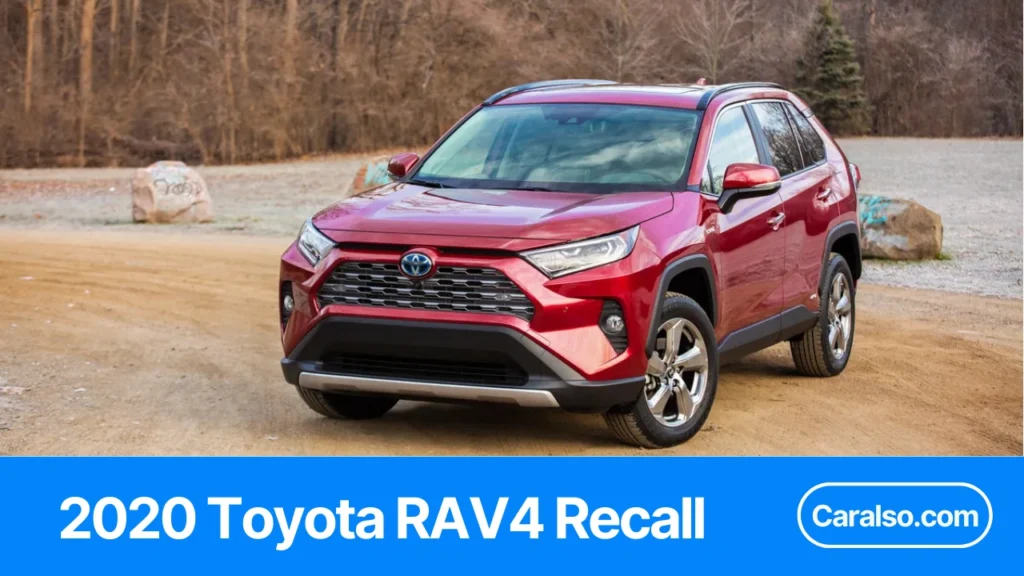
2020 Toyota RAV4 Recalls
How Many Recalls Does The 2020 Toyota RAV4 Have?
As of February 21, 2026, the 2020 Toyota RAV4 shows 6 NHTSA safety recalls in major recall databases. Your VIN may have 0 open recalls if previous owners already completed the repairs. The list can also change if a new campaign is added later.
Quick Answer Summary Table (Hero Asset)
| What You Want To Know | My Quick Answer |
|---|---|
| Total Safety Recalls Listed | 6 |
| Highest-Risk Categories | Airbags, Steering, Fuel System, Suspension, Engine Cooling |
| Fastest Next Step | Check your VIN, then book the free recall repair at a Toyota dealer |
Recall Categories At A Glance
| Recall Category | Count | What Can Happen | Typical Fix |
|---|---|---|---|
| Airbags (OCS Sensor) | 1 | Passenger airbag may not deploy | Inspect and replace sensor as needed |
| Steering Column | 1 | Driver airbag performance may be affected in a crash | Replace steering column |
| Fuel System (Fuel Pump) | 1 | Engine stall while driving | Replace fuel pump assembly |
| Electric Power Steering | 1 | Loss of power steering assist at low speeds | Replace steering gear box |
| Front Suspension (Lower Control Arm) | 1 | Control arm crack and possible separation | Replace both front lower arms |
| Engine And Engine Cooling | 1 | Coolant leak, overheating, possible stall, possible fire risk | Inspect and replace engine or engine block as needed |
How To Check Your 2020 RAV4 For Open Recalls (VIN In 60 Seconds)
I do this before I buy any used RAV4. I also do it once a year on my own cars. It takes 60 seconds if you already have the VIN.
Where To Find Your VIN (Windshield + Registration)
You need the 17-character VIN.
I usually grab it from one of these spots:
- Driver-side lower windshield. Look at the dash corner.
- Registration card.
- Insurance card.
- Driver-door jamb label.
If you are standing at the car, the windshield is fastest.
What The VIN Lookup Shows And What It Won’t Show
Here is what a VIN recall lookup is good at:
- It shows open safety recalls tied to your exact VIN.
- It tells you which campaigns still need a dealer repair.
Here is what it is not perfect at:
- It might not show recalls that were already completed. Many tools only show open items.
- A recall can be announced before every VIN database updates everywhere.
- Some recalls roll out in phases. Your VIN can show “remedy not available” until parts and procedures are ready.
Here is my 60-second routine:
- Copy the VIN. All 17 characters.
- Run it in the NHTSA recall checker.
- Run it in Toyota’s recall lookup too.
- If either site shows an open recall, I book a dealer appointment and ask for the campaign numbers.
Pro Tip: What I Ask The Dealer To Confirm Recall Completion (Used Buyers)
If I am buying a used 2020 RAV4, I want proof.
I ask for a campaign completion printout tied to the VIN.
I look for these fields:
- Campaign number
- Status: Open or Completed
- Completion date
- Dealer that performed the work
If the seller cannot produce that, I assume nothing. I verify the VIN myself.
2020 Toyota RAV4 Recall List (NHTSA + Toyota Campaign Numbers)
This is the recall list I use for the 2020 model year. I like seeing both numbers because different tools show different codes.
- NHTSA codes look like 20V286000.
- Toyota campaign codes look like 20TA08.
- Interim notices often use a TB code like 20TB08. That usually means Toyota started notifications while final parts or timing were still rolling out.
Recall Table Crosswalk (NHTSA Number, Toyota Number, Fix)
| System | NHTSA Campaign | Toyota Campaign | What Can Happen | What The Dealer Does | Applies To | Remedy Status Notes |
|---|---|---|---|---|---|---|
| Airbags (OCS Sensors) | 23V865000 | 23TA15 (Interim 23TB15) | Front passenger airbags may not deploy as designed | Inspect OCS sensors and replace if needed | Gas + Hybrid | Phased rollout by state. Toyota started in late Sep 2024, with humid states first |
| Steering Column (Airbag Performance) | 20V734000 | 20TA17 (Interim 20TB17) | Driver airbag performance may be affected in a crash | Replace steering column | Gas + Hybrid | Small population. Many owners will never see this one |
| Fuel System (Low-Pressure Fuel Pump) | 20V682000 (Expanded From 20V012) | 20TA02 (Interim 20TB02) | Engine may run rough, stall, and not restart | Replace low-pressure fuel pump | Gas | Phased implementation was used. VIN check matters |
| Steering (Electric Power Steering Assist) | 20V373000 | 20TA11 (Interim 20TB11) | Loss of steering assist at low speeds | Replace steering gear assembly | Gas + Hybrid | Most fixes are dealer parts replacement |
| Suspension (Front Lower Control Arms) | 20V286000 | 20TA08 (Interim 20TB08) | Control arm may crack and separate from the wheel assembly | Replace both front lower suspension arms | Gas + Hybrid | Toyota estimated about 3 hours for the repair |
| Engine And Engine Cooling (2.5L) | 20V064000 | 20TA04 (Interim 20TB04) | Coolant leak, overheating, possible stall, possible fire risk | Inspect engine block serial. Replace engine or block if involved | Gas + Hybrid | Inspection first. Replacement only if your engine block is in the affected range |
Airbags: OCS Sensors May Short Circuit (23V865000, 23TA15)
OCS means Occupant Classification System. It helps the vehicle decide how to manage the front passenger airbags.
What can happen:
- The sensor can short circuit.
- The system may not classify occupant weight correctly.
- Certain front passenger airbags may not deploy as designed in a crash.
What I do:
- I check my VIN first.
- If my VIN is included and the remedy is active, I schedule the inspection.
What the dealer does:
- Inspect the OCS sensors.
- Replace sensors if needed.
Important note:
- Toyota used a phased rollout and targeted humid states first. That means remedy timing can vary by VIN and location.
Steering Column: Issue May Affect Airbag Performance (20V734000, 20TA17)
This one is tied to a steering column component that may have been damaged during assembly.
What can happen:
- Driver airbag performance may be affected during deployment.
What the dealer does:
- Replace the steering column.
A detail I like to know:
- NHTSA documents list a small affected count for this campaign. That is why many 2020 owners never see it in their VIN results.
Fuel System: Low-Pressure Fuel Pump May Fail (20V682000, 20TA02)
This recall started earlier and expanded later. That is why you might see different NHTSA numbers in different databases.
What can happen:
- Warning lights can appear.
- Engine can run rough.
- Engine can stall.
- Vehicle may not restart.
What the dealer does:
- Replace the low-pressure fuel pump with an improved part.
My tip:
- This campaign used phased implementation. Your VIN lookup is the only way to know your current status.
Steering: Potential Loss Of Electric Power Steering Assist (20V373000, 20TA11)
This recall involves electric power steering.
What can happen:
- Water can enter the steering gear area.
- Steering assist can drop at low speeds.
- Parking maneuvers can take more effort.
What the dealer does:
- Replace the steering gear assembly.
Suspension: Front Lower Suspension Arms May Separate (20V286000, 20TA08)
This is one I do not ignore.
What can happen:
- Cracks can form in the front lower suspension arms.
- An arm can separate from the front wheel assembly.
- Loss of control risk goes up.
What the dealer does:
- Replace both front lower suspension arms.
A useful data point:
- Toyota’s owner notice estimated about 3 hours for the repair, plus whatever time the dealer needs for scheduling.
Engine And Engine Cooling: Engine Block Porosity And Coolant Leak (20V064000, 20TA04)
This recall involves certain 2.5L 4-cylinder engines used in the RAV4 and RAV4 Hybrid.
What can happen:
- Porosity in engine castings can lead to cracks.
- Coolant can leak internally or externally.
- Engine overheating can follow.
- Toyota also flagged a potential fire risk in certain scenarios.
What the dealer does:
- Inspect the engine block casting serial number.
- If your block is not in the affected range, no repair is needed.
- If your block is involved, Toyota’s remedy path can include engine block replacement, or engine replacement depending on findings.
My tip:
- If you smell coolant or see coolant loss, do not wait. Even if it is not recall-related, that is a real symptom.
Which 2020 RAV4 Recalls Affect Hybrid Vs Gas Models?
I get this question a lot from hybrid shoppers. It matters because some recall databases show a model-year list, not your exact VIN.
So I use a simple rule.
If the campaign lists RAV4 and RAV4 Hybrid, I treat it as “both can be affected.”
If it lists only RAV4, I treat it as “gas can be affected.”
Then I verify by VIN.
Quick Matrix Table (Gas Vs Hybrid)
| Recall Campaign (2020 RAV4) | Gas RAV4 | RAV4 Hybrid | Notes I Use When Checking |
|---|---|---|---|
| 23V865, Toyota 23TA15 (OCS Sensors) | Yes | Yes | Includes RAV4 and RAV4 Hybrid in Toyota owner notice lists |
| 20V734, Toyota 20TA17 (Steering Column, Airbag Performance) | Yes | Yes | Includes 2020 RAV4 and 2020 RAV4 Hybrid |
| 20V682 (Fuel Pump Expansion), Toyota 20TA02 | Yes | No | The expanded NHTSA scope list shows RAV4, not RAV4 Hybrid |
| 20V373, Toyota 20TA11 (Electric Power Steering Assist) | Yes | Yes | Lists 2019 to 2020 RAV4 and 2020 RAV4 Hybrid |
| 20V286, Toyota 20TA08 (Front Lower Suspension Arm) | Yes | Yes | Owner notice lists RAV4 and RAV4 Hybrid |
| 20V064, Toyota 20TA04 (Engine Coolant Leak Risk) | Yes | Yes | Toyota documents discuss hybrid behavior if a stall occurs |
Here is why this matters when you are buying used.
- A hybrid listing can be clean, but the VIN can still have an open airbag or steering recall.
- A gas model can show a fuel pump recall that a hybrid does not.
- Some campaigns hit a small build window. I have seen a 2020 RAV4 with 0 open recalls and another with 2 open recalls on the same day.
What To Do If Your 2020 RAV4 Has An Open Recall
If my VIN shows an open recall, I do not overthink it. I just run the steps. Most recall repairs are handled by an authorized Toyota dealer at $0 for parts and labor.
Step-By-Step Checklist
- Confirm the recall is open on your VIN.
I check the NHTSA VIN tool and Toyota’s lookup. - Write down the campaign numbers.
I save the NHTSA code and the Toyota code. Example: 20V286 and 20TA08. - Call a Toyota dealer service department and schedule.
I tell them the campaign code first. It speeds things up. - Ask two questions on the phone.
- Do you have parts in stock for my VIN?
- What is the estimated shop time?
- Ask about transportation.
Some dealers offer a loaner or a ride. Some do not. I ask before I show up. - Bring your recall letter if you have one.
It can help the advisor pull the exact bulletin faster. - Keep your paperwork.
I keep the final repair order PDF. It helps resale. It also helps if a future owner asks for proof. - If you already paid for the same repair in the past, ask about reimbursement.
Reimbursement is real, but the rules matter. I keep receipts and part numbers.
What If The Remedy Isn’t Available Yet? (Phased Recalls Explained)
Sometimes your VIN shows an open recall, but the tool says “remedy not available.” That usually means Toyota has identified the issue, but the final repair parts or procedure are not ready for your VIN yet.
This is what I do in that situation:
- I ask the dealer if my VIN is in an interim phase.
- I ask if they can put me on a callback list when the remedy goes live.
- I sign up for recall alerts as a backup.
- I make sure my registration address is current so the owner letter does not go to the wrong place.
- I re-check my VIN every 30 days until it flips to remedy available.
If the recall notice tells you not to drive, I follow that. If it does not, I still ask the dealer what Toyota recommends for my exact campaign.
Buying A Used 2020 RAV4? Here’s How To Verify Recall Repairs
When I buy a used RAV4, I assume nothing. I verify. Recalls are easy to miss in listings. And “no open recalls” can mean “we did not check.”
The 5-Point Used-Buyer Recall Verification
- Run The VIN In Two Places
I check the VIN on NHTSA first. Then I check it on Toyota’s recall lookup.
I save screenshots with the date. - Ask For A Dealer Campaign Completion Printout
I ask the seller or dealer for a campaign status printout tied to the VIN.
I want to see every campaign listed as Open or Completed.
I also want a completion date for anything already done. - Cross-Check Service Records Or A Vehicle History Report
I look for lines like “Safety Recall Performed” or “Recall Repair Completed.”
If it shows a recall, I still match it to the campaign number.
If it does not list the campaign number, I treat it as unverified. - Confirm Any “Remedy Not Available Yet” Campaigns And Make A Plan
If the VIN shows an open recall with no remedy yet, I ask two questions:- When does the dealer expect parts for my VIN?
- Can they put my VIN on a call-back list?
I also make sure the registration address is current. That is how the owner letter finds you.
- Use Clear Negotiation Language
I keep this simple. I ask for time or money.
Here are scripts I actually use:- “I’ll buy today if you complete the open recall campaigns before delivery.”
- “If you can’t do it before delivery, take $300 off. I’m losing a half day at the dealer.”
- “Put it in writing that the vehicle has no open safety recalls on the delivery date.”
If the car is being sold as Toyota Certified Used, I still check the VIN. It should not be certified with open campaigns. But mistakes happen.
Pro Tip: What To Do If A Dealer Says “No Open Recalls” But You’re Not Sure
I see this a lot. Here is how I handle it.
- Show Them Your VIN Results
I hand them the VIN and the screenshot from the recall lookup. - Ask Them To Re-Run The VIN In Their System
I ask for the printed campaign inquiry, not a verbal answer. - Remember This VIN Rule
Many public tools show unrepaired recalls. They are not always great at showing completed recalls.
Some new campaigns can take time to appear everywhere. - Call The Manufacturer If The Answers Do Not Match
I call Toyota with the VIN and ask them to confirm campaign status.
I do not argue. I just verify until the paperwork matches the VIN tools.
Recall Vs TSB Vs Service Campaign (Don’t Mix These Up)
I see people mix these up every week. It costs money. It also wastes time at the service counter.
Definitions (Snippet-Friendly)
| Term | What It Is | Safety Related | Cost To You | Can It Expire |
|---|---|---|---|---|
| Safety Recall | A safety defect or safety standard issue that must be corrected | Yes | $0 for the recall repair | No. It never expires |
| TSB (Technical Service Bulletin) | Repair instructions or diagnostic guidance sent to dealers | Usually no | Often $0 only if under warranty or covered program | Not a recall. No “expiration,” but no free promise |
| Limited Service Campaign (LSC) | A factory program to fix a non-safety issue | No | $0 while active | Yes. It can have an end date |
| Special Service Campaign (SSC) | A factory program to fix a non-safety issue for customer satisfaction | No | Often $0 | Often no expiration, depending on program |
| Warranty Enhancement Program (WEP) | Extra warranty coverage for a part under specific conditions | No | $0 if you meet coverage rules | Yes. Time and mileage limits apply |
Why A TSB Isn’t “Free Like A Recall” (Usually)
A TSB is not a recall.
It usually means Toyota knows about a pattern and has a repeatable fix.
What it does not mean:
- It does not automatically mean a free repair.
- It does not automatically extend your warranty.
What I do instead:
- I ask the dealer if the repair is covered by warranty.
- I ask if there is a Customer Support Program or Warranty Enhancement Program for the same issue.
- If the car is out of warranty, I ask for a printed estimate before any work starts.
Common Shopper Mistakes
I see these over and over:
- Thinking a TSB equals a recall.
- Searching by model year only, then assuming their VIN is included.
- Believing “0 open recalls” means the car never had a recall.
- Not asking for the campaign completion printout when buying used.
- Ignoring limited service campaigns because they are not “safety.” Some of them expire.
- Not updating the registration address, then missing the owner notice letter.
If you only do one thing, do the VIN check. Then get the campaign status printout before you buy.
FAQs
Are 2020 Toyota RAV4 Recall Repairs Free?
Yes. I pay $0 for a safety recall repair.
The dealer bills Toyota for parts and labor. You should not get a recall invoice.
If a dealer quotes you a price, I ask them to re-check the campaign number. I also ask if they are mixing a recall with unrelated maintenance.
Can I Still Drive My 2020 RAV4 With An Open Recall?
It depends on the recall instructions.
If the notice says “Do Not Drive” or “Park Outside,” I follow that. I do not gamble.
If the notice does not say that, I usually keep driving and schedule the repair ASAP. I also avoid long trips until it is done.
One detail I keep in mind for the 2020 RAV4. Some recalls can have no warning signs before the problem happens. That is why I do not sit on an open campaign.
How Long Does A Recall Repair Take?
Most recall repairs are measured in hours, not days.
A real example from a 2020 RAV4 campaign: the front lower suspension arm recall lists about 3 hours of repair time.
Your total time at the dealer can be longer. Scheduling, check-in, and parts availability matter. I plan for a half day unless the dealer gives me a tighter window.
If the recall involves inspection first, I ask for two time estimates. One for inspection. One for the repair if my VIN is affected.
Do Recalls Hurt Resale Value?
Open recalls can hurt your sale. Completed recalls usually do not.
Here is what I see in the real world:
- A private buyer gets nervous when they see an open airbag or steering recall.
- A dealer may reduce a trade-in offer if they need to book service time before resale.
- A clean stack of recall completion paperwork makes the sale smoother.
My move is simple. I fix open recalls before I list the car. Then I keep the repair order as proof.
How Do I Know If Recall Work Was Already Done?
I verify it in three steps.
- Run the VIN check for open recalls. If it shows 0 open recalls, that is a good start.
- Ask a Toyota dealer for a campaign completion printout tied to the VIN.
- Match the campaign numbers to service records or repair orders.
I do not rely on a seller’s memory. I rely on campaign status paperwork.
Key Takeaways
- I treat the 2020 RAV4 as a VIN-check vehicle. Model-year lists are not enough.
- I expect recall repairs to cost $0 at a Toyota dealer.
- I plan for hours, not minutes. One 2020 RAV4 campaign lists about 3 hours of repair time.
- If a recall says “Do Not Drive” or “Park Outside,” I follow it. No exceptions.
- For used buys, I ask for a campaign completion printout and keep the repair order for resale.
Sources
- Cars.com, “2020 Toyota RAV4 Recalls”
- NHTSA, “Recalls” (VIN Recall Lookup Tool)
- Toyota, “Toyota Recall And Campaign Lookup”
- RepairPal, “2020 Toyota RAV4 Recalls”
- Toyota UK, “Recalls”

Hey there,
How is it going?
I’m Meraj Sarker. I am a Car Mechanic and a student of Automobile Restoration here in Florida, USA. I’ve been studying automotive for around 9 years now. So you can rely on my recommendation. For me, studying and getting knowledge about automobile it’s really fun and entertaining. I will help you to get solutions for your car through this website. If you need any help let me know.