
I am talking about one specific vehicle here.
The 2020 Toyota RAV4 Hybrid, U.S. spec.
On paper it looks great. Strong MPG. Good safety. Big sales.
In the real world it is mostly solid, but not problem-free.
Most of the headaches I see from owners cluster in two places:
- The fuel tank and real-world range
- The big low-pressure fuel pump recall that hits many 2019–2020 Toyotas, including RAV4 Hybrid
On top of that there are the usual new-generation complaints. Ride noise. Some rattles. A few infotainment glitches. The hybrid system itself is usually not the main villain.
In this guide I will:
- List the main 2020 RAV4 Hybrid problems you should know about
- Explain what Toyota has done with recalls, TSBs, and “customer support” programs
- Show you how I check a used 2020 RAV4 Hybrid so you do not buy someone else’s headache
If you are looking at a used 2020 Hybrid right now, this is the stuff I would check standing next to you in the lot.
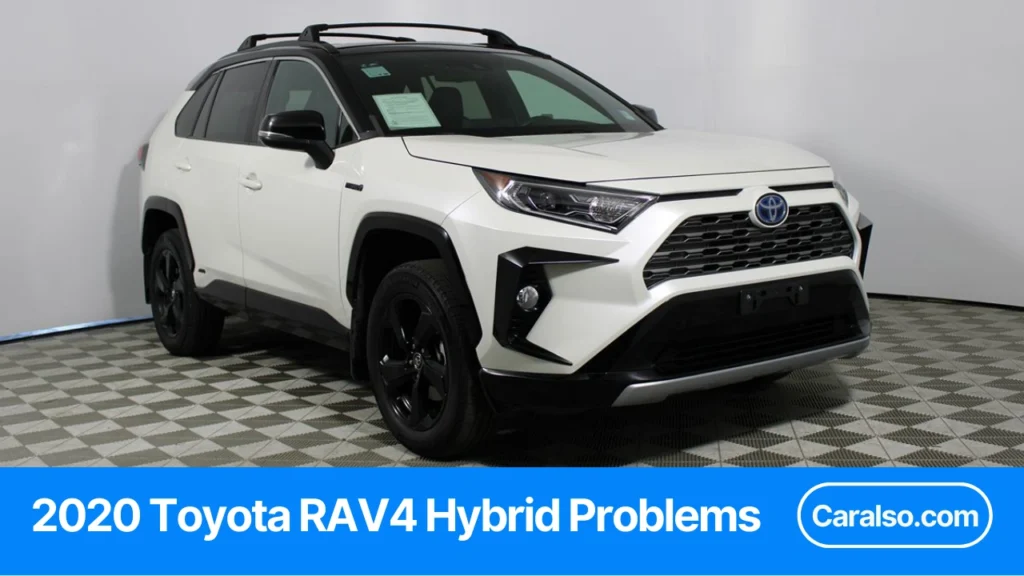
Is the 2020 RAV4 Hybrid reliable, or trouble?
Short verdict
The 2020 RAV4 Hybrid is generally reliable, and it is a clear step up from the rougher 2019 launch year. Complaint data and buyer guides put it in the “good, not perfect” bucket.
Most of the drama comes from:
- The fuel tank / range issue on 2019–2020 Hybrids, where the tank will not take its full rated capacity at the pump
- The low-pressure fuel pump recall, which can cause rough running or a stall if the bad pump is still installed
Outside of that, the 2020 Hybrid sees normal levels of minor complaints. Wind and road noise. Some clunks over bumps. Occasional infotainment bugs. Most of those are comfort problems, not deal-breakers.
So my simple answer:
I am fine recommending a used 2020 RAV4 Hybrid
if the fuel pump recall is done, any fuel tank work is documented, and the price makes sense next to a 2021–2022.
If a clean 2021 Hybrid is only a little more money, I usually nudge people newer. But a sorted 2020 at a real discount is still a strong buy.
Key 2020 RAV4 Hybrid problem areas
Here is the quick hit list I keep in my notes when I look at one of these.
| Problem area | How it shows up | How serious is it? | Toyota fix / status | Deal-breaker? |
|---|---|---|---|---|
| Fuel tank not filling fully | Pump clicks off early. Many owners only get about 9–11 gallons in from low fuel. Real-world range is much shorter than expected. | Annoying. Not a direct safety issue. But it hurts road-trip range and makes the gauge feel untrustworthy. | Toyota has issued TSBs and in some regions “customer support programs” that replace the tank, sender, and sometimes filler parts. Results are mixed. Some owners see a big improvement. Some do not. | Only a hard no for me if the fix was tried and failed and you care a lot about long highway range. |
| Fuel pump recall | Rough running, no-start, or rare stall. Fuel pump impeller can swell and stop spinning. | Real safety concern if it stalls in traffic. Also a reliability red flag if the bad pump is still in there. | Covered by a big recall that includes 2019–2020 RAV4 and RAV4 Hybrid. Dealer replaces the low-pressure fuel pump with an updated part for free. | Yes. I walk away if the recall is not done and the seller refuses to get it handled. |
| Drivability / noise | Some owners complain about engine drone under load, wind noise at highway speeds, and suspension thumps or clunks. A few report a “rubber band” feel from the hybrid system. | Mostly comfort and expectations. The e-CVT keeps revs up on hills, so it sounds busy. Not usually a failure, just a feel thing. | Often labeled “normal operation.” Sometimes better tires, correct pressures, and updated software help. Worn struts or loose trim can be fixed. | Case by case. I decide on a long test drive. If it bugs you in 20 minutes, it will drive you crazy at 3 years. |
| Tech glitches | Head unit rebooting, Bluetooth dropping, backup camera lag or going black once in a while. | Annoying but usually not dangerous. Does not mean the hybrid system is dying. | Toyota has pushed software updates and replaced some head units under warranty. Many trucks run fine after an update. | I do not walk away for one glitch during a drive. But if the owner has a stack of infotainment repair invoices, I budget for a new unit. |
| Isolated hybrid / electrical faults | “Check hybrid system” warning, limp mode, or 12V battery dying if it sits. These are much less common than fuel tank complaints. | These can be serious when they show up, but they are not widespread on 2020. Most are one-off parts failures. | Usually fixed under warranty. Dealer will pull codes, test the hybrid system, and replace failed components. | I want full documentation. If a 2020 Hybrid has repeat hybrid warnings with no clear fix, I walk. |
If you keep that table in mind, the rest of the article is just about helping you confirm two things on any 2020 RAV4 Hybrid you are looking at:
- Recalls and TSB work are truly done
- The way it drives and the way the fuel tank behaves fits your life
2020 Toyota RAV4 Hybrid common problems (by system)
Here’s how the 2020 RAV4 Hybrid actually fails in the real world, broken down by system. I’m sticking to problems that show up over and over in owner reports, complaints, and bulletins.
2020 RAV4 Hybrid fuel tank problem (range complaints)
This is the one almost every 2020 Hybrid owner has heard about.
Typical symptoms
Owners report:
- The pump clicks off early when they try to fill up
- The tank only takes about 9–11 gallons, even when the gauge is very low
- Real-world range is 80–150+ miles shorter than the EPA math suggests
On paper, a 2020 RAV4 Hybrid with around 40 mpg combined and a tank near 14.5 gallons should be close to 550–580 miles of range. In practice, some owners are seeing 350–420 miles before they have to refuel.
Likely cause
Toyota has never said “here is the exact failure,” but between TSBs and technical writeups, the problem looks like a mix of:
- The tank shape and internal baffling on 2019–2020 Hybrids
- How the venting and filler neck behave at the pump
- How the fuel level sender and gauge are calibrated
In short, the system thinks the tank is full and shuts off the pump early, even though there is space left.
Toyota’s response
Toyota has issued technical service bulletins and in some regions a “Customer Support Program” for 2019–2020 RAV4 Hybrids:
Typical dealer fixes include:
- Replacing the fuel tank
- Replacing the fuel level sender
- Replacing or adjusting the filler neck / vent parts
Some owners report a big improvement after this work. Others say the range only improves a little or not at all.
What this means if you’re buying used
Here is what I do when I’m looking at a 2020 Hybrid:
- Read the service history
- Look for words like “fuel tank,” “fuel sender,” “range concern,” or “Customer Support Program” on Toyota service invoices.
- Ask the seller directly
- “Did you ever have trouble filling the tank?”
- “Did Toyota replace the tank or any fuel parts?”
- Do a safe range check
- I don’t run it dry, but I do try to arrive at the station with low fuel (warning light or under ~50 miles to empty).
- I fill it until the first click and see how many gallons go in.
If it still only takes 9–10 gallons from very low and the owner says “Toyota couldn’t fix it,” I either:
- Ask for a big discount, or
- Walk and look for a 2021–2022 Hybrid instead
2020 RAV4 Hybrid fuel pump recall (stalling risk)
This is a major safety recall that hits a huge group of Toyotas, including 2019–2020 RAV4 Hybrid.
What the issue is
Some low-pressure fuel pumps (supplied by Denso) have impellers that can absorb fuel, swell, and stick. When that happens, the pump can stop spinning.
Symptoms can include:
- Rough running or hesitation
- Loss of power
- No-start
- In rare cases, stalling while driving
That last one is why this is a recall, not just a TSB.
How 2020 RAV4 Hybrid is involved
NHTSA and Toyota recall documents show that 2019–2020 RAV4 and RAV4 Hybrid are part of the affected group. The fix is a fuel pump replacement with an updated part.
The work is done free at a Toyota dealer.
How I verify it on a used 2020 Hybrid
- I grab the VIN and run it through the NHTSA recall lookup and Toyota’s recall tool.
- I ask the seller for the dealer repair invoice showing the pump replacement.
- If the recall is open, I ask the seller to get it done before we sign anything.
If they refuse or give vague answers, I walk. There are too many 2020 Hybrids out there to gamble on one with a known pump problem.
Drivability, noise and ride complaints
A lot of what owners call “problems” here are really expectations vs hybrid behavior, but you still need to know what you are getting.
What people report
- Engine droning or “buzz” when the gas engine kicks in hard on hills or during passing
- Wind noise from mirrors or roof rack at highway speeds
- Suspension thumps or clunks over sharp bumps or rough pavement
Remember, the 2020 Hybrid uses an e-CVT with a 2.5L Atkinson-cycle engine. Under load, the system holds higher revs to keep power up, so it can sound busy.
Why it happens
- That “rubber band” feel is normal for Toyota hybrids. The engine revs and the speed catches up.
- OEM tires and high tire pressure can make road noise and impact harshness worse.
- Worn struts, loose sway-bar links, or interior trim can show up as clunks and squeaks, especially on rough roads.
What I do on a test drive
- Take it on the highway and up a decent hill.
- Use Normal and Sport modes to see how the hybrid system behaves.
- Listen with the radio off.
- Ask if the shocks, struts, and tires are original.
If the noise bugs you in 20 minutes, it will drive you nuts at 3 years. I treat this as a comfort decision, not a pure reliability call.
2020 RAV4 Hybrid tech and infotainment issues
Most 2020 tech issues are annoying more than dangerous, but they still matter if you live on CarPlay.
Reported issues
Owners and dealer notes mention:
- The head unit freezing or rebooting
- Bluetooth drops or phones refusing to reconnect
- Backup camera lag or a brief black screen when shifting into reverse
- Occasional navigation glitches or voice command failures
What Toyota has done
Toyota has rolled out:
- Software updates for the Entune / Audio system
- Head-unit replacements when the system keeps crashing under warranty
You usually see this on service records as “radio replaced,” “head unit replaced,” or “software update performed.”
Used-buy tips
When I test a 2020 Hybrid I:
- Pair my phone and run Bluetooth + CarPlay for the whole drive
- Swap between audio sources and check steering-wheel controls
- Shift between reverse and drive a few times in a lot and watch the camera
If the screen reboots or glitches more than once, I assume it may need a software update or a replacement and I factor that into the price.
Hybrid system and electrical problems (less common but important)
Compared to the fuel tank drama, true hybrid-system failures on the 2020 RAV4 Hybrid are not common in public data. But they do exist, and you should know how to spot them.
Examples you’ll see in complaints
- “Check hybrid system” message and limp mode
- Random warning lights for ABS, traction, and hybrid system at the same time
- 12V battery going flat after the car sits for a week
- Occasional inverter or DC/DC converter fault codes
Most of these end up being:
- A weak 12V battery
- A bad sensor or relay
- A one-off wiring or connector issue
Toyota hybrids have a long track record in other models, and that helps here. The 2020 RAV4 Hybrid uses proven components, not brand-new experimental stuff.
What I do before buying
- I plug in a decent OBD2 scanner and check for stored codes, not just active ones.
- I ask the seller for any history of hybrid system warning lights or dealer visits.
- I call a Toyota dealer with the VIN and ask them to tell me about hybrid-related warranty work and remaining hybrid battery warranty.
If a 2020 Hybrid has had one minor hybrid repair and then years of smooth running, I do not worry much. If it has a long paper trail of “check hybrid system” visits with no clear fix, I pass.
2020 RAV4 Hybrid recalls and service bulletins (what’s actually been fixed?)
Now let’s talk about what Toyota has officially admitted and agreed to fix, vs things they handle quietly with TSBs or “support programs.”
Major recalls that affect 2020 RAV4 Hybrid
These are the big ones I always check first.
1. Low-pressure fuel pump recall
- Issue: Defective Denso fuel pumps can swell and stop working, causing rough running, no-start, or a stall.
- Models: Large groups of 2019–2020 Toyota and Lexus vehicles, including RAV4 Hybrid.
- Fix: Dealer replaces the low-pressure fuel pump with an improved part free of charge.
- How to check:
- Run the VIN on the NHTSA recall site and Toyota’s recall page.
- Ask for the dealer repair invoice showing the pump was changed.
2. Tow hitch wiring harness / trailer module recall (fire risk)
Some 2019–2021 Toyota SUVs, including RAV4, have a recall on the genuine trailer hitch wiring module. Water intrusion can cause a short and, in rare cases, a fire risk while parked. Many 2020 RAV4 Hybrids with factory/tow-package wiring are included.
- Issue: Moisture can enter the trailer wiring module, leading to corrosion, short circuits, and a potential fire risk.
- Fix: Dealer inspects the module, adds a protective cover or replaces the harness/module as needed.
- How to check:
- If the car has a factory tow hitch or wiring, check the VIN for this recall and ask for documentation.
3. Smaller safety recalls
Depending on exact build, some 2020 RAV4 Hybrids may also be covered by smaller campaigns (for example, issues with seat components or labels). These are less common and usually quick fixes, but they are still worth checking through the VIN tools.
TSBs and “customer support programs” for tank and drivability
TSBs (Technical Service Bulletins) are where Toyota tells dealers how to fix known issues when customers complain, but they are not recalls. You only get the work if you report the symptom and the car fits the criteria.
For 2019–2020 RAV4 Hybrid, the big ones relate to the fuel tank and range:
- TSBs describe:
- Fuel tank not accepting full capacity
- Range complaints
- Gauge inconsistencies
- Recommended fixes:
- Replace fuel tank
- Replace fuel sender / pump module
- Replace or adjust the filler neck / vent
- In some markets, Toyota also created a “Customer Support Program” that extends coverage for this tank issue beyond the normal warranty for certain VIN ranges.
There are also smaller TSBs that touch on:
- Drivability feel or hybrid control software updates
- Noise / vibration fixes (trim clips, suspension updates)
Again, these are only applied when the owner complains and the car matches the bulletin. No automatic letter like a recall.
Why this matters
On a used 2020 Hybrid, TSB and support work is a bonus. It means someone else already dealt with the hassle.
I scan the service history for:
- TSB references
- Parts like “fuel tank,” “sender,” “pump module,” “audio unit,” “ECM update”
If those are done and the car drives well, that’s a good sign.
How to check your 2020 RAV4 Hybrid for open recalls
Here is the exact process I follow in the driveway.
- Find the VIN
- It is on the dash plate by the windshield and on the driver’s door jamb.
- Run it through NHTSA
- Use the official NHTSA recall lookup. It will show open safety recalls for that exact VIN.
- Check Toyota’s recall / campaign site
- Toyota’s own tool shows recalls, service campaigns, and some customer support programs tied to the VIN.
- Call a Toyota service department
- Ask them to pull a campaign and service history printout.
- Confirm:
- Fuel pump recall done?
- Any fuel tank / range TSB work?
- Any hybrid or electrical campaigns?
If anything big is still open, I either ask the seller to have it done before the sale or I walk. There are enough 2020 Hybrids on the market that you don’t have to buy one with unfinished recall work.
2020 RAV4 Hybrid vs 2019 and 2021: did Toyota fix the issues?
When people ask me about the 2020 Hybrid, they really want to know one thing:
“Is it better than the rough 2019. And is it close enough to 2021 to be worth it?”
Short answer.
Yes, it is better than 2019.
No, it is not as clean as 2021–2022.
2019 vs 2020 RAV4 Hybrid
2019 RAV4 Hybrid
2019 is the first model year of the 5th gen Hybrid. It looks great, but it shows the highest complaint volume of the bunch in public data and owner reports.
Common 2019 issues:
- Fuel tank not filling to rated capacity
- Short real world range
- Same low pressure fuel pump recall as 2020
- More noise and ride complaints as people adjust to the new platform
Most “years to avoid” lists put 2019 at the top for the modern RAV4.
2020 RAV4 Hybrid
2020 keeps the same basic hardware. Same engine. Same hybrid system. Same tank design family.
The big differences in 2020:
- Some running changes and TSBs in place for the tank issue and range complaints
- Same fuel pump recall, but more VINs have already been fixed by now
- Complaint counts drop compared with 2019, though fuel tank issues are still very visible
My verdict: 2019 vs 2020
If the price is similar, I do not buy the 2019.
I take a 2020 every time, as long as:
- Fuel pump recall is done
- Any tank work is documented
- The range feels acceptable on a test drive
If the 2019 is way cheaper and has perfect documentation, I might think about it. But there are enough 2020+ trucks that I rarely need to settle for a 2019.
2020 vs 2021–2022 RAV4 Hybrid
2021–2022 RAV4 Hybrid
By 2021 and 2022, you are still in the same 5th gen platform, but the picture looks better:
- Complaint volume about the tank and range is lower than 2019 and 2020
- Software and calibration updates are more mature
- Owner surveys and buyer guides start to call 2020–2022 some of the best years for RAV4 Hybrid, with 2021–2022 as the safest bets if money allows
These years still share the basic layout, but they benefit from more time in the field. Fewer “first time we have seen this” situations at the dealer.
Tradeoff
- 2021–2022 cost more
- You usually get fewer miles and more remaining warranty
- You skip the bulk of early teething issues seen in 2019 and the worst of the 2020 tank drama
My verdict: 2020 vs 2021–2022
If your budget comfortably reaches 2021–2022, that is usually the smarter long term play.
I mainly choose a 2020 when:
- It is clearly cheaper than comparable 2021–2022 trucks
- It has complete recall and tank work
- It drives perfectly and the range is acceptable for how you travel
If a 2020 and a 2021 Hybrid are nearly the same money and miles, I move to the 2021.
Where 2020 RAV4 Hybrid sits in the bigger reliability picture
Here is how I place 2020 in the lineup after digging through complaints and buyer guides:
- Better than 2019
- Fewer issues per vehicle. More fixes in place.
- Not as clean as 2021+
- Later years show fewer tank complaints and feel more “sorted.”
- Still a reasonable buy
- When recall work is done
- When the fuel tank behavior has been fixed or does not bother you
- When the price gap vs 2021–2022 makes sense
So I treat 2020 as the middle child of early 5th gen Hybrids. Not perfect. Not a lemon year either.
Should you avoid the 2020 RAV4 Hybrid, or buy with conditions?
Here is the clear call, the way I explain it to friends.
When a 2020 RAV4 Hybrid is worth it
I am happy with a 2020 Hybrid when all of this is true:
- It is meaningfully cheaper than a similar 2021–2022
- The fuel pump recall is closed in the Toyota and NHTSA systems, with paperwork to prove it
- Any fuel tank or range TSB work is documented, or the owner never had a range problem
- The test drive shows:
- Normal hybrid behavior
- No hybrid warning lights
- No weird stalls, surges, or hard starting
On a clean truck that passes a pre purchase inspection, I am fine telling someone to buy a 2020 Hybrid and just enjoy the MPG.
When to walk away
I pass on a 2020 RAV4 Hybrid when:
- The fuel pump recall is still open, and the seller will not get it done
- The seller says the tank still only takes about 9–10 gallons and “Toyota could not fix it”
- There are notes about repeat hybrid system warnings, limp mode, or stalling without a clear final fix
- The price is too close to a 2021–2022 with fewer miles
If two trucks sit side by side:
- 2020 Hybrid, recall open, tank issue, sketchy records
- 2021 Hybrid, recall done, no tank drama, full records
I do not try to “save money” with the 2020. I walk straight to the 2021.
Price vs risk: how much discount I want for a 2020
Used pricing moves, so I do this as a simple rule, not a hard number.
When I compare a 2020 Hybrid to a similar 2021:
- Same trim, similar miles, same condition
- I usually want at least a noticeable price gap to justify taking the older year with the tank baggage
- In my head, the 2020 needs to be clearly cheaper, not just a few hundred dollars less
If the 2020 is only a tiny bit cheaper, the math rarely works. By the time you factor in the risk and the hassle of tank and recall checks, you are better off stretching to the cleaner year.
So my final take:
- Avoid 2020 if you can easily afford a good 2021–2022 Hybrid.
- Buy 2020 with conditions if the price is right, the recall and tank work are done, and it drives perfectly on a long test.
What to check when buying a used 2020 RAV4 Hybrid
If I am looking at a 2020 RAV4 Hybrid in the wild, this is the exact checklist I use.
Service records and recall status
First thing I do is paperwork, not paint.
- Fuel pump recall
- Run the VIN on the NHTSA recall site and the Toyota recall site.
- Make sure the low pressure fuel pump recall is closed on that VIN.
- Fuel tank / range work
- Ask for dealer records that mention “fuel tank,” “sender,” “range concern,” or a Customer Support Program for the tank.
- Many 2019–2020 Hybrids had tank, sender, or filler parts replaced under TSBs.
- Basic maintenance
- Oil changes on time.
- Coolant and brake fluid at proper intervals.
- Any hybrid system checks or firmware updates noted in the history.
I like to call a Toyota service department with the VIN and ask for a campaign and service history printout. That confirms what has actually been done at dealers.
Test drive checklist (2020 Hybrid specific)
If you can, start the test with low fuel so you can check the tank behavior.
- At the gas station
- From low fuel, fill the tank until the first click.
- A healthy, fixed tank should take close to what you expect for a 14-ish gallon tank.
- If it only takes 9–10 gallons from very low, assume the tank problem is still there.
- City driving
- Feel the engine to electric transitions. They should be smooth, not jerky.
- Listen for any clunks from the suspension on bumps.
- Highway driving
- Get it up to speed and listen for wind noise, vibration, or engine drone.
- Hybrid e-CVT will let the engine rev on hills. It should sound steady, not like it is surging.
- Hard braking and quick maneuvers
- Do one firm stop on an empty road. The pedal should feel solid, with no pull or grind.
- Make a few quick lane changes or sweep the wheel side to side in a safe area.
- Watch the dash for ABS, stability, or hybrid warning lights.
If anything feels off, I assume it will feel worse with weight, heat, and time.
Inspection items
I like to get the car in the air, or at least on a flat pad, before I decide.
- Underbody and tank area
- Look for signs the tank has been replaced. Newer-looking plastic tank with older surrounding hardware is a clue.
- Check for wet spots, stains, or fuel smells around the tank and lines.
- Engine bay
- Look for aftermarket wiring jammed in for stereos, light bars, or remote starts.
- Check that all hybrid labels and covers are present and that no one has hacked into the high-voltage bits.
- Interior and controls
- Test every button:
- Drive modes
- EV mode
- Trail mode
- All cameras and parking sensors
- Pair your phone and run CarPlay / Bluetooth for the whole drive. Watch for screen freezes or reboots.
- Test every button:
If the 2020 Hybrid passes this checklist and the price is right versus a 2021–2022, I am comfortable telling someone to sign.
FAQ – 2020 Toyota RAV4 Hybrid problems
Is the 2020 RAV4 Hybrid more reliable than the 2019?
Yes. Public complaint data and buying guides show 2019 as the rough launch year, with higher complaint volume and more noise around the fuel tank and range problem. 2020 still has tank and fuel pump issues, but at a lower rate and with more TSBs and fixes in place.
If price is close, I pick 2020 over 2019 every time.
Did Toyota fix the 2020 RAV4 Hybrid fuel tank problem?
Toyota has improved it for many owners but did not magically fix it for every truck.
There are TSBs and a Customer Support Program in some markets that replace the tank, sender, and related parts on 2019–2020 Hybrids. Some owners report a big range improvement. Others still cannot get near the rated capacity and live with shorter range.
So I always test a specific vehicle. I do not assume the tank issue is fixed just because the VIN is in a program.
What recalls affect the 2020 RAV4 Hybrid?
The big one is the low pressure fuel pump recall, which can cause rough running, no-start, or rare stalls. 2019–2020 RAV4 and RAV4 Hybrid are included, and the fix is a free pump replacement at Toyota.
Some 2020 RAV4s with factory tow equipment are also in a recall for the trailer hitch wiring module, due to a possible short and fire risk. There may be smaller safety campaigns too. The right way to know is to run the VIN on the NHTSA and Toyota recall lookup tools.
How many miles will a 2020 RAV4 Hybrid last?
We do not have 20 years of data yet, but we do have Toyota hybrid history and early owner reports.
Toyota hybrids in general often cross 200,000 miles with routine maintenance, and many hit 250,000+. There is nothing unique about the 2020 RAV4 Hybrid hardware that suggests a shorter life, as long as recalls are done and maintenance is solid.
So I treat a well maintained 2020 Hybrid as a 200k+ mile vehicle, with the usual caveats about fluids, tires, brakes, and rust.
Is the 2020 RAV4 Hybrid a good used buy, or should I skip to 2021?
It depends on the deal in front of you.
A 2020 Hybrid is a good buy if:
- It is clearly cheaper than a similar 2021–2022
- The fuel pump recall is done
- Any tank work is documented
- It drives perfectly on a long test
If the 2020 and a 2021 Hybrid are almost the same price and miles, I usually say skip to 2021, because later years show fewer tank complaints and a cleaner reliability picture.
Sources
Short list of the main sources behind this guide:
- NHTSA recall lookup – 2019–2020 Toyota fuel pump and RAV4 campaigns
- Toyota recall and customer support program info (fuel pump, fuel tank, campaigns)
https://www.toyota.com/recall/ - Coverage of 2019–2020 RAV4 Hybrid fuel tank / range complaints and TSBs
(Example technical and owner summaries)
https://www.torquenews.com
https://www.reddit.com/r/rav4club - Owner complaint and reliability summaries for 2019–2021 RAV4 Hybrid

Hey there,
How is it going?
I’m Meraj Sarker. I am a Car Mechanic and a student of Automobile Restoration here in Florida, USA. I’ve been studying automotive for around 9 years now. So you can rely on my recommendation. For me, studying and getting knowledge about automobile it’s really fun and entertaining. I will help you to get solutions for your car through this website. If you need any help let me know.