
Here I’m talking about one specific rig.
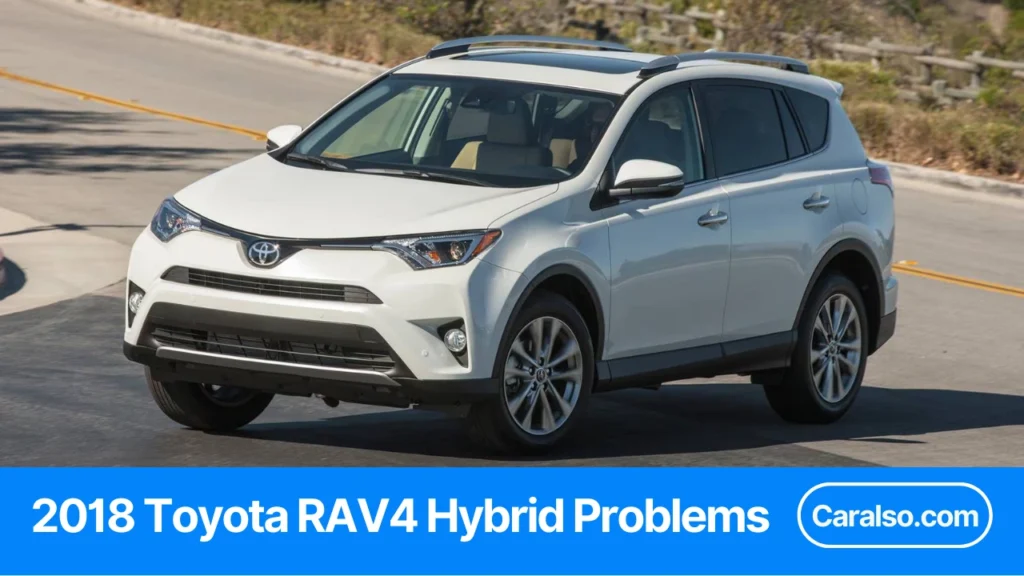
The 2018 Toyota RAV4 Hybrid, U.S. spec. Last year of the 4th generation.
On paper, this year looks great. Strong fuel economy. Good safety. Proven hybrid system. In owner surveys and buying guides, 2016–2018 RAV4 and RAV4 Hybrid keep showing up as some of the best RAV4 years overall, with 2018 often at the top.
That does not mean it is perfect. When I dig through complaints and shop stories, I see the same buckets over and over:
- Brake noise and some brake booster / actuator failures
- Occasional “check hybrid system” warnings and 12V battery issues
- A mix of infotainment glitches, wind noise, and interior rattles
In this guide I’ll stick to three things:
- How common each problem really is for 2018 Hybrid, not just horror stories
- What Toyota has done about it with recalls or service bulletins
- How I would inspect a used 2018 RAV4 Hybrid before handing over cash
If you’re shopping one right now, think of this as the checklist I’d walk you through in the parking lot.
Is the 2018 RAV4 Hybrid reliable, or trouble?
Short verdict
I put the 2018 RAV4 Hybrid in the “strong used year” column.
Owner data and reliability guides line up on this:
- 2016–2018 RAV4s, including the Hybrid, score well in long-term reliability and owner satisfaction
- 2018 often gets called out as one of the best RAV4 model years overall
Most 2018 Hybrid complaints are annoyances:
- Brake noises and some pricey brake booster / actuator failures
- A few “check hybrid system” cases that need dealer-level diagnosis
- Infotainment quirks, wind noise, and small build issues
I almost never see widespread engine or traction battery failures tied specifically to 2018.
I consider the 2018 RAV4 Hybrid a safe used buy
as long as the brakes, hybrid system, and recalls all check out on the exact SUV in front of you.
Key 2018 RAV4 Hybrid problem areas
Here’s the quick map I keep in my notes.
| Problem area | How it shows up | How serious is it? | Typical fix / cost range* | Deal-breaker? |
|---|---|---|---|---|
| Brake noise / brake booster or actuator issues | Low-speed squeal or chirp. Spongy or uneven pedal. In bad cases, ABS / brake warning lights and long pedal travel. | Can be serious. Noise alone is mostly annoying. A failing booster/actuator can hurt brake performance and is expensive. | Pad/rotor service for simple noise: a few hundred dollars. Booster/actuator replacement at a dealer can run $1,200–$2,500+ with parts and labor. | If the pedal feels weak or warning lights are on and the seller will not fix it, I walk. If it has already been replaced with records, I’m fine. |
| “Check hybrid system” warnings / limp mode | Dash lights up. Car may limit power or refuse to go READY. Sometimes triggered by a sensor, 12V issue, or inverter fault. | Potentially serious. You cannot ignore hybrid warnings. Needs proper diagnosis. | Anything from a $200–$400 sensor or 12V battery to $1,500+ if major hybrid components are involved. Warranty coverage can help if within time/miles. | I only buy if there’s a clear repair history and no current or stored codes. Repeat, unexplained warnings are a no from me. |
| 12V battery drain or early failure | Slow cranking, dash lighting up like a Christmas tree, random warning messages after the car sits. | Mild to moderate. Annoying but usually not dangerous if caught early. | New AGM 12V battery typically $150–$300 installed, depending where you live. | Not a deal-breaker. I just budget for a fresh battery if it tests weak. |
| Infotainment / backup camera glitches | Head unit freezes or reboots. Bluetooth drops. Backup camera lag or short black screen when shifting into reverse. | Mostly annoying. Does not usually affect driveability or safety, unless the camera dies completely. | Software update if under support. Out of warranty, a replacement unit can be $500–$1,200+ depending on source. | Only a deal-breaker if the screen is constantly crashing and the price does not reflect that. Otherwise I negotiate. |
| Wind noise, rattles, minor build issues | Whistle from mirrors or roof rails at highway speeds. Rattles from dash or cargo area on rough roads. | Comfort issue, not a mechanical failure. | Fixes range from free DIY (tightening trim, felt tape) to a few hundred dollars if you pay a shop to chase noises. | Not a deal-breaker. I let a long test drive tell me if I can live with it. |
| Isolated inverter / electrical faults | Hybrid warning lights plus specific trouble codes. Sometimes linked to inverter, DC/DC converter, or wiring. Very rare in 2018 data so far. | Serious if present, but not common. Needs expert diagnosis. | Costs vary wildly. Could be a $300–$600 wiring or sensor repair, or $2,000+ if major power electronics are out of warranty. | If there’s a clean repair history and it has been fine for years, I might consider it. Active electrical gremlins with no clear fix are a hard pass. |
*Cost ranges are rough ballparks in USD and will vary by region and shop.
If a 2018 RAV4 Hybrid passes this table with:
- Solid brake feel
- No hybrid warnings
- Clean electronics on a test drive
then it stays on my “yes” list. The rest of the article is about helping you confirm that on the actual truck you’re about to buy.
2018 Toyota RAV4 Hybrid common problems (by system)
I treat the 2018 RAV4 Hybrid as a solid year. Still, there are a few patterns I always check for when I’m looking at one used.
Brake noise and brake booster / actuator issues
This is the first system I test on a 2018 Hybrid.
What owners report
- Chirps or squeals at low speed stops
- Light grinding noise when coming to a halt
- “Spongy” pedal feel or uneven grab
- In some cases, ABS / brake / traction warning lights and a long pedal
A lot of this is just pads and rotors. But on some 2016–2018 RAV4 and RAV4 Hybrid, there have been failures of the brake booster or actuator assembly. That part is not cheap. When it begins to go, you can get:
- Hard or inconsistent pedal
- Buzzing from the engine bay when the brake pump runs
- Warning lights that come and go
Why it matters
A bad booster or actuator can turn into a four-figure repair at a dealer. It is one of the most expensive failures you can see on this year.
What I do when I test one
- Find a quiet road
- Do a few gentle stops and a couple of harder stops
- Pay attention to:
- Noise
- Pedal travel
- Any vibration or pulsing that feels wrong
- Warning lights that pop up even for a second
On the paperwork side I look for words like:
- “Brake booster”
- “Brake actuator”
- “Brake system recall or warranty extension”
- “ABS pump / actuator replaced”
If those parts were replaced once under warranty and the brakes feel great now, that is a plus. If the pedal feels weak and there is no record, I either walk or budget for a big repair.
Hybrid system warnings and drivability issues
True hybrid-system failures on 2018 RAV4 Hybrids are rare, but you do see some patterns.
Typical symptoms
- “Check hybrid system” message
- Car refusing to go READY
- Reduced power (limp mode)
- Multiple warning lights at once (ABS, traction, hybrid)
A lot of the time the root cause is not the big traction battery. It is:
- A bad sensor
- A weak 12V battery
- A wiring or connector fault
- In less common cases, an inverter or DC/DC converter problem
Why it matters
You cannot ignore a hybrid warning. The car can shut down or protect itself. Diagnosis usually needs dealer-level tools or a hybrid-savvy shop.
Buying advice
- Bring a scan tool or pay a shop to scan it
- Check for stored codes, not just active ones
- Ask the seller directly:
- “Have you ever seen a ‘check hybrid system’ message?”
- “What did the dealer do to fix it?”
If there was one clear problem and a clean fix, I note it and move on. If there is a long history of hybrid warnings with no clear resolution, I walk.
2018 RAV4 Hybrid battery problems (12V and traction battery)
Two different batteries here, and they behave very differently.
12V battery
- Runs the computers, locks, accessories
- Normal wear item
- Some 2018 owners see:
- Early 12V failures
- 12V draining when the car sits for long periods
A weak 12V can trigger all kinds of false warnings and “check hybrid system” messages. The fix is usually just a proper replacement battery and making sure doors and lights are not left on.
Hybrid traction battery
- High-voltage pack under the rear
- Paired with the electric motors
- Covered by a long hybrid warranty from Toyota in most states
In real-world data, traction battery failures on 2018 RAV4 Hybrids are very uncommon. When they do happen out of warranty, they are expensive, so I still check the basics.
What I check as a buyer
- Ask a Toyota dealer to tell you:
- How much hybrid battery warranty is left by VIN
- Drive it in:
- EV mode at low speed
- Mixed traffic
- Light highway
You want the car to:
- Enter EV mode smoothly
- Switch between engine and electric without jerks
- Avoid any hybrid warnings during or after the drive
If the traction battery is still under warranty and the car behaves well, I do not worry about it.
Transmission / drivability (e-CVT feel)
The 2018 Hybrid does not use a regular automatic. It uses an e-CVT (planetary gearset plus electric motors).
Normal behavior that feels “weird” if you’re new to hybrids
- Engine revs jump up under load and then sit steady while speed catches up
- Slight whine from the hybrid drive at certain speeds
- Less of a “shift” feeling, more of a smooth swell in power
People often call this a “rubber band” feel. That is normal.
Red flags
- Harsh jolts when taking off
- Grinding or metal-on-metal noises
- Long hesitation when trying to pull into traffic
- Shuddering under light throttle that feels like slipping
If you feel anything like that, it is not typical e-CVT behavior and needs a shop to look at it.
My test drive routine
- Start with gentle city driving
- Then a few hard merges onto a highway
- Then some steady cruising at 60–70 mph
If by the end of that loop the power delivery feels smooth and predictable and I am used to the sound, I am good with it.
Interior, electronics and infotainment issues
2018 is old enough that the tech can show its age.
Common complaints
- Entune head unit:
- Freezes
- Lags
- Reboots randomly
- Bluetooth:
- Drops calls
- Refuses to reconnect until you restart the car
- Backup camera:
- Slow to wake up
- Grainy image
- Short black screen before the image appears
- Steering wheel buttons:
- Volume or track skip acting up
Toyota sometimes pushes software updates or replaces head units under warranty. On a used truck, you may be out of warranty, so you have to test and decide how much you care.
Buying advice
On the test drive I always:
- Pair my phone
- Run Bluetooth audio and a call
- Try CarPlay if equipped
- Shift into reverse several times to watch the camera
- Hit all the steering wheel controls
One glitch I can forgive. A screen that freezes twice on one drive goes into the “budget for a replacement” bucket.
Build quality: wind noise, rattles, and glass
This is not a fragile truck, but it is still a mass-produced crossover. You see some patterns:
What people notice
- Wind noise from the mirrors or roof rails at highway speeds
- Rattles from the dash, doors, or cargo area
- Complaints that the windshield chips or cracks more easily than expected
Most of this is comfort, not mechanical failure.
What I do
- Highway test with the radio off
- Hit a few rough patches of pavement
- Listen for:
- Buzzes from the dash
- Squeaks from the cargo cover or seat latches
- Walk around and inspect:
- Windshield
- Side glass
- Rear glass
A bit of wind noise or a light rattle would not kill a deal for me. A cracked windshield or very loud whistles at 60 mph would either trigger a price talk or a pass.
2018 RAV4 Hybrid recalls and service bulletins (what’s actually been fixed?)
2018 is a good year, but it still sits inside Toyota’s usual web of recalls and TSBs. The exact mix depends on the VIN, build date, and market, so I always talk about these as “may apply, check your truck.”
Major recalls that may affect 2018 RAV4 Hybrid
Recalls change over time, so I never guess by memory. I follow this pattern.
Typical recall categories for this era
- Airbag and seatbelt
Some Toyota models in this period had recalls for airbag sensors, inflators, or seatbelt anchoring. A few campaigns cover RAV4 and sometimes overlap with Hybrid trims. - Fuel and electrical system
There have been broad fuel system and electrical recalls across various Toyota models around these years. Some 2018 RAV4s may be covered, especially for items like:- Fuel system control hardware
- Electrical connectors or modules under certain conditions
- Fuel pump recall
A large recall on Denso low-pressure fuel pumps hit many Toyota and Lexus models. Depending on production range, some 2018 RAV4s may be included. When they are, the fix is a pump replacement with an updated unit.
I never assume a 2018 Hybrid is or is not in a specific recall based on year alone. I always run the VIN.
Why this matters when buying
- Recalls are free repairs at a Toyota dealer
- An open recall can tell you the car has not seen a dealer in a long time
- A completed recall shows the previous owner at least brought it in when Toyota asked
TSBs are different from recalls. They are internal instructions to dealers.
For 2016–2018 RAV4 and RAV4 Hybrid, there have been TSBs around:
- Brake noise and brake booster / actuator behavior
Guidance on what to test, what parts to replace, and how to handle noise vs real faults. - Hybrid control software updates
Fine-tuning drivability, charging logic, or warning thresholds. - Noise and vibration fixes
Clips, insulation, or small parts to quiet rattles and wind noise.
A TSB:
- Does not automatically trigger a letter to the owner
- Is usually only applied if:
- The vehicle shows the problem
- The VIN and build date fall inside the bulletin’s range
Buying angle
When I’m serious about a 2018 Hybrid, I ask a Toyota service advisor for:
- A campaign / TSB history by VIN
- Notes on:
- Brake system bulletins
- Hybrid ECU updates
- Noise / vibration fixes
If the car already had brake or hybrid TSB work and now drives smooth and quiet, that’s a win. If it clearly matches a known issue but has no TSB work at all, I plan on dealing with it myself.
How to check your 2018 RAV4 Hybrid for open recalls
Here’s the simple process I use every time.
- Grab the VIN
- From the base of the windshield or the driver’s door jamb.
- Check NHTSA
- Go to the official NHTSA recall lookup.
- Enter the VIN.
- It will list all open safety recalls for that exact vehicle.
- Check Toyota’s owner / recall site
- Use the VIN on Toyota’s recall or owners page.
- This can show both recalls and some special service campaigns or customer support programs tied to that VIN.
- Call a Toyota service department
- Ask them to:
- Confirm open or completed recalls
- Print a campaign and TSB history
- Tell you how much hybrid battery warranty is left
- Ask them to:
This takes 10–15 minutes and can save you thousands.
I would not skip it on any 2018 RAV4 Hybrid, no matter how clean it looks on the surface.
2018 RAV4 Hybrid vs 2017 and 2019 – did Toyota improve?
When people ask me about 2018, they really want to know where it sits between the earlier 4th-gen Hybrids and the 2019 5th-gen launch.
2017 vs 2018 RAV4 Hybrid
Both 2017 and 2018 Hybrids are 4th-gen trucks with the same basic setup:
- 2.5L 4-cyl + electric motors
- e-AWD
- e-CVT
So you’re not changing engines or hybrid hardware when you move from 2017 to 2018.
Here’s why I lean 2018 when prices are close:
- Last year of the generation
By 2018, Toyota had several years of real-world feedback on this platform. Late-cycle years usually see fewer small bugs. - Reliability scores
Multiple buyer guides group 2016–2018 together as the best 4th-gen RAV4 and RAV4 Hybrid years, with 2018 getting singled out as one of the most reliable RAV4 years overall in owner surveys and J.D. Power quality scores. - Safety and features
Toyota Safety Sense is in place, and 2018 gets the most “fully baked” version of the 4th-gen cabin and options.
If a 2017 is a lot cheaper with better history, I’ll take it. If they’re close in money and miles, I pick 2018.
2018 vs 2019 RAV4 Hybrid (5th-gen launch)
Here the question is different:
“Do I want the newer 5th-gen truck, or the last 4th-gen year that’s more proven?”
2019 RAV4 Hybrid brings:
- New TNGA platform
- Sharper styling
- Better MPG than the 2018 Hybrid
- More modern infotainment and cabin feel
But it also brings:
- Much higher complaint volume, especially about:
- Fuel tank not filling to rated capacity
- Shorter real-world range
- The big low-pressure fuel pump recall
- Typical “first-year” teething issues for a new generation
Most “years to avoid” lists for modern RAV4s flag 2019 as the worst 5th-gen year, while putting 2016–2018 in the “best years” bucket.
So my take:
- If you care most about predictable reliability, a clean 2018 Hybrid is usually a safer bet than a cheap 2019 Hybrid with fuel-tank baggage.
- If you really want the 5th-gen look and MPG, I usually tell people to skip straight to 2020–2022 Hybrid, not stop at 2019.
Where 2018 sits in the bigger reliability story
Zooming out:
- 4th-gen 2013 is the roughest year.
- 2016–2018 are widely called the sweet spot, with 2018 often ranked as one of the best RAV4 years overall by owner data and buyer guides.
- 2019 takes a step back because of the tank and fuel pump issues.
- 2020+ 5th-gen Hybrids recover and start to look strong again.
So I treat 2018 RAV4 Hybrid as:
The most mature version of the 4th-gen Hybrid,
sitting right in the middle of the RAV4 reliability “green zone.”
Is the 2018 RAV4 Hybrid a good used buy?
Short answer from me: yes, with a couple of checks.
Why I like 2018 RAV4 Hybrid used
Here is why 2018 stays near the top of my used-buy list:
- Proven hybrid system
Toyota had been building Hybrid RAV4s on this platform since 2016, and Toyota hybrids in general have a long track record for running well past 150k–200k miles with basic care. - Strong reliability vs nearby years
Multiple guides put 2016–2018, and especially 2018, in the “best RAV4 years” category based on complaints and owner surveys. - Safety for the age
You get Toyota Safety Sense, good crash scores, and modern basic safety features without paying 5th-gen prices. - Value vs 5th-gen
Used 5th-gen Hybrids (2020+) usually cost more. A clean 2018 Hybrid can deliver similar daily MPG and comfort for less money, especially if you don’t care about the newest infotainment.
For a lot of shoppers, 2018 is the point where the math and the reliability both line up.
What might make me skip it
There are a few reasons I would walk or look at other years:
- Brake booster / actuator risk
If the pedal feels off, there are brake warnings, or there’s no history and the seller will not have it inspected, I’m not gambling on a potential four-figure brake job. - Outdated infotainment vs your expectations
If CarPlay and the latest screen are non-negotiable, you may be happier in a 2019+ truck even if 2018 is mechanically strong. - Hybrid warranty clock
Depending on mileage and what state you’re in, the hybrid battery warranty may be close to expiring. If you want to keep the SUV 8–10 more years, a newer Hybrid with more warranty left might be worth the extra money.
If I find a clean 2018 RAV4 Hybrid with:
- Good brake feel
- No hybrid warnings or stored codes
- Full service records and clean recall history
I’m comfortable calling it one of the best used RAV4 buys on the market right now.
What to check when buying a used 2018 RAV4 Hybrid
If I was standing next to you in the lot, this is the checklist I would use for a 2018 Hybrid.
1. VIN and recall check
Start with the paperwork. Not the paint.
- Grab the VIN from the windshield or driver door.
- Run it on the NHTSA recall lookup. That shows open safety recalls for that exact SUV.
- Run it on Toyota’s recall / owners site to see recalls, campaigns, and some support programs.
- Call a Toyota dealer and ask for a campaign and service history printout by VIN.
What I want to see:
- No open recalls.
- Past campaigns closed out.
- Regular dealer or shop visits, not big gaps.
2. Brake test and warning lights
This is a big one on any older hybrid SUV.
- With the engine and hybrid system on, do a few gentle stops from low speed.
- Then do a couple of firm stops on an empty road.
- Pay attention to:
- Pedal feel
- Any grinding or chirping
- How straight it stops
Watch the dash:
- Any ABS, brake or traction lights, even briefly, are a red flag.
In records I like to see:
- Brake pad and rotor changes noted at sane mileages.
- Any past work on brake booster or actuator fully resolved with no repeat visits.
3. Hybrid system scan and road test
You want to know what the computers know.
- Have a shop or a good scan tool check for stored codes, not just active ones.
- Anything touching the hybrid control system, inverter, or battery deserves a closer look.
On the drive:
- Make sure it goes to READY cleanly.
- In town:
- Feel the change between EV and gas power. It should be smooth.
- On the highway:
- No shaking or harsh surging when you ask for power.
- No hybrid warnings after a long run.
If you see a “check hybrid system” message at any point, I stop the deal until a Toyota dealer explains exactly why and what it will take to fix.
4. Hybrid battery warranty status
The big traction battery is usually reliable on these. I still check the coverage.
- Call a Toyota dealer with the VIN and ask:
- How much hybrid battery warranty is left
- Whether any hybrid-related repairs were done under warranty
If it is still under hybrid battery warranty and the system behaves well, I am not worried. If it is out of warranty and close to 150k miles, I want a very good price.
5. Full infotainment and camera test
The tech is not new anymore, so I stress test it.
- Pair your phone.
- Run Bluetooth audio and take a quick call.
- Try any navigation, voice commands, and steering wheel buttons.
- Shift into reverse several times:
- Camera should come on fast
- No long black screens
- No flicker or error messages
A one time glitch is fine. Constant freezes or reboots mean you should budget for a repair or ask for money off.
6. Undercar inspection for leaks and rust
Last step before I get serious.
- Look under the front:
- No wet oil or coolant streaks
- No obviously bent or scraped subframes
- Look around the rear and tank area:
- No fuel smell
- No damp spots on lines or tank
- Check for rust on:
- Brake lines
- Suspension arms
- Welds at the rear
Light surface rust is normal in snow states. Thick flakes, holes, or big scabs on structural parts are a reason to walk.
If a 2018 RAV4 Hybrid clears this list and the price makes sense, I am comfortable telling a friend to buy it.
FAQ – 2018 Toyota RAV4 Hybrid problems
Is the 2018 RAV4 Hybrid reliable long term?
Yes. Among RAV4s, 2016 to 2018, including the Hybrid, are often rated as some of the most reliable years. Several guides and owner surveys pick 2018 itself as one of the best RAV4 model years overall.
With normal maintenance, I treat a 2018 Hybrid as a 200,000 mile plus vehicle.
What are the most common problems on the 2018 RAV4 Hybrid?
The patterns I watch for are:
- Brake noise and possible booster / actuator issues
- Occasional “check hybrid system” warnings
- Early or weak 12V batteries
- Infotainment glitches and backup camera lag
- Wind noise and interior rattles
Big engine or traction battery failures tied specifically to 2018 are not common in the public data I see.
Does the 2018 RAV4 Hybrid have battery issues?
Mostly 12V battery, not traction battery.
- The small 12V battery can wear out early or drain if the SUV sits a lot. That is annoying but cheap to fix.
- The big hybrid battery is covered by a long warranty and has a good track record in this generation. Failures do happen but they are rare.
I always check remaining hybrid battery warranty and make sure the car goes in and out of EV mode smoothly.
Are there any recalls on the 2018 RAV4 Hybrid?
Most 2018 RAV4 Hybrid recalls are normal Toyota stuff. Airbag, seat, fuel or electrical campaigns that affect certain VIN ranges. The exact list depends on how and when your SUV was built.
I never guess. I always run the VIN through:
- The NHTSA recall lookup
- Toyota’s recall / owners site
Then I ask a Toyota dealer to confirm open or completed campaigns.
Is it better to buy a 2018 or 2019 RAV4 Hybrid?
If price and mileage are close, I pick 2018.
- 2018 is the last year of the 4th gen Hybrid, with a strong reliability record.
- 2019 is the first year of the 5th gen and has more complaints, especially for fuel tank and range issues, plus the big low pressure fuel pump recall.
If you want the 5th gen, I usually tell people to start at 2020–2022 Hybrid instead.
How many miles can a 2018 RAV4 Hybrid last?
With regular maintenance, a 2018 RAV4 Hybrid should be able to run 200,000 to 250,000 miles, and many Toyota hybrids in similar lines go even longer. Owner stories of RAV4s and other Toyota hybrids at 300,000 plus miles are common.
The big factors are:
- Consistent oil changes
- Coolant and brake fluid on time
- No ignored warning lights
- Minimal rust
A high mileage 2018 can still be a good buy if the price is right and the history is clean.
Sources
Here are the main references I leaned on while writing this guide:
- CarComplaints – Toyota RAV4 Hybrid overview and year specific complaints
- J.D. Power – 2018 Toyota RAV4 ratings and quality scores
- NHTSA – official recall lookup tool
- Toyota – recall and campaign lookup / owner resources

Hey there,
How is it going?
I’m Meraj Sarker. I am a Car Mechanic and a student of Automobile Restoration here in Florida, USA. I’ve been studying automotive for around 9 years now. So you can rely on my recommendation. For me, studying and getting knowledge about automobile it’s really fun and entertaining. I will help you to get solutions for your car through this website. If you need any help let me know.