
The 2016 RAV4 sits in an interesting spot. It is the facelifted 4th gen and it is also the first year for the RAV4 Hybrid.
It is not a horror year like some older oil burners or the 2019 first 5th gen. But it does have real trouble spots. Things like engine power loss while turning, a few transmission failures, brake complaints, and the newer 12 volt battery fire recall that covers 2013 to 2018 RAV4s.
My goal here is simple. If you already own a 2016 RAV4, I want you to know what to watch and what is usually fixable. If you are shopping one, I want you to see the risks up front so you can decide fast if this is your year or if you should keep looking.
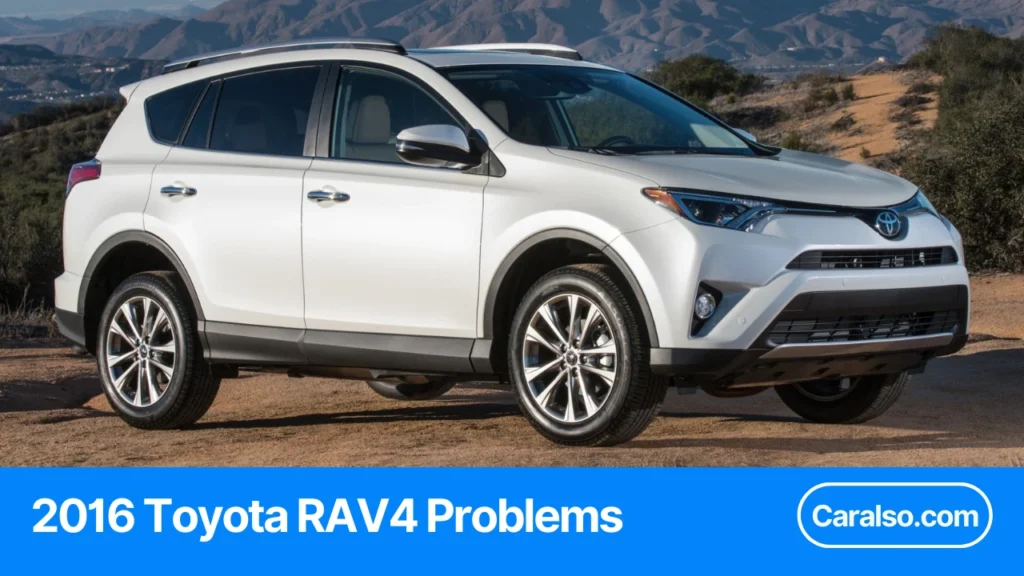
Is the 2016 Toyota RAV4 Reliable or a Headache?
Short answer. The 2016 RAV4 is serviceable, not perfect.
CarComplaints shows about 310 owner reported problems for the 2016 gas RAV4. The worst issues there are transmission failure, a power tailgate that stops working, and the car lurching while braking.
Consumer Reports still calls the 2016 RAV4 more reliable than the average 2016 vehicle, with three recalls on record. Edmunds notes a strong RepairPal reliability score of 4.5 out of 5 and three recalls as well.
The 2016 RAV4 Hybrid has only 18 problems reported on CarComplaints, with most of those in interior, body and brake categories. Consumer Reports says the 2016 Hybrid is more reliable than other 2016 vehicles overall.
So the 2016 RAV4 is not a car I avoid on sight. I just take engine behavior, brakes, EVAP faults, liftgate operation, and the battery recall very seriously.
Here is the quick snapshot I keep in my head.
2016 Toyota RAV4 Problem Snapshot
| Problem area | How common it looks* | Typical symptoms | Risk level | Usual fix | Rough cost if not covered | Deal breaker for me? |
|---|---|---|---|---|---|---|
| Engine loses power while turning or surges | Highlighted as the most common 2016 issue in used guides and engine complaint lists | Loss of power mid turn, hesitation, or unexpected surge when you get back on the gas | High. Can be a safety risk in traffic | Diagnose throttle, traction control, or transmission. Often software plus sensor or throttle work | From about $300 to $1,000+ depending on root cause | Yes, unless a dealer can show a clear repair and it drives perfect now |
| Transmission failure or harsh shifting | Worst single complaint on CarComplaints. 2,200 dollars average at about 104k miles | Hard shifts, shudder, hesitation, or total failure to move | High. You do not want to buy into a dying gearbox | Software updates, fluid service, and in bad cases full rebuild or replacement | A few hundred for service. 2,000 to 4,000+ for major work | Often. I walk if it still shifts badly after updates |
| Brake problems and long stops | Regular owner and article complaints on 2016. Includes soft pedal and reports of brake failure | Grinding, long pedal travel, or poor stopping distance | Medium to high. Brakes are safety gear | Pads and rotors, caliper service, hydraulic or ABS diagnosis | 300 to 800 dollars for basic work. Over 1,000 for deeper issues | No, if inspection shows it is just normal wear |
| EVAP canister and check engine lights | One of the “big four” 2016 issues in shopper guides. Common on 4th gen RAV4 | Check engine light, fuel smell, EVAP codes, failed emissions test | Medium. Annoying, hurts inspection and resale | Replace EVAP canister, valves, hoses as needed | Roughly 300 to 600 dollars in most estimates | No, but I want it fixed before I buy |
| Power liftgate or tailgate not working | Second worst complaint on CarComplaints with big repair cost | Hatch stops halfway, will not latch, or makes beeping sounds | Medium. Big pain for daily use | Liftgate motor, hinges, or control unit. Sometimes body work if bent | Can run 1,000 to 2,000+ at a dealer | Only if the hatch is wrecked and the seller will not price it in |
| Electric power steering warnings or weird feel | Known 4th gen theme in forums and tech answers | Heavy steering, warning light, or odd centering | Medium. Can become a safety issue if assist fails | Check 12V battery, steering sensors, and EPS unit | A few hundred for battery or sensor. 1,000+ if EPS unit is bad | Maybe. I walk from any car with active steering faults |
| 2016 RAV4 Hybrid interior and body issues | 18 total Hybrid complaints. Worst are door that will not close and roof rack trim coming off | Door misalignment, trim flying off, some brake and lighting complaints | Low to medium. Mostly annoying unless a door will not latch | Adjust or replace door and roof trim. Normal brake service | Usually a few hundred per issue | No, unless there is clear crash damage behind it |
| 12 volt battery fire recall 23V734000 | Affects about 1.8 million 2013 to 2018 RAV4s, including 2016 | Wrong size replacement battery can move, hit clamp, short, and in rare cases start a fire | High if recall not done. Once fixed, risk is low | Dealer replaces battery clamp, tray, and terminal cover with improved parts | Free at any Toyota dealer as part of the recall | Yes, I park it until this recall is completed |
*Based on public complaint counts and recall data, not exact failure rates.
If I am looking at a 2016 RAV4 on a lot or in a driveway, this is my quick flow:
- Check the VIN for the battery recall and other open recalls.
- Drive it hard enough to feel for engine hesitation, brake issues, and transmission behavior.
- Test the liftgate, steering, and all electronics.
If it passes those checks and the price is fair, I am comfortable telling a friend that a 2016 RAV4 or RAV4 Hybrid can still be a solid used buy.
2016 Toyota RAV4 Problem & Recall Snapshot
2016 RAV4 basics
Here is what you are dealing with on a 2016.
- Generation: 4th gen RAV4 (2013–2018), with a facelift in 2016
- Gas model: 2.5-liter 4-cylinder, 6-speed automatic, FWD or AWD
- Hybrid model: 2.5-liter hybrid, about 194 hp, standard AWD, first year of the RAV4 Hybrid
- EPA fuel economy (approx):
- Gas: around 23 city / 30 highway mpg FWD, a bit lower for AWD
- Hybrid: around 34 city / 31 highway / 33 combined mpg
So the hardware is simple. No turbo. No CVT. A normal Toyota 2.5 and 6-speed, plus a proven hybrid system if you go that way.
Reliability scores vs other years
On paper, 2016 looks better than the scare stories online.
- Consumer Reports says the 2016 RAV4 is more reliable than the average 2016 vehicle, with three NHTSA recalls on record.
- Edmunds shows a 4.5 out of 5 reliability score from owners and notes three recalls as well.
- For the 2016 RAV4 Hybrid, Consumer Reports also rates it “more reliable than other 2016 vehicles overall.”
So the data says “above average,” while the complaints highlight some real weak spots. That is why I treat 2016 as a cautious maybe, not a hard no.
Complaints and recalls at a glance
Here is the quick numbers view.
- Gas 2016 RAV4: about 310 problems reported on CarComplaints
- 2016 RAV4 Hybrid: only 18 problems logged, mostly interior and body issues
Top trouble areas for the gas model:
- Engine and powertrain
- Transmission and drivetrain
- Brakes
- Interior accessories and power equipment
Major recalls that hit 2016:
- 23V734000 – 12-volt battery fire risk. Wrong-size replacement battery can move in the tray, hit the clamp, and short. Fix is a new clamp, tray, and terminal cover, free at the dealer.
- Smaller recalls around labels and visibility, like incorrect load or tire pressure labels, which are quick dealer fixes.
So when I meet a 2016 RAV4, I care about how it drives today, and whether the battery recall and other campaigns are already done. That tells me way more than the raw complaint count.
Top 2016 Toyota RAV4 Problems (Gas Models)
Now let’s talk about the regular gas RAV4. These are the big issues I watch for when I test drive one.
Engine loses power while turning or feels like unintended acceleration
Used-car guides and owner reports put this near the top of the list. CoPilot calls engine power loss while turning one of the most common 2016 complaints, and engine problem listings mention surging or lack of power as drivers complete a turn.
What it looks like:
- You turn across traffic, press the gas, and the SUV hesitates
- Or it feels like it surges in a way you did not ask for
- Sometimes no codes show up right away
Possible roots:
- Throttle body or accelerator pedal sensor issues
- Traction or stability control cutting power too aggressively
- Transmission or torque converter not engaging cleanly
- In rare cases, a software or wiring fault in the powertrain controls
Why I take it seriously:
- Any random loss of power or surge mid turn is a safety risk. You do not want to guess whether it will go.
What I do:
- Try a bunch of low-speed turns from a stop in a safe area
- Feel for hesitation or lunging as I straighten the wheel
- If I feel it once, I get codes scanned and ask a Toyota tech to check for TSBs before I even think about buying
Transmission failure and harsh shifting
On CarComplaints, transmission failure is listed as the worst single 2016 RAV4 problem, with an average repair cost around 2,200 dollars and average mileage just over 104,000.
Other owners report:
- Rough or delayed shifts
- Shudder or vibration under light throttle
- Hesitation going from Reverse to Drive
Remember, this 2016 gearbox is a relative of the units that had torque-converter shudder TSBs in 2013–2015. So calibration and converter wear are both real concerns.
Common fixes:
- Software update or reflash at the dealer
- Transmission fluid service if it is burned or old
- Torque converter replacement in bad shudder cases
- Full transmission rebuild or replacement when it is truly cooked
What I do:
- Drive it from cold and feel every shift at light throttle
- Do some firm acceleration and highway merges
- Watch for any flare, slam, or big delay when changing gears
If it still feels ugly after a dealer has updated the software and checked the fluid, I walk. There are too many clean 2016s out there to roll the dice on a dying gearbox.
Brake problems and brake failure reports
Brakes show up a lot in 2016 write-ups.
CoPilot lists brake failure as one of the main 2016 RAV4 issues, with repairs costing up to about 1,200 dollars depending on parts.
Owner complaints talk about:
- Soft brake pedal
- Grinding or squeal at low miles
- Longer stopping distances than expected
- In some cases, ABS or brake warning lights
Most of the time it is just pads, rotors, or hardware that someone stretched too far. But if the SUV has warning lights and feels weak, you look deeper.
What I do:
- Make several medium to hard stops from city speeds
- Watch for pull, vibration, or fade
- Check for ABS or brake warning lights
If a shop says it just needs pads and rotors, I treat that as wear. If they start talking about master cylinders, ABS modules, or booster problems on a high-mile 2016 with no records, I think hard about the total budget.
Faulty EVAP canister and check-engine lights
The EVAP system is a common weak link on 4th gen RAV4s, and 2016 is in that run.
CoPilot calls a faulty vapor canister one of the four big 2016 problems and quotes an average fix near 390 to 400 dollars.
When the EVAP canister or valves fail you get:
- Check engine light
- Codes like P2401, P2402, P2419, P043E, P043F
- Failed emissions tests
- Sometimes a fuel smell near the rear of the car
Fix is usually:
- New canister and valves
- Maybe some hose work
- Clear codes and verify with a drive cycle
This one is annoying rather than scary. I just do not like buying a RAV4 that has a glowing check engine light for EVAP and a seller who refuses to fix it. That tells me how they treat the rest of the truck.
Power liftgate and tailgate failures
On the 2016 RAV4 CarComplaints page, “tailgate not working properly” ranks as the second worst problem. It shows an average repair cost similar to the transmission failure, around 2,200 dollars, and average mileage around 10,000 when reported.
Symptoms owners describe:
- Power hatch opens part way then stops
- Liftgate will not latch or pops back open
- Constant beeping and no movement
- In some cases, hinges or struts binding
There is also a class action suit that claims 2014–2021 RAV4 liftgate hinges can seize or break, which helps explain some horror stories.
What I do:
- Open and close the hatch several times on the test drive
- Try the interior button, the key fob, and the outside switch
- Listen for straining noises or grinding
If the liftgate acts up, I assume at least a motor or hinge job. I either make the seller fix it before sale, or I want a serious discount.
Electric power steering issues
The 2016 uses electric power steering. Most are fine. Some show weird behavior.
Forum threads and tech answers talk about:
- Steering that suddenly feels heavy
- EPS warning lights on the dash
- Odd centering or “dead spot” feel around straight ahead
Causes can be simple:
- Weak 12-volt battery
- Alignment and tire problems
Or deeper:
- Torque sensor faults
- EPS control unit issues
- Water intrusion at connectors
What I do:
- On the highway, see if it tracks straight and feels natural
- Turn the wheel lock to lock in a parking lot and listen
- Check for any EPS or steering warnings
If the only problem is a cheap battery or bad alignment, that is fine. If the steering is fighting me or warning lights are on, I let someone else own that project.
Interior electronics and infotainment glitches
The last bucket on the gas 2016 is electronics and interior hardware.
CarComplaints lists interior and electrical categories with issues such as:
- Dim navigation and radio screens
- Frozen or rebooting head units
- Power windows, locks, or mirrors acting up
- Random warning lights that trace back to sensors or loose connectors
Most of this stuff is annoying, not dangerous. It does tell you how the previous owner treated the car.
What I do:
- Sit in the truck and hit every switch
- Try all windows, locks, mirrors, steering wheel buttons, and the radio
- Pair a phone and test Bluetooth and backup camera if fitted
If it has one small quirk I love the rest of the vehicle I can live with it or fix it later. If half the cabin is glitching, I figure there are deeper wiring issues and I move on.
2016 Toyota RAV4 Hybrid Problems (And How They Compare)
The 2016 RAV4 Hybrid is the first hybrid year for this generation. That always makes me look a little closer.
Is 2016 a “year to avoid” for the Hybrid?
CoPilot’s hybrid guide flags the 2016 RAV4 Hybrid as a year to avoid, mainly because it is the first year and shows more issues with interior accessories, brakes, lights, and body parts than later hybrids.
But CarComplaints only lists 18 total problems for the 2016 Hybrid, across all systems. That is a low number compared with the 2016 gas RAV4 and some later “problem years” like 2019.
So I treat 2016 Hybrid as a “year to watch,” not an automatic no. I just inspect it harder than a 2017–2018 Hybrid.
Interior, body, and hatch / roof issues
Most of the hybrid complaints are not about the battery or motors. They are about trim and body.
Common ones:
- Door won’t close or latch right
- Roof rack weatherstrip blowing off at speed
- Rear hatch or tailgate acting up, especially power operation
These are more annoying than dangerous but can get expensive if you are buying dealer-only parts.
What I do:
- Open and close every door and the hatch multiple times
- Check the roof rack plastic and weatherstrip for loose pieces
- Look at panel gaps. Make sure these problems are not crash damage in disguise
Brake performance and hybrid feel
Some Hybrid owners report:
- Spongy or inconsistent brake feel
- Longer stops than they expect
- Noise at low speeds when the brakes switch from regen to friction
This is a common hybrid theme. The blend between regen and normal brakes can feel odd if you have never driven one. But if the pedal sinks or the SUV pulls, that is more than “hybrid feel.”
What I do:
- Do several slow and hard stops
- Feel how the pedal responds when the car is almost stopped
- If it feels vague or weak, I get a shop to check pads, rotors, and the hydraulic system
Hybrid electronics and battery warnings
For 2016–2018 Toyota hybrids in general, tech guides and shop writeups talk about:
- Check-hybrid-system warnings
- Occasional shutdowns linked to inverters, ECUs, or 12-volt batteries
- Sensor or wiring issues that look like pack failures at first
Actual high-voltage battery failures on 2016 RAV4 Hybrids are not showing up as a big pattern in public data.
What I do:
- Treat any hybrid warning light as urgent
- Scan the car with a tool that can see hybrid codes
- Check 12-volt battery health, because a weak 12-volt can throw fake hybrid warnings
Gas vs Hybrid: which has more problems in 2016?
If I compare the two:
- The gas 2016 RAV4 has more serious complaints: engine power loss, transmission failure, brake drama, EVAP issues.
- The 2016 Hybrid has fewer complaints overall and they tilt toward doors, trim, hatch, and some brake feel stuff.
So in 2016, I am actually more nervous about a high-mile gas RAV4 with no records than a clean Hybrid with a good inspection. I just keep in the back of my head that this is the first hybrid year and I want to see solid service history.
2016 RAV4 Recalls, Investigations, and TSBs That Matter
Recalls and service bulletins tell you what Toyota already knows is wrong. For a 2016 RAV4, a few stand out.
23V734000 – 2013–2018 RAV4 12-volt battery fire risk
This is the big one you cannot ignore.
NHTSA recall 23V734000 covers about 1.8 million 2013–2018 RAV4s, gas and hybrid. The issue is how the 12-volt battery is installed.
Problem in plain English:
- The RAV4 is designed for a Group 35 battery
- Some trucks get wrong-size replacement batteries or missing adapters
- A small battery can move in the tray under hard driving
- If it slides, the positive terminal can hit the hold-down clamp
- That short can overheat the battery and surrounding parts and, in rare cases, cause a fire
Toyota’s fix:
- Inspect battery size and mounting
- Install a redesigned battery tray, clamp, and positive terminal cover if needed
- Do the work for free under the recall
For me, this is non-negotiable. I do not daily drive a 2016 RAV4 until this recall shows as completed on the VIN.
Other 2016 RAV4 recalls
Depending on trim and build, 2016 RAV4s can also be covered by smaller recalls, including:
- Label / load capacity recalls
- Wrong weight or tire info on the door label or tire placard
- Fix is a new sticker and, if needed, adjusting spare tire pressure
- Seat belt / airbag or visibility recalls on certain 2013–2016 RAV4s
- These are narrower, but I still check NHTSA and Toyota’s sites to see if the VIN is listed
Most of these are quick dealer visits. They only become a concern if the previous owner ignored them.
Key TSB themes for 2013–2016 RAV4
Technical Service Bulletins are not recalls, but they tell you about patterns. For 2013–2016 RAV4s, common TSB topics include:
- Torque converter shudder and shift feel on earlier 4th gens, with ECM software updates and torque converter replacements as needed. This sets the context for rough-shifting 2016 gearboxes.
- EVAP / refueling issues, with procedures to diagnose vapor canister and valve problems.
- Power steering and alignment updates, aimed at odd steering feel or pull.
- Liftgate calibration and power hatch operation, including steps for noisy or hesitant tailgates.
When I see a symptom that matches one of these, I ask the dealer if the relevant TSB has already been applied. Sometimes the fix is as simple as a software update.
How to check your own VIN for 2016 RAV4 recalls
Here is the quick way I do it on any 2016 RAV4, gas or hybrid:
- Grab the VIN.
It is on the dash by the windshield and on the driver door jamb. - Check NHTSA.
Go to the NHTSA recall checker, type the VIN, and see if there are any open safety recalls. This will show recall 23V734000 if it has not been done yet. - Check Toyota’s site.
Plug the same VIN into Toyota’s official recall lookup. This can show both recalls and service campaigns. - Ask a dealer for a printout.
When you bring the SUV in, ask the service advisor to print all completed and outstanding recalls and campaigns for that VIN.
If the 2016 RAV4 you are buying still has open recalls, I:
- Get the recall work scheduled before I worry about anything else
- Use the open recall as negotiating leverage on price
A 2016 RAV4 with every recall handled and TSBs up to date is a very different vehicle from one that has been ignored for years.
Is the 2016 Toyota RAV4 a Good Used Buy?
For most people, I’d call the 2016 RAV4 a “good but picky” used buy.
Compared to its neighbors:
- 2015 – fewer facelift updates, similar 4th-gen issues
- 2016 – first facelift year, first Hybrid, more complaints than 2017 but still above-average reliability overall
- 2017 – usually a calmer year with fewer serious complaints
- 2019 – first 5th-gen year, often flagged as a problem year
Consumer Reports says the 2016 RAV4 is more reliable than the average 2016 vehicle, and also rates the 2016 RAV4 Hybrid above average for its year.
CarComplaints shows 310 problems for the 2016 gas RAV4 vs 444 for 2017 and a much uglier pattern for 2019, which they list as the worst recent year.
So where does that leave us:
- 2016 gas RAV4: Acceptable, but I screen hard for engine hesitation, transmission issues, brake performance, and liftgate operation.
- 2016 RAV4 Hybrid: First-year model, but only 18 complaints on CarComplaints and mostly trim / brake issues. It gets a “cautious maybe” from me, with a strong inspection and recall check.
If a 2016 checks out on a test drive, has all recall work done (especially the battery fire recall), and comes with decent service records, I am comfortable recommending it as a used buy. If it shows weird engine behavior or transmission drama, I move on to a better 2017+ truck.
2016 Toyota RAV4 Maintenance & Ownership Costs
The RAV4 is known for low running costs, and the 2016 fits that pattern.
RepairPal puts the average annual repair and maintenance cost for a RAV4 at about $429, with a reliability rating of 4.0 out of 5 and a rank of 3rd out of 26 compact SUVs.
CarEdge and similar sites estimate 10-year maintenance and repair costs around $6,000 for a RAV4, which is lower than the segment average.
For a healthy 2016, here is what I expect:
- Normal yearly spend: about $400–600 for oil, filters, brake service, and fluids, assuming 12–15k miles a year.
- Common wear items: brakes, tires, suspension bushings, and EVAP parts if the canister goes.
- Big one-time hits (if you are unlucky):
- Transmission rebuild or replacement
- Liftgate motor/hinge repairs
- ABS / brake hydraulic work
Those big jobs jump into the $1,500–$3,000+ range each. That is why I focus the inspection on the transmission, brakes, and tailgate. Catch the bad ones before you buy, and your actual cost of ownership looks much more like the numbers above.
2016 RAV4 Used Buying Checklist (Gas & Hybrid)
Here’s the checklist I’d hand a friend before they go see a 2016 RAV4.
1. VIN and recall check
- Grab the VIN from the windshield or door jamb.
- Run it on the NHTSA recall site to see open safety recalls.
- Run it on Toyota’s official recall lookup to see recalls and campaigns.
- Confirm recall 23V734000 (battery fire risk) shows as completed, or at least scheduled.
If recalls are still open and the seller will not deal with them, I walk.
2. Test drive checklist
Take at least 20–30 minutes and hit city and highway.
Engine and power:
- Do several low-speed turns from a stop.
- Feel for any power loss or surge as you straighten the wheel.
- Watch for stumbles, hesitation, or rough idle.
Transmission:
- From cold, feel each upshift at light throttle.
- Do a few strong merges and highway pulls.
- Watch for slipping, banging into gear, or long delays into Drive or Reverse.
Brakes:
- Do a few medium-hard stops from city speeds.
- Listen for grinding or squeal.
- Feel for pull, vibration, or a very long pedal.
Steering:
- At 60–70 mph, see if it tracks straight on a flat road.
- Notice any wander, constant correction, or EPS warning lights.
Hybrid-only checks:
- Run the A/C for a while.
- Look for water dripping under the car from the drain.
- Make sure there’s no water on the passenger floor and no strong musty smell.
3. Visual and basic checks
Walk around and under the SUV:
- Open and close the liftgate several times with the button and key fob. Watch for hesitation or failure.
- Look at panel gaps and paint for signs of crash repair.
- Check tires for even wear. Feathering or inside wear can signal alignment or suspension issues.
- Inspect around the fuel filler and under the rear for fuel or EVAP smells.
- In the engine bay, check coolant level, oil level, and look for leaks.
4. Scan, records, and pro inspection
Before you hand over cash:
- Scan for codes, not just active lights. Some sellers clear codes right before a sale.
- Ask for service records: oil changes, transmission fluid, brake work, and any big repairs.
- If the SUV still feels like a good one, pay for a pre-purchase inspection at a shop that knows Toyota and hybrids.
Tell the shop to focus on:
- Transmission health
- Brakes and ABS
- Liftgate hardware and hinges
- For Hybrids, the hybrid system scan and any water/corrosion around wiring
If they find only normal wear, you probably have a good 2016 on your hands. If they hand you a list of engine, transmission, or big electrical jobs, I would walk and look for a cleaner RAV4 instead.
FAQ – 2016 Toyota RAV4 Problems
Is the 2016 Toyota RAV4 a reliable SUV?
Yes, as long as you pick a good example. Data from Consumer Reports says the 2016 RAV4 is more reliable than the average 2016 vehicle, and they say the same about the 2016 RAV4 Hybrid.
The weak spots are engine hesitation, some transmission and brake complaints, the liftgate, and the battery fire recall. If those check out, I’m comfortable with a 2016 as a daily driver.
What are the most common 2016 RAV4 problems?
On the gas model, the main patterns are engine power loss or surging while turning, rough or failing transmissions, brake issues, EVAP canister faults, and power liftgate failures.
The hybrid’s small complaint pool leans toward interior, body, and brake feel problems rather than core hybrid system failures.
Does the 2016 RAV4 have transmission issues?
Some 2016s do. CarComplaints lists transmission failure as the worst single issue for that year, with a typical cost around $2,200 and mileage just over 100k, plus other reports of harsh shifting and hesitation.
Many owners get by with software updates and fluid service, but if a 2016 still shifts badly after that, I usually walk away.
Are 2016 RAV4 Hybrid models more reliable than gas?
For 2016, I lean that way. The Hybrid has only 18 total complaints logged on CarComplaints, mostly about doors, roof trim, and brake feel, while the gas model has over 300 spread across engine, transmission, and brakes.
Consumer Reports also calls the 2016 RAV4 Hybrid more reliable than the average vehicle from that year.
What recalls affect the 2016 Toyota RAV4?
The big one is NHTSA recall 23V734000, which covers about 1.8 million 2013–2018 RAV4s for a 12-volt battery fire risk if the wrong size battery is installed or it is not secured.
There are also smaller recalls for labels and visibility on some 2016s. I always run the VIN through NHTSA and Toyota’s recall checker and make sure every recall shows as completed before I buy.
Should I avoid the 2016 RAV4 or is it safe to buy used?
I would not blacklist 2016. It is not as clean as 2017, but it is nowhere near the worst RAV4 years as long as the transmission, brakes, liftgate, and recalls check out.
If a 2016 has full records, a clean inspection, and the battery recall done, I am fine telling someone to buy it. If it has engine hesitation, ugly shifts, or liftgate problems the seller won’t fix, I move on.
Sources (links)
Here are the key sources I used for this 2016 RAV4 problems guide:
- NHTSA Safety Recall Report 23V734000 – RAV4 12-volt battery fire risk
- Toyota recall lookup (official VIN checker)
- Toyota RAV4 reliability rating & average annual repair cost – RepairPal

Hey there,
How is it going?
I’m Meraj Sarker. I am a Car Mechanic and a student of Automobile Restoration here in Florida, USA. I’ve been studying automotive for around 9 years now. So you can rely on my recommendation. For me, studying and getting knowledge about automobile it’s really fun and entertaining. I will help you to get solutions for your car through this website. If you need any help let me know.