
If I’m shopping a 2013 RAV4, I’m hunting for 2 things before I fall in love with the price.
First, I test for torque converter shudder. It tends to show up under light throttle around 25 to 50 mph. If you can reproduce it, it changes the whole deal.
Second, I run the VIN for the 2013–2018 12V battery fire-risk recall. It is easy to verify. And it is not worth ignoring.
One quick note. There is a gas 2013 RAV4 and a 2013 RAV4 EV. This guide is for the gas RAV4.
Quick Answer (Read This First)
This page is for 2 people. The used-buyer who wants a fast checklist. And the owner who wants symptoms mapped to likely causes and fix paths.
If you only have 10 minutes, do this. Run the VIN for recalls. Then do the 25 to 50 mph light-throttle test for shudder.
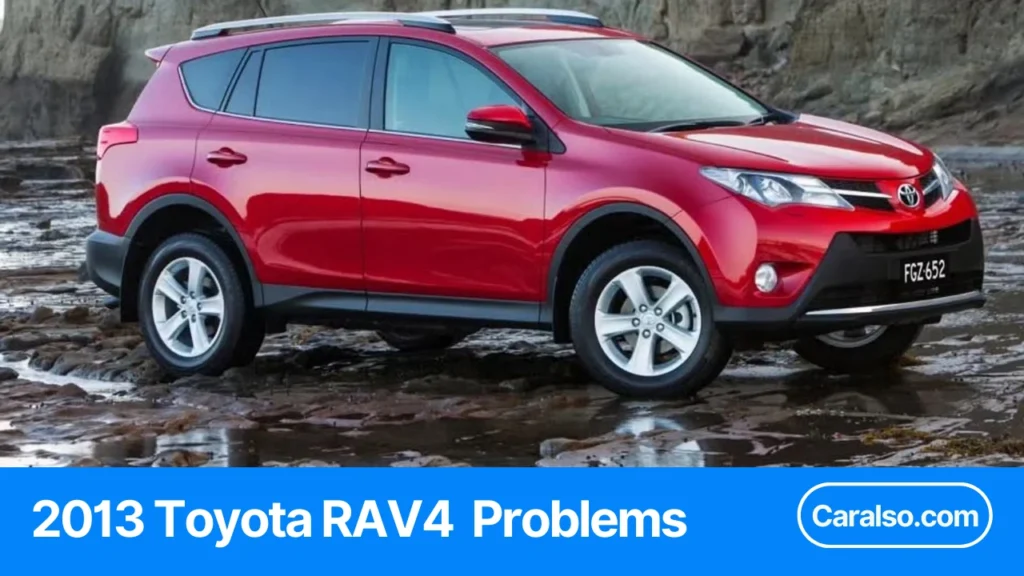
2013 Rav 4 Problems
2013 RAV 4 Problems (Summary Table)
| Problem | Most Common Symptom | Quick Confirmation Test | Typical Fix Path | Buy Or Walk |
|---|---|---|---|---|
| Torque Converter Shudder (2013–2015 Pattern) | Vibration or shudder under light throttle | Warm it up. Cruise at 25 to 50 mph. Hold light throttle. If it shudders as it “locks up,” I flag it | Dealer diagnosis. Often software update plus torque converter repair path | Walk If Repeatable And Seller Won’t Address |
| 12V Battery Fire-Risk Recall (2013–2018) | No driving symptom until it is a problem | VIN recall check. Then with engine off, grab battery and see if it moves. Look for clamp contact marks near the positive terminal | Dealer installs improved hold-down parts and terminal cover per recall | Walk If Recall Open And No Plan |
| EVAP Check Engine Light (P0441, P0442, P0446 Common Codes) | CEL after fueling, hard-to-fill tank, fuel smell near rear | Ask if the light shows up after fill-ups. Scan for EVAP codes. Check if pump clicks off early | Smoke test. Often canister and valve diagnosis, sometimes canister replacement | OK If Priced Right With Scan Data |
| Brake Feel Complaints | Grabby feel at low speed, noise, or pulsation | 5 slow stops from 15 to 20 mph in an empty lot. Then 1 medium stop from 50 to 10 mph | Pads and rotors. Clean and lube hardware. Check caliper slides | OK If Priced Right |
| Liftgate Issues (Manual Or Power) | Hatch won’t open, won’t stay up, or acts inconsistent | Open and close it 5 times. Check for slow movement and misalignment | Struts, latch, actuator, or alignment adjustment | OK If Priced Right |
| Infotainment Quirks | Screen lag, rebooting, glare complaints | Pair your phone. Test Bluetooth call. Test backup camera. Tap through menus for 60 seconds | Software update, head unit repair or replacement | OK If You Can Live With It |
My Fast Verdict In 3 Lines
Best Case
Recalls closed on the VIN. No shudder at 25 to 50 mph. No warning lights during a 15-minute drive.
Biggest Walk-Away Signals
Repeatable shudder plus a seller who will not diagnose it. Any open battery recall with no scheduling plan.
3 Fast Checks Before You Even Test Drive
- VIN recall check for the 12V battery campaign
- Battery movement check with engine off
- 25 to 50 mph light-throttle shudder test
Problems Snapshot (What Owners Report Most)
When I dig through owner complaints and recall info for the 2013 RAV4, the same themes keep repeating.
Here are the top patterns I see come up the most:
- Transmission Shudder And Vibration Complaints
This is the big one. People describe a shudder or vibration under light throttle, often in the 25 to 50 mph range. - Interior Accessories Complaints
Think infotainment bugs, screen behavior, and random small electrical annoyances. - Body And Paint Complaints
Clearcoat and paint complaints show up often enough that I always inspect upper panels in direct sun. - EVAP Check Engine Lights
P0441, P0442, and P0446 style codes are common EVAP language. People notice it after fueling or when the tank is near full. - Engine Hesitation Or Odd Behavior In Specific Situations
I see reports like hesitation in turns and drivability quirks. I treat these as scan-first issues. - Liftgate Annoyances
Hatch that does not open smoothly, does not stay up, or acts inconsistent. This is usually a wear-item story, not a drivetrain story. - Brake Feel Complaints
Grabby feel at low speed, noise, or pulsation. Usually fixable, but I want to feel it before I buy. - 12V Battery Recall Risk (2013–2018)
This is recall-driven. It is not a “symptom” issue. It is a VIN check issue.
What I See Most Often On Test Drives
I most often catch the shudder test at 25 to 50 mph, plus small interior rattles and brake feel complaints.
What’s Usually Cheap Vs What’s Usually Expensive
Cheaper fixes tend to be brakes, liftgate struts, and some EVAP diagnoses. More expensive fixes tend to be repeatable torque converter shudder that needs real repair, infotainment head unit replacement, and multi-panel paint work.
How The 2013 RAV4 Is Built (Why This Changes The Problems)
2013 is the start of the redesigned RAV4 generation. That matters because the drivetrain lineup and driving feel changed from the older 2006 to 2012 trucks.
4th Gen Redesign Context
The 2013 RAV4 is a clean-sheet update compared to 2012.
So when you read “common RAV4 problems,” make sure the page is actually talking about 2013 and up.
2.5L And 6-Speed Automatic Overview
The gas 2013 RAV4 uses a 2.5L 4-cylinder.
It makes 176 hp and 172 lb-ft.
A 6-speed automatic is standard.
This is important because a lot of the 2013 problem talk clusters around transmission lock-up behavior and shudder complaints.
FWD Vs AWD (What Changes, What Does Not)
FWD
- Fewer driveline parts.
- Less to inspect underneath.
AWD
- More driveline components.
- More opportunities for noise and vibration complaints to show up.
- Tire matching matters more. Same size. Similar tread depth.
What does not change
- The torque converter shudder discussion can show up on both FWD and AWD.
- EVAP codes and infotainment complaints do not care if you have AWD.
Quick Note: Gas RAV4 Vs RAV4 EV
Do not mix these up.
The gas RAV4 is what most people mean by “2013 RAV4.”
The RAV4 EV is a different vehicle with different parts, different symptoms, and different recall context.
If you are shopping used, confirm which one it is by the listing, the VIN decode, and what is under the hood.
The 8–10 Most Common 2013 RAV 4 Problems
I’m going to keep every problem in the same format. That makes it easy to scan. And easy to test-drive.
Torque Converter Shudder At 25–50 MPH (Light Load)
Symptoms
- Shudder or vibration at 25 to 50 mph
- Shows up under light throttle
- Often feels worst right before an upshift
- Feels like driving over rumble strips for 1 to 3 seconds
Likely Cause
Toyota documented a shudder that can happen during torque converter flex lock-up. It is tied to torque converter behavior and ECM calibration logic.
How I Confirm It Fast
- Warm the car up for 10 minutes
- Find a flat road
- Hold light throttle at 25 to 50 mph for 30 seconds
- If it shudders, repeat once to confirm it is repeatable
Fix Options
- Dealer confirms the condition
- Software update if applicable
- Torque converter replacement path if the update does not solve it
When I Walk Away
If I can reproduce it twice and the seller refuses diagnosis.
Cost Range
- $0 if covered by a campaign or warranty extension
- Often $1,800 to $3,500 if you pay out of pocket
Transmission Hesitation Or Weird Lockup Behavior
Symptoms
- Feels like it “hunts” between gears
- Delayed response at light throttle
- RPM rises, then settles, without much speed change
- Weird lockup feel at steady cruising
Likely Cause
Some of this is normal 6-speed programming. Some of it overlaps with the lock-up shudder issue. I treat it as “confirm first” before I blame the transmission.
How I Confirm It Fast
- Steady cruise at 35 mph for 15 seconds
- Slight throttle increase without downshifting
- Watch for repeatable flare or hesitation
- Repeat at 45 mph
Fix Options
- Scan for codes first
- Check for calibration updates at a dealer
- If it overlaps with shudder, diagnose in the same visit
When I Walk Away
If it flares hard or bangs into gear during normal driving.
Cost Range
- $0 to $250 for scan and basic checks
- $150 to $400 for a fluid service
- Up to the same shudder repair range if it leads to torque converter work
EVAP Check Engine Light (Leak Or Canister Related)
Symptoms
- Check engine light after fueling
- Fuel pump clicks off early while filling
- Fuel smell near the rear in some cases
- Codes like P0441, P0442, P0446 are common EVAP language
Likely Cause
EVAP faults are usually leaks, stuck valves, or a charcoal canister problem. Topping off the tank can also make EVAP parts unhappy over time.
How I Confirm It Fast
- Scan codes before clearing anything
- Ask if it happens right after fill-ups
- If filling is hard, I treat it as a real clue
Fix Options
- Smoke test first
- Replace only the failed part (cap, purge valve, vent valve, canister)
- Retest readiness monitors
When I Walk Away
If the seller cleared codes and monitors are not ready.
Cost Range
- $120 to $250 for a smoke test at many shops
- $200 to $1,200 depending on which EVAP part is actually bad
Symptoms
- Screen lag or slow response
- Random rebooting
- Bluetooth drops calls
- Backup camera delay
- Glare complaints in bright sun
Likely Cause
Some head units are just finicky with age. Some problems are software. Some are hardware.
How I Confirm It Fast
- Pair my phone
- Make a 60-second call
- Play audio for 60 seconds
- Tap through menus for 60 seconds
- Test backup camera engagement once
Fix Options
- Settings reset
- Software update if available
- Replace the head unit if it is failing
When I Walk Away
If it is dead or stuck in a reboot loop and the price is not adjusted.
Cost Range
- $0 to $100 for reset and basic troubleshooting
- $800 to $2,000 for replacement depending on parts and labor
Interior Rattles And Buzzes
Symptoms
- Dash buzz on rough roads
- Door panel rattle over bumps
- Center console squeaks
- Rattle that changes with temperature
Likely Cause
Plastic clips loosen. Foam compresses. Nothing exotic. Just age.
How I Confirm It Fast
- Drive over a rough patch at 20 to 30 mph
- Press on suspect panels while the noise happens
- If pressure changes the sound, it is trim related
Fix Options
- DIY felt tape and clip replacements
- Shop diagnosis if you want it perfect
When I Walk Away
I don’t. I just price it like a weekend fix.
Cost Range
- $10 to $40 DIY materials
- $150 to $500 if you pay a shop to chase it
Liftgate Problems (Manual Or Power)
Symptoms
- Hatch does not stay up
- Power liftgate stops mid-travel
- Latch needs 2 tries
- Misalignment at closing
Likely Cause
Struts wear out. Latches get sticky. Power units can get weak.
How I Confirm It Fast
- Open and close it 5 times
- Check for smooth travel
- Check if it stays up for 60 seconds
- Listen for grinding or clicking
Fix Options
- Replace struts first if it will not stay up
- Adjust latch and striker if alignment is off
- Diagnose power liftgate motor or control if equipped
When I Walk Away
If the liftgate area shows crash repair plus bad alignment.
Cost Range
- $80 to $300 for struts installed
- $300 to $1,200 for latch or power liftgate repairs
Brake Feel Complaints (Grabby, Early Bite, Noise)
Symptoms
- Grabby feel at parking-lot speeds
- Squeal on light braking
- Pulsation from 50 to 10 mph
- Steering wheel shake during braking
Likely Cause
Pads, rotors, and slide pins are the usual story. Sometimes it is just cheap parts from a prior brake job.
How I Confirm It Fast
- 5 slow stops from 15 to 20 mph
- 1 medium stop from 50 to 10 mph
- Listen for noise and feel for pedal pulse
Fix Options
- Clean and lube hardware
- Replace pads and rotors if needed
- Check tire balance if vibration is also present
When I Walk Away
If the ABS light is on and the seller will not scan it.
Cost Range
- $300 to $900 per axle for pads and rotors installed
- $100 to $200 for a basic brake inspection
Paint Or Exterior Trim Complaints
Symptoms
- Chips on the hood and front bumper
- Clearcoat haze on upper panels
- Peeling spots on roof edges in some cases
- Faded black trim
Likely Cause
Normal road debris plus age. Some colors seem to show it more. Sun and salt speed it up.
How I Confirm It Fast
- Inspect roof edge above windshield in direct sun
- Inspect hood leading edge
- Inspect mirror caps and door edges
- Look for panel-to-panel color mismatch
Fix Options
- Touch-up for chips
- Trim restore for faded plastic
- Panel respray for peeling or large failures
When I Walk Away
If multiple panels are failing and the seller wants clean-paint money.
Cost Range
- $30 to $100 for touch-up supplies
- $400 to $1,200 per panel for paint work
- $1,500 to $4,000 if several panels need real work
12V Battery Fitment And Hold-Down Issues (Recall Context)
Symptoms
- Often no symptom
- Battery can move in the tray if installed wrong
- In the worst case, terminal contact can create heat and damage
Likely Cause
This one is tied to the 2013–2018 battery fire-risk recall. The issue is about battery top size variation and clamp tightness. Movement can allow the positive terminal to contact the hold-down clamp.
How I Confirm It Fast
- Run the VIN for the battery recall
- With the engine off, try to move the battery by hand
- Look for metal contact marks near the positive terminal area
- Confirm the hold-down and terminal cover look correct
Fix Options
- Dealer recall remedy replaces the hold-down clamp, battery tray, and positive terminal cover at no charge if applicable
When I Walk Away
If the recall is open and the seller will not schedule it.
Cost Range
- $0 if the recall remedy is applied
- $150 to $400 if you pay for hardware corrections outside recall context
Headlight Performance Complaints (Aim, Bulbs, Lens)
Symptoms
- Low beam feels weak at night
- Uneven beam pattern left vs right
- Foggy lens look
- Bulbs burn out more than you expect
Likely Cause
Bulbs age. Lenses haze. Aim gets bumped after front-end work.
How I Confirm It Fast
- Turn lights on and check both low beams
- Check beam pattern against a wall from 20 feet
- Inspect lens clarity in daylight
Fix Options
- Replace bulbs with correct type
- Restore lenses if hazy
- Aim headlights properly
- Replace housings if lenses are cracked or badly hazed
When I Walk Away
I don’t. I just negotiate it.
Cost Range
- $30 to $200 for bulbs depending on type
- $50 to $200 for lens restoration
- $250 to $800 per housing if replacement is needed
Recalls And Safety Checks (Must-Read Before You Buy)
I treat recalls as step zero. Not step ten.
I also do not rely on a generic “recalls list.” I rely on the VIN.
Run VIN Checks First (Toyota And NHTSA)
This is the flow I use every time.
- Pull the VIN from the windshield.
- Run it on Toyota’s recall lookup.
- Run it on NHTSA’s recall lookup.
- Screenshot both.
- Confirm the status says remedy is available or completed.
If the seller says “it’s done,” I ask for the repair invoice.
2013–2018 12V Battery Fire Risk Recall (What It Is And What To Inspect)
What Triggers The Risk
- A replacement 12V battery with smaller top dimensions
- A hold-down clamp that is not tightened correctly
- Battery movement during forceful turns
- Positive terminal contacts the clamp and shorts
What The Fix Changes
- Battery hold-down clamp
- Battery tray
- Positive terminal cover
What I Physically Check In 60 Seconds
- Try to move the battery by hand
- Look for rubbing or contact marks near the positive terminal area
- Confirm the clamp is present and not bent
- Confirm there is a terminal cover in place
If the recall is open, I schedule it. Then I buy. In that order.
Trailer Light Module Recall (If Equipped, Region-Specific)
This one is not on every 2013 RAV4.
It applies to certain vehicles equipped with an accessory trailer light module. It is also tied to Southeast Toyota Distributors in many listings.
What It Can Do
- Trailer lights shut off if the module incorrectly detects a short
How I Check Fast
- Ask if the vehicle ever towed
- Look for a trailer harness
- Look for an accessory module near the rear trim area
- Run the VIN and see if it applies
Fix
- Dealer replaces the trailer light module with corrected software.
Deal-Breaker Vs OK If Priced Right
This is how I keep a 2013 RAV4 from turning into a surprise repair bill.
I split issues into two piles. Safety and drivetrain risks go in the deal-breaker pile. Everything else has a price.
Deal-Breakers (Walk Away Or Require Fix Before Purchase)
- Repeatable Torque Converter Shudder
If I can reproduce shudder 2 times at 25 to 50 mph on light throttle, I stop negotiating until there is a real fix plan.
If the seller says “they all do that,” I walk. - Open 12V Battery Fire-Risk Recall With No Scheduling Plan
If the VIN shows the recall is open and nobody will schedule it soon, I pause the purchase. - Battery Movement Or Terminal Contact Marks
If I can move the battery by hand, or I see clamp rub marks near the positive terminal area, I treat it as urgent. - Dash Warning Lights With No Scan Data
If the check engine light is on and the seller refuses a scan, I walk.
If ABS or stability lights are on, same rule. - Codes Cleared And Monitors Not Ready
If readiness monitors are not set and the seller “just cleared it,” I assume there is a recurring fault. - Flood Or Major Electrical Water Signs
Musty smell, wet carpet under the mats, corrosion in connectors, or fog inside lights. I do not play with that.
OK If Priced Right (Negotiate And Fix)
| Issue | Why I’m OK With It | What I Need To See | How I Price It |
|---|---|---|---|
| Minor EVAP Codes | Often diagnosis and 1 part, not a transmission | Code list, freeze frame if possible, and readiness status | I subtract diagnosis plus a realistic repair buffer |
| Liftgate Struts Or Latch Wear | Normal wear item | Hatch opens and closes 5 times without binding | I subtract the parts and labor estimate |
| Infotainment Quirks | Annoying, not a safety failure | Bluetooth call test, audio test, camera test | I decide if I can live with it, then negotiate |
| Brake Pulsation Or Noise | Usually pads, rotors, hardware | 1 medium stop from 50 to 10 mph | I subtract a brake job amount |
| Paint Chips And Trim Fade | Cosmetic | Sunlight inspection and panel mismatch check | I negotiate per panel, not vibes |
My one-line rule: I will negotiate wear items all day. I will not negotiate repeatable shudder, open safety recalls, or battery movement.
30-Minute Pre-Purchase Inspection And Test Drive Script (Differentiation Section)
This is the exact script I use on a 2013 RAV4. It is built to catch shudder, recall risks, and hidden warning lights.
Tools I Bring
- Flashlight
- OBD2 scanner
- Paper towel
- Tire pressure gauge
- Small magnet (optional, for body filler checks)
5-Minute Walkaround
Minute 0: VIN Check
- I photo the VIN at the windshield.
- I run the VIN for open recalls before I drive.
Minute 1: Body And Paint Scan
- Hood leading edge
- Roof edge above the windshield
- A-pillars
- Top of the liftgate
- I look for peeling, haze, and panel color mismatch.
Minute 2: Tires As A Drivetrain Clue
- I confirm all 4 tires match in size.
- I look at tread depth across the set.
- Uneven wear tells me alignment or suspension work is coming.
Minute 3: Lights And Lenses
- I check lens clarity and moisture inside housings.
- I check low beams, high beams, brake lights, and reverse lights.
Minute 4: Under-Car Quick Peek
- I look for wetness under the engine area.
- I check for oil drips on the splash shield edge.
10-Minute Underhood And Battery Area Check
Minute 5: Oil Baseline
- I check the dipstick.
- I want a clear level. Not below the low mark.
Minute 6: Coolant Baseline
- I check the reservoir level.
- I look for dried coolant crust around hose connections.
Minute 7: Battery Recall Physical Check (Big One On This Year)
- Engine off. I grab the battery and try to move it.
- I look at the hold-down clamp. I want it seated and straight.
- I look near the positive terminal area for rub marks.
- I confirm there is a terminal cover present.
Minute 8: Brake Fluid Check
- Level and color.
- Dark fluid tells me it has been ignored.
Minute 9: Quick Hose And Leak Look
- I look for wet oil around the valve cover area.
- I look for seepage around the front of the engine.
Minute 10: Pedal Area And Floor Mat Check
- Mat clipped to the factory anchors.
- No stacked mats.
- Nothing loose that can slide into the pedals.
10-Minute Test Drive Route
I want the car fully warm for the shudder test. If it is stone cold, I drive 8 minutes before I do the shudder check.
Minute 11: Start-Up And Dash Light Routine
- Key on. I confirm warning lights illuminate.
- Start engine. I confirm warning lights go out normally.
Minute 12 To 13: Transmission Engagement Feel
- Park to Reverse, pause 2 seconds.
- Reverse to Drive, pause 2 seconds.
- I want smooth engagement in about 1 second.
Minute 14 To 16: Low-Speed Brake Feel
- Empty lot only.
- 5 slow stops from 15 to 20 mph.
- I note grabby feel, noise, or odd lurch.
Minute 17 To 22: Shudder Test (The Money Test)
This is the exact setup I use.
- Flat road.
- Warm vehicle.
- Cruise at 25 to 50 mph.
- Hold light throttle for 30 seconds.
- If I feel shudder, I repeat once to confirm it is repeatable.
- If it only happens once, I still flag it and keep testing.
Minute 23 To 24: Light Throttle Lock-Up Behavior
- Cruise at 35 mph.
- Add 10 percent throttle.
- I want smooth response, not a harsh vibration.
Minute 25 To 26: Highway Merge Pull
- One medium throttle pull from 40 to 60 mph.
- I listen for odd noises and feel for vibrations.
5-Minute Post-Drive Recheck (Leaks, Smells, Codes)
Minute 27: Quick Rescan
- I scan for stored codes.
- I check pending codes.
- I check readiness monitors.
- If monitors are not ready, I ask why.
Minute 28: Underhood Heat Check
- I pop the hood.
- I sniff for coolant smell.
- I look for fresh wetness that only shows hot.
Minute 29: Battery Recheck
- I re-check the hold-down and terminal cover area.
- A battery should not shift after a drive.
Minute 30: Final Decision Notes
- If shudder is repeatable, I treat it as the decision maker.
- If the battery recall is open, I schedule it before purchase or I pause.
- If the seller blocks the scan, I walk.
Preventive Maintenance That Actually Reduces These Failures
I maintain a 2013 RAV4 around the problems people actually report. Not around a “perfect world” schedule.
Transmission Fluid Strategy (Intervals And Red Flags)
What I Do
- If I have zero records, I do a drain and refill first.
- Then I repeat it every 40,000 to 60,000 miles.
What Makes Me Do It Sooner
- Shudder at 25 to 50 mph under light throttle
- New hesitation that was not there last month
- Dark fluid color
- Burnt smell
- Rough engagement from Park to Drive
What I Avoid
- Clearing symptoms with additives
- Ignoring repeatable shudder
If the shudder is repeatable, I treat it as diagnosis time. Not maintenance time.
EVAP-Friendly Fueling Habits (Avoid The Codes)
EVAP issues love one habit.
Topping off.
What I Do
- I stop at the first click.
- I do not add “just a little more.”
- I tighten the gas cap until it clicks.
What I Watch For
- Pump clicks off early every time
- Fuel smell near the rear after fill-ups
- CEL that shows up within 1 to 2 days after fueling
If that pattern starts, I scan it before I replace anything.
Battery Maintenance And Fitment Checks After Replacement
This year has a big reason to care about the 12V battery.
Movement is the enemy.
What I Do After Any Battery Replacement
- I confirm the hold-down is tight.
- I confirm the battery does not move when I push it by hand.
- I confirm the positive terminal area is covered and protected.
- I look for clamp rub marks near the positive terminal area.
My Monthly Check (30 Seconds)
- Engine off. Push the battery.
- If it shifts, I fix it that day.
If the VIN shows an open battery recall, I get the recall done before I treat the car as “sorted.”
Liftgate Care (Struts, Latch, And Alignment)
Liftgate problems are often wear and alignment, not a mystery.
What I Do
- I open and close it smoothly. No slamming.
- I do not hang bags off the open hatch.
- If it is power, I do not push it down by hand while it is moving.
Every 6 Months
- I wipe the latch area clean.
- I add a small amount of lubricant to the latch mechanism.
- I check if it stays up for 60 seconds.
If it drops, I replace struts sooner, not later.
Basic Suspension And Brake Inspection Rhythm
This is the routine that keeps “small” issues from becoming expensive.
Every 5,000 Miles
- Tire rotation
- Quick brake visual check through the wheel
- Listen for new clunks over bumps
Every 12 Months
- Alignment check if tire wear looks uneven
- Suspension look-over for leaking struts and torn boots
- Check for wheel bearing style hum on the highway
Every 2 To 3 Years
- Brake fluid exchange
- Caliper slide pin service if you live in a rust belt
If brakes feel grabby at 5 mph, I inspect hardware first. That fixes a lot of “weird feel” complaints.
FAQs
Is The 2013 RAV4 A Reliable Used SUV?
Yes, if you screen it the right way.
My pass list is short.
- No repeatable shudder at 25 to 50 mph under light throttle.
- No warning lights during a 15-minute drive.
- Recalls closed on the VIN.
- Battery does not move in the tray.
If it passes those, I usually trust it as a daily.
How Do I Test For Torque Converter Shudder On A Test Drive?
I use a repeatable test.
- Warm the car up for 10 minutes.
- Find a flat road.
- Hold light throttle at 25 to 50 mph for 30 seconds.
- If it shudders, repeat once.
If it does it twice, I treat it as a real issue. Not “just how it drives.”
What OBD2 Codes Show Up With EVAP Problems?
These are common EVAP codes I see people mention most.
- P0441
- P0442
- P0446
My rule is simple. I scan first. Then I smoke test if needed. I do not guess parts.
What Recalls Should I Check On A 2013 RAV4?
I always run the VIN, but these are the big themes I look for.
- 12V battery fire-risk recall for 2013 to 2018 RAV4
- Trailer light module recall if the vehicle has the accessory module installed
- Any open safety campaign that shows on the VIN
If any recall is open, I schedule it before I call the purchase “done.”
Is AWD More Trouble Than FWD On The 2013 RAV4?
Not automatically. But AWD raises the bar on tire and maintenance discipline.
If you buy AWD, I want:
- All 4 tires the same size
- Similar tread depth across all 4
- No vibration on the highway
- No drivetrain noises on steady cruise
If you are the type who replaces 2 tires at a time, FWD is usually the safer bet for ownership cost.
Key Takeaways
- I treat torque converter shudder as the main 2013 RAV4 risk. I test it at 25 to 50 mph with light throttle and I repeat the test twice.
- I run the VIN for the 12V battery fire-risk recall before I negotiate. Then I physically check that the battery does not move by hand.
- If shudder is repeatable and the seller will not diagnose it, I walk.
- If the recall is open and nobody will schedule it soon, I pause the purchase or I walk.
- I do not buy any 2013 with warning lights on unless I can scan it and explain the codes.
- EVAP codes can be OK if priced right, but only if monitors are ready and the seller did not just clear the light.
- Liftgate struts, brakes, and infotainment quirks are usually negotiation items, not deal-breakers.
- My fastest “buy or walk” combo is VIN check plus the 25 to 50 mph shudder test.
Sources
- Toyota Service Bulletin: Torque Converter Flex Lock-up Shudder (T-SB-0023-15)
- NHTSA Part 573 Recall Report: 23V-734 (2013–2018 RAV4 12V Battery Fire Risk)
- RepairPal: 2013 Toyota RAV4 Problems Overview
- Edmunds: 2013 Toyota RAV4 Review
- RepairPal: 2013 Toyota RAV4 Problems Overview

Hey there,
How is it going?
I’m Meraj Sarker. I am a Car Mechanic and a student of Automobile Restoration here in Florida, USA. I’ve been studying automotive for around 9 years now. So you can rely on my recommendation. For me, studying and getting knowledge about automobile it’s really fun and entertaining. I will help you to get solutions for your car through this website. If you need any help let me know.