
If I’m shopping a 2012 RAV4, I’m doing two checks before I even get excited.
First, I run the VIN for open recalls. This model year has a few recall items that matter for real-world safety, like ABS and stability control warnings, wiper linkage failure, and rear seat belt protection.
Second, if it’s AWD, I do a very specific road test. I listen for a rear-end growl at 35 to 55 mph with light throttle. That sound can point to the rear differential coupling issue Toyota wrote a bulletin for on some 2006 to 2012 4WD RAV4s.
After those two, I’m looking for the “money leaks” that affect value. Paint and clearcoat complaints are common for this generation. So I inspect the roof and hood edges in bright light.
Quick Answer (Read This First)
The Fast Verdict In 3 Lines
Most Common High-Impact Issues To Check
Open recalls, AWD rear growl, paint and clearcoat, and a low-speed surge feeling when stopping.
Top 1 Safety Must-Check
ABS, TRAC, and VSC warning lights. If they are on, I scan and verify the skid control ECU update recall status.
Top 1 AWD-Specific Money Issue
Rear differential coupling growl noise at 35 to 55 mph under light throttle.
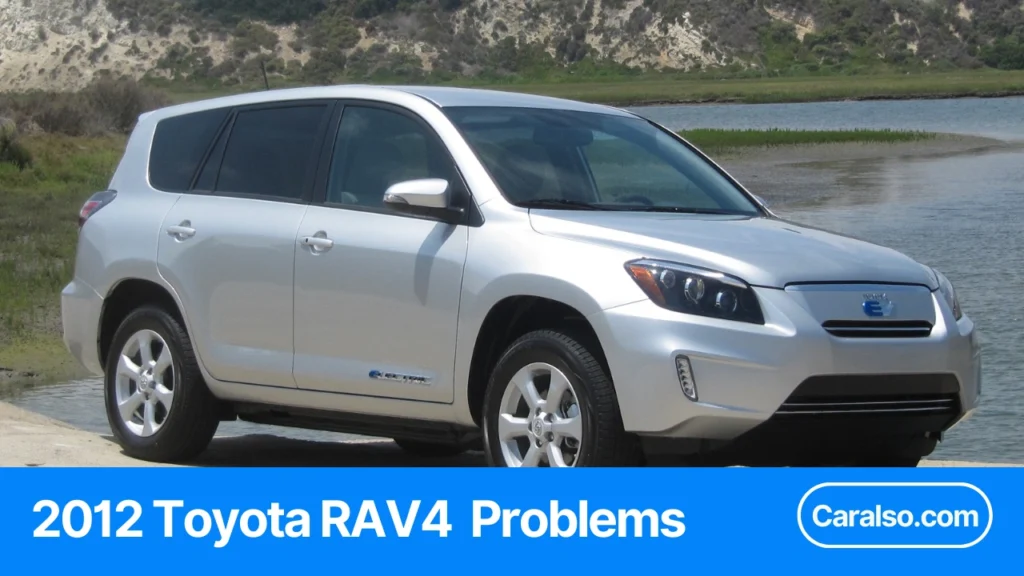
2012 Rav 4 Problems
Summary Table
| Problem | Affected Models | What You Notice | 60-Second Confirmation | Fix Paths | Buy/Walk |
|---|---|---|---|---|---|
| Rear Differential Coupling Growl Noise | AWD only | Growl from the rear while cruising | Drive 35 to 55 mph. Hold light throttle. Lift slightly. Reapply lightly. If the sound changes with load, I flag it | Confirm at a shop. Service per bulletin path. Often coupling repair or replacement | Walk If Loud And Unpriced |
| ABS, VSC, TRAC Lights With DTC C1428 | FWD and AWD | ABS, TRAC, VSC lights on. Stability features can be disabled | Key on and check dash lights. If lights stay on, scan for C1428 | Dealer software update to skid control ECU if recall applies | Walk If Lights On And No Proof |
| Wiper Linkage Corrosion Or Separation (Recall) | FWD and AWD | Wipers clunk or stop working | Run wipers on low and high for 10 seconds each | Dealer replaces water diverter channel and updated linkage parts per recall | Walk If Wipers Fail |
| Rear Outboard Seat Belt Risk In Severe Crash (Recall) | FWD and AWD | No normal driving symptom | VIN recall check. Then confirm rear belts retract smoothly | Dealer installs protectors on rear seat cushion frames | Buy If Recall Closed |
| “Surge When Coming To A Stop” Feel | FWD and AWD | Feels like it wants to push forward at the last moment | In an empty lot, do 5 slow stops from 15 to 20 mph | Verify floor mat is clipped. Scan for codes. If repeatable, diagnose before buying | Walk If Repeatable On Test Drive |
| Paint Or Clearcoat Failure | FWD and AWD | Peeling, flaking, or cloudy clearcoat | Inspect roof edge above windshield and hood leading edge in bright light | Body shop repaint if severe. Use as price leverage | OK If Priced Right |
Quick buyer note from me. 2012 is the last year of this generation. A lot of pages mix 2012 and 2013. I don’t. The 2013 redesign is a different conversation.
Problems Snapshot (What Owners Report Most)
I treat the 2012 RAV4 like a “last-year” version of the 2006–2012 generation. That’s good news. Most of the big-ticket issues I watch for are either recall-related (free fix) or very specific to AWD parts.
Here’s what shows up the most in owner complaint databases for the 2012 model year:
Most Mentioned Complaint Categories
| Category | What Owners Usually Notice | My Fast Check |
|---|---|---|
| Body / Paint | Clearcoat or paint peeling, often on upper panels | Look at roof, pillars, hood edge, and above windshield in direct sun |
| Brakes | Odd brake feel, occasional “surge” when stopping, warning lights | Test slow stops into a parking spot and scan for ABS codes |
| Engine | Driveability complaints and occasional odd throttle behavior | Cold start, idle stability, and a short highway merge pull |
| Electrical | Wiper system issues (recall) and occasional oddball electrical complaints | Run wipers on all speeds and spray windshield washer |
| Seat Belts / Air Bags | Rear seat belt safety recall | Confirm recall completion with VIN check and inspect rear belt path |
Why Trim And Drivetrain Changes The Problem List
I always ask 2 questions before I even show up.
- Is it 4-cylinder or V6?
The 2012 RAV4 came with a 2.5L 4-cylinder and a 4-speed automatic. Some trims also have a 3.5L V6 with a 5-speed automatic. That changes how it drives and what noises I expect. - Is it FWD or AWD?
If it’s AWD, I pay extra attention to rear drivetrain noises. There’s a known pattern on some 2006–2012 AWD RAV4s where the rear differential coupling can develop a growl-type noise.
If it’s FWD, I still check for brake feel complaints and paint condition, but the AWD-specific coupling noise drops off my “top suspects” list.
The 8–10 Most Common 2012 Rav 4 Problems
Below is the exact format I use when I’m diagnosing these. Same rhythm every time.
1) Rear Differential Coupling Growl Noise (AWD)
Symptoms
- Growl or humming from the rear while driving
- More noticeable at steady speeds than on acceleration
Likely Cause
- Rear differential coupling bearing contamination and wear (AWD coupling assembly related)
How To Confirm
- Drive 35–55 mph on smooth road. Hold steady throttle.
- Listen for a rear “growl” that does not change with engine RPM like a normal engine sound.
- Do a gentle lane change left and right. Wheel bearing noise often changes with load. Coupling growl often feels more “constant.”
Fix Options
- Confirm fluid condition and level first.
- If the noise matches the coupling pattern, the fix path usually involves inspection and replacement or repair per Toyota service guidance.
Price Leverage
- Any rear driveline growl on an AWD RAV4 is negotiation fuel.
- I price it like a drivetrain job, not like “new tires.”
2) Windshield Wipers Can Fail From Link Corrosion Or Separation (Recall)
Symptoms
- Wipers stop working or move oddly
- Wipers work sometimes, then quit
- You may hear the motor but the arms do not move correctly
Likely Cause
- Water drainage issue at the cowl area lets water drip onto the wiper linkage joint
- Corrosion and wear can lead to separation at the linkage joint
How To Confirm
- Run wipers on low, high, and intermittent for 60 seconds each.
- Spray washer fluid and confirm smooth sweep and parking position.
- Look for sloppy motion or a “one arm moves, one arm doesn’t” situation.
Fix Options
- If recall is open, the dealer remedy is the play.
- If recall is closed but the problem exists, repair can involve water channel and linkage related parts.
Price Leverage
- If the recall is not completed, I treat it as a safety and inspection delay.
- If it’s failing now, I negotiate like a repair is immediately needed.
3) ABS, TRAC, And VSC Lights On (Skid Control ECU Software Recall)
Symptoms
- ABS, TRAC, and VSC warning lights illuminate
- Systems may become inoperative
- Regular braking still works, but driver-assist functions can drop out
Likely Cause
- Skid Control ECU software issue that can trigger a stored trouble code (commonly referenced as DTC C1428 in recall materials)
How To Confirm
- Key-on check. Confirm lights go off normally.
- If lights stay on or return during the test drive, scan the ABS system for stored codes.
Fix Options
- If the recall is open, the fix is a dealer software update at no charge.
- If recalls are closed and lights are on, diagnose as a normal ABS fault and fix by component testing.
Price Leverage
- If warning lights are on and recall status is unknown, I negotiate hard.
- If the recall is open, I negotiate for the time and hassle.
4) Rear Seat Belt Webbing Cut Risk (Recall)
Symptoms
- Usually no day-to-day symptom
- This is a crash-safety issue, not a “you feel it on the drive” issue
Likely Cause
- In a severe frontal crash, the rear outboard lap belt webbing can contact the seat cushion frame edge and be cut
How To Confirm
- VIN recall check is the real confirmation.
- I also inspect the belt routing and look for abrasion marks near the rear seat frame areas.
Fix Options
- Recall remedy installs protective covers on the rear seat cushion frames.
Price Leverage
- If recall is open, I consider it mandatory before family hauling.
- I do not “plan to do it later.”
5) “Surge When Coming To A Stop” Or Unexpected Lurch (Owner-Reported)
Symptoms
- A short lurch forward while braking into a stop
- Often described as 1–2 feet when pulling into a garage or parking spot
- May be paired with a brief engine rev feeling
Likely Cause
- This one is not always a single smoking gun
- Possibilities include brake system behavior on uneven surfaces, throttle control quirks, or driver input confusion in tight low-speed situations
How To Confirm
- Reproduce safely. Empty lot only.
- Do several slow stops from 10–15 mph on flat pavement.
- Then do a slow stop over a small bump or driveway apron.
- If it feels like ABS, you often feel pedal pulsing. If it feels like throttle, the engine sound changes.
Fix Options
- Start with basics: remove stacked floor mats, verify pedal clearance, and confirm throttle body and idle behavior are normal.
- If warning lights are involved, scan the vehicle.
- If a recall applies to brake or stability control software, get that done first.
Price Leverage
- If I can reproduce it, I negotiate like a drivability fault.
- If I cannot reproduce it, I still document it and keep my offer conservative.
6) Paint Or Clearcoat Peeling (Common Owner Complaint Pattern)
Symptoms
- Paint peeling in patches
- Clearcoat failure that looks like flaking or lifting
- Often more obvious on horizontal surfaces
Likely Cause
- Paint system failure on certain vehicles and colors is a repeated complaint theme
How To Confirm
- Inspect in direct sun.
- Focus on roof, pillars, top of doors, hood leading edge, and above windshield.
- Run a clean microfiber over the surface. If it catches, the clearcoat may already be lifting.
Fix Options
- Spot repair for small areas
- Panel respray for larger failures
- Full refinish if multiple panels are affected
Price Leverage
- Paint is expensive fast.
- I negotiate per panel, not “it needs a polish.”
7) EVAP System Problems (Charcoal Canister And Vent Valve Related)
Symptoms
- Check engine light after fueling
- Hard-to-fill fuel behavior (pump clicking off repeatedly)
- Fuel smell near rear of vehicle in some cases
- Common EVAP-related codes include P0441, P0442, and P0446
Likely Cause
- Vapor canister can release charcoal pellets that plug the vent valve
- Vent valve and canister issues can trigger repeat EVAP codes
How To Confirm
- Scan codes before clearing anything.
- Ask if the check engine light shows up after filling the tank.
- Listen for odd venting sounds around the fuel tank area after shutdown.
Fix Options
- Proper diagnosis first. Do not shotgun parts.
- If it matches the known pattern, replacement of the canister assembly with valves is a common fix path.
Price Leverage
- EVAP faults are perfect negotiation material because the light scares buyers and the fix can be labor-heavy.
8) Oxygen Sensor Failure (Check Engine Light)
Symptoms
- Check engine light
- MPG drop is possible
- Occasional rough running depending on which sensor fails
Likely Cause
- One or more oxygen sensors fail with age and mileage
How To Confirm
- Scan the codes. Do not guess.
- Look at live O2 sensor data if you have a scanner that supports it.
Fix Options
- Replace the failed sensor(s) only, not all of them by default
- Clear codes and confirm readiness monitors complete
Price Leverage
- If the CEL is on, I always assume “diagnosis + repair,” not just a $20 sensor.
9) Road Noise From Wheel Bearings Or Tire Cupping (Easy To Misdiagnose)
Symptoms
- Humming or roaring that rises with speed
- Noise can change slightly with left vs right turns
- Often confused with AWD rear coupling noise
Likely Cause
- Wheel bearing wear, tire cupping, or alignment issues
How To Confirm
- Drive 45–65 mph and gently weave within your lane.
- If the noise changes with load, wheel bearing is a suspect.
- Rotate tires front to rear and see if the noise changes location or tone.
Fix Options
- Fix tire issues first if tread shows cupping
- If it’s a bearing, replace the noisy hub assembly
Price Leverage
- I use this as “immediate maintenance cost” negotiation.
- Especially if tires are also near the wear bars.
10) Brake Pulsation Or Steering Shake Under Braking
Symptoms
- Pulsing brake pedal
- Steering wheel shake during braking from 50–70 mph
- Feels worse after a long downhill or repeated stops
Likely Cause
- Rotor runout or uneven pad transfer
- Sometimes tied to stuck caliper slide pins or poor previous brake work
How To Confirm
- Empty road. Brake from 60 to 10 mph with medium pressure.
- Repeat once. Do not overheat brakes during a test drive.
- If the steering shakes, it’s often front brake related.
Fix Options
- Clean and lubricate slide pins and hardware
- Replace rotors and pads if needed
- Check tire balance too, because vibration can stack
Price Leverage
- Brake jobs are predictable money.
- I negotiate the parts-and-labor value, not “it feels a little weird.”
Recalls And Safety Checks (Must-Read Before You Buy)
I treat recalls like step zero.
If a 2012 RAV4 has an open safety recall, I either schedule it before I buy or I price the car like it is not road-ready yet.
The Recalls That Matter Most For A 2012 RAV4
Here are the big ones I actually care about as a buyer.
| Recall Or Safety Item | Why I Care | Fast Check | What “Fixed” Looks Like |
|---|---|---|---|
| Skid Control ECU Software Update (ABS, TRAC, VSC Lights) | ABS, traction, and stability functions can be disabled. Standard braking still works, but risk goes up | Key on. Confirm ABS, TRAC, VSC lights go out normally. If they stay on, scan for ABS codes | Dealer software update completed, with paperwork showing recall closed |
| Windshield Wiper Link Corrosion Or Separation | Wipers can stop working. Visibility risk in rain | Run wipers on low, high, and intermittent for 10 seconds each. Spray washer once | Dealer recall remedy completed. Updated water channel and linkage parts installed |
| Rear Outboard Seat Belt Webbing Cut Risk | Crash-safety issue. No daily symptom | VIN recall check. Then tug belts and confirm smooth retraction | Dealer installed protectors on both second-row outboard seat cushion frames |
My simple rule: if it is a safety recall, I want it closed.
How To Check If Recalls Are Done (VIN Script)
This is the exact script I use.
- Get the VIN from the dash at the windshield.
- Run the VIN on Toyota’s recall lookup.
- Run the VIN on NHTSA’s recall lookup.
- Screenshot both results.
- Ask the seller for the repair invoice if they claim it is done.
If the VIN shows an open recall, I do this next.
- I call a Toyota dealer with the VIN.
- I ask if the recall is open and parts are available.
- I ask for the soonest appointment date.
My timing rule is 7 days. If it cannot be scheduled within 7 days, I pause the purchase or I negotiate like the car needs immediate work.
The 3 Physical Checks I Always Pair With The VIN Check
- Wipers
This takes 60 seconds. It can save you a very bad rainy day. - Dash Lights
I want ABS, TRAC, and VSC lights to turn off normally after startup. - Rear Seat Belts
I pull and retract both rear outboard belts. I want smooth operation. No fraying. No hesitation.
Deal Breaker Vs OK If Priced Right
This section is how I keep myself from buying a “project” by accident.
Deal Breakers (Walk Away Or Require Fix Before Purchase)
- Open Safety Recall With No Plan
If the VIN shows an open safety recall and nobody can schedule it, I walk. - ABS, TRAC, VSC Lights On With No Scan Data
If those lights are on and the seller cannot show a scan report, I stop. I do not guess. - Wipers That Clunk, Bind, Or Quit
If wipers fail on the driveway, I treat it as a safety issue that must be fixed before I buy. - AWD Rear Growl That Is Easy To Trigger
If it growls from 35 to 55 mph and changes with light throttle, I price it like an AWD driveline job or I walk. - Repeatable Surge When Stopping During My Test Drive
If I can reproduce it in an empty lot, I do not buy the car. Not until it is diagnosed and repaired. - Severe Rust In Structural Or Suspension Areas
If the rear hardware looks like it is flaking apart, I am done.
OK If Priced Right (Negotiate Using These)
These are common used-car issues. I just want the price to match the fix.
| Issue | Why I’m OK With It | What I Need To See | How I Negotiate |
|---|---|---|---|
| Paint Or Clearcoat Failure | Cosmetic and resale hit | Photos in direct sun plus a body shop estimate | I negotiate per panel, not “needs a detail” |
| Minor Brake Pulsation | Usually rotors, pads, or slide pin service | Road test proof plus a brake quote | I subtract a brake job from my offer |
| Tires Near Wear Bars | Normal wear item | Tread depth and tire age | I subtract 4 tires and an alignment |
| EVAP Check Engine Light With Normal Driving | Usually fixable, but needs diagnosis | Code list and readiness monitor status | I negotiate and budget for proper diagnosis |
| Small Interior Wear | Cheap compared to drivetrain | None | I negotiate a little and move on |
If you want my one-line buying rule: I will negotiate cosmetic and wear items all day. I will not negotiate safety unknowns.
30-Minute Pre-Purchase Inspection And Test Drive Script
I use this exact script when I’m looking at a 2012 RAV4. It takes 30 minutes. It catches the expensive stuff.
5-Minute Walkaround (Body, Tires, Leaks)
Minute 0: VIN And Recalls
- I take a photo of the VIN at the windshield.
- I check for open recalls before I drive it.
Minute 1: Paint And Glass Quick Scan
- I check the roof edge above the windshield.
- I check the hood leading edge.
- I check the A-pillars and the top of the liftgate.
- I look at the windshield edges for chips, especially the lower corners.
Minute 2: Tires As A Drivetrain Clue
- I confirm all 4 tires match in size.
- On AWD, I want similar tread depth on all 4.
- If 2 tires are new and 2 are worn, I expect AWD stress.
Minute 3: Rust And Rear Hardware Peek
- I look at the rear alignment hardware area for heavy rust.
- If it looks crusty, I slow down and plan a better inspection.
Minute 4: Quick Leak Check
- I look under the engine for fresh wetness.
- I look near the rear for any wetness around the rear differential area on AWD.
10-Minute Under-Hood And Under-Car Check
Minute 5: Oil Baseline
- I check oil level on the dipstick.
- If it is below the low mark, I assume the owner does not check it.
Minute 6: Coolant Baseline
- I check coolant level in the reservoir.
- I look for dried coolant crust around hose connections and radiator seams.
Minute 7: Battery Terminals
- I look for corrosion and loose terminals.
- A loose terminal can create random warning lights.
Minute 8: Brake Fluid Quick Look
- I check brake fluid level and color.
- Dark fluid tells me it has been ignored for years.
Minute 9: Under-Car 60-Second Scan
- I look for oil wetness around the engine and transmission.
- I look at CV boots for grease sling.
- On AWD, I look for seepage at rear driveline seals.
Minute 10: Pedal Area Check
- I confirm the floor mat is clipped to the factory anchors.
- I confirm there are no stacked mats.
- I make sure nothing can slide into the pedals.
12-Minute Test Drive Route (Exact Speeds And Prompts)
I do this route in the same order every time.
Minute 11 To 12: Start And Dash Light Check
- Key on, then start.
- I confirm ABS, TRAC, and VSC lights turn off normally after startup.
- If any stay on, I plan a scan immediately.
Minute 13 To 15: City Loop (Stop And Go)
- I do 6 stops from 25 mph.
- I watch for brake pulsation.
- I listen for clunks over small bumps.
Minute 16 To 18: Low-Speed Stop “Surge” Test (Safe And Controlled)
- Empty lot only.
- I do 5 slow stops from 15 to 20 mph.
- I listen for a sudden engine rev sound.
- I note if the car creeps forward more than expected in the last 1 to 2 feet.
Minute 19 To 23: AWD Rear-End Noise Window (AWD Only)
- Smooth road.
- Steady cruise at 35 mph for 10 seconds.
- Light throttle to 55 mph.
- Lift slightly for 3 seconds.
- Reapply lightly.
- If a growl changes with load and seems behind me, I flag it.
Minute 24 To 26: Bearing Vs Tire Noise Check
- I cruise at 50 to 60 mph.
- I do a gentle lane change left, then right.
- If the noise changes with the lane change, I suspect a wheel bearing more than the rear coupling.
Minute 27 To 28: Transmission Behavior Check
- From a stop, I do 3 light-throttle pulls to 35 mph.
- Then 2 medium-throttle pulls to 45 mph.
- I watch for flare. RPM rises without speed increase.
3-Minute Post-Drive Check (Smells, Drips, Warning Lights)
Minute 29: Wipers And Washer
- I run wipers low and high for 10 seconds each.
- I spray washer once.
- If wipers clunk or quit, that is a safety issue.
Minute 30: Pop The Hood And Recheck
- I look for fresh wetness that only shows up hot.
- I sniff for coolant smell.
- I recheck the dash for warning lights that returned during the drive.
My rule is simple.
If the seller blocks the VIN check, blocks the scan, or blocks the test drive route, I walk.
Preventive Maintenance That Actually Reduces These Failures
When I buy a 2012 RAV4 with unknown history, I do not guess. I baseline the stuff that ties directly to the common failure patterns.
Fluids That Matter On High-Mile 2012 RAV4s
Engine Oil
- I change it every 5,000 miles or 6 months.
- I check level every 2 fuel fill-ups.
Coolant
- If history is unknown, I do a drain and refill early.
- I recheck level weekly for 4 weeks after purchase.
- A steady drop is a leak until proven otherwise.
Transmission Fluid
- If history is unknown, I prefer a drain and refill, not a power flush.
- I recheck for leaks and shift quality after 200 miles.
- If it smells burnt, I diagnose before I throw fluid at it.
Brake Fluid
- I replace brake fluid every 2 to 3 years.
- It helps keep ABS components happier over the long run.
AWD Service Notes (If Equipped)
This is where owners save money or lose money.
Rear Differential And Transfer Case Fluids
- I inspect for leaks at every oil change.
- I change fluids every 30,000 to 50,000 miles depending on heat, hills, and city driving.
The Tire Rule That Prevents Driveline Drama
- Same size on all 4 tires.
- Similar tread depth on all 4 tires.
- If 2 are new and 2 are worn, I replace all 4 on AWD.
Why I Care
A lot of rear noise complaints start with mismatched tires and end with expensive guesses.
Brake And Sensor Hygiene (Avoiding Warning Light Chaos)
I do 3 simple things that prevent a lot of “dash light mysteries.”
- Keep Battery And Grounds Healthy
- Clean terminals once a year.
- Replace a weak battery before winter.
- Do A Monthly Dash Light Routine
- Key on, confirm lights illuminate.
- Start the car, confirm ABS, TRAC, and VSC lights go out normally.
- If one stays on, I scan it that day.
- Keep Wipers And Washer System Working
- I run wipers on low and high for 10 seconds once a month.
- I spray washer once.
- If anything clunks at the cowl, I address it before rainy season.
If You Only Do 3 Things After You Buy
- Keep recalls closed and verify with a VIN check once a year.
- If AWD, service rear driveline fluids and keep tire tread depth matched.
- Scan warning lights early and fix root causes instead of clearing codes.
FAQs
Is The 2012 RAV4 A Good Used SUV?
Yes, if it passes 3 checks.
- The VIN shows no open safety recalls.
- It has no ABS, TRAC, or VSC warning lights during your drive.
- If it is AWD, it has no rear growl at 35 to 55 mph under light throttle.
If it clears those, I’m usually comfortable buying one at normal used-car pricing.
What Is The Most Expensive 2012 RAV4 Problem To Fix?
For AWD models, rear drivetrain growl problems can turn into a 4-figure repair fast.
If the ABS, TRAC, and VSC lights are on and the recall does not apply, diagnosis can also get expensive depending on what failed.
That is why I treat warning lights and rear-end growl as “price it now or walk.”
How Do I Tell If My 2012 RAV4 Has The AWD Rear Coupling Issue?
I do a short, repeatable road test.
- Get to 35 mph on a smooth road.
- Hold steady throttle for 10 seconds.
- Light throttle to 55 mph.
- Lift slightly for 3 seconds.
- Reapply lightly.
If a growl changes with load and sounds like it is behind you, I flag it as a rear driveline suspect. If the noise changes a lot when you gently weave left and right, I suspect a wheel bearing first.
What Recalls Should I Check Before Buying A 2012 RAV4?
These are my must-check items:
- Skid Control ECU software update related to ABS, TRAC, and VSC warning lights
- Windshield wiper linkage corrosion or separation
- Rear outboard seat belt protection
I run the VIN on Toyota’s recall tool and NHTSA’s recall tool. I screenshot both results.
Why Does My 2012 RAV4 Feel Like It Surges When Stopping?
I see this described as a low-speed lurch, often the last 1 to 2 feet before a stop.
Here is how I sort it out fast:
- First, I check floor mats. No stacked mats. Mat clipped to factory anchors.
- Then I do 5 slow stops from 15 to 20 mph in an empty lot.
- If it feels like ABS, you often feel pedal pulsing.
- If it feels like throttle, you usually hear a brief change in engine sound.
If I can reproduce it on a test drive, I do not buy the car until it is diagnosed and fixed.
Is The V6 Or 4-Cylinder The Better Pick In 2012?
If you want simpler ownership, I usually pick the 2.5L 4-cylinder.
If you want stronger passing power and you do a lot of hills, the 3.5L V6 is the one I prefer to drive.
My real decision rule is boring but it works: I buy the one with better maintenance proof and a cleaner test drive.
Key Takeaways
- I run the VIN for open recalls before I test drive a 2012 RAV4.
- If ABS, TRAC, or VSC lights stay on, I scan it and verify recall status before I negotiate.
- If AWD, I prioritize the 35 to 55 mph rear growl test under light throttle.
- Wiper function is a 60-second safety test I do every time.
- Rear seat belt recall items are VIN checks, not “wait and see” issues.
- “Surge when stopping” gets tested in an empty lot with 5 slow stops from 15 to 20 mph.
- Paint and clearcoat problems are usually negotiation items, priced per panel.
- Tire matching matters more on AWD. Same size and similar tread depth across all 4.
Sources
- NHTSA TSB: Rear Differential Coupling Growl Noise (2006–2012 4WD RAV4)
- NHTSA TSB: Rear Differential Coupling Growl Noise (2006–2012 4WD RAV4)
- CarComplaints: 2012 Toyota RAV4 Complaints Overview
- Edmunds: 2012 Toyota RAV4 Review
- RepairPal: 2012 Toyota RAV4 Problems

Hey there,
How is it going?
I’m Meraj Sarker. I am a Car Mechanic and a student of Automobile Restoration here in Florida, USA. I’ve been studying automotive for around 9 years now. So you can rely on my recommendation. For me, studying and getting knowledge about automobile it’s really fun and entertaining. I will help you to get solutions for your car through this website. If you need any help let me know.