
If I am shopping a 2011 RAV4, I start with 2 fast checks.
First, I run the VIN for open recalls. On this model year, several safety items are VIN-specific and fixable at a dealer for $0.
Second, if it is AWD, I do a 35 to 55 mph road test to listen for a rear differential coupling growl. Toyota published a bulletin for this exact noise on 2006 to 2012 4WD RAV4s, including 2011.
After that, I move to the “money leaks.” Paint peeling is the big one I see talked about the most. It is not a breakdown. But it can hit resale value fast.
Quick Answer (Read This First)
Quick Verdict
Best Case: What A Clean 2011 Looks Like
- Zero open recalls on the VIN check.
- No rear growl at 35 to 55 mph if it is AWD.
- Smooth shifts and normal temperature on a 10-minute drive.
- Windows and wipers work every time.
Biggest Walk Away Signals
- Any open safety recall you cannot schedule right away.
- Rear end feels like it “steers itself” after bumps, or it needs constant correction.
- Loud rear growl on AWD that changes with light throttle.
- Wipers fail or clunk at the base of the windshield.
3 Fast Checks Before You Even Test Drive
- VIN Recall Check
- 30-Second Wiper And Window Test
- 35 To 55 MPH Rear Noise Test (AWD Only)
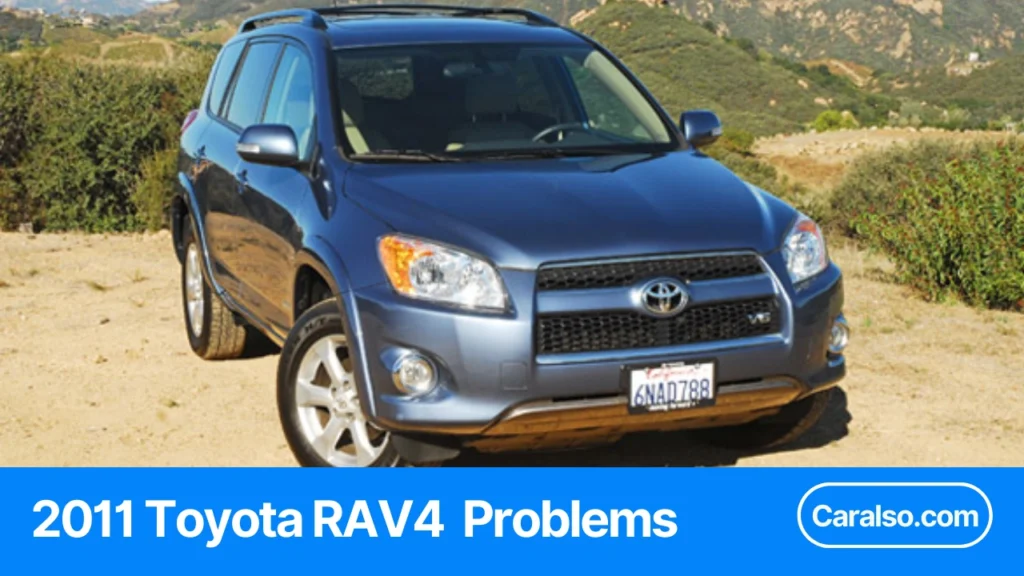
2011 Rav4 Issues
2011 RAV4 Issues Priority Table
| Issue | Who It Hits (FWD, AWD, V6) | What You’ll Notice | 60-Second Check | Severity (1–5) | Fix Path Overview |
|---|---|---|---|---|---|
| Rear Suspension Arm And Alignment Hardware Risk (Recall Family) | FWD, AWD, V6 | Rear feels loose. Alignment changes fast. Uneven rear tire wear | Quick look under rear for heavy rust on rear alignment hardware. Then verify recall status by VIN | 5 | Dealer recall remedy if open. Replace both rear arms and set alignment |
| Curtain Shield Airbag May Not Deploy (Limited 2011 Build Range Recall) | Some 2011 only | No driving symptom | Ask for the build date. Then run VIN. This recall is tied to a specific production window | 5 | Dealer checks VIN applicability and replaces curtain shield assemblies if needed |
| Windshield Wiper Link Corrosion And Separation (Recall) | FWD, AWD, V6 | Wipers stop. Or clunk at the cowl | Run wipers on low and high for 30 seconds. Listen for clunking | 5 | Dealer recall remedy replaces water diverter and installs updated linkage and crank arm |
| Power Window Master Switch Overheating (Recall) | FWD, AWD, V6 | Windows act up. Switch can get hot. Smell of melting plastic | Cycle driver master switch windows 2 times each. Feel for heat and intermittent response | 5 | Dealer inspects, applies grease, and replaces circuit board if needed |
| Rear Outboard Seatbelt Webbing Cut Risk In A Crash (Recall) | FWD, AWD, V6 | No driving symptom | VIN check. Then inspect rear belt webbing for fraying and smooth retraction | 5 | Dealer installs protectors over seat cushion frames |
| Rear Differential Coupling Growl Noise (AWD, TSB) | AWD only | Growl from the rear under steady cruise | Drive 35 to 55 mph. Hold steady throttle 10 seconds. Lift slightly. Reapply lightly. Noise that changes with load is the clue | 4 | Confirm source, then repair per Toyota bulletin. Often coupling service or replacement |
| Paint Peeling (Often White Paint Codes) | FWD, AWD, V6 | Peeling on metal panels, often roof or hood edges | Inspect roof edge above windshield and hood leading edge in bright light | 2 | Repair is body-shop work. Also ask a Toyota dealer if any support program applies by VIN |
| Sudden Engine Acceleration When Braking (Complaint Pattern) | FWD, AWD, V6 | Engine revs when you are trying to slow down | Verify floor mat is clipped and not stacked. Do 5 slow stops in an empty lot | 3 | Scan for codes. Check pedal area and mats first. Diagnose throttle and brake systems if repeatable |
Problems Snapshot (What Owners Report Most)
When I read through owner complaints and recall summaries for the 2011 RAV4, the same themes keep popping up.
I group them into 4 buckets. Then I decide what to inspect first.
Most Discussed Buckets
- Paint And Trim
Paint peeling is the loudest theme in owner reports. On CarComplaints, the 2011 paint peeling page shows 17 complaints, with an average repair cost of $110 at 71,900 miles. - Engine And Drivability
The “engine revs while I’m braking” complaint pattern shows up too. CarComplaints shows 7 complaints, with an average repair cost of $240 at 37,850 miles. I treat this as a safety check and a pedal area check first. - Drivetrain And AWD Noises
If it is AWD, the rear differential coupling growl noise is the issue I do not skip. It is a known pattern on 2006 to 2012 4WD RAV4s, including 2011. - Safety And Electrical
Recalls and safety campaigns matter on this year. Wipers, window master switch, rear suspension arms, and airbags are VIN-dependent. The fix can be $0. But you have to verify it.
What That Means For A Shopper (What I Inspect First)
Here is my real priority order.
| Priority | What I Check | Why It Matters | 60-Second Screening |
|---|---|---|---|
| 1 | VIN Recall Status | Several issues are safety-critical and VIN-specific | Run VIN on Toyota and NHTSA |
| 2 | Rear Hardware Rust (Salt States) | Rear alignment hardware risk can become a control issue | Quick look under rear for heavy rust on adjusters |
| 3 | AWD Rear Growl Test | AWD driveline repair can be a 4-figure bill | 35 to 55 mph light throttle test |
| 4 | Paint And Windshield | Biggest resale-value hits and negotiation levers | Bright light walkaround on roof and hood edges |
| 5 | Wipers And Windows | Visibility and electrical safety | 30 seconds of function testing |
If a seller blocks any of these checks, I walk. It is not personal. It is risk management.
How The 2011 RAV4 Is Built (Why This Changes The Problems)
This year is simple in a good way. But the drivetrain choice changes what I worry about.
Engines And Transmissions (What You Need To Know)
2.5L 4-Cylinder
- 179 hp
- 4-speed automatic
- This is the most common setup you will see.
3.5L V6
- 269 hp
- 5-speed automatic
- This one is quicker and usually feels more relaxed at highway speed.
Why this matters for “issues”
- The 4-speed setup is usually fine, but it has fewer ratios. It can run higher rpm on hills.
- The V6 has a different transmission and different maintenance history patterns. Some owners tow more with the V6. I check fluid condition closely.
FWD Vs AWD (What Parts You’re Adding)
FWD keeps it simple. AWD adds more moving parts.
What AWD Adds
- Rear differential coupling components
- Rear driveline components between the transmission and rear diff
- More fluids to maintain over time
What Noises Usually Mean (Quick Cheat Sheet)
- Rear growl that changes with light throttle at 35 to 55 mph
I suspect rear coupling, not a wheel bearing. - Humming that changes when I gently lane-change left then right
I suspect a wheel bearing. - Vibration that shows up at 60 to 70 mph and feels like a seat shake
I suspect tires, driveline angle, or a prop shaft issue.
My simple rule
If you buy AWD, you have to test for AWD noises. Every time. Even if the seller says it is “just tires.”
The 10 Most Common 2011 Rav4 Issues
Rear Differential Coupling Growl Noise (AWD)
Symptoms
- Low-pitch growl from the rear.
- Most noticeable at 35 to 55 mph.
- Often changes when I add light throttle, then lift slightly.
Likely Cause
- Toyota’s bulletin points to contamination at the front bearing inside the rear differential coupling on some 2006 to 2012 4WD RAV4s.
How To Confirm
- Drive 35 to 55 mph on a smooth road.
- Hold steady throttle for 10 seconds.
- Lift slightly, then reapply lightly.
- If the sound changes with load and is loudest from the rear, I flag it.
- If it only changes with road surface and not throttle, I suspect tires first.
Fix Options
- Confirm diagnosis at a shop. Toyota’s bulletin-style path is to verify noise is loudest at the rear differential coupling.
- Repair can involve rebuilding or replacing the coupling assembly, depending on internal condition.
Rear Suspension Arm And Alignment Hardware Risk After Service (Recall-Related)
Symptoms
- Rear feels loose after bumps.
- It feels like the car “rear steers” and needs correction.
- Rear tire wear looks uneven.
- Alignment will not stay set.
Likely Cause
- The rear suspension arms (rear tie rods) can have lock nuts that were not tightened correctly after service. That can lead to thread damage and rust over time.
How To Confirm
- Check the driver door jamb build date. Many affected vehicles were built before early September 2010.
- Look under the rear for heavy rust around rear alignment adjusters and hardware.
- On a test drive, I do 3 mild lane changes at 45 to 60 mph. A loose rear can feel like a delayed tail wag.
Fix Options
- If the recall is open, I let Toyota handle it.
- The recall remedy replaces both rear suspension arms and addresses the adjustment hardware so it is not serviced incorrectly again.
Power Window Master Switch Overheating (Recall-Related)
Symptoms
- Windows work intermittently from the driver switch.
- Switch feels notchy or sticky.
- Hot plastic smell near the driver door controls.
- In rare cases, smoke.
Likely Cause
- Insufficient grease on the sliding electrical contacts can let debris and moisture create a short, which can overheat the switch.
How To Confirm
- With the car on, cycle each window 2 times from the driver master switch.
- I listen for hesitation and feel for heat after cycling.
- I confirm by VIN, since a switch can feel normal and still be unrepaired.
Fix Options
- Dealer recall remedy. They inspect and apply the specified lubricant, or replace the circuit board if there is an abnormal condition.
Wiper Linkage Corrosion Or Separation (Recall-Related)
Symptoms
- Wipers stop working.
- Clunking at the base of the windshield.
- Intermittent wiping in heavy rain.
Likely Cause
- Water can drip onto the joint that connects the wiper linkage to the motor. Corrosion and wear can lead to separation over time.
How To Confirm
- Run wipers on low and high for 30 seconds.
- Listen for clunks at the cowl.
- If the seller will not let me test wipers, I walk.
Fix Options
- Dealer recall remedy replaces the water diverter channel and installs updated linkage parts designed to reduce water splash and help prevent separation.
Curtain Shield Airbag May Not Deploy (Limited 2011 Build Range Recall)
Symptoms
- Usually no driving symptom.
- This is a VIN and build-date issue.
Likely Cause
- A limited group of 2011 RAV4s had curtain shield airbags with an inflator initiator propellant that may not perform correctly.
How To Confirm
- Check the driver door jamb build date. The affected range is late 2011 production, roughly November 24, 2011 through December 19, 2011.
- Then confirm by VIN. Build date alone is not proof.
Fix Options
- Dealer recall remedy. They identify the curtain shield assemblies and replace as needed.
Rear Seat Belt Webbing Cut Risk In A Crash (Recall-Related)
Symptoms
- No normal driving symptom.
- It matters in a severe frontal crash.
Likely Cause
- In a frontal collision, rear outboard lap belt webbing can contact a portion of the seat cushion frame and be cut.
How To Confirm
- VIN check is the real test.
- I still inspect belts for fraying and smooth retraction.
Fix Options
- Dealer installs protectors over both rear seat cushion frames at no charge under the recall.
Paint Peeling (Especially White Paint Codes)
Symptoms
- Paint peels from metal panels in sheets.
- It often starts at roof edges, hood leading edge, and pillars.
- Early stage looks like small lifting spots that turn into large patches.
Likely Cause
- Toyota documents describe sunlight over time degrading adhesion between the primer coat layer and the underlying layer, which can let paint peel from the metal body panel on some vehicles with Blizzard Pearl (070) or Super White (040).
How To Confirm
- I inspect these 4 spots in bright light:
- Roof edge above the windshield
- A-pillars
- Hood leading edge
- Top of the liftgate
- I also check the paint code on the door jamb label.
Fix Options
- Body shop repaint of the affected panels is the real fix.
- I also ask a Toyota dealer to run the VIN to see if any customer support coverage applies for paint peeling.
Sudden Engine Acceleration When Braking (Complaint Pattern)
Symptoms
- Engine revs when I am braking.
- Car creeps forward more than expected during a stop.
- It can feel random and scary.
Likely Cause
- This is not a single proven root cause from owner reports.
- The first things I rule out are floor mat interference and pedal area obstruction.
- If it is repeatable, it becomes a diagnosis problem, not a guessing game.
How To Confirm
- Before driving, I physically check:
- Floor mat is clipped to factory anchors
- No stacked mats
- Nothing can slide into the pedal area
- Then I do 5 slow stops in an empty lot from 15 to 20 mph.
- If anything feels wrong, I stop testing. Safety first.
Fix Options
- Scan for stored and pending codes.
- If it repeats, I recommend a professional inspection focused on throttle control, pedal feel, and brake system behavior.
- I do not buy a car that shows this symptom during a test drive.
Excessive Oil Consumption (Less Common, Still Expensive If Ignored)
Symptoms
- Oil level drops between changes.
- Low oil light comes on.
- Top-off becomes routine.
Likely Cause
- Owner reports vary. Some describe high consumption without obvious leaks.
- At this age, I assume more than one factor can be involved.
How To Confirm
- Check the dipstick before the test drive.
- Check again after the drive for any dramatic change.
- Look underneath for active leaks.
- Ask the owner how many quarts they add per 1,000 miles. I want a number.
Fix Options
- Start simple. Fix obvious leaks. Replace a stuck PCV valve if it tests bad.
- If consumption is high, the correct next step is documenting usage over 1,000 miles and doing proper engine diagnostics.
Driveshaft Or Prop Shaft Vibration (AWD Context)
Symptoms
- Vibration that feels like a seat shake at 60 to 70 mph.
- Vibration that changes with throttle load can point away from tires.
Likely Cause
- Tire mismatch, wheel balance, or driveline components out of balance.
- AWD adds more rotating parts, so small problems can show up as vibration.
How To Confirm
- First, I check tires.
- Matching size on all 4
- Similar tread depth across the set
- Then I road test at 60 to 70 mph.
- If it changes when I gently accelerate, then coast, I suspect driveline more than tire balance.
Fix Options
- Start with the basics. Balance, alignment, and tire match.
- If vibration persists, I get an AWD driveline inspection before I buy.
Recalls And Safety Checks (Must-Read Before You Buy)
I treat this section like a must-do list. I do not buy first and “handle recalls later.”
2011 RAV4 Recalls Checklist Table
| Recall Topic | Risk If Ignored | What I Check On The Car | How I Confirm Closed Status |
|---|---|---|---|
| Rear Suspension Arms (Rear Tie Rods) | Loss of vehicle control risk if an arm fails | Rear alignment hardware condition, rust, and any odd rear steer feel | VIN check, then dealer record of both arms replaced under the latest remedy |
| Power Window Master Switch | Overheating and fire risk | I cycle every window twice from the driver master switch and check for heat or smell | VIN check, then recall completion on the dealer invoice |
| Wiper Linkage | Wipers can stop working, visibility risk | 30-second wiper test on low and high, listen for clunks | VIN check, then verify water diverter and linkage remedy was performed |
| Curtain Shield Airbag (Limited 2011 Production Window) | Curtain airbag may not deploy in a crash | Door jamb build date, then VIN check | VIN check is the final answer, not guessing |
| Rear Seat Belt Frame Protector | Rear belt may be cut in a severe frontal crash | Belt condition, smooth retraction, and VIN check | VIN check, then confirm protectors were installed |
| Rear Alignment Related Recalls That Were Updated Over Time | Earlier remedies may not be the final fix | Paperwork that shows which campaign was performed and when | Dealer can tell you if an earlier recall was superseded and needs the updated remedy |
My 3-Minute VIN Recall Workflow
- Photo the VIN at the base of the windshield.
- Run the VIN on Toyota’s recall lookup.
- Run the VIN on NHTSA’s recall lookup.
- Screenshot both results.
- If anything is open, call a Toyota dealer and ask:
- Can you confirm the campaign is open on this VIN?
- Can you schedule it within 7 days?
The 2 Physical Checks I Always Pair With The VIN Check
- Wipers And Windows
These are fast, and they map directly to recall topics. - Rear Hardware Look-Under
If I see heavy rust on rear adjustment hardware, I treat it like a real buying decision, not a cosmetic note.
Deal-Breaker Vs OK If Priced Right
This is how I decide if a 2011 RAV4 is worth my time.
I do not “talk myself into” safety and drivetrain risks. I either fix them first or I walk.
Deal-Breakers (Walk Away Or Deep Discount Only)
- Any Open Safety Recall You Cannot Schedule Now
If the VIN shows an open recall for wipers, windows, airbags, seatbelts, or rear suspension arms, I want a scheduled appointment. Within 7 days is my rule. - Rear Suspension Hardware Rust Plus Rear Steer Feel
Heavy rust on the rear alignment hardware plus a loose rear feel is a no for me. I do not buy it without a lift inspection and a plan. - AWD Rear Differential Coupling Growl That Is Easy To Trigger
If it growls from 35 to 55 mph and changes with light throttle, I treat it like a real driveline repair. I either get a repair quote in writing or I walk. - Sudden Engine Rev While Braking During Your Test Drive
If it happens once during my drive, I stop. I do not buy the car. I do not “hope it was a fluke.” - Automatic Transmission Slip, Flare, Or Long Engagement Delay
If Reverse to Drive takes more than about 1 second to engage, or it flares under light throttle, I treat it as high risk. Burnt fluid smell is an instant walk. - Overheating Or Coolant Loss
If the temp gauge climbs or the heater goes cold at idle after warm-up, I am done.
OK If Priced Right (With Proof And A Plan)
These are issues I buy all the time, as long as the price matches the fix.
| Issue | Why I’m OK With It | What Proof I Want | How I Price It |
|---|---|---|---|
| Paint Peeling (Often White Paint Codes) | Cosmetic and resale hit, not usually a breakdown | Paint code photo, body shop estimate, and I ask a dealer if any support program applies by VIN | I negotiate based on panel count, not guesses |
| Windshield Chips Or Cracks | Common, easy to fix | Glass quote and proof it is not a bad prior install | I treat it as a fixed dollar item |
| Worn Tires Or Uneven Wear | Normal used-car math | Tire age, tread depth, and alignment printout if wear is uneven | I subtract tires plus alignment from my offer |
| Minor Suspension Clunks | Often links, bushings, or struts | Shop inspection note or proof of recent suspension work | I budget a 2-wheel or 4-wheel refresh depending on noise |
| EVAP Code Or Random CEL With Normal Drive | Often cap, purge, or small leak | Scan report with code list and readiness monitors | I negotiate and plan diagnosis, not parts roulette |
| Cosmetic Interior Wear | Easy and cheap compared to drivetrain | None needed | I just negotiate |
My documentation rule is simple.
If the seller has records, I pay closer to market.
If they have stories, I pay closer to auction.
30-Minute Pre-Purchase Inspection And Test Drive Script
I built this to work in a parking lot with a basic scanner and a flashlight. It takes 30 minutes.
0 To 5 Minutes (Before Starting The Engine)
VIN And Recall Flow
- Photo the VIN at the windshield.
- Run the VIN for open recalls.
- If a safety recall is open and the seller refuses to schedule it, I stop.
Paint And Body Quick Scan
- Check roof edge above windshield.
- Check A-pillars.
- Check hood leading edge.
- Check top of liftgate.
- Photo any peeling spots so you can price it later.
Tire Wear Pattern Read
- Front inner-edge wear often points to alignment or worn parts.
- Rear wear that looks “feathered” can match alignment problems.
- On AWD, I confirm all 4 tires match in size. I want similar tread depth.
Fluid Glance
- Oil level on dipstick.
- Coolant level in the reservoir.
- If oil is below the low mark, I assume the owner does not check it.
5 To 15 Minutes (Idle And In Place Checks)
Cold Start Preference
- I ask for a cold start.
- If it is already warm, I treat that as a data point.
Window Switch Test (1 Minute)
- Cycle each window from the driver master switch 2 times.
- Any hesitation or dead switch gets noted.
- I sniff for hot plastic smell near the switch.
Wiper Function Test (30 Seconds)
- Low speed 10 seconds.
- High speed 10 seconds.
- Washer spray 1 time.
- Any clunk at the cowl is a flag.
Brake Pedal Feel Check (30 Seconds)
- In Park, press the brake pedal for 20 seconds.
- It should not sink steadily.
- I also check that the brake lights work.
Steering Feel In Place (30 Seconds)
- Turn wheel left and right while stopped.
- Listen for clunks.
- A single clunk can be normal wear. Repeated knocks are not.
Pedal Area Check (1 Minute)
- Confirm the floor mat is clipped and not stacked.
- Make sure nothing can slide into the pedals.
- I do this before I drive, every time.
15 To 30 Minutes (Test Drive Loops)
Loop 1: Rear Coupling Growl Test (AWD Only) (4 Minutes)
- Smooth road.
- Cruise at 35 mph for 10 seconds.
- Light throttle to 55 mph.
- Lift slightly for 3 seconds.
- Reapply lightly.
- If the sound changes with load and comes from the rear, I flag it.
Loop 2: Rear Steer And Alignment Feel (4 Minutes)
- 45 to 60 mph straight road.
- 3 gentle lane changes.
- The car should track straight.
- If the rear feels delayed or loose, I slow down and inspect the rear hardware again.
Loop 3: Braking Weirdness Check (4 Minutes)
- Empty lot or safe straight road.
- 5 slow stops from 15 to 20 mph.
- I want smooth braking and predictable creep.
- If the engine revs while I am braking, I stop testing.
Loop 4: Transmission Behavior (Automatic) (3 Minutes)
- From a stop, 3 light-throttle pulls to 30 mph.
- 3 medium-throttle pulls to 45 mph.
- I watch for flare, harsh shifts, or hunting.
- After the drive, I check for burnt transmission smell if possible.
Post-Drive Recheck (2 Minutes)
- Pop the hood.
- Look for fresh wetness.
- Sniff for coolant smell.
- Recheck coolant reservoir level against your “before” baseline.
My walk rule is fast.
If the seller blocks the VIN check, blocks the wiper test, or blocks the scan, I walk.
Preventive Maintenance That Actually Reduces These Failures
I do not “maintenance” a 2011 RAV4 the same way I do a brand-new car. I focus on the exact failure patterns.
If You Only Do 3 Things
- Keep All Recalls Closed
I run the VIN every year. I do not assume it is still closed after a sale. - Service AWD Fluids And Match Tires (AWD Only)
I keep tire sizes and tread depth close. I change rear driveline fluids on a real schedule. - Stop Paint Damage Early
I wash salt off. I protect exposed primer fast. I do not wait until it is peeling in sheets.
AWD Driveline Habits (To Reduce Growl And Vibration Risk)
If I own an AWD 2011, I treat rear driveline fluid like insurance.
What I Do
- I change rear differential fluid and transfer case fluid on a 30,000 to 50,000 mile rhythm.
- I check for seepage at every oil change.
- I fix leaks before I top off.
The Tire Rule That Prevents Expensive Headaches
- Same size on all 4. Always.
- Similar tread depth across all 4.
- If 2 tires are new and 2 are worn, I replace all 4 on AWD.
Why I Care
A lot of “mystery vibration” starts with tires and ends with a driveline bill.
Rear Suspension And Alignment Rules (To Avoid Repeat Rear Steer Feel)
I do not let random shops crank on rusty adjusters.
My Alignment Shop Rules
- I ask if they inspect rear adjusters before adjusting.
- I want a before-and-after printout.
- If they say “we forced it,” I assume damage risk.
My Inspection Habit
- I look at the rear alignment hardware twice a year if I live in a salt state.
- If rust is heavy, I verify recall status again and I plan corrective work before winter.
Wipers And Windows (Safety Stuff I Actually Test Monthly)
These are quick checks that catch recall-related failures early.
Once A Month
- Wipers low speed for 10 seconds.
- Wipers high speed for 10 seconds.
- Washer spray once.
- All windows up and down from the driver master switch.
If Something Feels Off
- I stop using it and I diagnose.
- I do not “just live with it.”
Visibility and switch overheating risk are not the place to be casual.
Brake And Pedal Area Habits (Because Of The “Rev While Braking” Complaints)
I do 2 simple things.
- I keep the floor mat clipped to the factory anchors.
- I do not stack mats.
Then I add a quick brake feel check.
- Pedal press in Park for 20 seconds.
- If it sinks, I inspect before it becomes a bigger job.
Paint Peeling Prevention (The Cheap Stuff That Works)
Paint issues are where resale value disappears.
What I Do
- I wash the roof edge and hood edge more often than the doors.
- I remove bird droppings within 24 hours if I can.
- I wax or seal the paint 2 to 4 times a year.
- If I see a chip that exposes primer, I touch it up fast.
If It Is Already Peeling
- I stop trying to “spot fix” big peeling areas with a pen.
- I get a body shop estimate and decide if I want a proper respray or a price adjustment at sale time.
FAQs
Is The 2011 RAV4 Reliable?
Yes, if the recalls are handled and the drivetrain passes a clean test drive.
I trust a 2011 most when:
- The VIN shows zero open recalls.
- AWD has no rear growl at 35 to 55 mph.
- It tracks straight and does not feel loose in the rear.
What Is The Most Common 2011 RAV4 AWD Noise?
The one I never skip is a rear growl that shows up around 35 to 55 mph.
It often changes when I add light throttle, then lift slightly.
If it does that, I treat it like a driveline issue until proven otherwise.
How Do I Check Open Recalls On A 2011 RAV4?
I do a 2-site VIN check.
- Toyota recall lookup
- NHTSA recall lookup
Then I screenshot both.
If anything is open, I call a Toyota dealer and schedule it before I buy, or immediately after.
Which Engine Is The Better Buy In 2011 (4-Cyl Or V6)?
If you want the simplest ownership math, I usually pick the 4-cylinder.
If you want more power for hills and passing, the V6 is the one I prefer to drive.
My decision rule is practical:
- I buy the one with better maintenance records and a cleaner test drive.
- I do not buy either one with AWD growl, rear steer feel, or open safety recalls.
What Mileage Do These Problems Usually Show Up?
It depends on maintenance and climate more than mileage.
Here is how I think about it:
- AWD noises often show up when miles get higher and fluid history is unknown.
- Rear hardware rust problems show up earlier in salt states.
- Paint issues can show up earlier on sun-exposed cars.
So I do not use mileage as a cutoff. I use condition, records, and a repeatable test drive.
Is Paint Peeling A Known Issue On This Generation?
Yes, it is talked about a lot by owners.
I see it most on roof edges, hood edges, and pillars. White paint gets mentioned often.
I treat it as a negotiation item unless the seller expects clean-paint pricing.
Key Takeaways
- I start with a VIN recall check. Every time.
- On AWD, I run a 35 to 55 mph rear noise test before I get serious.
- Rear growl that changes with throttle is a driveline flag, not a tire rotation promise.
- Rear suspension rust risk is real in salt states. I inspect rear hardware and I verify recall status.
- Wipers and windows are safety checks. I test them in 60 seconds.
- Paint peeling is common talk for this year. I inspect roof and hood edges first and I price it accordingly.
- My best prevention plan is simple: keep recalls closed, service AWD fluids, match tires, and protect paint early.
Sources
- Cars.com: 2011 Toyota RAV4 Recalls
- NHTSA TSB PDF: Rear Differential Coupling Growl Noise (2006–2012 4WD RAV4)
- Edmunds: 2011 Toyota RAV4 Features And Specs
- CarComplaints: 2011 RAV4 Paint Peeling
- Toyota Recall Lookup (VIN)

Hey there,
How is it going?
I’m Meraj Sarker. I am a Car Mechanic and a student of Automobile Restoration here in Florida, USA. I’ve been studying automotive for around 9 years now. So you can rely on my recommendation. For me, studying and getting knowledge about automobile it’s really fun and entertaining. I will help you to get solutions for your car through this website. If you need any help let me know.