
If you are searching “2009 Toyota RAV4 problems,” you are usually trying to do one thing. Avoid an expensive surprise after you buy. I get it. I shop these like a mechanic, not like a fanboy.
My approach is simple. I start with open recalls. Then I listen for rear-end noises on the test drive. If the recall work is done and the rear end is quiet, a 2009 RAV4 can still be a smart used buy.
Quick Answer (Most Common 2009 RAV4 Problems)
Quick Verdict
If you want a fast yes or no, here it is.
Buy a 2009 RAV4 if:
- It has 0 open recalls by VIN.
- The rear end is quiet at 45 to 70 mph.
- The wipers run smoothly with no clunking.
- The driver window switch feels normal, not sticky.
Pass if:
- A safety recall is open and the seller will not schedule it.
- You hear a steady whine or growl from the rear that changes with speed.
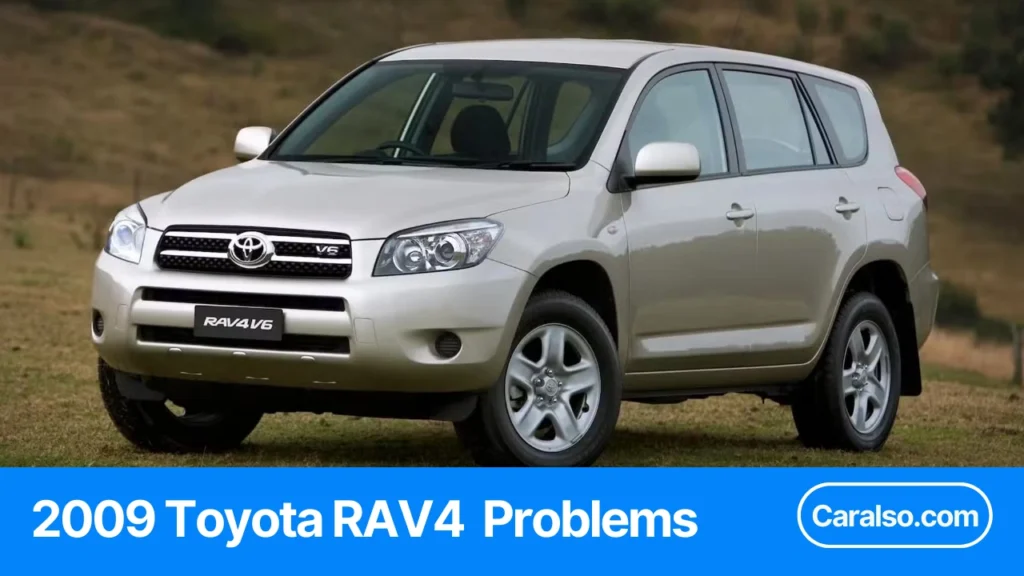
2009 Toyota RAV4 Problems
60-Second Problem Snapshot
| Problem (Ranked By Buyer Risk) | What You Notice | 1-Minute Check | Risk Level | What I Do Next |
|---|---|---|---|---|
| Rear Lower Suspension Arm Corrosion Recall (CSJ and related campaigns) | Rear clunk, odd rear alignment feel, uneven tire wear | Look for heavy rust underneath and ask for recall completion paperwork | High | VIN check, then dealer confirmation of completion |
| Wiper Link Corrosion Recall (15V-577) | Clunking at the base of the windshield, wipers stop or get sloppy | Run wipers on low and high for 30 seconds | High | VIN check, then verify recall repair done |
| Power Window Master Switch Recall (12V-491) | Driver switch feels notchy or sticky | Operate all 4 windows from the driver switch in 60 seconds | High | VIN check, then verify recall remedy done |
| Rear Differential Or Coupling Growl (AWD models) | Whine or growl from rear at steady speed | Cruise at 55 mph for 2 minutes, then lift off the throttle | Medium To High | Inspect fluid history, plan for a shop evaluation |
| Steering Clunk At Low Speed | Knock over bumps or during full-lock turns | Do 3 slow full-lock circles in a parking lot | Medium | Front end inspection, check for play |
| Brake Pulsation Or Noise | Steering wheel shake under braking, squeal | 2 firm stops from 45 mph on a safe road | Medium | Measure rotors and pads, price it in |
| Paint Chipping And Cosmetic Wear | Chips on hood and leading edges | Walk the front end and rockers for 2 minutes | Low | Negotiate, then protect with film or touch-up |
The Most Common Problems I See Mentioned (Ranked)
- Rear Lower Suspension Arm Corrosion And Recall Work
This is the one I treat as non-negotiable. It is safety related. I want proof the campaign was completed. - Wiper Link Corrosion Recall (Wipers Can Stop Working)
If the linkage joint corrodes and separates, the wipers can become inoperative. I always test the wipers during the walkaround. - Driver Power Window Master Switch Recall
A notchy or sticking driver switch is a real warning sign. The recall paperwork specifically calls out overheating and melting risk if people spray cleaners into the switch. - Rear-End Whine Or Growl On AWD Models
If you hear it, do not ignore it. I listen at 45, 55, and 70 mph. I also listen on decel. Noise that changes with speed usually costs real money. - Steering Clunks And Front-End Wear Noises
This is often suspension or steering wear. It is usually fixable. It is also a good negotiation lever if the rest of the car is clean. - Brake Pulsation
This is commonly rotors and pads. It is rarely a deal-breaker. I still price it in because it affects how the car feels every day. - Paint Chipping Complaints
This is cosmetic. It matters for resale and pride of ownership, not safety. I check the hood edge, A-pillars, and behind the front wheels.
Recall Reality Check
Most major recall trackers list about 15 recalls for the 2009 RAV4. That sounds scary until you remember what matters. Your goal is not to memorize every recall. Your goal is to confirm the big safety items are closed on the VIN you are about to buy.
A quick reality check. Some complaint trackers show small sample sizes for certain issues. For example, one drivetrain vibration category shows 2 reports with a typical repair cost listed at $900. One paint chipping category shows 4 reports with a typical repair cost listed at $1,300.
2009 RAV4 At A Glance (What You’re Actually Shopping)
When I shop a 2009 RAV4, I keep the basics simple. Know the trims. Know the engines. Know which setup fits your use.
Trims And Seating
- Trims are typically Base, Sport, and Limited.
- Seating for 5 is standard.
- A third-row seat was offered on some Base and Limited models.
- That third row is kid-sized. I treat it as “for short trips,” not “for adults.”
Engines, Transmissions, And Drive Types
Here is the quick breakdown I use.
| Item | 4-Cylinder Models | V6 Models |
|---|---|---|
| Engine | 2.5L I4 | 3.5L V6 |
| Power | 179 hp, 172 lb-ft | 269 hp, 246 lb-ft |
| Transmission | 4-speed automatic | 5-speed automatic |
| Drive | FWD or AWD depending on trim and market | Usually AWD in many listings, but availability varies by market |
Towing And Cargo
- Towing on the 4-cylinder is commonly listed at 1,500 lbs.
- Towing on the V6 varies by configuration and equipment. I see 2,000 lbs listed on some spec sheets, and up to 3,500 lbs listed in others.
- Cargo space is a strong point.
- I use two numbers when I compare crossovers: 36.4 cu ft behind the rear seats, and 73.0 cu ft with the rear seats down.
Key Dimensions I Actually Care About
These are the numbers that matter in real life.
- Length: 181.9 in
- Wheelbase: 104.7 in
- Turning circle: 34.8 ft
That is why the 2009 feels easy in a parking lot, even when it has the rear spare tire carrier.
The 8 Most Common 2009 Toyota RAV4 Problems (Ranked)
1) Rear Lower Suspension Arm Corrosion Or Looseness (Safety Recall CSJ And Earlier C0J)
Symptoms
- Clunk or knock from the rear over bumps
- Rear alignment feels off
- Uneven rear tire wear
Why It Happens
- Toyota’s recall docs point to rear alignment adjusters and threaded areas that can corrode, especially after alignment service or in rust-belt conditions.
How I Check In 2 Minutes
- I look under the rear for heavy rust around the rear lower suspension arm areas.
- I check rear tire wear for inside-edge wear.
- I ask for recall paperwork with the campaign listed as completed.
Fix Path
- Dealer inspection.
- Replace the arm if rust is found.
- Alignment, then the arm is sealed and labeled as non-adjustable.
Buyer Verdict
- If the recall is open, I treat it as a stop sign until the dealer closes it.
- If it is closed and the rear end is quiet, I move on to the next checks.
2) Windshield Wiper Link Corrosion (Safety Recall 15V-577)
Symptoms
- Clunking at the base of the windshield
- Wipers hesitate, bind, or stop
- Wipers work on one speed but not another
Why It Happens
- Toyota’s recall docs describe water dripping onto the wiper motor link over time.
- That can corrode and wear the joint.
- In worst cases, the link can separate and the wipers can become inoperative.
How I Check In 2 Minutes
- I run the wipers for 30 seconds on low.
- Then 30 seconds on high.
- I listen with the windows down, parked, right next to the cowl.
Fix Path
- Dealer replaces updated parts based on the vehicle’s repair history.
- It is a recall repair, so it should be $0 to the owner.
Buyer Verdict
- If it clunks, I do not guess. I check the VIN for the recall status.
3) Driver Power Window Master Switch (Safety Recall 12V-491)
Symptoms
- Notchy or sticky feel on the driver switch
- Intermittent window operation
- Auto up or auto down acts weird
Why It Happens
- Toyota’s recall documents describe thermal damage risk tied to the master switch.
- The technical instructions describe inspections and a grease-based remedy if “catching” is found.
How I Check In 2 Minutes
- I operate all 4 windows from the driver panel.
- I do it twice.
- I pay attention to the feel, not just whether the glass moves.
Fix Path
- Dealer inspection and remedy per the recall instructions.
- It is a recall repair, so it should be $0 to the owner.
Buyer Verdict
- If it feels sticky, I want the recall closed before I buy.
- If it is already closed and the switch feels normal, I move on.
4) Rear Differential Or Rear Coupling Whine, Growl, Or Rumble (Most Common On AWD)
Symptoms
- Whine that rises with speed
- Growl under light throttle
- Rumble or vibration around steady cruise
Why It Happens
- On AWD models, rear driveline components take real load.
- Owner complaint hubs frequently point to rear differential and coupling-related diagnoses.
How I Check In 2 Minutes
- I cruise at 45 mph for 60 seconds.
- Then 60 mph for 60 seconds.
- Then I lift off the throttle and listen for a change.
- I also do 2 slow turns in a parking lot and listen for groan or bind.
Fix Path
- First step is fluid condition and correct service.
- A differential fluid service is usually not expensive compared to parts replacement.
- If noise is loud or getting worse, I plan a driveline inspection.
Cost Reality
- A differential fluid service can be in the low hundreds at many shops.
- A full rear differential replacement on many vehicles is often quoted in the low thousands, and can go higher depending on parts and labor.
Buyer Verdict
- Mild noise gets a pre-purchase inspection and a price adjustment.
- Loud growl or vibration gets a hard pause until a shop confirms what is failing.
5) Steering Clunk Or Pop At Low Speed
Symptoms
- Clunk when turning at low speed
- Pop over driveway lips
- Knock felt through the steering wheel
Why It Happens
- On older crossovers, this is often play in a steering or suspension component.
- Complaint trackers show steering noise categories for the 2009 RAV4, even if the exact root cause varies.
How I Check In 2 Minutes
- I do 3 slow full-lock circles in a parking lot.
- I hit 2 or 3 small bumps at 10 to 15 mph.
- Windows down. Radio off.
Fix Path
- Inspect for play in tie rods, ball joints, and bushings.
- If the issue is deeper, steering rack work gets expensive fast.
Cost Reality
- Some steering parts are a few hundred in parts.
- A full rack-and-pinion replacement is commonly quoted in the $1,989 to $2,630 range for a RAV4, before taxes and fees.
Buyer Verdict
- If it is a light clunk and everything else is clean, I negotiate and plan an inspection.
- If steering feels inconsistent or loose, I pass.
6) Brake Pulsation, Squeal, Or Premature Wear
Symptoms
- Steering wheel shakes under braking
- Pedal pulsation at 45 to 55 mph stops
- Squeal at low speed
Why It Happens
- Pads and rotors wear.
- Heat and uneven wear can create pulsation.
How I Check In 2 Minutes
- I do 2 firm stops from 45 mph on a safe road.
- I check for shake in the wheel and pedal.
Fix Path
- Pads, rotors, and a brake fluid check if service history is unknown.
Cost Reality
- Typical estimates for a 2009 RAV4 brake pad replacement are often in the $306 to $391 range.
- Pricing varies by axle, rotor condition, and labor rates.
Buyer Verdict
- Usually negotiable.
- Not a deal-breaker unless the ABS light is on or braking is unstable.
7) Check Engine Light From EVAP Or Oxygen Sensor Issues
Symptoms
- Check engine light, often with no drivability symptoms
- Occasional fuel smell
- Rough idle in some cases
Why It Happens
- EVAP systems are picky.
- A loose gas cap can do it.
- A purge valve can do it.
- An oxygen sensor can do it.
How I Check In 2 Minutes
- I plug in a basic OBD-II scanner.
- I read stored codes and pending codes.
- I check readiness monitors if emissions testing matters in your area.
Fix Path
- Start with the simple stuff. Gas cap, obvious hoses, purge valve.
- If codes point to O2 sensors, confirm wiring and exhaust leaks before parts swapping.
Cost Reality
- A 2009 RAV4 purge valve replacement is often estimated around $179 to $240.
- A 2009 RAV4 oxygen sensor replacement is often estimated around $363 to $392.
- EVAP canister work can be much higher on many vehicles, so I do not ignore repeated EVAP codes.
Buyer Verdict
- If the seller will not let you scan it, I walk.
- If codes are simple and price reflects it, I proceed.
8) Paint Chipping And Exterior Finish Complaints
Symptoms
- Chips on the hood leading edge
- Chips behind the front wheels
- Clear coat wear on high-exposure panels
Why It Happens
- Road debris hits the front edge at highway speed.
- Some owners report heavier-than-expected chipping on this generation.
How I Check In 2 Minutes
- I inspect the hood edge and the front bumper line.
- I check the rocker panels behind the front wheels.
- I look for respray lines and overspray.
Fix Path
- Touch-up for small chips.
- Panel respray if it is beyond touch-up.
Cost Reality
- One complaint tracker lists an average paint-chipping repair cost of $1,300 based on 4 complaints, with an average mileage of 27,600 miles.
- Hood repaint pricing can swing widely depending on prep and paint quality.
Buyer Verdict
- Cosmetic, unless it is rusting.
- I use it to negotiate, then I protect the front end.
2009 RAV4 Recalls That Matter (And How To Check Yours)
The 3 Recalls I Tell Buyers To Verify First
- Rear Lower Suspension Arm No. 1 Corrosion And Looseness (C0J And CSJ)
- Windshield Wiper Motor Link Corrosion (15V-577)
- Power Window Master Switch Thermal Risk (12V-491)
If these are open, I do not rely on promises. I verify the VIN.
VIN Recall Check (How I Do It In 5 Minutes)
Step 1: Get The VIN
- I read it at the lower left windshield corner.
- I confirm it on the driver door jamb label.
Step 2: Check NHTSA
- I enter the 17-digit VIN on the NHTSA recall lookup page.
- I screenshot the results.
Step 3: Check Toyota
- I enter the same VIN on Toyota’s recall lookup page.
- I screenshot the results.
Step 4: Confirm With A Dealer
- I call a Toyota service department.
- I ask them to confirm “open” versus “closed” campaigns on that VIN.
- If it is closed, I ask for a printout or a repair order record if the seller claims it was done recently.
Step 5: Know What “Open” Means
- If a recall shows as incomplete or open, the fix has not been recorded as done for that VIN.
- Sometimes a remedy is not yet available, but for the big 2009 RAV4 items, remedies have been published for years.
Recall-To-Symptom Map (Print This Before You Shop)
| Recall Or Campaign | What You Notice | Why It Matters | What The Dealer Does | What I Ask The Seller |
|---|---|---|---|---|
| Rear Lower Suspension Arm (C0J And CSJ) | Rear clunk, odd tire wear, visible rust | Safety related. Rear alignment hardware and arm corrosion are the focus | Inspect arms, replace if needed, set alignment, apply sealing and labels | Proof the campaign is closed on the VIN |
| Wiper Link Corrosion (15V-577) | Clunk at cowl, wipers bind or stop | Loss of wipers can reduce visibility | Replace updated wiper link components and related parts per remedy | Show me the recall completion record |
| Power Window Master Switch (12V-491) | Notchy or sticky driver switch | Recall docs cite overheating risk | Inspect and repair per technical instructions, including grease remedy when needed | Show me the recall completion record |
Deal-Breakers Vs OK-If-Priced-Right (Buyer Rubric)
Here is the rubric I use when I am deciding if a 2009 RAV4 is a buy, a negotiate, or a walk.
| Issue | Walk Away If | Proceed If | Negotiation Note |
|---|---|---|---|
| Open Safety Recall (Suspension Arms, Wipers, Or Window Switch) | VIN shows an open recall and the seller will not schedule it | VIN shows 0 open recalls, or the seller books a dealer appointment before you pay | Recall repairs should be $0. I do not discount for “it probably got done.” |
| Rear-End Whine Or Growl (AWD) | You hear a steady whine or growl that rises with speed, plus vibration in the seat or floor | Rear end stays quiet at 45, 55, and 70 mph | Noise = inspection leverage. I negotiate for a driveline inspection and price room. |
| Wipers Clunk At The Cowl | Loud clunking at the base of the windshield, or wipers hesitate | Wipers run smooth on low and high for 60 seconds | If it clunks, I assume recall status is unknown until proven. |
| Driver Window Switch Feels Sticky Or Notchy | Switch feels sticky and windows act intermittent | All windows run twice from the driver switch with normal feel | I treat this as recall-related until I see the VIN status. |
| Steering Feels Loose Or Clunks Hard | Clunk plus loose steering feel, or steering pulls hard after alignment claims | Minor noise only, steering tracks straight, no warning lights | A rack-and-pinion job can run $1,865 to $2,487, so I do not ignore steering feel. |
| Warning Lights (ABS, VSC, AWD, Airbag) | Any safety light stays on after restart | No lights after startup, and no stored codes on scan | I price in diagnosis time if lights pop back on during the drive. |
| Brake Pulsation | Hard shake under braking from 45 mph | Mild pulsation only, or brakes feel smooth | Brake pads are often $306 to $391. Rotors add more. I negotiate either way. |
| Check Engine Light | Seller says “it is just a gas cap” but will not allow an OBD scan | You scan it and the codes make sense with a fix plan | Purge valve estimates can be $198 to $227. O2 sensor estimates can be $363 to $392. EVAP canister estimates can be $704 to $785. |
| Rust In Structural Areas | Heavy flaking rust on suspension mounting points or subframe areas | Surface rust only, no flaking, no perforation | Rust is not a “small negotiation” item. It changes the whole risk profile. |
| Maintenance Paper Trail | No proof of basic service and multiple red flags show up on drive | Records show basic maintenance, and the car drives clean | Clean records do not fix problems. But they reduce guessing. |
30-Minute Used-Buyer Inspection + 10-Minute Test-Drive Script (Printable)
I use this exact script when I am checking a 2009 RAV4. It keeps me from missing the expensive stuff.
What I Bring (3 Items)
- Flashlight
- Paper towels
- Basic OBD-II scanner
Before You Start The Engine (10 Minutes)
- Confirm The VIN (1 Minute)
- Windshield VIN.
- Door jamb VIN.
- They must match.
- Check Recall Status Proof (2 Minutes)
- Ask for paperwork showing recall completion.
- If they have none, write down the VIN for a recall lookup later.
- Wiper Link Quick Test (1 Minute)
- Key on. Engine off is fine.
- Run wipers 30 seconds on low.
- Run wipers 30 seconds on high.
- Listen at the base of the windshield for clunking.
- Driver Window Switch Feel Test (1 Minute)
- Run all 4 windows from the driver panel.
- Do it twice.
- Feel for sticky or notchy movement.
- Underbody Rust Check (3 Minutes)
- Kneel by the rear wheels.
- Look under the rear suspension arm areas.
- I am looking for heavy flaking rust, not brown surface film.
- Tire Wear And Alignment Clues (2 Minutes)
- Look at inner and outer tread edges.
- Uneven wear on the inside edge matters.
- It can point to alignment issues or worn suspension parts.
Test Drive (10 Minutes)
- Low-Speed Steering Check (2 Minutes)
- In a parking lot, do 3 slow full-lock circles.
- Windows down. Radio off.
- Listen for clunks and pops.
- Rear Noise Sweep (4 Minutes)
- Drive 45 mph for 60 seconds.
- Drive 55 mph for 60 seconds.
- Drive 70 mph for 60 seconds if safe.
- Listen for a whine or growl that changes with speed.
- Coast-Down Check (2 Minutes)
- At 55 mph, lift off the throttle.
- If the sound changes a lot on lift-off, I take note.
- It can help separate tire noise from driveline noise.
- Brake Pulse Test (2 Minutes)
- Do 2 firm stops from 45 mph on a safe road.
- Feel for steering wheel shake and pedal pulsation.
After The Drive (10 Minutes)
- Quick Smell And Leak Check (2 Minutes)
- Park. Leave it running for 30 seconds.
- Sniff for burnt oil or coolant smell.
- Look under the front and center for fresh drips.
- Under-Hood Quick Look (2 Minutes)
- Check coolant level in the reservoir.
- Look for wet oil around the valve cover area.
- Look for fresh fluid on belts or pulleys.
- OBD Scan (4 Minutes)
- Scan stored and pending codes.
- If the check engine light is on, I do not guess.
- I write down the code and decide if it is a simple fix or a pass.
- Final 2-Question Close (2 Minutes)
- “Can you show me proof the recalls are closed on this VIN?”
- “Will you let me do a pre-purchase inspection at a shop I choose?”
If the seller says no to both, I walk. I have done this enough times to know that rule saves money.
Preventive Maintenance That Reduces The Biggest Risks
Most 2009 RAV4 “problems” I see fall into 3 buckets. Rust and alignment hardware. Water where it should not be. AWD fluids that get ignored.
Here is what I do to stack the odds in my favor.
1) Treat Rear Alignment Work As A Recall Check First
If you live where roads get salted, I put the rear suspension arm recall at the top of the list.
My rule is simple.
- I do not pay for a rear alignment until I know the rear suspension arm campaign is closed.
- If the campaign was done, I ask the shop what changed. Toyota’s remedy seals the arm and adds labels saying it is no longer adjustable.
If a shop tells you they “freed up” rear adjusters on a rusty RAV4, I take that as a warning sign. I want a careful inspection before I drive it hard.
2) Keep The Wiper Cowl Area Clear Of Debris
The wiper link recall exists because water can drip onto the wiper motor link over time. That can lead to corrosion and wear at the joint.
I do 3 things that take about 5 minutes.
- I keep leaves and pine needles out of the cowl area.
- I make sure water is not pooling at the base of the windshield.
- If I hear a clunk during wiper operation, I stop guessing and check recall status by VIN.
3) Do Not Spray Cleaners Into The Driver Window Switch
Toyota’s own recall language is blunt here. If the switch feels notchy or sticky, spraying cleaning lubricants into it can turn a “feel” problem into an overheating problem.
This is what I do instead.
- I wipe the switch area with a lightly damp cloth.
- I do not spray anything into the switch.
- If the switch feels sticky, I treat it as a recall verification item, not a DIY fix.
4) AWD Fluids Matter More If You Tow Or Drive In Dust
If you have an AWD RAV4, the scheduled maintenance guide calls out extra items for special operating conditions.
If you tow, Toyota flags these as replace items for 4WD.
- Rear differential oil
- Transfer case oil
- It also flags front differential oil and automatic transmission fluid replacement in the towing list on later service pages.
Even if you never tow, I still want the AWD fluids checked for condition and leaks. If the service history is unknown, I often do a baseline service after purchase so I know what is in the housings.
5) Re-Torque And Inspection Items I Do Not Skip On AWD
Toyota’s schedule includes a re-torque for the drive shaft bolt on 4WD, plus routine inspections like steering linkage and boots.
I like that list because it matches what I hear on test drives. Clunks and pops are often wear and looseness, not mystery failures.
FAQs
Are 2009 RAV4s Reliable?
Yes, in the big picture. I see the 2009 RAV4 rated well for reliability on major car sites, but it also shows 15 recalls.
My rule is simple. Reliability only matters after the VIN shows 0 open recalls and the test drive is quiet from the rear.
What Is The Most Serious Recall On A 2009 RAV4?
For most buyers, it is the rear lower suspension arm corrosion campaign.
Toyota’s remedy is an inspection. If rust is found on the internal threaded portion, the arm gets replaced. Then alignment is set, the arm is sealed with epoxy, and warning labels are applied. The work is listed as no charge.
If you live where roads get salted, I put this at the top of the list.
Why Do My Wipers Clunk At The Base Of The Windshield?
I treat that sound as a recall clue first.
Toyota’s recall explanation is water dripping onto the joint that connects the wiper link and wiper motor. Over time, that can corrode and wear the joint. In some cases the link can separate. If that happens, the wipers can become inoperative.
My next step is a VIN recall check. Then I get the recall remedy done.
What Does A Notchy Driver Window Switch Mean?
On this generation, it can be a sign the master switch needs the recall remedy.
Toyota’s documents describe insufficient lubricant grease in some switches. That can lead to “catching” and, under certain conditions, a short circuit risk.
My rule. I do not spray cleaners into the switch. I check recall status by VIN and let the dealer handle the remedy.
What Causes Rear Whining On An AWD 2009 RAV4?
Most of the time, it comes down to rotating parts. Tires, wheel bearings, or the rear driveline.
A complaint tracker lists 3 reports specifically for “whining sound in rear,” with a typical repair cost of $2,020 and an average mileage of 82,350 miles. That is a small sample, but it tells me the pattern exists.
Here is how I narrow it down fast.
- If the pitch changes with speed, I suspect tires, bearings, or gears.
- If the sound changes on throttle versus coasting, I suspect driveline load, often rear differential or coupling related.
- If it gets louder in a long left or right turn, I suspect a wheel bearing.
If I am shopping the car, I price a driveline inspection into the deal.
Key Takeaways (Bullets)
- I start with the VIN. I want 0 open recalls before I negotiate anything else.
- I run the wipers for 60 seconds on low and high. I listen at the cowl.
- I operate all 4 windows from the driver switch twice. I check for a notchy feel.
- On AWD models, I listen for rear whine at 45, 55, and 70 mph. Then I coast and listen again.
- I do 3 full-lock circles in a parking lot. I listen for steering clunks.
- I do 2 firm stops from 45 mph. I check for brake pulsation.
- If a seller will not allow an OBD scan and a pre-purchase inspection, I walk.
Sources
- NHTSA Recall Lookup (VIN)
- Toyota Recall Lookup
- NHTSA Recall 15V-577 Part 573 Report (PDF)
- CarComplaints 2009 Toyota RAV4
- RepairPal Oxygen Sensor Cost (RAV4)

Hey there,
How is it going?
I’m Meraj Sarker. I am a Car Mechanic and a student of Automobile Restoration here in Florida, USA. I’ve been studying automotive for around 9 years now. So you can rely on my recommendation. For me, studying and getting knowledge about automobile it’s really fun and entertaining. I will help you to get solutions for your car through this website. If you need any help let me know.