
I treat the 2008 RAV4 like 2 different SUVs. One is the 2.4L 4-cylinder.
The other is the 3.5L V6. That split changes what I check first.
It also changes what can turn into a big bill. If you are shopping used, this guide is built for speed. I want you to know what to test in minutes, not hours. If you already own one, I want you to match symptoms to the most likely fix path fast.
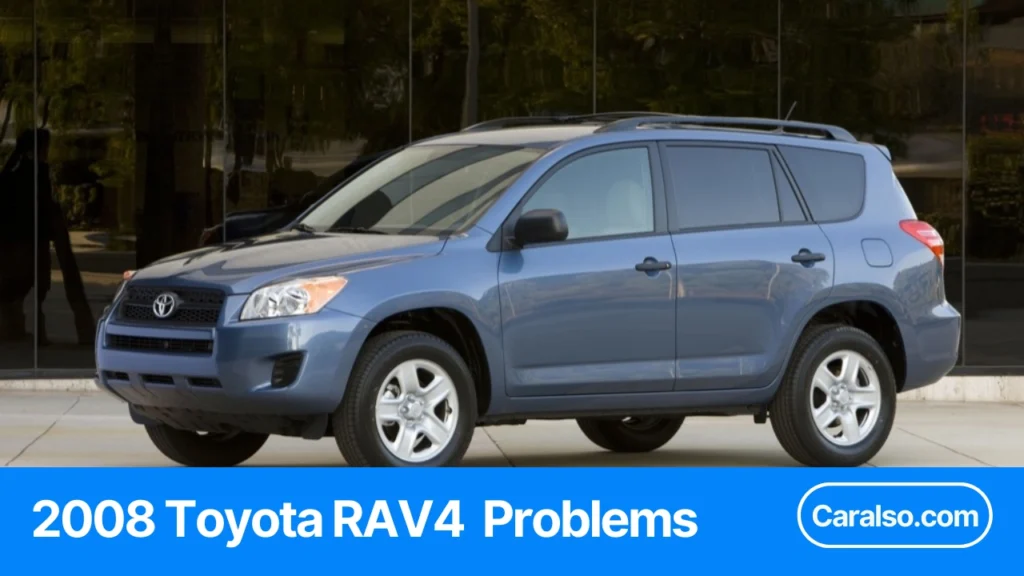
2008 Toyota RAV4 Problems
Quick Answer Box
The 30-Second Verdict (Buy, Buy With Checks, Skip)
Buy
- V6 with proof the VVT-i oil hose was updated.
- No rear growl on 4WD at 35 to 45 mph.
- VIN shows no open recalls.
Buy With Checks
- 2.4L that holds oil level steady across repeat checks.
- Light wear issues only. Tires, brakes, battery.
Skip
- 2.4L that arrives low on the dipstick.
- 4WD with a repeatable rear growl that changes with throttle.
- Any open safety recall you cannot get scheduled right away.
3 Deal-Breakers I Check First
- Oil Level And Oil Use Risk (2.4L Focus)
I check the dipstick before the engine starts.
If it is below the low mark, I stop the test drive.
I assume oil use or poor maintenance until proven otherwise. - Rear Growl Test (4WD Models)
I cruise at 35 to 45 mph on a smooth road.
I listen for a growl from the rear.
I lift off the throttle for 2 seconds, then go back to light throttle.
If the sound changes with load, I write it down as a driveline risk. - Open Recalls And Service Campaigns (VIN Check)
I run the VIN before I negotiate.
I care most about airbag sensor recalls, rear suspension arm recalls, and the power window switch recall.
I also check if the V6 oil hose campaign work was done.
Problem Severity Scorecard (Table)
| Problem | Who It Hits | “Notice First” Symptom | Quick Confirmation | Typical Fix Direction | Can It Strand You |
|---|---|---|---|---|---|
| Excessive Oil Use | Mostly 2.4L | Oil level drops between changes | Start at full. Recheck every 500 miles for 2 weeks | Diagnose and confirm pattern. Plan internal repair if severe | Yes, if oil gets low |
| Rear Driveline Growl | 4WD/AWD | Growl or hum from rear at cruise | 35 to 45 mph. Throttle on vs off test | Differential coupling diagnosis, repair or replace | Usually no, but it can get worse |
| V6 VVT-i Oil Hose Leak Risk | Some V6 | Oil smell, engine noise, oil pressure light | Inspect hose area. Look for wet oil and seepage | Replace the oil hose with the updated design | Yes, if oil pressure drops |
| Curtain Shield Airbag Sensor Recall | Some builds | Airbag light on | Run VIN. Schedule recall | Dealer inspection and replacement if needed | No, but it is safety-critical |
| Power Window Master Switch Recall | Some builds | Switch feels sticky or gritty | Run VIN. Check switch feel | Dealer inspection and remedy | No |
| Rear Suspension Arm Recall | Some builds | Alignment changes, uneven rear tire wear | Run VIN. Check rear tire wear pattern | Replace arms, align, apply protection | No, but it is safety-critical |
If You Only Do 1 Thing
Run the VIN for open recalls and campaigns.
Then do the 7-minute test drive checks.
If it is a 2.4L, start a simple oil level log on day 1.
Who This Guide Is For
Used Buyers (What I Would Check Before Paying)
If you are shopping a 2008 RAV4, I treat it like 2 different vehicles.
- 2.4L 4-cylinder (2AZ-FE). Big risk is oil consumption.
- 3.5L V6 (2GR-FE). Big risk is the VVT-i oil hose if it was never updated.
Then I split it again by drivetrain.
- FWD. Simpler. Fewer driveline noises to chase.
- 4WD. Add rear differential coupling noise checks.
If you only do 3 checks before money changes hands, I do these.
- Oil level and oil history.
- Rear end growl check if it is 4WD.
- VIN recall check for the curtain shield airbag sensor.
Current Owners (How I Match Symptoms To Fixes)
If you already own it, this is how I use this guide.
- I match what I feel first.
- Then I do 1 fast confirmation test.
- Then I pick the cheapest safe fix path first.
Example.
- Oil level drops between changes.
- I run the dipstick routine for 7 days.
- Then I decide if I am topping off, chasing leaks, or booking an oil consumption test.
High-Mileage Vs Low-Mileage Priorities (100k Vs 150k Vs 200k)
I use mileage like a filter.
At 100k miles, I prioritize:
- Oil consumption trend.
- Fluid history. Engine oil. Coolant. Transmission. Rear diff if 4WD.
- Mounts and basic drivability. Smooth idle. Clean shifts.
At 150k miles, I prioritize:
- Rear driveline noises on 4WD.
- Catalyst and O2 sensor style check engine lights.
- Suspension wear. Clunks over bumps.
At 200k miles, I prioritize:
- Proof of maintenance over “it runs fine.”
- Repeatable tests. Same road. Same speeds. Same conditions.
- Negotiation buffer for a big repair.
The Most Common 2008 RAV4 Problems (Ranked By What You Should Notice First)
Excessive Oil Consumption (2.4L 2AZ-FE)
What It Feels Like Day To Day
This is the one I see the most on the 2.4L.
- The dipstick level drops between oil changes.
- You add oil more than once per interval.
- You may smell burnt oil after a drive.
- You may see smoke on startup or after idling, but the dipstick drop is the real tell.
Fast Confirmation Test (Dipstick Routine)
I do this the same way every time.
- Park on level ground.
- Check oil after the engine is off for 5 minutes.
- Wipe the dipstick. Reinsert. Read it.
- Take a photo of the level.
- Record the odometer.
- Recheck every fuel fill-up for 2 weeks.
- Top off only when it hits the low mark, then record how much you add.
If you want the “Toyota-style” version, I use this logic.
- Start at full.
- Drive about 1,100 to 1,300 miles.
- Measure how much oil it takes to get back to full.
What Usually Causes It
On this engine family, the common story is internal.
- Oil control ring issues.
- Piston and ring design that can let oil pass.
- PCV system issues can make it worse, but it is rarely the whole problem by itself.
Fix Paths (From Cheap To Expensive)
I go in this order.
- Verify it is not an external leak.
- Replace the PCV valve if it is original.
- Tighten the routine. Shorter oil intervals. More frequent checks.
- Dealer oil consumption test if you want documented results.
- Internal repair path. This is the piston and ring direction.
I do not gamble on “thicker oil will fix it.”
It can hide the symptom. It does not reverse wear or ring issues.
What I Check On A Test Drive And First Week Of Ownership
This is my repeatable process.
On the test drive:
- I start the drive with the engine cold if possible.
- I check the dipstick before the start.
- I check again after the drive, after a 5 minute wait.
- I look for fresh oil around the valve cover, timing cover area, and under the engine.
In the first 7 days:
- I set the oil level to full.
- I record miles and add amount.
- I check every 200 to 300 miles.
- I do not wait for a warning light.
If it is burning oil, I want to know before I commit to a long trip.
Rear Differential Coupling Growl Or Whine (4WD)
The Speed Band Where People Hear It Most
I hear it most at steady cruise on a smooth road.
- Light throttle.
- Constant speed.
- Low wind noise conditions.
I test it at 35 to 45 mph because it is easy to repeat and easy to hear.
My Confirmation Method (Throttle On Vs Off, Location Test)
I do 2 passes on the same road.
Pass 1:
- Hold steady throttle.
- Listen for a growl or whine from the rear.
Pass 2:
- Lift off the throttle at the same speed.
- Then lightly roll back into throttle.
If the noise changes with load, I pay attention.
Then I do the location test.
- I shift my ears. Driver seat, then rear seat if possible.
- I turn off the fan and audio.
- I crack a rear window slightly to reduce cabin boom.
What The Toyota Bulletin Says To Confirm
Toyota’s process is basically.
- Confirm the growl.
- Confirm it is loudest at the rear differential coupling.
In a shop, that can mean an electronic listening tool or a stethoscope on a lift.
As a buyer, I cannot do that.
So I use the same road, same speed, and the rear-seat check.
Fix Direction (Rebuild Vs Replace)
This usually goes one of 2 ways.
- Replace the coupling assembly.
- Rebuild it if the internal condition and housing allow it.
If the seller says “it’s just tires,” I still run my test.
Tire noise usually moves with the tires. Coupling noise feels anchored in the rear.
V6 VVT-i Oil Hose Risk (3.5L 2GR-FE)
What Happens When The Hose Degrades
This one matters because it can dump oil fast.
Typical signs:
- Oil pressure warning light.
- Sudden oil leak smell.
- Abnormal engine noise after oil level drops.
I treat this as a stop-driving situation until I confirm oil level.
How To Identify If The Campaign Was Done
I do not guess. I check.
- Service records that show a VVT-i oil line or oil hose update.
- Visual confirmation if you know what you are looking for.
If I cannot confirm it was updated, I budget to update it.
Coverage Angle: Limited Service Campaign (Not A Safety Recall)
This was handled as a limited service campaign, not a safety recall.
What that means for you today:
- You may not get automatic recall-style coverage.
- Dealer eligibility depends on VIN and campaign status.
- Many of these campaigns had an end date.
So I use the VIN first. Then I call a dealer with that VIN.
Curtain Shield Airbag Sensor Recall (Certain 2007 To 2008 Builds)
What The Recall Is About
This one is safety related.
It involves the curtain shield airbag sensor system on certain builds.
What To Do If Your Airbag Light Is On
If the airbag light is on, I do 3 things.
- Stop treating the car as “fine.”
- Run the VIN recall check.
- Book a dealer inspection.
Do not ignore an airbag warning light.
This is one of the few lights I never “wait and see” on.
“No Charge” Remedy Basics
For covered vehicles, the dealer remedy is handled at no charge.
The core idea is inspection and replacement if needed.
Transmission Complaints (Whine, Harsh Shifts, Jerking)
What Owners Report
The complaints I see most often fall into these buckets.
- Jerking at low speeds.
- Harsh shift feel.
- Whining noise.
The 4-cylinder and V6 use different automatics, but my test is the same.
My Quick Drive Test For Shift Quality
I do a 5 minute loop.
- From a stop, light throttle to 25 mph.
- Hold 25 mph for 30 seconds.
- Slow roll to near stop, then accelerate again.
- Repeat 3 times.
- Do 1 moderate throttle pull from 20 to 50 mph.
I am listening for:
- Delay into gear.
- Flare between shifts.
- A whine that rises with speed.
The 2 Questions I Ask About Fluid History
These 2 questions save me time.
- When was the last transmission fluid service?
- Was it a drain and fill, or a full flush?
If the seller has no answer, I assume it needs attention.
Check Engine Light Cluster (EVAP, O2 Sensor, Catalyst Talk)
The 3 Most Common Codes To Expect
If I am scanning a 2008 RAV4 before buying, I expect to see some mix of:
- EVAP leak codes.
- O2 sensor related codes.
- Catalyst efficiency codes.
The exact code matters more than the light itself.
What Is “Annoying” Vs “Urgent”
Here is how I sort it.
Annoying but common:
- EVAP leaks that do not change drivability.
Urgent:
- Misfire codes.
- A flashing check engine light.
- Any code that comes with rough running or power loss.
How I Use A Cheap OBD2 Scan Before Negotiating
I scan before I negotiate. Every time.
My process:
- Scan codes.
- Save a screenshot.
- Clear nothing.
- Test drive.
- Rescan.
If a code returns fast, I price it into the deal.
“Annoying But Common” (Short Hits Section)
I keep this part short because it rarely strands you.
- Road noise. I notice it more on rough pavement and older tires.
- Interior wear. Buttons, steering wheel, and trim can show age fast.
- Small rattles. Rear cargo area and hatch plastics are common spots.
I do not walk away for these.
I just use them for negotiation.
Safety Recalls For The 2008 RAV4 (What Matters, What It Means, What To Do)
The Fast Rule
I use 3 buckets.
- Recall = safety issue. Free fix. VIN-specific.
- TSB = diagnostic and repair guidance. Not automatically free.
- Service campaign = Toyota help program. Time-limited. VIN-specific.
If you remember nothing else, remember this.
I never assume a recall applies. I run the VIN.
The Recalls I Put At The Top Of The List
Curtain Shield Airbag Sensor Recall (Certain 2007 To 2008 Builds)
Why I care: airbags. This is not a “wait and see” item.
What it can look like: airbag warning light on the dash.
What it means: the roll-sensing function for the curtain shield airbags can be affected.
What I do:
- I run the VIN.
- If it is open, I book the recall.
- If the airbag light is on today, I stop treating the car as “fine.”
Rear Lower Suspension Arm Corrosion Recall (2006 To 2011 RAV4)
Why I care: rear suspension arms can corrode. That can change alignment and stability.
What you might notice first: uneven rear tire wear, alignment that will not stay set, or a rear-end feel that is not consistent.
What I do:
- I run the VIN.
- I look at the rear tires for inner-edge wear.
- If it is open, I schedule it before I spend money on an alignment.
Rear Outboard Seatbelt Recall (2006 To 2012 RAV4)
Why I care: it is seatbelt performance in a crash.
What it means: Toyota added a remedy to reduce the chance of belt webbing contacting a metal edge in certain impacts.
What I do:
- I run the VIN.
- If it is open, I get it done.
- I do not let a dealer sell me the car with this open if they can complete it first.
Floor Mat And Accelerator Pedal Interference Recall (Some Toyota Models, Some RAV4 Fitment)
Why I care: trapped pedal risk is serious.
What it looks like: wrong mats, stacked mats, missing retention hooks, or a mat that slides forward.
What I do:
- I check for 1 mat only on the driver side.
- I confirm the retention hooks are in use.
- I pull the mat back and make sure it cannot walk forward.
Power Window Master Switch Recall (Coverage Varies, Check VIN)
Why I care: it is an overheating risk on certain Toyota switches.
What you might notice: switch feel that catches or does not move smoothly.
What I do:
- I run the VIN.
- If the switch feels odd, I still address it. Recall or not.
How To Check Your VIN In 60 Seconds
This is the fastest path I use.
- Copy the 17-digit VIN from the dash or door sticker.
- Check Toyota’s recall and service campaign lookup.
- Check NHTSA’s recall lookup as a second source.
- Take screenshots of the results page.
Then I call the dealer and say 2 things.
- “I have an open recall on this VIN. I want the earliest appointment.”
- “Please confirm parts availability before I drive in.”
What To Do If Parts Are Not Available
This happens. Especially on older campaigns.
Here is my playbook.
- Ask for an ETA and a backorder status.
- Get a case number. Write it down.
- Ask if they can order parts before your appointment date.
- Ask if there is any interim guidance you should follow.
- If you are buying the car, use this as leverage. I want the dealer to complete it before delivery, or I want the price adjusted.
If the recall is airbag or seatbelt related, I do not drag my feet.
I keep calling for updates every 7 days.
TSBs And Campaigns That Actually Matter (Skip The Noise)
Limited Service Campaign 90K (VVT-i Oil Hose, V6)
If you have the 3.5L V6, this one is big.
What the campaign was about:
- The rubber section of the VVT-i oil supply hose can degrade over time.
- That can lead to oil leakage.
- It can also trigger abnormal engine noise and the oil pressure light.
How I treat it on a used 2008:
- I assume nothing.
- I look for proof the oil hose update was completed.
- I check service records and dealer history by VIN.
If I cannot confirm it was done, I price it in.
I also inspect for any oil wetness in the area during a pre-purchase inspection.
One more reality check.
- Toyota extended this campaign for certain vehicles through December 31, 2021.
- That date is over now.
So today, the value is confirmation it was already completed.
Rear Differential Coupling Growl Bulletin (4WD)
If your 2008 is 4WD, this bulletin matters.
The real-world symptom:
- A growl-type noise from the rear area while driving.
Why I care:
- It can be expensive if you buy the car and discover it later.
- It is easy to confirm on a test drive.
My quick test:
- 35 to 45 mph.
- Light throttle.
- Then lift for 2 seconds and roll back in.
If the growl changes with load, I write it down.
Then I decide if the deal still makes sense.
Everything Else Rule
I keep this simple.
If it does not change safety, reliability, or purchase price, I do not let it steal my time.
That means I ignore most noise-level bulletins and cosmetic complaints.
I focus on:
- Oil loss risk.
- Rear driveline growl risk.
- Open recalls that affect safety systems.
Toyota Coverage Map (Differentiation Section Competitors Don’t Have)
I see people waste money here.
They mix up recalls, TSBs, and service campaigns.
So I use a simple map.
The Coverage Types Table (Snippet-Friendly)
| Coverage Type | Who Pays | How I Prove Eligibility | Paperwork I Ask For |
|---|---|---|---|
| Safety Recall | Toyota pays | VIN recall lookup shows “Open” | Repair order showing recall code completed |
| TSB | Usually me | Symptom matches bulletin + shop confirms | Repair order notes the bulletin number and findings |
| Limited Service Campaign | Toyota may pay, time-limited | VIN shows campaign and it is still active | Dealer printout showing campaign completion status |
| Warranty | Usually expired on a 2008 | In-service date and mileage | Warranty booklet terms and the repair order |
| Goodwill | Case by case | Service history + repeat visits | Case number and a written offer split |
My 2008 RAV4 Coverage Cheat Sheet
This is how I think about the big items on this year.
Safety recalls
- If your VIN is open, you book it.
- Airbag and suspension recalls get my first appointment.
Limited service campaign
- The V6 VVT-i oil hose campaign was time-limited.
- I treat it like this: either it was done, or I budget to do it now.
TSBs
- The rear differential coupling growl bulletin is a diagnosis tool.
- It helps a shop move fast.
- It does not mean the repair is free.
The 3 Things I Ask The Service Writer For
- A printout of open recalls by VIN
- Confirmation of completed campaigns on the VIN
- History notes on the last visit dates and mileage
I want those 3 on paper.
It saves arguments later.
Used-Buyer Test Drive Checklist (7 Minutes, Step-By-Step)
I run this in the same order every time.
It catches the big risks fast.
0:00 To 1:30 Pre-Drive Checks
Oil Level
- I check the dipstick before startup.
- If it is below the low mark, I pause the deal.
- On a 2.4L, low oil is my #1 red flag.
Coolant
- I look at the reservoir level.
- Low coolant is a maintenance red flag.
V6 Hose Area Quick Look
- If it is a V6, I look for fresh oil wetness around the oil hose area.
- If it looks wet, I assume it needs attention.
Tires
- On 4WD, I want matching tire size on all 4 corners.
- If tread depth differs by more than 2/32 inch front to rear, I note it as a driveline stress risk.
Driver Floor Mat
- I confirm 1 mat only.
- I confirm it is clipped to the retention hooks.
1:30 To 3:30 Cold Start Checks
Startup Lights
- I watch the dash.
- ABS and airbag lights should turn off after startup.
- If the airbag light stays on, I stop treating it as “fine.”
Exhaust Smoke
- I watch the tailpipe for 10 seconds.
- Blue smoke is my oil-burning clue.
Idle
- I let it idle for 30 seconds.
- I want stable RPM.
- I turn the AC on. Idle should stay steady.
3:30 To 5:30 Parking Lot Tests
Steering
- Windows down. Radio off.
- I do slow left and right turns at 3 to 5 mph.
- Clunk or pop that matches steering input gets written down.
Brakes
- 2 gentle stops from 20 mph.
- 1 firmer stop from 30 mph.
- Pulsation is a rotor clue. Long pedal is a fluid or air clue.
Transmission Feel
- From a stop to 25 mph, I want clean shifts.
- I repeat that start 2 times.
5:30 To 7:00 Road Test Checks
Rear Growl Test (4WD)
- Smooth road. 35 to 45 mph.
- Light throttle for 15 seconds.
- Lift off for 2 seconds.
- Roll back into light throttle.
- If the sound changes with load, I treat it as rear driveline risk.
Vibration Check
- I hold 55 to 65 mph for 20 seconds if the road allows.
- Steering wheel shake points to tires or wheels.
- A rear hum points to driveline or bearings.
After-Drive Quick Look
- Park and wait 2 minutes.
- I look under the engine for fresh drips.
- On a V6, I sniff for fresh oil smell.
What To Write Down (Negotiation Leverage)
I write down 7 items.
This is what I use to negotiate price.
- VIN and current mileage
- Engine: 2.4L or V6
- Drivetrain: FWD or 4WD
- Dipstick level before start
- Any warning lights that stayed on
- Noise type + speed band (example: rear growl at 40 mph)
- Tire brand and tread depth differences
If I have those notes, I do not get talked out of what I heard.
Owner Playbook (How To Get A Faster Fix And Better Outcome)
I treat a 2008 RAV4 like a simple case file.
Clear evidence gets faster repairs.
How I Document A Problem In 10 Minutes (Photos + Logs)
I bring 6 photos and 1 short log.
Photos I Take
- Odometer.
- VIN plate or registration.
- Dash with any warning light on.
- Dipstick level on level ground.
- Any leak spot under the car.
- Tire brand and size on all 4 tires if it is 4WD.
My 3-Line Log
- Date and mileage.
- Exact speed and condition. Example: 40 mph steady, light throttle.
- What changed it. Example: noise gets louder when I add throttle.
If it is oil related, I add 2 numbers.
- Miles since last oil change.
- Quarts added since last oil change.
If it is a rear growl, I add 1 number.
- Speed band where it is loudest. Example: 35 to 45 mph.
If it is the airbag light, I add 1 sentence.
- Airbag light stays on after startup.
The Exact Words I Use At The Dealer
I keep it short.
I give triggers and counts.
For A Recall Check
“Please run my VIN for open recalls. If any are open, I want them scheduled and completed. I want the recall codes printed on my repair order.”
For The Airbag Light
“My airbag warning light stays on after startup. I want the recall status checked by VIN and the system inspected today.”
For Rear Growl On 4WD
“I hear a growl from the rear at 35 to 45 mph. It changes when I lift off the throttle and roll back into light throttle. I want the rear driveline diagnosed.”
For V6 Oil Hose Concern
“I have a 3.5L V6. I want you to confirm if the VVT-i oil hose update was completed on this VIN. If it was not, I want an estimate to update it.”
For 2.4L Oil Use
“My 2.4L oil level drops between checks. I have dates, miles, and quarts added. I want it inspected for leaks and I want a documented plan for next steps.”
My one rule.
I never say “it makes a noise sometimes.”
I give speed, frequency, and a trigger.
When I Switch To A Trusted Independent Shop
I use the dealer for 2 things.
Recalls and VIN history.
I switch to a strong independent shop when:
- The issue is not a recall.
- The dealer wants a long diagnostic path with no clear plan.
- The car is high mileage and I need cost control.
Examples where an independent shop often wins:
- Wheel bearing hum.
- Suspension clunks.
- Brakes, rotors, and calipers.
- Basic oil leak diagnosis.
Examples where I prefer a dealer first:
- Any open recall.
- Airbag light with a recall possibility.
- Campaign verification by VIN.
Negotiation Leverage For Buyers (If A Problem Is Confirmed)
I negotiate with proof, not opinions.
Here is what I write down.
- Dipstick level before the drive.
- Any warning light that stayed on.
- Rear growl speed band.
- Tire mismatch on 4WD. Brand, size, and tread depth difference.
Then I attach a cost bucket to it.
- Recall open. I ask the seller to complete it before sale.
- Rear growl confirmed. I price it as a driveline repair risk.
- Oil level drops fast. I price it as an engine risk.
My favorite negotiation line is simple.
“I’m not arguing. I’m budgeting.”
If the seller will not move, I walk.
There will be another RAV4.
FAQs
Do 2008 RAV4s Burn Oil?
Some do, mostly the 2.4L.
My fastest test is a dipstick routine for 2 weeks.
I check every 200 to 300 miles.
If it drops fast, I treat it as a real issue, not “normal.”
Is The 2008 RAV4 A Good Used Car?
Yes, if it passes 3 checks.
- Oil level stays stable on the 2.4L.
- No rear growl on 4WD at 35 to 45 mph.
- VIN shows no open safety recalls.
If those are clean, it is usually normal wear stuff.
Brakes, tires, fluids, and suspension.
Which Engine Is Better In The 2008 RAV4?
It depends on how you drive.
2.4L 4-Cylinder
- 166 hp
- Lower buy-in price most of the time
- Higher risk for oil consumption complaints
3.5L V6
- More power for highway merges
- The big check is whether the VVT-i oil hose update was done
If you hate checking oil, I lean V6.
If you want simpler and cheaper up front, I lean 2.4L with a strict oil log.
What Recalls Should I Check On A 2008 RAV4?
I start with safety items.
- Curtain shield airbag sensor recall on certain builds
- Rear suspension arm recall on certain vehicles
- Rear outboard seatbelt recall on certain vehicles
- Power window master switch recall on certain vehicles
- Floor mat and pedal interference campaigns where applicable
Your exact list is VIN-specific.
I always run the VIN before I negotiate.
What Does Rear Differential Growl Sound Like?
It is a low growl or hum from the rear.
I notice it most at steady speed on a smooth road.
My confirm test is simple.
- Hold 35 to 45 mph on light throttle.
- Lift off for 2 seconds.
- Roll back into light throttle.
If the sound changes with load, I take it seriously.
How Long Do 2008 RAV4s Last?
With good maintenance, I plan for 200,000 miles.
I have seen plenty go past that.
The key is boring service.
- Oil checks and timely changes
- Coolant service
- Transmission fluid service
- Rear diff service if it is 4WD
- Matched tires on 4WD
If the maintenance history is unknown, I assume you will catch up on day 1.
Key Takeaways
- I treat the 2008 RAV4 as 2 SUVs. 2.4L vs V6.
- On the 2.4L, oil level behavior is the deal breaker.
- On the V6, I want proof the VVT-i oil hose update was done.
- On 4WD, I always test for rear growl at 35 to 45 mph.
- Recalls are VIN-specific, and they are the first thing I clear.
- The airbag light is never a “later” problem for me.
- Tire mismatch on 4WD is a real driveline stress risk.
- A 7-minute test drive catches most expensive issues.
- Notes and photos beat opinions when you negotiate.
Do This Today
- Run your VIN for open recalls.
- Start an oil level log for 14 days if you have the 2.4L.
- Do the 35 to 45 mph rear growl test if you have 4WD.
Sources
- Edmunds: 2008 Toyota RAV4 Specs And Features
- Toyota Pressroom: Limited Service Campaign For VVT-i Oil Line
- NHTSA (Toyota): Extension Of Limited Service Campaign 90K (VVT-i Oil Hose) (PDF)
- CarComplaints: 2008 Toyota RAV4 Excessive Oil Consumption
- Toyota Recall Lookup (VIN)

Hey there,
How is it going?
I’m Meraj Sarker. I am a Car Mechanic and a student of Automobile Restoration here in Florida, USA. I’ve been studying automotive for around 9 years now. So you can rely on my recommendation. For me, studying and getting knowledge about automobile it’s really fun and entertaining. I will help you to get solutions for your car through this website. If you need any help let me know.