
I built this guide for two people. Used buyers who want a fast yes or no. And owners who want the fastest path to a real fix.
The first thing I check is what powertrain you have. The 2006 RAV4 came with a 2.4L 4-cylinder or an optional 3.5L V6. That split changes what problems matter most.
Next, I check the drivetrain. Front-wheel drive is simpler. 4WD adds a rear differential coupling that has its own known noise pattern.
Quick Answer Box
The 30-Second Verdict (Buyer Vs Owner)
If You’re Buying, Do These 3 Checks First
- 2.4L oil use test. Ask for oil change receipts. Then check the dipstick at the start of a test drive and again after a few days of normal driving. If it drops fast, I walk.
- 4WD rear growl check. On a smooth road at steady speed, listen for a growl from the rear. If it changes with throttle and speed, I plan for differential coupling work.
- Recall completion check. I run the VIN and confirm the big safety campaigns were done. Suspension arms, seatbelts, floor mat fix, and the power window switch campaign.
If You’re Owning, Diagnose These 3 Issues First
- Oil level dropping between changes on the 2.4L. Track miles and oil added.
- Clunk or pop when turning the wheel at low speed. This often points to the steering intermediate shaft.
- Rear growl on 4WD while cruising. This often points to the rear differential coupling.
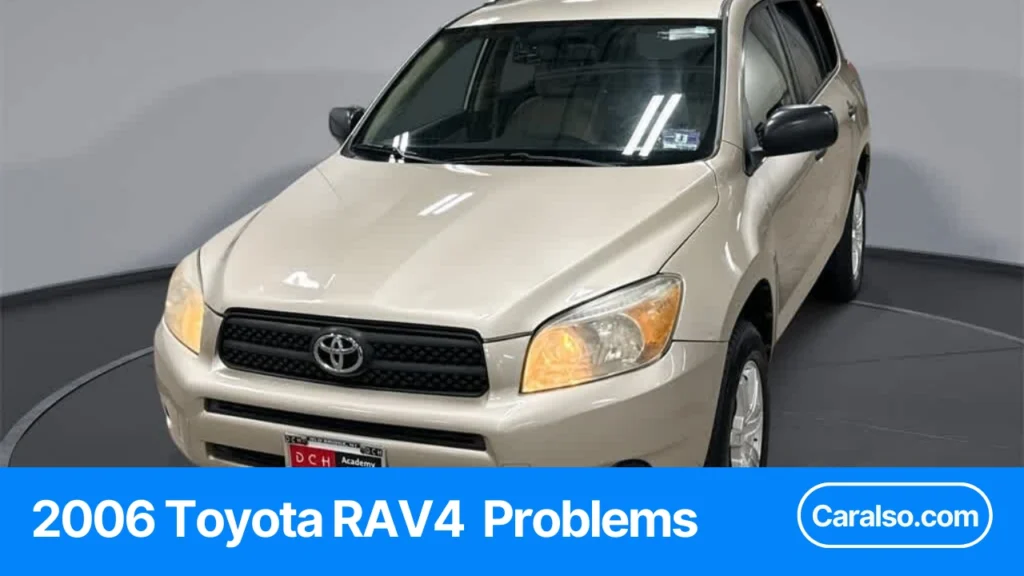
Summary Table
| Problem | Who It Hits | How To Confirm Fast | Typical Fix |
|---|---|---|---|
| Excessive Oil Consumption | Mostly 2.4L (2AZ-FE) | Start full. Drive 1,200 miles. Recheck. More than 1 quart low in 1,200 miles is the key cutoff. | Piston and piston ring set replacement. In some cases, short block work if the cylinder bores are not reusable. |
| Steering Clunk When Turning | Many 2006 to 2007 | In a parking lot, turn left then right at low speed. Listen for clunk, pop, or knock through the column. | Replace the steering intermediate shaft with the updated part. |
| Rear Differential Coupling Growl | 4WD only | Steady cruise. Listen for a growl from the rear. Confirm it is loudest at the rear coupling area. | Replace or rebuild the rear differential coupling per the bulletin procedure. Refill with the correct gear oil. |
| Power Window Master Switch Recall | Certain vehicles | Check VIN status. Symptom can be a sticky or notchy switch feel. Risk is overheating in the switch assembly. | Dealer inspection and corrective work under the recall. |
| Rear Lower Suspension Arm Recall | Certain vehicles | Check VIN status. This is not a “wait for a noise” item. It is a safety campaign. | Replace both rear suspension arms, align, and apply the specified protective epoxy and labels. |
| Rear Outboard Seatbelt Recall | Certain vehicles | Check VIN status. This is a crash safety issue. | Dealer installs plastic covers over the seat frame area at no charge. |
| Floor Mat Interference Recall | Certain vehicles | Check VIN status. Also confirm the driver mat is the right design and properly secured. | Dealer modifies the accelerator pedal and replaces older all-weather mats if equipped. |
Who This Guide Is For (Buyers Vs Owners)
Used Buyer
When To Walk Away
- It fails an oil-consumption test. More than 1 quart low after 1,200 miles is my hard stop.
- You hear a steady rear “growl” on an AWD model that changes with throttle. That can get expensive fast.
- The VIN shows an open safety recall and the seller will not schedule the fix before sale.
When To Negotiate
- It burns some oil, but it is below the 1 quart per 1,200 miles line. I still negotiate because you will be checking and topping off.
- You get a steering clunk in parking-lot turns, but everything else checks out. This is often a parts-and-labor type fix.
- Tires are mismatched on an AWD model. I negotiate because drivetrain stress is real when rolling diameters are off.
When It’s A Safe Buy
- Service history is boring. Oil changes, coolant, trans service, and no “mystery” gaps.
- Cold start is clean. No rattle that lasts more than 1 second. No blue smoke.
- AWD models drive straight, quiet, and smooth from 25 to 60 mph with no rear noise.
- Recalls show “Completed” when you run the VIN.
Current Owner
Stop Driving Today Triggers (Recall-Related)
- Your VIN check shows a “Do Not Drive” advisory or an open airbag recall with a stop-use warning.
- You have an open suspension recall and you feel rear-end steer, sudden alignment change, or clunks from the rear after an alignment.
Plan A Repair Soon Triggers
- The oil level drops fast between checks. Especially if you add more than 1 quart between oil changes.
- Steering clunks or pops show up during low-speed turns.
- AWD growl starts and repeats in the same speed band every drive.
Monitor Only Triggers
- A single clunk over a speed bump that you cannot repeat.
- Slight oil use that stays stable for 2 straight oil-change intervals.
- A faint hum that does not change when you swerve left vs right.
The Most Common 2006 RAV4 Problems
Excessive Oil Consumption (2.4L 2AZ-FE)
Pass Or Fail Number
More than 1 quart per 1,200 miles is the line I use.
Symptoms
- Oil light flickers in corners or braking.
- You add oil between changes. Sometimes 1 quart every 1,000 to 1,500 miles.
- Blue puff at startup on some engines.
- Spark plugs look wet or crusty on one or more cylinders.
Quick Checks
- Set a dipstick baseline. Check on level ground. Same spot. Same method. Every 500 miles.
- Look for leaks first. Valve cover, timing cover area, and oil pan edges.
- Check the PCV valve. If it sticks, it can increase consumption.
- Pull one plug. If it is oily, you likely have more than “normal” use.
Likely Cause
- Piston rings that are not controlling oil well on some 2AZ-FE engines.
Fix Options
- Step 1: Confirm with a measured consumption test over 1,200 miles.
- Step 2: Replace the PCV valve and fix any external leaks. Then re-test.
- Step 3: If it still fails, the real fix is internal. Piston and ring replacement is the typical path.
- Step 4: If compression is low or the engine is tired, a used engine swap can be the better math.
Cost Range (Typical Shop Pricing)
- PCV valve and basic diagnosis: $50 to $200.
- Internal piston and ring repair: $3,000 to $5,500.
- Major engine work can land in the $4,000 to $5,000 range even before “while you’re in there” extras.
Prevent It
- Check oil every 500 miles if you own the 2.4L.
- Do not stretch oil intervals on a known oil-user.
- Keep receipts. It helps if you ever pursue goodwill help.
Buyer Negotiation Shortcut
If it fails the 1,200-mile test, I price the car as if I will spend the full internal-repair number. Then I negotiate from there.
Steering Clunk, Pop, Or Knock When Turning
Symptoms
- Clunk or pop in the steering wheel area during left or right turns.
- Most noticeable at parking-lot speed.
- You can sometimes feel it through the steering wheel rim.
Quick Checks
- In an empty lot, do 5 slow lock-to-lock turns. Windows down. Radio off.
- Lightly load the wheel left and right while creeping at 3 to 5 mph.
- Listen for a single knock that matches steering input, not road bumps.
Likely Cause
- Intermediate steering shaft play. This is a known pattern on some 2006–2007 RAV4s.
Fix Options
- Replace the intermediate steering shaft with the updated part.
- Have the shop confirm torque and joint condition during install.
Cost Range (Typical Shop Pricing)
- Parts can be under $100 for aftermarket, and higher for OEM-style.
- Labor is often around 1.5 hours.
- A realistic all-in range is $250 to $600 depending on labor rate and parts choice.
Prevent It
- There is no real prevention. I treat this as a wear item when it shows up.
- Fix it early. A clean fix beats living with the noise for years.
AWD Growl From Rear Differential Coupling
Applies To
AWD models. Not the FWD versions.
Symptoms
- Growl or whine from the rear while cruising.
- Often most noticeable around 30 to 45 mph.
- Noise can change with throttle on vs throttle off.
Quick Checks
- Find a smooth road. Hold 35 mph for 20 seconds. Then let off the gas.
- If the noise changes with load, I suspect coupling or related bearings.
- Do a gentle swerve test. If the pitch changes left vs right, also consider wheel bearings.
Likely Cause
- Rear differential coupling wear. Some repairs are a rebuild. Some are replacement.
Fix Options
- Confirm the condition using the OEM diagnostic flow.
- Remove and inspect the rear differential coupling assembly.
- Replace or rebuild the coupling assembly based on findings.
Cost Range (Typical Shop Pricing)
- Fluid service is cheap compared to parts. Do it first if service history is unknown.
- Bearing-level repairs can be hundreds.
- Full coupling replacement can land around $1,500 to $2,500 depending on parts source and labor.
Prevent It
- Keep AWD tires matched. Same brand. Same model. Similar tread depth.
- Service fluids on schedule, especially if you tow or drive in heat.
High-Intent Secondary Issues (Quick Hits)
Wheel Bearing Hum
Symptoms
- Droning hum that grows with speed.
Quick Check - Swerve lightly. If it changes, suspect a bearing.
Cost Range - Commonly a few hundred per wheel at a shop.
Battery Or Charging Complaints
Symptoms
- Battery light, dim lights, slow crank.
Quick Check - Check charging voltage with a meter. Engine running.
Cost Range - Alternator replacement commonly lands in the mid-hundreds.
HVAC Or AC Problems
Symptoms
- Warm air at idle, weak cooling, or noisy compressor.
Quick Check - Confirm fan works on all speeds. Confirm compressor engages.
Cost Range - AC compressor jobs often cross $1,000 at a shop.
Brake Feel Notes
Symptoms
- Pulsation under braking, or long pedal travel.
Quick Check - Measure rotor condition and pad thickness. Inspect for leaks.
Cost Range - Pad and rotor jobs vary a lot by parts choice and axle count.
Safety Recalls For The 2006 RAV4
I treat recalls as non-negotiable.
They are VIN-specific. They are free. And they can be done even on a 19-year-old RAV4.
The “Do These First” Recall List
| Recall (Plain English) | Why It Matters | What You Might Notice | What I Do Today | What The Dealer Does |
|---|---|---|---|---|
| Power Window Master Switch Overheating Risk | In rare cases, the switch can overheat and melt. Smoke and fire risk is the reason this exists. | Sticky or notchy window switch feel. Sometimes nothing at all. | I stop using any “spray lube” on the switch. I book the recall if it is open. | Inspects the switch and applies the specified grease or replaces parts per recall instructions. |
| Rear Lower Suspension Arm Corrosion And Adjustment Issue | Rear suspension alignment adjustment can lead to corrosion. In worst cases, the arm can crack or separate. | Alignment changes. Rear-end steer feel. Uneven rear tire wear. Clunks from the rear. | I run the VIN. If open, I schedule it before I do any alignment work. | Replaces both rear No. 1 suspension arms and hardware. Sets rear alignment. Seals arms with epoxy. Applies labels to prevent future rear adjustments. |
| Rear Outboard Seatbelt Webbing Cut Risk | In a very severe frontal crash, the lap belt webbing can contact the metal seat frame and get cut. | Usually no warning. This is crash-only behavior. | I run the VIN. If open, I schedule it. | Installs protective covers over the seat frame area in the second-row outboard seats. |
| Floor Mat Interference With Accelerator Pedal | Unsecured or incompatible mats can trap the accelerator in the wide-open position. | Mats that slide. Mats stacked on mats. Missing retention clips. | I remove any stacked mats now. I verify the mat is secured. Then I book the recall if open. | Modifies the accelerator pedal. Inspects all-weather mats and replaces older designs when applicable. Cleans and checks the carpet and retention points. |
How To Check Recall Status In 2 Minutes (VIN Workflow)
This is what I do every time I’m buying a 2006 RAV4.
- Copy the 17-character VIN.
- Run it in the official recall lookup.
- Look for “Open” or “Incomplete.”
- Screenshot the result.
- Call a Toyota dealer and ask two questions.
- Are parts available?
- Can you confirm the recall will be completed at no charge?
Proof I ask for after the repair:
- A printed repair order showing the recall campaign code as completed.
- A printout showing “0 open recalls” for the VIN.
One real-world tip that saves you trouble:
If you are paying for an alignment, do the rear suspension arm recall first. It can change rear alignment procedures after the remedy.
Toyota Coverage Map
A 2006 RAV4 is old enough that the normal warranty conversation is basically over.
So I use a simple coverage map that actually works in real life.
Recall Vs TSB Vs Warranty Vs Goodwill (Plain English)
Recall
Safety or compliance issue tied to your VIN.
If it’s open, the fix is $0.
TSB (Technical Service Bulletin)
Toyota’s repair playbook for a known symptom.
It is not free by default.
You pay unless the dealer chooses to help.
Warranty
Most factory warranty coverage is long expired on a 2006.
Do not plan your budget around warranty.
Goodwill
Sometimes Toyota or a dealer helps on cost.
On a 2006, I treat goodwill as a bonus, not a plan.
The “Who Pays” Table (Fast Decision Tool)
| Problem Type | What It Usually Is On A 2006 | Who Typically Pays | What I Bring To Win Faster |
|---|---|---|---|
| Safety Recalls | Power window switch, suspension arms, seatbelts, floor mat campaign | Toyota pays | VIN check screenshot, appointment request, ask for completion printout |
| Oil Burning On 2.4L | Known engine pattern on some 2AZ-FE | Owner pays | Oil level log, miles tracked, oil added, photo of dipstick, any compression numbers |
| Steering Clunk | Common wear pattern with a known bulletin path | Owner pays | Short video in a parking lot, exact speed, left vs right repeatability |
| AWD Rear Growl | 4WD coupling wear or bearing noise | Owner pays | Speed band where it happens, throttle-on vs throttle-off note, tire match check |
| Brake Pulsation Or Noise | Wear items most of the time | Owner pays | Pad thickness notes, rotor condition, repeatability after 3 stops |
The Coverage Shortcut I Use (Works For Buyers Too)
Step 1
Clear all open recalls first. Always.
Step 2
If it is a 2.4L, treat oil level like a gauge.
I check it every 500 miles for 2 weeks after purchase.
Step 3
If it is AWD, keep tires matched.
Same size. Same brand if possible. Similar tread depth.
Step 4
Use TSBs as a diagnosis tool, not as a promise of free repair.
If your symptom matches a bulletin, the shop will move faster.
My “Fix Or Walk” Rule For Used Buyers
I walk away when:
- It fails the oil-consumption line I use and the seller won’t price it accordingly.
- It has open safety recalls and the seller refuses to complete them before sale.
- AWD rear growl is loud and repeatable, and tires are mismatched.
I buy it when:
- Recalls show completed.
- Oil level stays stable across checks.
- Steering is quiet at parking-lot speed.
- AWD is quiet at steady cruise.
Used-Buyer Test Drive Checklist (7 Minutes, Step-By-Step)
I use this exact routine on every 2006 RAV4 I look at.
It is fast. It catches the expensive stuff.
Minute 0 To 1 (Before You Start It)
Fluid Level Checks
- Check the oil on the dipstick before the engine starts.
- If the oil is below the low mark, I stop the test drive right there.
- Look at coolant level in the reservoir. Low coolant is a red flag.
Recall Red Flags
- Check the driver floor mat. It must be the correct shape and secured. No stacked mats.
- Press the power window master switch a few times. If it feels sticky or gritty, I note it and run the VIN.
- Look at the rear tires. Uneven wear can hint at rear suspension issues or bad alignment history.
Quick Visual Leak Scan
- Look under the engine for fresh oil drip marks.
- Look under the rear differential area if it is AWD.
Minute 1 To 3 (Cold Start And Idle)
Smoke Checks
- Start the engine and watch the exhaust for 10 seconds.
- Blue smoke is my oil-burning clue. White smoke that disappears fast can be normal condensation.
- Smoke that hangs around is not normal.
Idle Stability
- Let it idle for 30 seconds.
- I want a stable idle. No surging. No hunting.
- Turn the AC on. Idle should stay steady.
Quick Warning Light Check
- Confirm the check engine light is not on.
- Confirm ABS and airbag lights turn off after startup.
Minute 3 To 5 (Low-Speed Turns And Braking)
Steering Clunk Test
- Go to an empty lot. Windows down. Radio off.
- Drive 3 to 5 mph. Turn left, then right.
- If I hear a clunk or pop that matches steering input, I write it down.
Brake Feel Test
- Do 2 gentle stops from 20 mph.
- Then do 1 firmer stop from 30 mph.
- Pulsation can be warped rotors. A long pedal can be air or old fluid.
Minute 5 To 7 (Cruise And Light Throttle)
4WD Coupling Growl Test (If AWD)
- Hold 35 to 45 mph on a smooth road for 20 seconds.
- Listen for a growl from the rear.
- Lift off the throttle for 2 seconds, then lightly add throttle again.
- If the sound changes with load, I suspect rear coupling or related bearings.
Transmission Shift Feel
- From 15 to 45 mph, I want smooth shifts.
- A single harsh shift can happen. Repeated harsh shifts get my attention.
- I also do one steady cruise at 50 to 60 mph to check for vibration.
The 3 Walk Away Findings
- Oil Is Low On The Dipstick Or Blue Smoke Appears At Startup
I assume oil consumption or poor maintenance until proven otherwise. - AWD Rear Growl Is Loud And Repeatable At 35 To 45 MPH
This can turn into a big repair bill fast. - Open Safety Recalls And The Seller Refuses To Complete Them
I do not buy a car with open recalls when the fix is free.
Owner Playbook (How To Get A Faster Fix And Better Outcome)
I treat older RAV4 repairs like a simple case file.
It gets faster answers from a dealer or an independent shop.
How I Document The Problem In 15 Minutes
Photos
- Odometer photo.
- Dipstick photo on level ground.
- Tire tread photo on all 4 tires if AWD.
- Any leak photo under the car.
Measurements
- Oil added in quarts and miles driven since last top-off.
- The exact speed band for a noise, like 35 to 45 mph.
- For AWD, tread depth difference side-to-side and front-to-rear.
Dates And Mileage
- Date of first symptom.
- Mileage at first symptom.
- Mileage today.
My oil log is simple.
Miles. Quarts added. New oil level mark.
That is enough to prove a pattern.
How I Talk To A Dealer Or Shop (Scripts)
Recall Appointment Script
Hi. I have a 2006 RAV4. I want you to check my VIN for any open safety recalls.
If any are open, I want them scheduled and completed at no charge.
Please print the recall status and the completed campaign codes on my repair order.
Oil Consumption Script (2.4L)
My 2006 RAV4 2.4L is consuming oil. I track miles and oil added.
I want an oil consumption test started and documented.
My goal is a measured result over 1,200 miles so we can decide the correct repair path.
Steering Clunk Script
I hear a clunk or pop when turning the steering wheel left or right at 3 to 5 mph.
It is repeatable in a parking lot with the windows down.
Please inspect the steering intermediate shaft per the known bulletin for this symptom.
AWD Rear Growl Script
My AWD RAV4 makes a rear growl at 35 to 45 mph.
The noise changes when I lift off the throttle and return to light throttle.
Please diagnose the rear differential coupling and confirm whether it matches the known growl condition.
What To Do If You’re Getting The Runaround
I escalate in steps. I keep it calm.
Step 1
Ask for a short ride-along with the technician. 5 minutes is enough.
Repeat the symptom once.
Step 2
Ask for the findings in writing.
Diagnosis line. Next step. Estimated cost.
Step 3
Ask if there is a known bulletin or campaign that matches the symptom.
If yes, ask them to note it on the repair order.
Step 4
If a dealer will not help and the issue is not a recall, go to a strong independent shop.
Bring your notes and your log. You will save time.
Step 5
If it is a safety recall and the dealer stalls, call another Toyota dealer.
Recalls are not optional.
FAQs
Do 2006 RAV4s Burn Oil?
Yes, some do. It is most common on the 2.4L 4-cylinder.
My fastest check is simple. I set the oil level to full. I track miles. I recheck every 500 miles.
If it drops fast, I do an oil consumption test. The pass or fail number I use is more than 1 quart low after 1,200 miles.
How Much Oil Consumption Is Normal?
For a 2006 daily driver, I do not call it “normal” if you have to top off often.
The only hard cutoff I use is this. More than 1 quart in 1,200 miles is excessive. That is where I stop guessing and start planning an internal repair path.
If you are below that line, I still monitor it. I check every 500 miles for 2 oil-change intervals.
Is The 2006 RAV4 A Good Used Car?
Yes, if it passes 3 checks.
- Oil level stays stable on the 2.4L.
- AWD models have no repeatable rear growl at steady cruise.
- The VIN shows no open recalls.
If those 3 are clean, most remaining repairs are normal age stuff. Tires, brakes, wheel bearings, and fluids.
What Engine Is In The 2006 RAV4 And Which Is Better?
You usually see two options.
2.4L 4-cylinder (2AZ-FE)
- 166 hp
- Lower purchase price most of the time
- Higher risk for oil consumption complaints
3.5L V6 (2GR-FE)
- 268 hp
- Stronger acceleration
- Usually less “oil-burning anxiety” than the 2.4L
Which one is better depends on your use.
I pick the 2.4L if you want lower entry cost and you are willing to monitor oil.
I pick the V6 if you want more power and you want to avoid the oil-consumption risk story.
What Recalls Does A 2006 RAV4 Have?
The big ones I care about are:
- Power window master switch overheating risk
- Rear lower suspension arm corrosion and alignment adjustment issue
- Rear outboard seatbelt webbing cut risk in a severe crash
- Floor mat interference with accelerator pedal
Your exact list is VIN-specific. I always run the VIN and print the result.
What Does A Rear Differential Coupling Growl Sound Like?
It is a low-pitched growl or hum from the rear of the vehicle.
I hear it most at steady speed on a smooth road. Often 35 to 45 mph.
It can change when you lift off the throttle and then get back on lightly.
If the noise is only on AWD models and it is clearly coming from the rear, I suspect the rear coupling area first.
Why Does My RAV4 Clunk When Turning?
The most common cause is play in the steering intermediate shaft on some 2006 to 2007 models.
My quick test is a parking lot turn at 3 to 5 mph. Windows down. Radio off.
If the clunk matches steering input left and right, I start there.
If it does not match steering input, I also check these next:
- Outer tie rods
- Lower ball joints
- Strut mounts
- Sway bar links and bushings
Key Takeaways
- My top 3 checks are oil use, AWD rear growl, and open recalls.
- For the 2.4L, the cutoff I use is more than 1 quart in 1,200 miles.
- If the oil is low on the dipstick before the test drive, I stop the deal.
- On AWD, I listen for rear growl at 35 to 45 mph and test throttle-on vs throttle-off.
- Steering clunk at 3 to 5 mph in a parking lot often points to the intermediate shaft.
- Recalls are VIN-specific and still worth doing on an older RAV4. They are free.
- Mat security matters. No stacked mats. Use the retention hooks.
- Service records beat promises. I want oil change dates and mileage, not stories.
Sources
- Toyota Pressroom: 2006 RAV4 powertrain overview (2.4L and optional 3.5L V6)Toyota TSB (via NHTSA): 2AZ-FE oil consumption test and repair guidance (PDF)
- Copy of Toyota oil consumption bulletin (test logic reference) (PDF)
- Toyota TSB (via NHTSA): Rear differential coupling growl noise (4WD) (PDF)
- NHTSA Recall: Rear lower suspension arm campaign technical instructions (PDF)

Hey there,
How is it going?
I’m Meraj Sarker. I am a Car Mechanic and a student of Automobile Restoration here in Florida, USA. I’ve been studying automotive for around 9 years now. So you can rely on my recommendation. For me, studying and getting knowledge about automobile it’s really fun and entertaining. I will help you to get solutions for your car through this website. If you need any help let me know.