
If you are shopping a 2005 RAV4, I treat it like a 2-step decision. Step 1 is safety. I run the VIN for open recalls before I even start the engine. Toyota issued a Do Not Drive advisory that includes some 2004 to 2005 RAV4s with unrepaired Takata driver airbag inflators. If the VIN flags that status, I stop right there.
Step 2 is mechanical risk. On this generation, the issues I see people chase most are check engine lights, cooling system problems, oil consumption complaints, and the occasional transmission driveability issue. A 10-minute scan and a 10-minute test drive usually tell the story.
Quick Answer (Read This First)
Quick Verdict In 5 Lines
- I buy a 2005 RAV4 when the VIN shows no open Do Not Drive airbag status, and the title is clean.
- I skip any one that runs hot, loses coolant, or smells like coolant after a 15-minute drive.
- I scan for codes before money changes hands. I pay extra attention to EVAP and catalyst-related codes.
- I treat P0446 as a priority because it often points to an EVAP canister problem on Toyotas.
- I negotiate for EVAP and “false cat code” issues if it drives well and the fix path is clear.
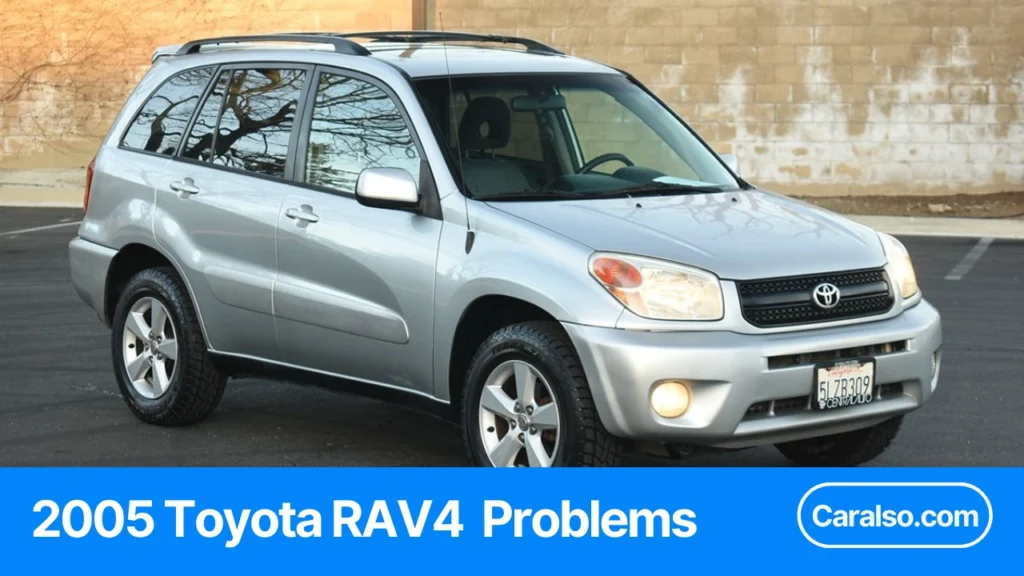
2005 Toyota RAV4 Problems
Toyota RAV4 Problems – Summary Table
| Problem | Red-Flag Symptom | 2-Minute Confirmation | Typical Fix Path | Deal-Breaker? |
|---|---|---|---|---|
| Takata Driver Airbag Inflator Recall (Some With Do Not Drive) | VIN flags Do Not Drive status | Run VIN on Toyota and NHTSA sites before a test drive | Free recall remedy through Toyota | Yes, until fixed |
| EVAP Canister Charcoal Pellets (Often Shows P0446) | Check engine light after fueling, sometimes fuel smell | Scan codes. If you see P0446 with P0441 or P0442, I suspect the canister and vent side | Replace EVAP canister assembly and related valves as a unit | No, but I price it in |
| False Catalytic Converter Failure Code | Check engine light with “cat efficiency” language, drives normal | Scan code and check for misfire history. If it runs smooth, I ask about ECU update history | Software update may be the fix before replacing parts | No, unless it also misfires |
| Overheating Or Coolant Loss | Temp gauge climbs, heater goes cool at idle | Cold check coolant level. Warm idle 10 minutes. Gauge must stay steady | Pressure test and repair leak source first, then re-test | Yes if it overheats |
| Excessive Oil Consumption | Low oil between changes, oil smell after a drive | Check oil level cold. Ask how many miles per quart. Look for smoke on startup | Start with PCV and leak checks, then verify consumption rate | Maybe, depends on rate |
| Transmission Driveability (Automatic) | Delay into Drive, harsh shifts, flare | Cold start. Shift R to D. Engagement should be within about 1 second. Test drive 10 minutes | Scan for related codes. Verify fluid condition. Diagnose before condemning | Yes if it slips or has burnt fluid smell |
If You Only Check 3 Things Before You Buy
- Open Recalls By VIN
I check Toyota’s recall lookup and NHTSA’s VIN tool. I do both. - Cooling System Health
I do a cold coolant check, then a 10-minute warm idle check. I want a stable temp gauge and steady cabin heat. - OBD Scan For EVAP And Catalyst Codes
I scan for stored and pending codes. I prioritize P0446 and catalyst-related codes, then I look for any misfire history.
Problems Snapshot (What Owners Report Most)
What The Data Sources Are Actually Measuring
Here’s how I look at “2005 Toyota RAV4 problems” data without getting fooled by noise.
| Source | What It Tracks | How I Interpret It As A Buyer |
|---|---|---|
| NHTSA Complaints + Recalls | Safety recalls and owner-submitted complaints | Great for safety checks and patterns. Not great for “how common” because many owners never file. |
| CarComplaints | Aggregated complaint themes with rough cost and mileage averages | Good for spotting repeat issues and typical failure mileage. Still has reporting bias. |
| RepairPal Problem Pages | Shop-facing problem patterns and “what fixes it” narratives | Good for fix paths, common codes, and what shops actually replace. |
| Real-World Scan Data | OBD-II codes from a $20–$60 scanner | The fastest truth source during a test drive. Codes beat guesses every time. |
Quick reality check. Complaint aggregators skew negative. Happy owners do not post. But pattern spotting is real if the same codes and same symptoms show up for years.
The Most Repeated Themes (High-Level Buckets)
When I combine what owners complain about with what repair databases flag, these themes repeat the most:
- Check Engine Light and emissions codes
EVAP codes are common. Catalyst efficiency codes show up too. - Cooling system problems and overheating risk
Leaks, fans, and thermostats are the usual suspects. - Oil consumption complaints
This matters because low oil can kill an engine quietly. - Transmission drivability at higher miles
Harsh shifts, delayed engagement, and “it will not shift right” stories. - No-start and stalling episodes
Intermittent no-crank and start-then-stall complaints pop up in the data. - Normal wear items that feel like “big problems”
Front-end clunks, rattles, and vibrations can feel scary but are often fixable.
If you only do 1 thing before buying. Bring a scanner. If the seller will not allow a scan, I walk.
The 8–10 Most Common 2005 RAV4 Problems
EVAP System Faults (P0446 Is The Tell)
Symptoms (What You Feel Or See)
- Check Engine Light on
- Fuel smell near the rear of the vehicle
- Hard to fill the tank, pump keeps clicking off early
- Failed emissions test
Likely Cause (Plain English)
The EVAP system is not holding vapor correctly. On these older RAV4s, the charcoal canister can break down internally. Charcoal pellets can clog EVAP valves and lines.
How To Confirm Fast
- Scan for codes. P0446 is the big one. P0441 and P0442 often tag along.
- Open the gas cap and inspect the seal. Cracks matter.
- Ask when the last gas cap was replaced. A $15 cap can save hours of chasing.
Fix Options
- Cheapest first: replace the gas cap with an OEM cap and clear codes.
- Next: smoke test the EVAP system to find leaks.
- Common real fix: replace the charcoal canister and any affected valves or lines.
Pricing Guidance
- Gas cap: usually $15–$40
- Smoke test and diagnosis: commonly $120–$200
- Canister replacement can land in the $300–$900 range installed, depending on labor access
Catalyst Efficiency Codes And False Cat Flags (Software Update, Then Sensors, Then Cat)
Symptoms (What You Feel Or See)
- Check Engine Light on
- P0420-style catalyst efficiency codes are common in this category
- Car may drive “fine” but fails emissions
Likely Cause (Plain English)
There are 3 common paths here.
- Some RAV4 model years have a known pattern where a software update fixes a false catalytic converter failure report.
- An oxygen sensor can fail and lie to the ECU.
- The catalytic converter can actually be worn out.
How To Confirm Fast
- Scan the codes and save a freeze-frame snapshot.
- Check for exhaust leaks before the converter. A small leak can trigger efficiency codes.
- Look at live data if you can. A lazy downstream O2 sensor is a clue.
Fix Options
- Start with the software angle if applicable at a dealer or Toyota-capable shop.
- If not, test O2 sensors before replacing a converter.
- Replace the converter only after you rule out leaks and sensor faults.
Pricing Guidance
- Software update: often billed as diagnostic time. I plan $0–$200.
- O2 sensor replacement: commonly $150–$400 per sensor installed
- Catalytic converter replacement: commonly $900–$2,500+ installed depending on parts and emissions rules
Overheating Or Coolant Loss
Symptoms (What You Feel Or See)
- Temp gauge climbing above normal
- Coolant smell after a drive
- Wet spots or crusty dried coolant around hoses and radiator
- Heater stops blowing hot when you come to a stop
Likely Cause (Plain English)
Most overheating starts simple. Leaks, a weak fan, or a thermostat that sticks.
How To Confirm Fast
- Check the coolant level cold. Radiator and overflow bottle.
- Look for pink or white crust around the water pump and radiator seams.
- After a test drive, pop the hood and listen. Fans should kick on.
- A cooling system pressure test finds leaks fast.
Fix Options
- Fix the leak first. Hose, clamp, radiator cap, radiator, or water pump.
- Replace thermostat if it is original and temps fluctuate.
- If it overheated badly, test for combustion gases in coolant before you buy.
Pricing Guidance
- Hoses and thermostat: often $100–$400 installed
- Radiator or water pump: often $300–$900 installed
- Head gasket level problems: often $2,000–$4,000+ and I treat that as a walk-away unless priced as a project
Oil Consumption (The Dipstick Test Matters Here)
Symptoms (What You Feel Or See)
- Low oil on the dipstick between changes
- Blue smoke on cold start or hard acceleration
- Oily spark plugs
- Burnt oil smell after highway driving
Likely Cause (Plain English)
Oil can be getting past rings or valve seals. A stuck PCV valve can make it worse. High miles amplify all of it.
How To Confirm Fast
- Check oil level before and after the test drive.
- Look for fresh oil around the valve cover and timing cover area. Leaks can mimic “consumption.”
- Ask the owner how many quarts per 1,000 miles it uses. If they cannot answer, assume they do not check.
Fix Options
- Replace PCV valve and verify correct oil viscosity for the climate.
- Fix external leaks first.
- If it is true internal consumption, you are in rebuild or replacement territory.
Pricing Guidance
- PCV and basic service: often $50–$200
- Chasing leaks: often $150–$800 depending on what is leaking
- Engine rebuild or replacement: commonly $2,500–$6,000+
No-Start Or No-Crank (Starter Solenoid Contacts)
Symptoms (What You Feel Or See)
- You turn the key and get 1 click. Or nothing.
- Lights work but engine will not crank
- Starts fine for 2 weeks, then randomly will not
Likely Cause (Plain English)
Worn or corroded starter solenoid contacts. The good news is many cases do not require a whole starter.
How To Confirm Fast
- Listen for a single click when you turn the key.
- Check battery voltage. A weak battery can mimic this.
- If it starts after multiple key turns, I suspect contacts.
Fix Options
- Replace the solenoid contacts if the starter motor itself is still good.
- Replace the complete starter if the internals are tired.
Pricing Guidance
- Battery and terminal cleanup: often $0–$250 depending on battery
- Starter contacts repair: often $150–$400 installed
- Full starter replacement: often $300–$700 installed
Start-And-Stall Or Stalling At Stops (Idle Air Control Carbon And Throttle Body)
Symptoms (What You Feel Or See)
- Starts, then dies in 2–10 seconds
- Stalls when coming to a stop sign
- Idle hunts between 700–1,500 rpm
- Sometimes no codes at all
Likely Cause (Plain English)
Carbon buildup in the idle air control system and throttle body. It tends to show up around 100,000 miles and beyond.
How To Confirm Fast
- Let it idle for 3 minutes after a cold start. Watch for surging.
- Turn on headlights and AC. Load changes can trigger a weak idle control issue.
- If the seller “warms it up before you arrive,” that is a red flag. Insist on a cold start.
Fix Options
- Clean throttle body and idle passages first.
- If symptoms return quickly, replace the idle air control component and clean the throttle body again.
Pricing Guidance
- Cleaning service: often $100–$250
- Replacement plus cleaning: often $250–$700 depending on parts availability and labor
Transmission Failure Or Shift Problems At Higher Miles
Symptoms (What You Feel Or See)
- Harsh 1–2 shift
- Delayed engagement into Drive or Reverse
- Feels like it “slips” under light throttle
- Won’t go into gear, or shifter feels loose
Likely Cause (Plain English)
At higher miles, shift quality problems can come from throttle position sensor adjustment, shift solenoids, or wear. Sometimes it is not a full rebuild situation. Sometimes it is.
How To Confirm Fast
- Do 6 stop-to-30 mph pulls. Light throttle and medium throttle.
- Feel for a flare. RPM jumps without speed increase.
- Check transmission fluid level and smell. Burnt odor is a bad sign.
- Scan for transmission-related codes if your scanner supports it.
Fix Options
- Start with fluid condition and proper level. Fix leaks.
- Next step is diagnosis for solenoids or sensor adjustment.
- Worst case is replacement transmission or major internal repair.
Pricing Guidance
- Fluid service and diagnosis: often $200–$500
- Solenoid or sensor work: often $300–$900
- Replacement transmission level repairs can land around the $2,000–$3,500+ range depending on sourcing
Brake Pedal Feels Spongy Or Sinks (Master Cylinder)
Symptoms (What You Feel Or See)
- Pedal slowly sinks at a stop
- Pedal feels soft after a few quick stops
- You need more pedal travel to stop
Likely Cause (Plain English)
A failing brake master cylinder can cause an inconsistent pedal and longer stopping distances.
How To Confirm Fast
- In Park, press the pedal for 30 seconds. It should stay firm.
- Check brake fluid level and look for leaks at the master cylinder and lines.
- During a test drive, do 3 moderate stops from 30 mph. The pedal should feel consistent each time.
Fix Options
- Replace the master cylinder and bleed the system correctly.
- Inspect pads, rotors, and rubber brake hoses while you are there.
Pricing Guidance
- Master cylinder replacement is commonly in the $374–$645 range installed
Front-End Clunks, Rattles, And Vibration (Suspension Wear)
Symptoms (What You Feel Or See)
- Clunk over speed bumps
- Rattle on rough roads
- Steering wheel vibration at 55–70 mph
- Uneven tire wear
Likely Cause (Plain English)
Wear items. Sway bar links, bushings, struts, ball joints, and sometimes wheel bearings. On a 2005, I assume at least 1 of these is near end-of-life.
How To Confirm Fast
- Drive over a rough parking lot at 10–15 mph with windows down.
- Do a tight circle in a lot. Listen for clicks or grinding.
- Inspect tires. Cupping often points to suspension wear.
Fix Options
- Start with the cheapest noise makers. Sway bar links and bushings.
- Then struts and mounts if it bounces more than 2 times after you push down on a corner.
- Align it after suspension work. Always.
Pricing Guidance
- Sway links or bushings: often $150–$400
- Struts: often $600–$1,400 for a pair installed
- Wheel bearing: often $300–$700 per corner installed
AC Not Working Or Weak Cooling (Leaks, Electrical, Compressor)
Symptoms (What You Feel Or See)
- Warm air at idle
- Cold air only while driving
- AC cycles on and off rapidly
- No change when you press the AC button
Likely Cause (Plain English)
Most AC failures start with a refrigerant leak. Electrical issues are next. Compressor failures happen too.
How To Confirm Fast
- With the AC on, check if the compressor clutch engages.
- Listen for clicking and watch for rapid cycling.
- Feel vent temps after 5 minutes at idle.
Fix Options
- Leak test and repair first. Then evac and recharge.
- Fix electrical problems like fuses, relays, or control module issues.
- Replace compressor only after confirming it is not a simple low-charge situation.
Pricing Guidance
- Diagnosis and recharge: often $150–$350
- Leak repair plus recharge: often $250–$800 depending on location of leak
- Compressor replacement: often $600–$1,500+
Recalls And Safety Checks (Must-Read Before You Buy)
I treat recalls as step zero. Not step five.
If the VIN shows a Do Not Drive status for the Takata driver airbag inflator, I do not start the car. I do not test drive it. I do not “just drive it to the dealer.”
The One Recall Scenario That Changes Everything: Do Not Drive
Toyota issued a Do Not Drive advisory that includes some 2004 to 2005 RAV4s with unrepaired Takata airbag inflators.
Here is what I do if the VIN flags it.
- Park it. Keys off.
- Call a Toyota dealer with the VIN.
- Ask what no-cost options they will provide.
Common options include mobile repair at the vehicle’s location, towing to the dealership, vehicle pickup and delivery, or other alternate transportation. - Get the recall remedy completed before you drive it again.
There is no “inspection trick” that makes this safe. It is a VIN status thing.
How To Check Open Recalls By Vin (Do This Before A Test Drive)
This is my quick routine.
- Find the VIN on the driver-side dash at the windshield.
- Run the VIN on Toyota’s recall lookup.
- Run the VIN on NHTSA’s recall lookup.
- Screenshot both results. I use them for negotiation and for my own records.
- Read the fine print on NHTSA results.
NHTSA’s VIN tool will not show recalls that were already repaired. It also will not show recalls more than 15 years old unless the manufacturer offers more coverage. That is why I check Toyota’s site too.
Recalls You Will Commonly See Mentioned For This Year
I only trust recall lists tied to VIN checks, but these are the ones you will see referenced for 2005 RAV4 most often.
- Driver frontal airbag inflator moisture intrusion recall (example listing: 15V284000)
- Replacement inflators of the same design that may still rupture over time (example listing: 19V741000)
- Tire and rim label compliance recalls tied to certain distributor regions (example listing: 10V035000)
Do not panic if you see a label recall. I treat that as paperwork. Airbag inflator items are the ones I treat as safety-critical.
Deal-Breaker Vs “OK If Priced Right”
This is the part that saves you money.
I separate safety and engine-killer issues from everything else. Then I price the rest like normal used-car wear.
| Issue | Why It Matters | Quick Proof | Walk Away Or Negotiate? |
|---|---|---|---|
| Open Do Not Drive Airbag Status | Safety risk. No warning signs. | VIN shows Do Not Drive or urgent unrepaired inflator recall | Walk Away Until Fixed |
| Overheating On Test Drive | Can turn into head gasket or worse. | Temp gauge climbs. Heater goes cold at idle. Coolant smell after drive. | Walk Away |
| Coolant Loss With No Clear Leak | Often becomes repeated overheating. | Reservoir level drops between your cold check and after-drive check | Walk Away Unless Diagnosed First |
| Milky Oil Or Foam Under Oil Cap | Possible coolant contamination. | Oil cap and dipstick show milkshake look | Walk Away |
| Transmission Slip Or Flare | Can mean internal wear. | RPM rises without speed increase during light throttle pulls | Walk Away |
| Burnt Transmission Fluid Smell | Heat and wear. Big risk. | Brown or black fluid plus burnt odor | Walk Away |
| Brake Pedal Sinks At A Stop | Stopping distance risk. | Press pedal for 30 seconds in Park. It slowly sinks. | Walk Away |
| Heavy Rust On Brake Lines Or Mount Points | Safety and inspection failure risk. | Flaky brake lines. Wet spots. Soft metal near mounts. | Walk Away |
| Active Misfire Codes | Can damage the catalytic converter fast. | OBD scan shows misfire codes or flashing check engine light | Walk Away Until Fixed |
| EVAP Codes Only (P0446, P0441, P0442) | Usually fixable. Often drives fine. | OBD scan shows EVAP codes and it runs smooth | Negotiate |
| Catalyst Efficiency Code With No Misfire Feel | Could be software, sensor, or converter. | Smooth idle, no misfire history, no exhaust leaks found | Negotiate |
| Starter Click, Intermittent No-Crank | Annoying, usually repairable. | Single click and no crank. Battery tests good. | Negotiate |
| Idle Surging Or Start-Then-Stall | Often carbon and idle control issues. | Idle hunts 700 to 1,500 rpm, worse with AC load | Negotiate |
| Suspension Clunks And Vibration | Wear items. Priceable. | Clunk over bumps, tire cupping, steering shake 55 to 70 mph | Negotiate |
| Weak AC | Comfort issue, not usually a deal-killer. | Warm air at idle after 5 minutes with AC on | Negotiate |
My rule is simple.
I do not buy problems that can total the value of a 20-year-old SUV. I do buy fixable problems when the price matches the repair.
30-Minute Pre-Purchase Inspection And Test Drive Script (Unique Section)
I use this script on every 2005 RAV4 I shop. It takes 30 minutes. It catches most expensive surprises.
0 To 5 Minutes (Before Starting The Engine)
VIN And Recalls First
- I read the VIN on the dash at the windshield.
- I run the VIN for open recalls before a test drive.
- If it shows a Do Not Drive airbag status, I stop.
Tires And AWD Clues
- I check all 4 tires for the same size.
- On AWD, I like the same brand and similar tread depth on all 4.
- A 4-tire mismatch is a driveline risk.
Leaks In 60 Seconds
- I look under the front for fresh coolant drips.
- I look under the middle for oil drips.
- I look at the rear for wet fuel smell or stains near the tank area.
Coolant And Oil Baseline
- I check coolant level in the overflow bottle.
- I check oil level on the dipstick.
- If oil is below the low mark, I assume the owner does not check it.
Rust Points I Always Check
- Brake lines near the rear axle
- Rear suspension mounting points
- Pinch welds under the doors
5 To 10 Minutes (Cold Start Checks)
Cold Start Is A Data Point
- I prefer a cold start.
- If it is already warm, I ask why.
Warning Lights
- I turn the key on and confirm the check engine light comes on.
- Then I confirm it turns off after starting.
- If it never comes on, the bulb may be removed.
Idle Quality
- I let it idle for 60 seconds.
- I turn on headlights and AC.
- Idle should stay stable.
Exhaust And Smell Checks
- White steam for 30 seconds can be normal on a cold day.
- Sweet coolant smell is not normal.
- Blue smoke is oil.
Cabin Heat Quick Check
- I set heat to max after a few minutes.
- If heat goes cold at idle, I suspect cooling system issues.
10 To 20 Minutes (City Driving Loop)
I do this loop first. It triggers most common 2005 RAV4 complaints.
Transmission Feel
- I do 6 pulls from 0 to 30 mph.
- 3 pulls at light throttle.
- 3 pulls at medium throttle.
- I watch for shift flare. RPM rises without speed.
Stop And Go Behavior
- I do 6 stops from 25 mph.
- I feel for brake pull.
- I feel for pedal pulsation.
Steering And Clunks
- I drive over a rough parking lot at 10 to 15 mph with windows down.
- I listen for clunks on the first steering input.
- I listen for clicking on turns, which can be CV joints.
Temperature Gauge Discipline
- I glance at the temp gauge every 2 minutes.
- Any climb above normal is a stop-now moment for me.
20 To 30 Minutes (Highway And Parking Lot Tests)
Highway Vibration Check
- I cruise at 60 to 70 mph for 2 to 3 minutes.
- If the steering wheel shakes, I suspect tires, balance, or worn front end parts.
Wheel Bearing Load Test
- I do a gentle lane change left then right.
- A bad bearing often changes pitch when load shifts.
Hard Brake Test
- One firm stop from 50 mph on a safe road.
- The car should stop straight.
- The pedal should not sink.
AWD Binding Check (If AWD)
- In a tight circle at low speed, I listen and feel.
- Hopping or binding is a red flag.
- Mismatched tires can cause it, so I check tires again.
Reverse Engagement
- I shift into Reverse after the drive.
- I want engagement within about 1 second.
- Long delay is a transmission red flag.
My Scan Tool 5
I run these 5 checks before money changes hands.
- Stored Codes
- Anything active matters more than a seller story.
- Pending Codes
- Pending EVAP and catalyst codes often show up here first.
- Readiness Monitors
- If many monitors are “not ready,” codes may have been cleared recently.
- Fuel Trim Snapshot
- At warm idle, I like trims close to 0%.
- If long-term fuel trim is over plus 15% or under minus 15%, I slow down and diagnose.
- Freeze Frame For The Main Code
- I save the moment the code set.
- It helps separate a real failure from a one-time event.
If the seller refuses a scan, I walk.
Preventive Maintenance That Actually Reduces These Failures
If I buy a 2005 RAV4 with unknown history, I baseline it fast. This is what reduces the problems people complain about most.
Emissions And CEL Prevention
EVAP Habits That Work
- I stop fueling at the first click. No topping off.
- I replace the gas cap if the seal is cracked.
- I tighten the cap until it clicks 3 times.
How I Handle EVAP Codes
- I do not clear codes just to pass a test drive.
- I scan first, then fix the root cause.
- P0446 gets priority in my book.
Readiness Tip
- If you clear codes, your emissions monitors reset.
- Plan 50 to 100 miles of mixed driving before a retest in many cases.
- I do not schedule an emissions test the same day I clear codes.
Cooling System Habits
I Treat Cooling Like Insurance
- I check coolant level once a month.
- I look for crusty residue around hose connections every oil change.
Coolant Interval I Use When History Is Unknown
- I drain and refill coolant every 50,000 miles or 5 years.
- If the car has proof of recent coolant service, I follow that schedule.
Radiator Cap And Thermostat Logic
- If it runs hot even once, I pressure test the system.
- I replace a weak radiator cap early.
- I replace the thermostat if temps fluctuate.
Oil Level Discipline
This Is The Habit That Saves Engines
- I check oil level every 2 fuel fill-ups.
- On a high-mileage 2005, I check weekly.
How I Track Consumption
- I measure miles per quart.
- If it uses 1 quart per 1,000 miles, I treat that as high consumption.
- If it uses 1 quart per 3,000 miles, I watch it and keep it topped off.
PCV Valve
- I replace the PCV valve if oil use is rising.
- It is cheap. It is worth doing early.
Transmission And AWD Fluids
Automatic Transmission
- If history is unknown, I do a drain and refill first.
- I avoid power flushing on a high-mileage unknown unit.
- I recheck level and leaks after 200 miles.
AWD (If Equipped)
- I change rear differential and transfer case fluid on a schedule.
- My interval is 30,000 to 50,000 miles depending on use.
- I check for leaks every oil change.
Tire Matching Rule
- On AWD, I keep tread depth difference small.
- If 2 tires are new and 2 are worn, I replace all 4.
- That costs more up front, but it is cheaper than driveline repairs.
FAQs
Is The 2005 Toyota RAV4 Reliable At 150,000 Miles?
Yes, it can be. I see plenty that run past 200,000 miles.
At 150,000 miles, I care more about 3 things than the odometer. Cooling system health, oil level discipline, and clean shifting on a 10-minute drive.
If it holds coolant, stays at normal temp, and has no active misfire codes, I am comfortable with this year.
What Is The Most Common Check Engine Code On A 2005 RAV4?
In my experience, EVAP codes show up the most on older Toyotas. That is the group tied to the fuel vapor system.
I see P0446 mentioned a lot in problem writeups because it often points toward the EVAP canister and vent side. I also see catalyst efficiency codes like P0420 in this era, especially on higher-mile vehicles.
My rule is simple. I do not guess. I scan the car before I negotiate.
What Does P0446 Mean On A 2005 RAV4?
P0446 is an EVAP vent control related fault. In plain English, the car is not venting or sealing fuel vapors the way it expects.
On a 2005 RAV4, that can be as simple as a bad gas cap. It can also be a charcoal canister issue, especially if P0446 shows up with P0441 or P0442.
I start with the cheap checks, then I do an EVAP smoke test if the code comes back.
Should I Avoid A 2005 RAV4 With A Catalytic Converter Code?
Not automatically. I avoid the reason behind the code, not the code itself.
If it has misfire codes, rough running, or a flashing check engine light, I walk until it is fixed. Misfires can kill a catalytic converter fast.
If it drives smooth and the only issue is a catalyst efficiency style code, I treat it as a diagnosis problem. I rule out exhaust leaks and oxygen sensor issues first. I also ask if a software update applies before I price in a converter.
How Do I Check Recalls If The Car Is This Old?
I check 2 places every time.
First, I run the VIN on Toyota’s recall lookup. Second, I run the VIN on the NHTSA recall tool.
I do both because older vehicles can have recall history that is easier to confirm with the manufacturer site. I also want the most current status, not a screenshot from a seller.
If the VIN shows a Do Not Drive airbag status, I do not test drive it. I call a Toyota dealer and arrange the recall remedy first.
Key Takeaways
- I run the VIN for open recalls before I start the engine.
- If the VIN shows Do Not Drive airbag status, I do not drive it.
- I skip any 2005 RAV4 that overheats or keeps losing coolant.
- I scan for codes before negotiating. EVAP and catalyst codes are common.
- I treat P0446 as an EVAP priority code and plan a real diagnosis path.
- I walk from active misfire codes unless they are repaired before purchase.
- I use a 30-minute script to test shifting, braking, and front-end noise.
- If history is unknown, I baseline fluids and track oil level every 2 fuel fill-ups.
Sources
- Toyota Recall Lookup (VIN)
- NHTSA Recall Lookup (VIN)
- Cars.com 2005 Toyota RAV4 Recalls
- CarComplaints 2005 Toyota RAV4 Overview
- CarComplaints Transmission Failure

Hey there,
How is it going?
I’m Meraj Sarker. I am a Car Mechanic and a student of Automobile Restoration here in Florida, USA. I’ve been studying automotive for around 9 years now. So you can rely on my recommendation. For me, studying and getting knowledge about automobile it’s really fun and entertaining. I will help you to get solutions for your car through this website. If you need any help let me know.