
If I am shopping a 2010 RAV4, I do 2 things first.
First, I run the VIN for open recalls. I do that before I drive it. Some recall items are safety-critical. I do not gamble there.
Second, I listen for AWD rear driveline noise on a test drive if it is a 4WD model. A growl from the rear can point to a known rear differential coupling issue on some 2006 to 2012 4WD RAV4s. It is not every car. But it is common enough that I always check.
After that, I focus on the “money problems.” Paint bubbling, windshield cracks, and transmission failure reports show up a lot in owner data for this year. The good news is that most of these are easy to screen for in 10 minutes.
Quick Answer (Read This First)
Quick Verdict (2 Lines)
Buy If
- The VIN shows no open safety recalls.
- It is quiet from 35 to 55 mph with light throttle, especially on 4WD.
- The test drive shows smooth shifting and stable temperature.
Walk Away If
- The VIN shows an open safety recall you cannot schedule right away.
- You feel unstable steering or hear a new rear clunk that matches the rear suspension arm risk.
- The transmission slips, bangs, or hesitates and fluid smells burnt.
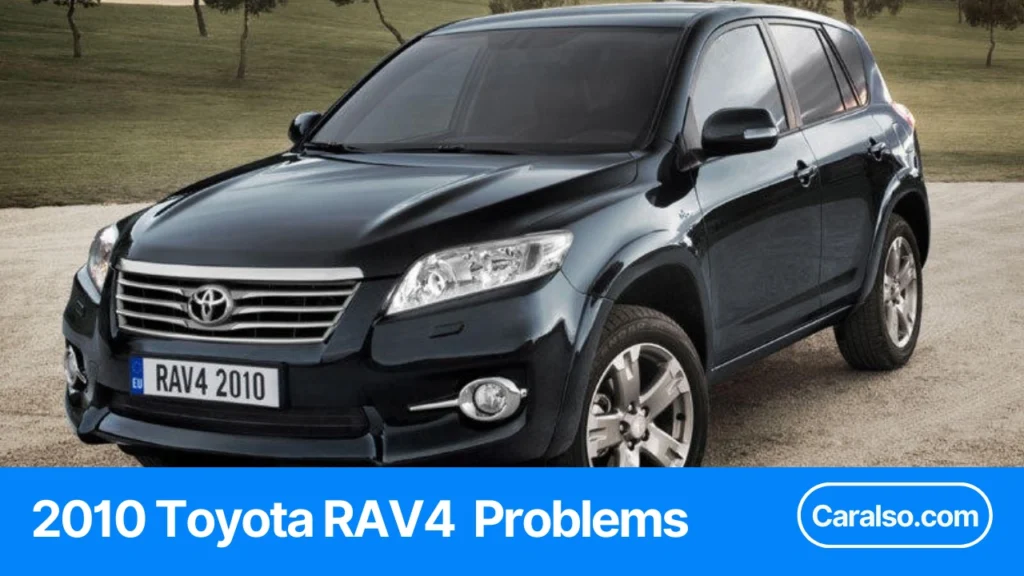
2010 Rav 4 Problems
Hero Asset Summary Table (Snippet Target)
| Problem | Safety Risk | Typical Signs | Fast Confirmation Test | Likely Fix Path |
|---|---|---|---|---|
| Rear Differential Coupling Growl Noise (4WD) | Low | Growl from the rear under light throttle, often around 35 to 55 mph | Test drive at steady cruise. Then accelerate lightly. If the noise is loudest at the rear, it is a clue | Confirm source. Repair or replace the rear differential coupling assembly |
| Rear Lower Suspension Arm Rust And Thread Wear (Recall Family) | High | Rear noise plus unstable steering feel. Alignment history in salt areas can matter | Check VIN. Then inspect rear suspension arms and hardware for heavy rust. Do a straight-line braking check | Recall remedy at dealer. Replacement of both rear lower suspension arms. Rear alignment set, then sealed |
| Accelerator Pedal Can Feel Stiff Or Slow To Return (Recall) | High | Pedal feels harder to depress, slow return, or stuck partially depressed | With engine off, press pedal 10 times. Feel for rough spots. Confirm with VIN recall status | Recall remedy at dealer. Repair or replace pedal assembly parts per campaign |
| Power Window Master Switch Overheat Risk (Recall) | High | Window switch feels notchy. Window stops working. Smell of melting plastic. Possible smoke | Test all driver door window switches. Sniff for hot plastic smell after cycling windows 5 times | Recall remedy. Inspection and grease application. Circuit board replacement if needed |
| Paint Bubbling And Peeling | Low | Bubbles and peeling, often on roof edges and near trim | Walkaround in bright light. Look along roof rails, sunroof edges, and hood leading edge | Respray or panel repair. I use it as price leverage |
| Windshield Cracks Easily | Low | Crack starts from edge and runs fast | Inspect edges and corners. Look for prior replacement markings and poor sealant | Replace windshield. Check calibration needs if equipped |
If You Only Check 3 Things Before You Buy
- VIN Recall Status
I check Toyota and NHTSA. I screenshot the results. - 35 To 55 MPH Noise Test
This is the quickest way to catch rear driveline growl on 4WD models. - Paint And Glass Walkaround
I look at the roof, hood, and windshield edges. I also ask if the windshield was replaced before.
Problems Snapshot (What Owners Report Most)
The 5 Buckets Of Issues
- Safety And Recall Items
Pedal feel, wipers, rear seatbelts, and a power window master switch campaign. - AWD And Driveline Noises
A growl that points to the rear differential coupling on some 4WD models. - Powertrain And Drivability
A small set of high-dollar transmission complaints. Some EVAP check engine lights. - Electrical And Convenience Issues
Window switch behavior, and random gremlins that are usually fixable. - Body And Glass Issues
Paint bubbling and peeling. Windshield cracking complaints.
What Shows Up As “Top Problems” On Aggregators
These numbers are from owner-complaint aggregators. I use them as a quick compass, not as a guarantee your exact car will fail.
| Issue (2010 RAV4) | Typical Repair Cost | Average Mileage | Total Complaints | What I Do With This Info |
|---|---|---|---|---|
| Paint Bubbling And Peeling | $1,540 | 80,900 miles | 21 | I inspect roof and hood first. I price in a respray or I negotiate hard. |
| Transmission Failure | $3,450 | 126,700 miles | 3 | I do a longer test drive. I check fluid condition and shift quality. |
| Windshield Cracks Easily | $850 | 36,750 miles | 2 | I check for prior glass work and edge chips before I buy. |
My Read On The Pattern
- Paint is the loudest theme. It is not a tow-truck failure. It is a resale-value hit.
- The expensive mechanical risk is driveline noise on 4WD and the smaller set of transmission failures.
- Recalls matter because they are $0 fixes if they are still open. But you have to verify by VIN.
The 10 Most Common 2010 RAV4 Problem
1) Rear Differential Coupling Growl Noise (4WD Models)
Symptoms
- Low-pitch growl or rumble from the rear.
- Noise increases with speed.
- Most noticeable on steady throttle.
Likely Cause
- Wear inside the rear differential coupling assembly (Toyota has a service bulletin for this noise).
How To Confirm In 3 Minutes
- Find an empty road and get to 35 to 55 mph.
- Hold a steady throttle for 10 seconds, then lift slightly.
- If the growl changes with load, I get suspicious of driveline parts, not tires.
- If you can safely do it, a shop can confirm by listening at the coupling area on a lift.
Fix Options (DIY, Indie Shop, Dealer)
- Dealer-style fix is typically replacing the coupling assembly per the bulletin path.
- Some independent driveline shops may offer bearing-level work. Results vary. I only do this with a shop that does diffs weekly.
Cost Range And Time (Range Only)
- Often a 4-figure repair at a shop if the coupling gets replaced.
- Expect 2 to 4 labor hours plus parts.
2) Rear Lower Suspension Arm Rust And Thread Damage (Recall Family)
Symptoms
- Abnormal noise from the rear.
- Rear feels loose. Steering feels unstable.
- Rear alignment goes out and will not stay in spec.
Likely Cause
- Corrosion on the rear alignment threads, often tied to prior alignment work and road salt exposure.
- Toyota issued a recall that replaces both rear lower suspension arms and seals them.
How To Confirm In 3 Minutes
- Turn the front wheels to one side and look under the rear from behind the tire.
- I look for heavy rust on the rear toe adjustment threads and hardware.
- I also ask for paperwork that shows both rear arms were replaced under the recall.
Fix Options (DIY, Indie Shop, Dealer)
- If the recall is open, I go dealer. That is the cleanest path.
- If the recall is closed but the hardware is damaged, an alignment shop plus a suspension shop usually gets involved.
Cost Range And Time (Range Only)
- If covered by an open recall, cost is $0.
- Toyota’s recall FAQ says about 3 hours for the repair.
3) Accelerator Pedal Sticking Or Slow Return (Recall)
Symptoms
- Pedal feels harder than normal.
- Pedal returns slowly.
- In the worst case, it can stick partially depressed.
Likely Cause
- The accelerator pedal assembly can develop increased friction under certain conditions, which Toyota described in its defect report.
How To Confirm In 3 Minutes
- With the engine off, press and release the pedal 10 times.
- I look for any “notchy” feel or slow return.
- I also verify recall completion by VIN. Paperwork is even better.
Fix Options (DIY, Indie Shop, Dealer)
- If the recall is open, I do not DIY this. I go dealer.
- If it is already done, I still make sure the pedal feel is smooth on the test drive.
Cost Range And Time (Range Only)
- If covered by an open recall, cost is $0.
- Plan 1 to 2 hours at the dealer depending on scheduling.
4) Windshield Wiper Link Corrosion (Recall)
Symptoms
- Wipers stop working.
- Clanking noise at the base of the wipers.
- Intermittent operation in heavy rain.
Likely Cause
- Water dripping onto the wiper motor link can corrode the joint over time.
- Corrosion can cause separation and inoperative wipers.
How To Confirm In 3 Minutes
- Turn on wipers at low and high speed.
- Listen for clunking at the base of the windshield.
- Check for recall completion by VIN.
Fix Options (DIY, Indie Shop, Dealer)
- Dealer recall remedy replaces the wiper crank sub-assembly and cowl parts depending on prior interim repairs.
- If not covered, a good independent shop can repair it, but I still price it like a safety item.
Cost Range And Time (Range Only)
- If covered by an open recall, cost is $0.
- Toyota’s recall Q&A says about 1 hour.
5) Rear Outboard Seatbelt Webbing Damage Risk (Recall)
Symptoms
- Usually no driving symptom.
- This is a safety-risk item, not a comfort issue.
Likely Cause
- In a severe frontal crash, the lap belt webbing could contact the seat cushion frame and be cut.
How To Confirm In 3 Minutes
- Check VIN recall status.
- Look at the rear seat belt mounting areas and seat cushion edge for any obvious damage.
Fix Options (DIY, Indie Shop, Dealer)
- Dealer installs protective covers over the metal seat frame.
- I do not mess around with seatbelt hardware unless I am trained for it.
Cost Range And Time (Range Only)
- If covered by an open recall, cost is $0.
- Toyota’s recall Q&A says about 1 hour.
6) Power Window Master Switch Overheating (Recall)
Symptoms
- Driver window controls act up.
- Switch gets warm.
- Smell of melting plastic.
- In rare cases, smoke.
Likely Cause
- Toyota says insufficient grease in the master switch can lead to a short circuit and overheating.
How To Confirm In 3 Minutes
- With the car on, operate every window from the driver master switch.
- I check for intermittent response.
- I also sniff near the switch and feel for abnormal heat after cycling windows.
- Then I confirm recall status by VIN.
Fix Options (DIY, Indie Shop, Dealer)
- Dealer remedy includes inspection, switch disassembly, and applying a specified grease. In some cases, they replace the circuit board.
- I do not recommend spraying random lubricants into this switch.
Cost Range And Time (Range Only)
- If covered by an open recall, cost is $0.
- Toyota’s recall FAQ says about 1 to 1.5 hours.
7) Paint Bubbling And Peeling
Symptoms
- Clearcoat lifting.
- Bubbling under paint.
- Peeling on roof, hood, and pillars on some cars.
Likely Cause
- Paint adhesion breakdown. It can also be worse on areas with lots of sun and heat cycles.
How To Confirm In 3 Minutes
- I check these 4 spots first:
- Roof edge above the windshield
- A-pillars
- Front of the hood
- Top of the liftgate
- I run a fingertip along any bubbled edge. If it flakes, it is active.
Fix Options (DIY, Indie Shop, Dealer)
- Small area repair is sometimes possible, but color match is hard.
- Proper fix is prep, prime, and repaint of the affected panels at a reputable body shop.
Cost Range And Time (Range Only)
- Complaint aggregators show a typical repair cost around $1,540.
- Body shops often want the vehicle 2 to 5 days depending on panel count.
8) Windshield Cracks Easily
Symptoms
- Crack starts near an edge.
- Crack spreads faster in cold weather.
- Repeat chips that turn into cracks.
Likely Cause
- Some owners report the glass seems prone to cracking. Temperature swings can make a small chip turn into a long crack.
How To Confirm In 3 Minutes
- I inspect the full perimeter. Especially the lower corners.
- I look for distortion, waves, or uneven urethane that suggests a prior replacement.
- I check for tiny star chips. Those are future cracks.
Fix Options (DIY, Indie Shop, Dealer)
- A quality glass shop replacement with proper urethane cure time.
- If it has ADAS glass on other vehicles, calibration matters, but most 2010 RAV4 setups are simple.
Cost Range And Time (Range Only)
- Complaint aggregators show a typical repair cost around $850.
- Most replacements take 1 to 2 hours plus cure time.
9) Transmission Failure Or Major Driveline Failure Complaints
Symptoms
- Grinding noise.
- Loss of drive.
- Harsh shifting. Delayed engagement into Drive or Reverse.
Likely Cause
- A small number of owners report transmission failure or related driveline internal issues.
How To Confirm In 3 Minutes
- On the test drive, I do this every time:
- Cold start.
- Shift R to D and D to R with a 2-second pause. I feel for delay or slam.
- Light throttle 1-2 shifts, then medium throttle.
- 45 to 65 mph cruise, then a gentle pass.
- I also check fluid condition if possible. Burnt smell is a red flag.
Fix Options (DIY, Indie Shop, Dealer)
- I do not DIY a modern automatic failure.
- I want a transmission specialist diagnosis before purchase if I feel anything off.
Cost Range And Time (Range Only)
- Complaint aggregators show a typical repair cost around $3,450.
- Expect 1 to 4 days depending on parts and shop backlog.
10) EVAP Check Engine Light (P0441 And Similar)
Symptoms
- Check engine light.
- Sometimes a fuel smell.
- Usually drives normal.
Likely Cause
- Incorrect purge flow in the EVAP system.
- Common culprits are a loose gas cap, purge valve issues, or EVAP hose leaks.
How To Confirm In 3 Minutes
- Read the code with a basic OBD2 scanner.
- Tighten the gas cap until it clicks.
- Visually inspect EVAP hoses you can see for cracks.
- If the light comes back, the next real step is a smoke test.
Fix Options (DIY, Indie Shop, Dealer)
- Start with the gas cap and visual checks.
- Independent shop smoke test saves time.
- Purge valve replacement is common if the valve sticks.
Cost Range And Time (Range Only)
- Purge valve replacement averages about $186 to $212 on RepairPal.
- EVAP canister replacement can be about $905 to $939 on RepairPal.
- Most diagnostics and small EVAP repairs are same-day.
Recalls And Safety Checks (Must-Read Before You Buy)
I do not treat recalls like trivia. I treat them like a pre-flight checklist.
On a 2010 RAV4, I run the VIN first. Then I translate the recall into a quick physical check, so I know what I am looking at on the driveway.
Recall Table
| Recall Topic | What Can Happen | How To Check Fast | What The Fix Does |
|---|---|---|---|
| Accelerator Pedal Sticking (10V017) | Pedal can feel harder to depress, slow to return, or stick partially depressed | With engine off, press and release the pedal 10 times. Then confirm recall status by VIN | Dealer performs the recall remedy on the pedal assembly at no charge |
| Rear Lower Suspension Arm Rust And Thread Wear (Safety Recall G0V) | Threads can wear over time, arm can separate, loss of vehicle control risk | Check VIN. Then inspect rear alignment hardware for heavy rust and damaged threads | Dealer replaces both rear lower suspension arms, sets rear alignment, seals arms with epoxy, and applies labels |
| Windshield Wiper Link Corrosion (NHTSA 15V577) | Wipers can become inoperative, visibility risk in rain | Run wipers on low and high for 30 seconds. Listen for clunks at the cowl. Confirm by VIN | Dealer replaces the water channel with an improved part and replaces the wiper link and crank arm with added protection |
| Rear Outboard Seatbelt Webbing Cut Risk (NHTSA 16V096, Toyota G0F) | In a high-speed frontal crash, lap belt webbing could be cut and separate | VIN check is the real test. Also inspect belts for fraying and smooth retraction | Dealer installs resin protectors on both second-row seat cushion frames |
| Power Window Master Switch Overheating (Safety Recall C0M) | Switch can overheat and melt. Possible smoke. Possible fire | Test all windows from the driver switch. Smell for melting plastic. Confirm by VIN | Dealer inspects, disassembles, applies specialized grease, and may replace the circuit board at no charge |
How To Check Open Recalls By VIN
This takes me 3 minutes.
- Copy the VIN from the dash at the windshield.
- Run the VIN on Toyota’s recall lookup.
- Run the VIN on NHTSA’s recall lookup.
- Screenshot both results.
- If anything is open, call a Toyota dealer and ask 2 questions.
- Can you confirm the campaign is open on this VIN?
- Can you schedule it before I buy, or immediately after purchase?
I also ask the seller for the repair invoice if they claim it is already done. Dealer paperwork beats verbal promises.
The 2 Recall Checks I Always Do In Person
- Rear Suspension Hardware Look-Under
If I see heavy rust on the rear alignment threads or hardware, I slow down and verify the G0V status. - Wiper And Window Function Test
I run wipers for 30 seconds. I cycle every window 2 times from the driver switch.
These take less than 2 minutes. They catch the stuff that actually matters on a rainy day.
Deal-Breaker Vs OK If Priced Right
I buy older Toyotas by separating safety and drivetrain risk from cosmetic and convenience problems.
Deal-Breakers (I Walk Or I Require Fix First)
- Any open safety recall you cannot schedule immediately
Pedal, suspension arms, wipers, seatbelts, window master switch. If it is open, I treat it as unfinished business. - Rear suspension arm symptoms that match the recall risk
Abnormal noise from the rear plus unstable steering feel is not a “maybe” for me. I verify G0V status and I inspect the hardware. - Rear differential coupling growl on a 4WD test drive
If it growls from 35 to 55 mph under light throttle and it clearly comes from the rear, I do not ignore it. - Severe transmission symptoms plus bad service history
Slip, flare, delayed engagement into Drive, harsh bangs, or burnt fluid smell. Any one of these can turn into a 4-figure bill fast.
OK If Priced Right (I Negotiate, Then I Fix)
- Paint bubbling and peeling
This is resale value and appearance. I use it as leverage. - Windshield cracks and edge chips
I price a replacement and I move on. - EVAP and purge flow codes (P0441 family)
If it drives smooth and the code path is clear, I negotiate. I do not guess. I scan it. - Wear items with receipts
Tires, brakes, battery, and suspension links. If there are recent invoices, I treat it as normal used-car math.
My simple rule: if the problem can affect control, braking, or visibility, I treat it as a walk-away until fixed. If it is cosmetic or emissions and it drives right, I negotiate like a grown-up and move forward.
30-Minute Pre-Purchase Inspection And Test Drive Script
I run this exact script on a 2010 Rav 4. It takes 30 minutes. It catches the big stuff.
Minute 0 To 5 (Walkaround)
I Start With The VIN
- I take a photo of the VIN at the windshield.
- I check open recalls before the test drive.
I Check Paint And Glass First
- I look at the roof edge above the windshield.
- I look at the A-pillars.
- I look at the hood leading edge.
- I inspect the windshield edges and corners for chips.
I Check Tires Like A Drivetrain Clue
- I confirm all 4 tires match in size.
- On AWD, I want similar tread depth on all 4.
- If 2 tires are new and 2 are worn, I expect AWD stress.
Minute 5 To 10 (Under Hood)
Oil And Coolant Baseline
- I check oil level on the dipstick.
- I check coolant level in the overflow bottle.
- I look for dried coolant crust near the radiator seams.
Quick Smell Test
- Burnt oil smell can mean an active leak onto the exhaust.
- Sweet coolant smell after warmup is a red flag.
Battery And Terminals
- I look for corrosion on the battery terminals.
- Loose terminals can cause random warning lights.
Minute 10 To 15 (Undercarriage Quick Checks)
Rear Suspension Hardware Check (Fast And Important)
- I look at the rear lower suspension arms and the rear alignment hardware.
- I look for heavy rust on threads and adjusters.
- If it looks crusty, I slow down and verify recall status.
Front-End Look
- I check the inner edge of the front tires for wear.
- Inner-edge wear often means alignment or worn parts.
Leaks
- I look for fresh wetness under the engine and transmission.
- I look for wetness near the rear differential area on AWD models.
Minute 15 To 25 (Test Drive Route And Exact Speeds)
I do this in the same order every time.
Cold Shift Test (Automatic)
- From Park to Reverse, then Reverse to Drive.
- I pause 2 seconds between shifts.
- Engagement should feel normal within about 1 second.
City Loop (5 Minutes)
- 6 stops from 25 mph.
- I feel for brake pull and pedal pulsation.
- I listen for clunks on the first steering input.
The Rear Coupling Noise Test (AWD) (The 35 To 55 MPH Window)
- I get to 35 mph.
- I hold steady throttle for 10 seconds.
- I accelerate lightly to 55 mph.
- I lift off the throttle slightly, then reapply lightly.
- If a growl changes with load and sounds like it is behind me, I flag it.
Highway Stability (2 Minutes)
- I cruise at 60 to 70 mph.
- I look for steering wheel vibration.
- I listen for a humming noise that changes when I gently lane-change left then right.
Full-Lock Parking Lot Test (1 Minute)
- Tight circle left, then tight circle right.
- On AWD, binding or hopping is a red flag.
- Tire mismatch can cause it, so I recheck tires if I feel it.
Minute 25 To 30 (Post-Drive Recheck And OBD Scan)
Post-Drive Heat Check
- I pop the hood.
- I look for fresh wetness that appears only when hot.
- I sniff for coolant smell near the radiator area.
My Fast OBD Scan Routine
- Stored codes
- Pending codes
- Readiness monitors
- Freeze-frame data for any active code
My Rule
If the seller refuses a scan, I walk.
Preventive Maintenance That Actually Reduces These Failures
If I buy a 2010 Rav 4 with unknown history, I do not guess. I baseline it.
AWD Driveline Fluids (The Ones People Skip)
If It Is AWD, I Treat These Fluids Like Insurance
- Rear differential fluid
- Transfer case fluid (if equipped)
What I Do When History Is Unknown
- I inspect for leaks first.
- If the fluid is dark or smells burnt, I change it.
- If the seller has no records, I assume it is overdue.
A Simple Interval That Works For Most Drivers
- I inspect every 15,000 miles.
- I plan a fluid change around 30,000 to 50,000 miles depending on heat, towing, and city driving.
Alignment Shop Rules (Because Of Rear Hardware Risk)
The rear suspension arm situation is not just “check rust.” It is also “avoid bad alignments.”
My Rules
- I only use an alignment shop that can show before-and-after numbers.
- I ask them to inspect rear adjusters before they touch anything.
- If a shop says “we forced it,” I assume hardware damage.
What I Ask For On Paper
- Alignment printout with specs
- Notes on rear adjuster condition
- Any replaced bolts, cams, or arms listed clearly
Electrical Recall Follow-Through (Windows, Wipers)
I treat these like safety items, not convenience.
Windows
- I cycle every window from the driver master switch 2 times a month.
- If the switch feels notchy or windows stop responding, I stop using it until it is inspected.
Wipers
- I run wipers on low and high before rainy season.
- If I hear clunking at the cowl, I address it fast.
Simple Habits That Prevent Repeat Issues
These take 3 minutes and prevent expensive surprises.
Once A Month
- Check oil level.
- Check coolant level.
- Check tire pressure.
Every 2 Fuel Fill-Ups
- Quick look at the temp gauge behavior on the same hill or the same commute.
Every Oil Change
- Look for new leaks.
- Look for uneven tire wear.
- Test all lights and wipers.
If A Warning Light Comes On
- I scan it the same day.
- I do not clear it just to “see if it comes back.”
- Codes are data. I want the data.
FAQs
Is The 2010 Rav 4 Reliable Compared To Other Years?
Yes, it can be. I put 2010 in the “good used buy” bucket when it is maintained and the recalls are handled.
What I like about it is simple. A lot of the big safety items are recall-related, so the fix can be $0 if it is still open. What I do not like is buying one with unknown AWD noise or rear suspension rust risk in salt states.
If you want the short version, I buy a 2010 when it passes a VIN recall check and a 35 to 55 mph road test.
What Is The Rear Differential Coupling Growl Noise?
It is a low pitch growl that comes from the rear of some AWD models.
I usually notice it between 35 and 55 mph. It often changes when I add light throttle, then lift slightly. Tires can hum too, so I listen for a sound that changes with drivetrain load, not just speed.
If it is loud and clearly from the rear, I treat it like a real driveline repair, not “needs a rotation.”
How Can I Tell If The Rear Suspension Arm Recall Work Was Done?
I do two checks.
First, I run the VIN and look for the recall status. That is the cleanest proof.
Second, I look for paperwork that shows both rear lower suspension arms were replaced. I want an invoice with the VIN on it.
If I am under the car, I also look at the rear alignment hardware. Heavy rust and damaged threads are the visual clue that tells me to slow down and verify.
Which Recalls Matter Most On A Used 2010 Rav 4?
These are the ones I treat as top priority because they affect control, visibility, or fire risk.
- Rear lower suspension arm rust related recall
- Windshield wiper linkage corrosion recall
- Power window master switch overheating recall
- Rear outboard seatbelt recall
- Accelerator pedal sticking recall
My rule is simple. If the recall touches steering control, braking control, visibility, seatbelts, or a fire risk, I want it closed before I treat the car as “ready.”
What Does P0441 Mean On A Rav 4 And Is It Serious?
P0441 is an EVAP purge flow fault. In plain English, the fuel vapor system is not flowing the way the ECU expects.
Most of the time, it is not an engine-killer. The car usually drives normal. It is still important because it can fail emissions testing.
What I do first is scan the code, check the gas cap seal, and inspect visible EVAP hoses for cracks. If it comes back, I pay for a smoke test instead of guessing.
What Mileage Is Too High For A 2010 Rav 4?
I do not use 1 mileage number as a cutoff. I use maintenance proof and test drive results.
I am fine buying one with 180,000 miles if:
- It has oil change records.
- It runs at normal temperature.
- It has no AWD growl in the 35 to 55 mph test.
- It has no active safety recalls.
- It shifts clean and does not smell like burnt fluid.
I get cautious at any mileage when the owner cannot explain basic maintenance, or when the scan tool shows multiple codes and reset monitors.
Key Takeaways
- I run the VIN for recalls before I drive a 2010 Rav 4.
- I do a 35 to 55 mph rear noise test on AWD models every time.
- Rear differential coupling growl is a real repair, not a tire rotation fix.
- Rear suspension rust risk is both a recall and an inspection item in salt regions.
- Paint bubbling and windshield cracks are common “money leaks” but usually negotiable.
- I treat wipers, windows, seatbelts, and pedal recalls as must-close safety items.
- P0441 is usually an emissions problem, not an engine problem, but it still needs diagnosis.
Sources
- NHTSA: Recalls (VIN Lookup)
- Toyota: Recall Lookup (VIN)
- Cars.com: 2010 Toyota RAV4 Recalls
- CarComplaints: 2010 RAV4 Transmission Failure

Hey there,
How is it going?
I’m Meraj Sarker. I am a Car Mechanic and a student of Automobile Restoration here in Florida, USA. I’ve been studying automotive for around 9 years now. So you can rely on my recommendation. For me, studying and getting knowledge about automobile it’s really fun and entertaining. I will help you to get solutions for your car through this website. If you need any help let me know.